

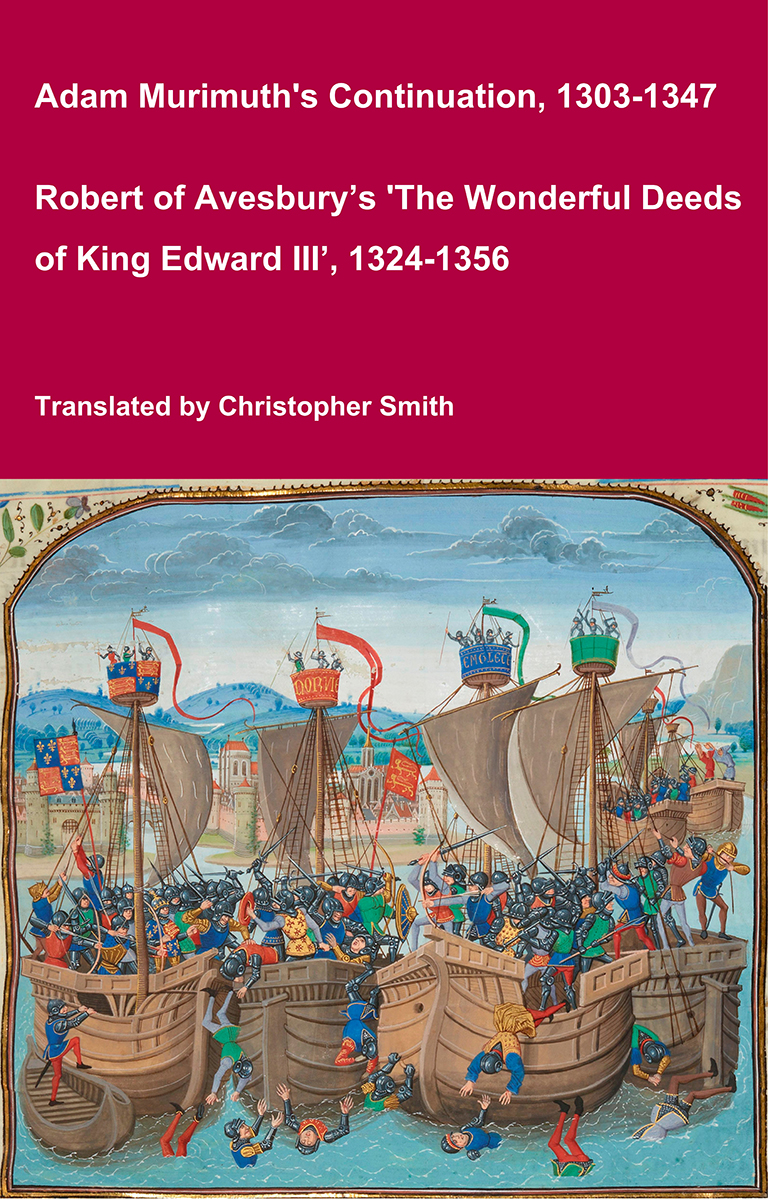
Adam Murimuth's Continuation and Robert of Avesbury’s 'The Wonderful Deeds of King Edward III'
This volume brings together two of the most important contemporary chronicles for the reign of Edward III and the opening phases of the Hundred Years’ War. Written in Latin by English clerical observers, these texts provide a vivid and authoritative window into the political, diplomatic, and military history of fourteenth-century England and its continental ambitions. Adam Murimuth Continuatio's Chronicarum continues an earlier chronicle into the mid-fourteenth century, offering concise but valuable notices on royal policy, foreign relations, and ecclesiastical affairs. Its annalistic structure makes it especially useful for establishing chronology and tracing the development of events year by year. Complementing it, Robert of Avesbury’s De gestis mirabilibus regis Edwardi tertii is a rich documentary chronicle preserving letters, treaties, and official records alongside narrative passages. It is an indispensable source for understanding Edward III’s claim to the French crown, the conduct of war, and the mechanisms of medieval diplomacy. Together, these works offer scholars, students, and enthusiasts a reliable and unembellished account of a transformative period in English and European history. Essential for anyone interested in medieval chronicles, the Hundred Years’ War, or the reign of Edward III.
Available at Amazon in eBook and Paperback format.
1436-1453 End of the Hundred Years War is in 15th Century Events.
A Brief Latin Chronicle. June 1436. In the 14th year of this King Henry, Philip, Duke of Burgundy, against his loyalty, besieged the town of Calais with great preparation and a copious multitude of people; there were there, according to estimates, more than one hundred thousand men. In tents and pavilions 10,000, in large cannons 28, in fiery cressets at night 7,000, in galleys 7,000, in small cannons called ribalds 7,000, in crossbows 10,000, in carts 12,000.
Anno xiiij° hujus regis Henrici Philippus dux Burgundie, contra fidelitatem suam, villam Calisie obsidiavit cum magno apparatu et multitudine populi copiosa; fuerunt enim ibi, secundum estimacionem, plus quam c. milia virorum. In tentoriis et pavilionibus x ml, in magnis gunnis xxviij, in cressetes ardentibus in nocte vij ml, in gall. vij ml, in parvis gunnis vocatis ribaldis vij ml, in crosbowes x ml, in carectis xij ml.
A Brief Latin Chronicle. July 1436. For the resolution of this siege, Lord Humphrey, Duke of Gloucester [aged 45], crossed the Channel with many nobles and lords and a multitude of people numbering 60,000, hastening to Calais. However, before his arrival, the Earl of Mortain and Lord Camoys with their forces, numbering 2,500, safely kept the said town of Calais, and within a few days, they valiantly broke the siege and killed many there. The Duke of Burgundy, with his forces, having learned that the Duke of Gloucester with such a powerful English force was approaching, became fearful and confused and quickly took flight. After the said Duke of Gloucester had arrived at Calais, he then proceeded through Picardy and Flanders for 11 days, burning towns. The Earl of Huntingdon and his forces also burned the town of Poperinge and killed many, and around the feast of Saint Bartholomew the Apostle that followed, the aforementioned Duke of Gloucester and the nobles with lords and their people prosperously returned to England.
Pro qua quidem obsidione dissolvenda transfretavit Dominus Humfridus, dux Gloucestrie, cum quam pluribus magnatibus et proceribus ac multitudine populi ad numerum lx ml, Calisiam usque properans. Sed ante ipsius adventum, Comes de Morten et Dominus de Cammysh cum suis ad numerum ij ml di. dictam villam Calisie tutissime conservantes illam obsidionem infra dies paucos viriliter confregerunt et plurimos ibidem occiderunt. Qui quidem dux Burgundie cum suis, cognito quod dux Gloucestrie cum tanta potestate Anglorum in proximo adventaret, veritus et confusus, celerrime capit fugam. Postea vero quam predictus dux Gloucestrie Caliam venisset, exinde in Picardiam et Flandiam per dies xj procedendo villas combussit. Ubi etiam Comes Huntingdon et sui villam de Popering cremaverunt ac plurimos peremerunt, et circiter festum Sancti Bartholomei Apostoli proximo sequens Dux Gloucestrie memoratus ac magnates cum proceribus et populo suo in Angliam prospere remearunt.
A Brief Latin Chronicle. August 1436. In the same year, within the next month after the aforementioned Duke of Burgundy had besieged the town of Calais and then fled by the grace of God, James, King of the Scots [aged 42] and perjurer, laid siege with his army to the Castle of Roxburgh in Northumbria, reportedly with a force of 300 men and more; there he achieved nothing. For the very noble knight, Ralph Grey [aged 30], with eighty valiant men, strongly held the said castle and valiantly resisted the said King of Scots and his army. Hearing that the Archbishop of York, the Bishop of Durham, and the Earl of Northumberland with a great force from the north were planning to confront them soon, the aforementioned king and his army, terrified and confused, immediately fled.
Anno eodem, infra mensem proximo sequentem quo prefatus dux Burgundie villam Calisie taliter obsedisset et inde gratia Dei profugatus fuisset, Jacobus rex Scottorum perjurus Castro de Rokesburgh in Northumbria cum suo exercitu, ut fertur, ad numerum c ml et ultra, obsidionem opposuit; ubi nichil profecit. Nam prenobilis ille miles Radulphus Greye, cum lxxx viris strenuis, dictum castrum fortiter custodivit et dicto regi Scottorum et exercitui suo viriliter restitit. Audito autem quod Archiepiscopus Eboracensis, episcopus Dunelmensis ac Comes Northumbrie cum maxima potestate borealium eisdem obviare infra breve proponebant, rex prefatus et suns exercitus territi et confusi protinus aufugerunt.
On 3rd January 1437 Catherine of Valois Queen Consort England [aged 35] died at Bermondsey Abbey [Map]. She had been married aged eighteen to King Henry V of England for two years three months. Their son was King Henry VI of England and II of France [aged 15].
After Henry V died she disappears somewhat from the records other than for Parliament to legislate against her marrying without permission, which she then duly did, to Owen Tudor [aged 37], and had two sons, the elder of which was father to King Henry VII of England and Ireland.
Her children Edmund [aged 6] and Jasper [aged 5] were subsequently placed in the care of Abbess Katherine Pole, then Abbess of Barking. Katherine's brother William "Jackanapes" de la Pole 1st Duke of Suffolk [aged 40] had the wardship of Edmund's future wife Margaret Beaufort Countess Richmond.


Chronicle of Gregory. 3rd January 1437. Ande that same year Quene Kateryn [aged 35] dyde at Bredmonsey [Map] the iij day of Jany ver.
On 21st February 1437 King James I of Scotland [aged 42] was assassinated at Blackfriars. He was buried at Carthusian Charterhouse, Perth. His son James [aged 6] succeeded II King Scotland. His wife, Joan Beaufort Queen Consort Scotland [aged 33], managed to escape.
On 26th March 1437 Walter Stewart 1st Earl Atholl 3rd Earl Caithness [aged 77] and his grandson Robert Stewart [aged 37] were hanged, drawn and quartered at Edinburgh Castle [Map] for having conspired to assassinate King James I of Scotland [deceased].
Chronicle of Gregory. [21st February 1437] Ande the same year the King of Schottys [aged 42] was trayturly slayne in his owne londe, of a false squyr and the squyer is sone, of the same londe, that was namyd Robert Grahams. The whyche squyer and his son were take anon aftyr, and there they were playnely put to dethe, as welle worthy was, to be traye any King or prynce.
The Death of King James. Here folowing begynnythe a full lamentable cronycle, of the dethe and false murdure of James Stewarde, Kyng of Scotys [aged 42], nought long agone prisoner yn englande, the tymes of the kyngs henrye the fifte and henrye the sixte.
Princes shuld take hede, and draw it to thare memorie, of Maistre Johanes de Moigne counsell, thus said yn Frenche langage, II nest pas sires de son pays, quy de son peple n'est amez [He is not lord of his land who is not loved by his people].
From a Manuscript Written In MCCCCXL [1440].
Printed for J. Wylie & Co.
By Robert Chapman. Glasgow. 1818.
A Brief Latin Chronicle. 21st February 1437. And around the following March, the same king, by the wicked persuasion and counsel of the Earl of Atholl [aged 77], his uncle, and others supporting him in this, was killed one night by a Scot commonly known as William Graham and some others, while the king was preparing for bed, dressed only in his shirt and trousers. He was terrified and forced into the latrine of his own chamber, where he was cruelly and inhumanely killed with swords. It is said that he had about thirty wounds on his body, seven of which seemed fatal. As evidence of this event, an apostolic legate then in Scotland reportedly later brought the said shirt to the Pope, as it is said. Blessed be the Lord God who so often rescues His servants from the hands of those seeking evil against them, and confuses and overthrows the perjurers and those who disturb the peace!
Et circiter mensem Martii extunc proximo sequentem idem rex, iniqua suasione ac consilio Comitis de Athel, avunculi sui, et aliorum sibi in hoc favencium, per quemdam Scottum, Willelmum Grame vulgariter nominatum, et quosdam alios, nocte quadam, dum se rex ad lectum disponebat, camisia et braccis solummodo indutus, improvise territus et in cloacam proprie camere fugatus, cum spatis crudeliter et inhumane est occisus. Fertur enim ipsum circa xxx vulnera in corpore habuisse, quorum vij letalia videbantur. In evidenciam cujus rei quidam legatus apostolicus in Scotia tunc existens dictam cdamisiam postmodo Domino Pape, ut dicitur, deferebat. Benedictus sit Dominus Deus qui tam sepius servulos suos eripuit de manibus querencium eis mala, perjurosque et pacem turbantes confudit et evertit!
The Death of King James. [26th March 1437] Soone after this was takyn the Erle of Athetelles [aged 77], by the Erle of Angwis; and laid ynto the castell of Edenburghe to prisone. This same Erle of Athetelles was endited, arreyned, and dampned. Bot bycause of that this was nighe the fest of Pascue, the crosse was takyn adowne; and he lad to the polour yn the towne, and ther was he fast boundon, and a corone of papir put upon his hed, the which was all abowte depaynetid with jubettes, and for the more dispite and shame to hym was writyne with thes wordes, TRAITOUR, TRAITOUR, TRAITOUR. The Busshope of Urbinate, legate of owre Holy Fadir the Pope, then beyng in Scotteland, upon his ambassite, hard thare confessions. And then evyn forthwith the said Erle of Athetelles was heded; bot he went alwas to have grace and pardon, unto the tyme that the hangman had hym upon the skaffald, to be there and then hedid. For he confessid, and said that he was not yn no wyse consentyng ne assentyng to the Kynges deth; but that he knew therof long, and kepte hit counesell, bycause that Sir Robert Stuward [aged 37], that was oone of the grettest traitours, was his sonnes sonne, and therfore he told hit not to the Kyng. Bot yit nevyre the lesse when this Sir Robert wist therof and told hit to the Erle of Athetelles of the Kynges deth, he blamyd hyme sore, and defendid hym that in no wyse shuld he be consentyng to none such murdure of his Soveran Lord: weynyng veraly that nether he, ne none of all the other, the which bene rehersid afore, wold never have done that murdure yn effecte. And so the said Erle told, and confessid, at his lyvys end; and his hed, coroned with a corone of yryne, stondyng upon a spere shaft yn the myddis of Edenburghe.
The Death of King James. [After 26th March 1437] After this Sir Robert Grame, with many other traitours of his coveene, beyng in captyvyte, were ladde to the towne of Strivellen, and there were thay tourmented and put to the deth. The said Sir Robert Grame stondyng there, at the wher he was tofore enditid of treison afore the Justice and the lawe there, upon his araynment, said playnely that thay had no lawe to do hym to deth, for he said he had nat offendit, bot slayne the Kyng his dedely enmye; for by his letturs, sealed with his seale of armes, long tyme afore he had defyed the Kyng, and renouncid his legeaunce, for causes reasonables as he said. And yf thay wold do hym lawe after the statuytes of armes, thay shuld delyver hym, and let hym go qwite, bicause the Kyng wold have destruyd hym yf he had myght. And thus yn that he said he did no wrong nor synne, bot oonly that he sloughe Godes criature, his enemye. All thes reasons nether couth ne myght suffice for his excuse, the which he perceyvyd wele yn all wise of thare wirchynges. This same Sir Robert Grame, with manly hart and wele avisid, as a mane wele ynstructe yn lawe and letture, said thes wordes standyng at the bare afor the Juges, all the peple there assembled for that cause the selfe tyme. "O ye all so synfull, wreched, and mercilese Scottisshe folke, withoute prudens, and full replet of unavisid folie, I know wele that I shall nowe dye, and ma note escape youre venomous judiciall handes; for by will, and not be right ne lawe, ye have dampned my bodye to the dethe, the which God suffrethe me at this tyme to resave of you, for no desairt of this accusacion that ye condempne me ynne nowe, bot for other offences and trespas, that I yn the vayne tymes of my youth have displeasid hyme ynne. Yit doubt y nat that ye shall se the daye and the tyme, that ye shall pray my soule, for the grete good that I have done to you, and to all this reaume of Scottland, that I have thus slayne and delyveryd you of so cruell a tirant, the grettest enemye the Scottes or Scottland myghth have, consideryng his unstaunchable covetise, yn his youth, ayenst all nature, his tirannye ynmesurable, without pite or mercy to sibbe or to freme, to hie or to lawe, to poure or to riche."
Henrici Quinti, Angliæ Regis, Gesta, is a first-hand account of the Agincourt Campaign, and subsequent events to his death in 1422. The author of the first part was a Chaplain in King Henry's retinue who was present from King Henry's departure at Southampton in 1415, at the siege of Harfleur, the battle of Agincourt, and the celebrations on King Henry's return to London. The second part, by another writer, relates the events that took place including the negotiations at Troye, Henry's marriage and his death in 1422.
Available at Amazon in eBook and Paperback format.
In April 1437 Robert Graham was executed for his part in the Assassination of King James I of Scotland.
On 24th November 1440 William Crichton 1st Lord Crichton arranged a dinner of reconciliation at the Great Hall, Edinburgh Castle. During the course of the dinner the young brothers William Douglas 3rd Duke Touraine [aged 16] and David Douglas [aged 10] was beheaded in front of the young King James II of Scotland [aged 10].
The Auchinleck Chronicle. [24th November 1440] Item Jm iiijc Erll William of douglas archebalde's son beand than xviij years of age & his brother Dauid Douglas was put to deid at Edinburgh and malcome flemyng of beggar was put to deid in that samyn place within three days eft.
The History of the Houses of Douglas and Angus. [24th November 1440] This fpeech thus uttered, teftifying both an acknowledging of the evill paft, and a refolution to amend, was it not fufficient to have purged whatfoever errour had been, or might have been thought to have escaped him before? And certainly it would, if these men had regarded Juftice, or the good of the Common-wealth, and had defired to reclaim him from his errours, and winne him to his Countrey. But his fo full confidence thus repofing on their credit, was it not enough to have tied them to have kept their credit? If there had been any spark of humanity or nature of man left in them: and if they had not beene worse then favage beafts. Truft deferveth that we should prove worthy of that trust, and credit procures keeping of credit; where all humane nature is not extinct, and even fimplicity deferveth favour and pitie. Neither can a man that is not altogether given over, and hath not fold himfelfe to wickednes choose but favour it, and have compaffion of it; yea though he had been otherwife difpofed in the beginning, it would even move any mans heart (that were indeed a man, and not changed into a beaft) to favour and commiferate, and would have tamed and calmed any former difcontentment, and have wrung from them any evill intention which they might (perhaps) have conceived before. However, this noble youth goeth on in the innocency of his heart, and that the more quickely, to cut off all occafion of fuch speeches, and with his brother, and with a few other principall friends goeth directly to the Castle, (being led as it were and drawne by a fatall destiny) and both enter, and fo come in the power of thofe their deadly enemies and fained friends. At the very inftant comes the Governour (as was before appointed betwixt them) to play his part of the Tragedy, that both might bee alike embarked in the action, and beare the envie of fo ugly a fact, that the weight thereof might not lie on one alone: yet to play out their treacherous parts, they welcome him moft courteoufly, fet him to dinner with the King at the fame table, feaft him royally, intertain him chearfully, and that for a long time. At laft about the end of dinner, they compaffe him about with armed men, and cause present a bulls head before him on the boord the bulls head was in thofe dayes a token of death (fay our Hiftories) but how it hath come in ufe fo to bee taken, and fignifie, neither doe they, nor any elfe tell us, neither is it to be found (that I remember) any where in any History, fave in this one place: neither can wee conjecture what affinity it can have therewith, unleffe to exprobrate groffeneffe, according to the French, and Our owne reproaching dull, and groffe wits, by calling him Calves-head (tefte de Vean) but not Bulls head. So that by this they did infult over that innocencie which they had fnared, and applaud their owne wifedome that had fo circumvented him: a brave commendation indeed, and an honeft! yet I wonder what they meant by entertaining him fo well at that time, there was fome reason for it why they fhould have done it by the way, that they might worke out their treafon, untill he were within their thongs: but being now within the Caftle, and fully in their power, I wonder what it fhould mean to make him to faire a welcome, to feaft him fo liberally and folemnely at the Kings table, and from thence to bring him tothe fhambles: what could have beene their intention? might they not have conveyed him to fome private chamber? might they not have carried him to the place of execution? what needed all this proceffe? what needed they to have let him fee the King at all? It would feem as if they had not been fully refolved upon the bulinelle before; and that their intentions and purpofes were not treafonable, but that they tooke occafion to be treasonable from the facility to atchieve it: but our Writers are cleare against that, and fay onely it was pre-concluded, when he was written for. It might feeme alfo that they did this to communicate the matter, or to transferre it altogether upon the King: but he was too young, and purges himselfe by difproving of it. So that I can see no other reafon of it, but as the Lion with his prey, or(to ufe a more bafe, yet a more familiarexample, and the bafer the fitter for them) as the cat with the mouse, which he might devoure immediately, yet it pleaseth her to play a little with it: So they for their greater fatisfaction, and contentment, delight to play out their Steane; fo ftrangely notwithstanding that fuch proceffe and uncouth formes of doing might feem to import fome myfteand deeper reach then ordinary: which I confeffe is fo profound and deep a folly, and mifchantneffe, that I can no wife found it, unleffe it were that the Noblemans place, and his worth forced their wicked hearts to acknowledge it notwithstanding their wickedneffe: And although the acknowledging could not prevaile fo farre, as to make them leave off the enterprise, yet did it in fome fort brangle their refolution, and wrung out this confeffion of his worth: as all the actions of wickedneffe, and all wickedneffe in the acting, are full of contradictions, as this fame is most clearly for if this Nobleman was guilty of death, why is he brought into the Kings prefence why is he fet at his table? If he was not guilty, why was he put to death? So difficult a thing it is in a lie to keep conformity, either in a lie of actions (fo to fpeake) or in a lie of words! In words it is difficult fo to fpeake that the attentive hearer fhall not perceive contrariety: In actions it is impoffible that they can be diffembled. This action is a lie, for it faith he is guilty of death, but their welcomming of him, their fetting of him at the table with the King, and their feafting, fayes, he is an innocent, Noble, worthy man; Indeed onely truth in word and action can accord with it felfe: as it is uniforme, it floweth from unitie, tendeth to it, and endeth in it, and keepeth the tafte of the fountain from which it cometh. So they having given this confeffion of his worth, and again, (by that ominous figne) contradicted their confeffion, muft needs be falfe witneffes however it go. The young Nobleman either understanding the figne as an ordinary thing, or aftonished with it as an uncouth thing, upon the fight of the Buls head offering to rife, was laid hold of by their armed men in the Kings prefence at the Kings table, which should have beene a Sanctuary to him. And fo without regard of King, or any duty, and without any further proceffe, without order, affife (or jurie) without law, no crime objected, he not being convicted at all; a young man of that age that was not liable to the law in regard of his youth, a Nobleman of that place, a worthy young Gentleman of fuch expectation, a guest of that acceptation, one who had repofed upon their credit, who had committed himselfe to them, a friend in mind, who looked for friendship, to whom all friendship was promifed; against dutie, law, friendship, faith, honefty, humanitie, hofpitalitie; against nature, against humane fociety, against Gods Law, against mans law, and the law of nature, is cruelly executed, and put to death: They, (in defpight as it were) fpitting in the face of all duty and honefty, proclaiming (as farre as lay in them) there was no dutie to God nor man to bee regarded. And that the measure of their wickedneffe thus heaped and fhaken, and preft downe might also runne over; all this was done (as it fhould feem) without the confent, nay, against the will of their King and Soveraigne, who wept at their execution, and forbad them to meddle with his Coufin: the shameleffe men chid him for weeping at the death of his enemy (as they call him) during whofe life (fay they) hee needed never to looke for peace, whereas they themselves were his chiefeft enemies, and greatest traitours to him, and befides him to God and nature, and to the office of Juftice which they bore; bringing a blot on the and the other, and bloud-guiltineffe upon his Crowne, fo farre as lay in them.
Tales of a Grandfather by Walter Scott. But when this powerful nobleman died, in 1439, and was succeeded by his son William, a youth of only sixteen years old, the wily Crichton began to spy an occasion to crush the Douglasses, as he hoped, for ever, by the destruction of the youthful earl and his brother, and for abating, by this cruel and unmerited punishment, the power and pride of this great family. Crichton proposed to Livingstone to join him in this meditated treachery; and, though enemies to each other, the guardian of the King and the chancellor of the kingdom united in the vile project of cutting off two boys, whose age alone showed their innocence of the guilt charged upon them. For this purpose flattery and fair words were used to induce the young earl, and his brother David, with some of their nearest friends, to come to court, where it was pretended that they would be suitable companions and intimates for the young King. An old adherent of the family greatly dissuaded the earl from accepting this invitation, and exhorted him, if he went to Edinburgh in person, to leave at least his brother David behind him. But the unhappy youth, thinking that no treachery was intended, could not be diverted from the fatal journey.
The Chancellor Crichton received the Earl of Douglas and his brother on their journey, at his own castle of Crichton, and with the utmost appearance of hospitality and kindness. After remaining a day or two at this place, the two brothers were inveigled to Edinburgh Castle, and introduced to the young King, who, not knowing the further purpose of his guardians, received them with affability, and seemed delighted with the prospect of enjoying their society.
On a sudden the scene began to change. At an entertainment [24th November 1440] which was served up to the earl and his brother, the head of a black bull was placed on the table. The Douglasses knew this, according to a custom which prevailed in Scotland, to be the sign of death, and leaped from the table in great dismay. But they were seized by armed men who entered the apartment. They underwent a mock trial, in which all the insolencies of their ancestors were charged against them, and were condemnea to immediate execution. The young King wept, and implored Livingstone and Crichton to show mercy to the young noblemen, but in vain. These cruel men only reproved him for weeping at the death of those whom they called his enemies. The brethren were led out to the court of the castle, and beheaded without delay.. Malcolm Fleming of Cumbernauld, a faithful adherent of their house, shared the same fate with the two brothers.
This barbarous proceeding was as unwise as it was unjust. It did not reduce the power of the Douglasses, but only raised general detestation against those who managed the affairs of James II1. A fat, quiet, peaceable person, called James the Gross, indolent from habit of body and temper of mind, next became Earl of Douglas, which was probably the reason that no public commotion immediately attended on the murder of the hapless brothers. But this corpulent dignitary lived only two years, and was in his turn succeeded by his son William, who was as active and turbulent as any of his ambitious predecessors, and engaged in various civil broils for the purpose of revenging the death of his kinsmen2.
Note 1. Godscroft and Abercromby record the following traditionary rhyme, expressive of popular indignation at the deed:
"Edinburgh castle, toun and tour,
God grant you sink for sin;
And that even for the black dinnour
Earl Douglas got therein."
Note 2. Wood's Peerage, vol. i., p. 429, 430.
In April 1443 John Beaufort 1st Duke of Somerset [aged 40] declared himself Lieutenant of Aquitaine and Captain-General of Guyenne. He was paid £25,000 attracting the enmity of Richard Plantagenet 3rd Duke of York [aged 31] whose significants debts remained unpaid by the Crown.
In September 1443 John Beaufort 1st Duke of Somerset [aged 40] led 7000 men to Cherbourg [Map]. He returned around December 1443 having achieved nothing but the loss of all his funds and, possibly, half his men.
In August 1443 John Beaufort 1st Duke of Somerset [aged 40] landed 7000 men at Cherbourg [Map] and then marched south. His campaign achieved little being bought off by Francis Montfort I Duke Brittany [aged 29]. He marched through Maine [Map] then returned to England in the winter of 1443.
Chronicle of Gregory. 8th September 1443. And on the same year, the viij day of Septembyr, there was done a grete vyage yn Fraunce by the Duke of Somesette [aged 40] and his retynowe; and at the same viage were slayne and takyn to the nombyr of iij M vij c [3700], whereof were ix lordys and a squyer, whyche that was a grete captayne.
On 28th May 1444 the Treaty of Tours was concluded. The terms included the marriage of King Henry VI of England and II of France [aged 22] and Margaret of Anjou [aged 14] in return for which England ceded the strategically important French County of Maine to France; she brought no dowry. The Treaty was negotiated by William de la Pole Duke of Suffolk [aged 47]. The cessation of Maine subsequently came as something of surprise to Edmund Beaufort Earl Somerset [aged 38] who was its Governor. He, Somerset, was offered the Governorship of Normandy instead leading to a further rift between Somerset and Richard Duke of York [aged 32] who had already been offered Normandy. These seeds of the Wars of the Roses were falling on fertile ground.
Henrici Quinti, Angliæ Regis, Gesta, is a first-hand account of the Agincourt Campaign, and subsequent events to his death in 1422. The author of the first part was a Chaplain in King Henry's retinue who was present from King Henry's departure at Southampton in 1415, at the siege of Harfleur, the battle of Agincourt, and the celebrations on King Henry's return to London. The second part, by another writer, relates the events that took place including the negotiations at Troye, Henry's marriage and his death in 1422.
Available at Amazon in eBook and Paperback format.
On 24th January 1445 the Battle of Arbroath was fought between Clan Lindsay and Clans Ogilvy, Gordon, Oliphant, Seton and Forbes. David Lindsay 3rd Earl Crawford [aged 40] was killed when attempting to prevent the battle by riding between the two armies in an attempt to call a truce. Unfortunately a member of the Clan Ogilvy, thinking the Earl was attacked threw his spear at the Earl, hitting him in the mouth, killing him instantly. Clan Lindsay victorious. His son Alexander [aged 22] succeeded 4th Earl Crawford. Margaret Dunbar Countess Crawford [aged 20] by marriage Countess Crawford.
On 18th March 1445 Richard Plantagenet 3rd Duke of York [aged 33] met Margaret of Anjou [aged 14] at Pontoise [Map] on his mission to bring her back to England for her marriage to King Henry VI of England and II of France [aged 23].
On 23rd April 1445 King Henry VI of England and II of France [aged 23] and Margaret of Anjou Queen Consort England [aged 15] were married at Titchfield Abbey, Hampshire [Map] probably by Bishop William Ayscough [aged 50], Bishop of Salisbury. She the daughter of René Valois Anjou I Duke Anjou [aged 36] and Isabella Metz Duchess Anjou I Duchess Lorraine [aged 45]. He the son of King Henry V of England and Catherine of Valois Queen Consort England. They were third cousins.
Chronicle of Gregory. And a pon the first day of Aprylle [1545] Quene Margarete [aged 15] landed at Portysmowthe [Map], and a-pon the x day of the same monythe sche was weddyd at a lytylle velage [Map] in Hampsehyre i-namyd.
Chronicles of London Vitellius A XVI. In this yere Henry the vith maredd Quene Margaret at Sowthwell1 and she cam unto London the xviijth day of Maij; and by the ways all the lordes of Englond receyved her honorably in dyuers places, And in especiall the Duke of Glowcetur; And vpon blak heth the Maier, Aldermen, and the comoners of the Citee, a certeyn of euery crafte, in blewe Gownys browdered wt the devise of his Crafte, and euery man a scarlet or a Reed hood; and so brought her to london, where were ordeyned dyvers pageantes, countenauntes of dyuers histories, shewed in dyuers places of the Cite in Roiall wise and costelewe; and the xxx day of Maij she was crowned at Westmynster, where were Justices iij daies continually after. In this yere was the sege of Caleys.
Note 1. Fabyan reads Southwyke, i.e. Southwick. Stow has written a correction in the MS. as follows: 'quene margaret landyd at portsmouthe & was weddyd to henry at Tichefelde nere to southampton. Tichfeld and Southwick are six or seven miles apart'.
Chronicle of Gregory. 26th May 1445. And uppon Thorsday, the xxvj day of May, the kyng [aged 23] made xlvj [46] Knyghtys of the Bathe yn the Towre of London. And uppon the morowe, that was the Fry day, lordys of the realme, whythe nobylle and grete and costelowe araye, the Mayre of London and the aldyrmen in scharlet, whythe alle the craftys of London in blewe, wythe dyvers dyvysyngys, every crafte to be knowe from othyr, rydyng agayne Quene Margarete [aged 15] and brought her unto the Toure of London [Map], the quene havynge whythe her xvij [17] charys with ladys.
On 30th May 1445, five weeks after her marriage, Margaret of Anjou Queen Consort England [aged 15] was crowned Queen Consort England by Archbishop John Stafford at Westminster Abbey [Map].
Chronicle of Gregory. 28th May 1445. And a-pon the morowe, the Satyrday, she was brought thoroughe London syttyng in a lytter by twyne ij [2] goode and nobylle stedys i-trappyd with whyte satton, and sche was conveyyde unto Westemyster. And apon the morowe the Sonday was the coronacyon, and ij [2] dayes aftyr there was grette revylle of justys of pes in the sayntewery at Westemyster, &c.
A Brief Latin Chronicle. 30th May 1445. In the year of our Lord 1445, on the 30th day of May, Margaret [aged 15], the daughter of the King of Sicily [aged 36], was crowned Queen of England at Westminster. However, it should be noted that shortly after the marriage contract was made with the said Margaret in overseas territories by William, Duke of Suffolk [aged 48], Maine along with Anjou were lost. Then gradually (whose betrayal or cowardice God knows) all of Normandy with the city of Paris, etc., were lost. Similarly, Bordeaux along with all of Gascony, etc., were also lost.
Anno Domini millessimo cccc°.xlv., xxx die mensis Maii coronatur Margareta filia regis Ceciloie in reginam Anglie apud Vestmonasterium. Sed advertendum est quod infra breve post contractum factum cum dicta Margareta in partibus transmarinis per Willelmum ducem Suthfolk, amissa est Cenomannia cum Andegavia. Deinde paulatim (quorum prodicione aut ignavia novit Deus) amissa est tota Normannia cum civitatge Parisius, &. Deinde similiter amissa est Burdegalia cum tota Vascibua, &.
On 20th October 1445 Richard Plantagenet 3rd Duke of York [aged 34] returned to England at the end of his five-year appointment in France.
Annals of the six Kings of England by Nicholas Trivet
Translation of the Annals of the Six Kings of England by that traces the rise and rule of the Angevin aka Plantagenet dynasty from the mid-12th to early 14th century. Written by the Dominican scholar Nicholas Trivet, the work offers a vivid account of English history from the reign of King Stephen through to the death of King Edward I, blending political narrative with moral reflection. Covering the reigns of six monarchs—from Stephen to Edward I—the chronicle explores royal authority, rebellion, war, and the shifting balance between crown, church, and nobility. Trivet provides detailed insight into defining moments such as baronial conflicts, Anglo-French rivalry, and the consolidation of royal power under Edward I, whose reign he describes with particular immediacy. The Annals combines careful year-by-year reporting with thoughtful interpretation, presenting history not merely as a sequence of events but as a moral and political lesson. Ideal for readers interested in medieval history, kingship, and the origins of the English state, this chronicle remains a valuable and accessible window into the turbulent world of the Plantagenet kings.
Available at Amazon in eBook and Paperback format.
On 30th July 1447 Richard Duke of York [aged 35] was appointed Lord Lieutenant of Ireland. An attempt by the Council to isolate Richard.
On 3rd June 1449 Anne Beauchamp 15th Countess Warwick [aged 5] died at Ewelme, Oxfordshire aged four whilst in the care of Alice Chaucer Duchess Suffolk [aged 45]. She was buried at Reading Abbey, Berkshire [Map]. Baron Burghesh abeyant between her three-half aunts and her full aunt Anne Beauchamp 16th Countess Warwick [aged 22]. It isn't clear why the barony was not subject to the same legal dispute that the Earldom of Warwick was subject to - see following.
After a prolonged legal dispute between her three half-aunts, Margaret Beauchamp Countess Shrewsbury and Waterford [aged 45], Eleanor Beauchamp Duchess Somerset [aged 40], Elizabeth Beauchamp Baroness Latimer [aged 32] and her full aunt Anne Beauchamp 16th Countess Warwick, the courts decided her full aunt Anne Beauchamp should succeed. Anne Beauchamp succeeded 16th Countess Warwick. Her husband Richard Neville [aged 20] by marriage Earl Warwick; the first step on his journey to becoming Kingmaker.
The decision of the court was not subscribed to by Edmund Beaufort Earl Somerset [aged 43] who was married to Anne's half-sister Eleanor; he wanted his share of the considerable Beauchamp inheritance.
On 23rd October 1448 Hugh Douglas 1st Earl Ormonde commanded at during the Battle of Sark inflicting a heavy defeat on the English forces. Henry Percy 3rd Earl of Northumberland [aged 27] and Thomas Harrington [aged 48] were captured. Henry Percy 2nd Earl of Northumberland [aged 55] escaped.
On 15th April 1450 the Battle of Formigny was a decisive victory for the French that destroyed the England's last army in France bringing to end English control of Normandy.
Charles Bourbon I Duke Bourbon [aged 49] and Arthur Montfort III Duke Brittany [aged 56] commanded the French. The English commander Thomas Kyriell [aged 54] was captured.
The battle is considered to be one of the first where cannon played a decisive role.
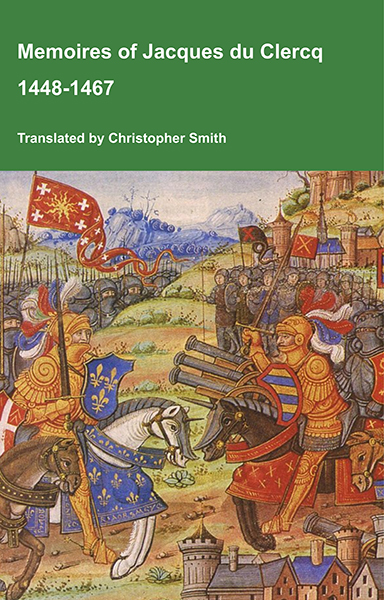 Memoires Jacques du Clercq. At that time, after Easter had passed, in the year 1450, three thousand English from the realm of England landed at Cherbourg, whose leader was Thomas Kyriell. They rode by stages as far as the suburb of Valognes, where the guard and captain for the King of France was a squire from Poitou named Albert Regnault; and there they laid siege. This captain held out for a long time without being relieved, until at last he surrendered and departed, he and his companions, with their goods, horses, and armour safe. During this time and siege, the French were assembling from all sides to try to raise the said siege of Valognes; and when the English learned of this, they likewise assembled to hold the field. They set out from Caen with five to six hundred fighting men, led by Sir Robert Vere; from the town of Bayeux eight hundred, led by Mathieu Go; from the town of Vire four to five hundred, led by Sir Henry Norbery. These joined with those newly arrived from England, so that they numbered five to six thousand fighting men. All these English companies thus assembled passed the fords of Saint-Clément toward Bayeux and Caen; and when the French, who had taken the field to seek them out, learned of this, they pursued them, riding hard, some on one side and others on another. At last, on the 14th of April in the said year 1450, Sir Geoffroy de Couvran and Joachim Rohault caught up with them and struck fiercely upon the rear guard of the English, killing many. They then withdrew and made known their actions and the condition of the English to the Constable of France, who was at Saint-Lô, and likewise informed the Count of Clermont, who was in the field seeking them. The Count of Clermont was immediately joined by the Count of Eu, the seneschal of Poitou, the lords of Montgommery and of Rays, Admiral of France, the seneschal of Bourbonnais, the lords of Magny and of Mouy, Robert de Longueval, Sir Geoffroy de Couvran, Joachim Rohault, and Olivier de Brion; and when they had assembled together, they hastened to where the English were and found them in a field near a village called Formigny, between Carentan and Bayeux.
EN ce temps, aprés les Pasques passés, l'an mil iiijc l, descendirent a Chierbourg trois mille Anglois du pays d'Angleterre, dont estoit chief Thomas Bririel, lesquels chevaucherent par leurs journées jusqu'au faulxbouro de Valoingnes, dont estoit garde et capitaine pour le roy de Franche uno cscuyer de Poitou, nommé Albert Regnault, et illecq meirent le siege; lequel capitaine tint longuement le siege sans estre secouru, et tant qu'enfin le rendeit et s'en parteit lui et ses compagnons, saulfs biens chevaulx et harnois. Durant ce temps et siege estoient les Franchois assemblés de toutes parts pour cuider lever le siege de Valoingnes, devant dict, et quant les Anglois le sceurent, ils s'assemblerent pareillement pour tenir les champs, et partirent de Caen de v a vjc combattants, dont estoit conduiseur messire Robert Vere; et de la ville de Bayeulx viijc combattants, dont estoit chief et conduiseur Mathago; de la ville de Vires iiij a cinq cens combattants, dont estoit chief et conduiseur messire Henry Morbery; lesquers assemblerent avecq ceulx qui estoient de nouvel venus d'Angleterre, tant qu'ils se trouverent de cinq a six mille combattants. Toutes les compagnies d'Anglois cy dessus declarées, assemblées, ils passerent les guets St Clement, pour l'hyver, vers Bayeulx et vers Caen; et lors les Franchois qui s'estoient mis sur les champs pour les trouver le sceurept, lesquels les poursuivirent et chevaucherent fort les ungs d'un costé, les aultres d'aultre, tant qu'en la fin, le xiiije d'apvril l'an dessusdit mil quatre cens cinquante, les attaignicent messire Geoffroy de Couvran et Joachim Rohault, lesquels ferirent asprement sur l'arriere-garde des Anglois et en tuerent plusieurs, puis se retraierent feirent sçavoir au connestable de Franche qui estoit a St Loup, leur faict et le faict des Anglois, et pareillement le feirent sçavoir au comte de Clermont, qui estoit sur les champs pour les querir, lequel incontinent fust qcvompagnié du cornte de Chastres, du seneschal de Poitou, des Srs de Montgary et de Ray, admiral de Franche, du seneschal de Bourbonnois, des Srs de Manye de Mouy et de Robert Lomgam, messire Geoffroy de Couvran, Joachim Robault et Olivier de Brion, lesquels, assemblés ensemble, hastivement ou estoient les Anglois et les trouverent en ung champ prés ung villaige nommé Fourmigny, entre Careton et Bayeulx.
Memoires Jacques du Clercq. When the English saw them, they formed into battle and sent in haste for the said Mathieu Go, on the day which was the 15th of April [1450], who had left them very early that morning to go to Bayeux; upon this summons he returned immediately. And for the space of three hours the French and English stood facing one another, skirmishing against each other. Meanwhile the English dug great pits and trenches in front of them with earth, daggers, and swords, so that if the French attacked, they and their horses would fall into them. The English had behind them, at a bowshot's distance, a large number of enclosures full of apple trees, pear trees, and other trees, so that they could not be attacked from the rear. At the same time the lord of Richemont, Constable of France, the Count of Laval, the lord of Lohéac, Marshal of France, the lord of Réal, Marshal of Brittany, the lord of Saint-Sever, and several others, to the number of three hundred lances with archers, hastened to come near the said English. They rode from a village called Trévières, where they had lodged the night before, to a place just beyond Formigny; and there, in sight of the English, they formed into battle and advanced in good order toward Formigny, at a ford or a small stone bridge. Then the English, fearing them, abandoned their ground and withdrew toward the river to place it at their backs. Seeing this, the Count of Clermont, who had five to six hundred lances with archers and his company, together with the Constable of France, attacked them vigorously, and in the end defeated them around that river. There were slain and killed there, according to the report of heralds, priests, and other reliable witnesses, three thousand six hundred seventy-four English; and there were taken prisoner Sir Thomas Kyriell, Sir Henry Morbery, Janequin Bacquier, and many other English, to the number of twelve hundred. The dead were buried in four pits. Mathieu Go escaped and fled to Bayeux, and Sir Robert Vere likewise escaped to Caen. On the French side there died only six to eight hundred men; and some might say that this was by the grace of God for the French, who gained this victory, for they were in all, according to the heralds' report, only about three thousand fighting men, whereas the English were six to seven thousand. Thus the grace of God was clearly shown toward the French, who conducted themselves bravely and valiantly. Among others, those under the banner bore themselves honourably, as did those of the constable, the lords of Montgommery and Saint-Sever, and especially the seneschal of Poitou. For the English pressed hardest upon his men and those of the bailiff of Évreux, commanded by the lord of Mauny, so that they captured from that side two culverins; but then the seneschal dismounted and caused his men to dismount, and attacked the English so fiercely that he drove them back by one wing of the battle the length of four lance-lengths and recovered the two culverins, and in this repulse seven hundred English were slain. The other French likewise behaved so valiantly that they gained the victory and remained masters of the field; and there were knighted the Count of Eu, brother of the Count of La Marche, Godefroy de Valognes, son of the Count of Valognes, Danneguet, the lord of Vannes, son of the Count of Villers, the lord of Saint-Sever, the lord of Alençon, and several others.
Quant les Anglois les appercheurent, ils se meirent en bataille et envoyerent querir diligemment le susdit Mathago le jour qui fust le xve jour du nois d'apvril, lequel: s'estoit parti d'eulx tres le matin pour aller a Bayeulx; pour lequel mandement il retourna incontinent, et: feurent les Franchois et Anglois par l'espace de trois heures l'ung devant l'aultre en escarmouchant l'ung contre l'aultree. Et cependant feirent les Anglois grands trous et fossés devant eulx de terre, dagues et espées, adfin que sy les Franchois les assailloient qu'ils cheissent eulx et leurs chevaulx. Les Anglois avoient derriere leur dos a ung traict d'arcq et entre,d'eulx grande foison de, jardinages plains de pommiers, poiriers. et aultres divers arbres,eadfin qu'on ne leur peut courrir sur le derriere. Cependant le Sr de Richemont, connestable de Franche, lle comte de Laval, le Sr de Loheach, mareschal de Franche, le Sr de Heajal; je marescbalde Bretaigne, les Sr de St Severe, et plusieurs aultres, jusques au,nombre de trois cens lanches, et les archiers Caisoieut diligence d'estre pres desdits Anglois, chevaucberent d'ungs villaige nommé Estrieveres, ou, ils avoient couché le soir jusques a ung au dessus dudit Fourmigny, et la, a la vue des Anglois, se meirent touts en bataille et marcherent en leurs ordonnances pres d'icelluy Fourmigny, a ung guet ou a ung petit pont de Pierre; et lors les Anglois doubterent et laisserent le camp, et se reculerent sur la riviere pour la mectre a leur dosVoyant ce, le comte de Clermont, qui avoit de cinq a six cens, lanchesy avecq les archiers et sa compaguie, et le connestable de Franche les assaillirent vigoureusement et en la fin les desconfeirent autour d'icelle riviere, et la feurent morts et occis, par le rapport des heraulx, des prestres et des bonnes gens qui' la estoient, trois mille sept cens soixante quatorze Anglois, et sy feurentprins messire Thomas Bririel, messire Henry Morbery, Janequin Basquiers et plusieurs aultres Anglois, jusques au nombre de xijc et les morts: feurent enterrés en quatre fosses. Mathago eschappa et s'enffuit a Bayeulxy et aussy feit messire Robert Vere, s'en allaa Caen; et en icelle bataille morurent, du costel des Franchois, de sis a huict cens hommes seulement, et polroient aulcuns dire que ce fust grace de Dieu pour les Franebois qui eurent ceste Victoire, car its n'estoient en tout,' par le rapport des heraulx, qu'environ trois mille combattants, et les Anglois estoient de six a sept mille, et par ee peult apparoir asses la grace de Dieu suraes Franchois, lesquels sy gouvernerent bravement et valliamment, et entre aultres ceulR de dessoubs l'estendart sy porterent honnorablement et honestement, et sy feirent ceulx du connestable, les Srs de Montgarou, de St Severe, et par especial le seneschal de Poitou; car les Anglois chargerent l'effort sur ses gens et sur ceulx du bailly d'Evreulx, que gouvernoit le Sr du Manny tellement, qu'ils gaignerent du costel ou ils estoient en bataille, deux coulleuvrines sur eulx, et lors le seneschal descendit a pied et feit descendre ses gens, puis assaillit sy durement les Anglois, qu'il les reboutta par l'ung des bouts de la bataille la longueur de quatre lanches et recouvra les deux coulleuvrines, et a ceste reboutte morurent sept cens Anglois. Ce les aultres Franchois se porterent sy valliammenti qu'ils eurent la victoire, et leur demoura le camp, et il fust fait chevallier le comte de Chastres frcre du comte de la Marche, Godefroy de Valoingnes, fils du cointe de Valoingnes et Danneguet, et le Sr de Vannet, fils du comte de villers, le Sr de St Severe, le Sr d'Allenchon, et plusieurs aultres.
Memoires Jacques du Clercq. Chapter 1.24. Of the battle of Formigny, where the English were defeated, and where there were killed three thousand six hundred seventy-four.
CHAPITRE XXIV. De la bataille de Fourmignyou les Anglois fuerent dcsconfils, et en morut trois mille vjc lxxiiij.
Before 1st May 1450, the day he was murdered, William "Jackanapes" de la Pole 1st Duke of Suffolk [aged 53] was impeached, and sentenced to the exiled. Duke Suffolk, Marquess Suffolk, Earl Pembroke forfeit.
Before 1st May 1450 William "Jackanapes" de la Pole 1st Duke of Suffolk [aged 53] exiled for five years for having lost the English possessions in Northern France including Anjou and Maine which were part of Margaret of Anjou's wedding settlement. Before he left he wrote to his eight year old son John de la Pole 2nd Duke of Suffolk [aged 7]:
My dear and only well-beloved son, I beseech our Lord in Heaven, the Maker of all the World, to bless you, and to send you ever grace to love him, and to dread him, to the which, as far as a father may charge his child, I both charge you, and pray you to set all your spirits and wits to do, and to know his holy laws and commandments, by the which you shall, with his great mercy, pass all the great tempests and troubles of this wretched world.
And that also, knowingly, you do nothing for love nor dread of any earthly creature that should displease him. And there as any frailty maketh you to fall, beseech his mercy soon to call you to him again with repentance, satisfaction, and contrition of your heart, never more in will to offend him.
Secondly, next him above all earthly things, to be true liegeman in heart, in will, in thought, in deed, unto the king our aldermost high and dread sovereign lord, to whom both you and I be so much bound to; charging you as father can and may, rather to die than to be the contrary, or to know anything that were against the welfare or prosperity of his most royal person, but that as far as your body and life may stretch you live and die to defend it, and to let his highness have knowledge thereof in all the haste you can.
Thirdly, in the same way, I charge you, my dear son, always as you be bounden by the commandment of God to do, to love, to worship, your lady and mother; and also that you obey always her commandments, and to believe her counsels and advices in all your works, the which dread not but shall be best and truest to you. And if any other body would steer you to the contrary, to flee the counsel in any wise, for you shall find it naught and evil.
Thirdly, in the same way, I charge you, my dear son, always as you be bounden by the commandment of God to do, to love, to worship, your lady and mother; and also that you obey always her commandments, and to believe her counsels and advices in all your works, the which dread not but shall be best and truest to you. And if any other body would steer you to the contrary, to flee the counsel in any wise, for you shall find it naught and evil.
Moreover, never follow your own wit in nowise, but in all your works, of such folks as I write of above, ask your advice and counsel, and doing thus, with the mercy of God, you shall do right well, and live in right much worship, and great heart's rest and ease.
And I will be to you as good lord and father as my heart can think.
And last of all, as heartily and as lovingly as ever father blessed his child in earth, I give you the blessing of Our Lord and of me, which of his infinite mercy increase you in all virtue and good living; and that your blood may by his grace from kindred to kindred multiply in this earth to his service, in such wise as after the departing from this wretched world here, you and they may glorify him eternally amongst his angels in heaven.
Written of mine hand,
The day of my departing from this land.
Your true and loving father
On 1st May 1450 William "Jackanapes" de la Pole 1st Duke of Suffolk [aged 53] was beheaded at sea whilst travelling into exile his ship having been intercepted by the Nicholas of the Tower, or by Admiral Nicholas of the Tower. His son John [aged 7] succeeded 2nd Marquess Suffolk, 5th Earl Suffolk, 5th Baron Pole. Margaret Beaufort Countess Richmond [aged 6] by marriage Marchioness Suffolk. Earl Pembroke forfeit.
Chronicle of Gregory. 1st May 1450. Ande at his passynge ovyr the see warde he was mette with by-twyne Dovyr and Calys by dyvers schyppys, of the whyche was here Admyralle Nycholas of the Towre; and yn that shyppe soo beyng in the see they smote of his hedde of the fore said Duke of Sowthefolke [aged 53], and they caste bothe body and his hedde in to the see. And aftyr that it was takyn uppe and brought unto the towne of Dovyr [Map], and aftyr from thens brought unto Wynkylfylde [Map] in Sowthefolke, and there it is i-buryde; whos name was Syr Wylliam Pole.
Paston Letters V1 120 William Lomner to John Paston. 5th May 1450.
William Lomner to John Paston [aged 28]1
RIGHT worchipfull sir, I recomaunde me to yow, and am right sory of that I shalle sey, and have soo wesshe this litel bille with sorwfulle terys, that on ethes ye shalle reede it.
As on Monday2 nexte after May day there come tydyngs to London, that on Thorsday3 before the Duke of Suffolk [deceased] come unto the costes of Kent full nere Dower with his ij shepes and a litel spynner; the qweche spynner he sente with certeyn letters to certeyn of his trustid men unto Caleys warde, to knowe howe he shuld be resceyvyd; and with hym mette a shippe callyd Nicolas of the Towre, with other shippis waytyng on hym, and by hem that were in the spyner, the maister of the Nicolas hadde knowlich of the dukes comyng. And whanne he espyed the dukes shepis, he sent forthe his bote to wete what they were, and the duke hym selfe spakke to hem, and seyd, he was be the Kyngs comaundement sent to Caleys ward, &c.
And they seyd he most speke with here master. And soo he, with ij or iij of his men, wente forth with hem yn here bote to the Nicolas; and whanne he come, the master badde hym, 'Welcom, Traitor,' as men sey; and forther the maister desyryd to wete yf the shepmen woldde holde with the duke, and they sent word they wold not yn noo wyse; and soo he was on the Nicolas tyl Saturday4 next folwyng.
Note 1. [From Fenn, i. 38.] The date of this letter is perfectly determined by the events to which it relates.
Note 2. 4th May.
Note 3. 30th April.
Note 4. 2nd May.
Paston Letters V1 120 William Lomner to John Paston. Also he asked the name of the sheppe, and whanne he knew it, he remembred Stacy that seid, if he myght eschape the daunger of the Towr, he should be saffe; and thanne his herte faylyd hym, for he thowghte he was desseyvyd, and yn the syght of all his men he was drawyn ought of the grete shippe yn to the bote; and there was an exe, and a stoke, and oon of the lewdeste of the shippe badde hym ley down his hedde, and he should be fair ferd wyth, and dye on a swerd; and toke a rusty swerd, and smotte of his hedde withyn halfe a doseyn strokes, and toke awey his gown of russet, and his dobelette of velvet mayled, and leyde his body on the sonds of Dover; and some sey his hedde was sette oon a pole by it, and hes men sette on the londe be grette circumstaunce and preye. And the shreve of Kent doth weche the body, and sent his under shreve to the juges to wete what to doo, and also to the Kenge whatte shalbe doo.

Anne Boleyn. Her Life as told by Lancelot de Carle's 1536 Letter.
In 1536, two weeks after the execution of Anne Boleyn, her brother George and four others, Lancelot du Carle, wrote an extraordinary letter that described Anne's life, and her trial and execution, to which he was a witness. This book presents a new translation of that letter, with additional material from other contemporary sources such as Letters, Hall's and Wriothesley's Chronicles, the pamphlets of Wynkyn the Worde, the Memorial of George Constantyne, the Portuguese Letter and the Baga de Secrets, all of which are provided in Appendices.
Available at Amazon in eBook and Paperback format.
On 18th May 1452 the Battle of Brechin was fought between supporters of King James II of Scotland [aged 21] and his rebellious nobility including the Black Douglases. Alexander Gordon 1st Earl Huntley defeated the rebels led by Alexander Lindsay 4th Earl Crawford [aged 29] on behalf on the King. John Lindsay [aged 29], and the brothers William Gordon and Henry Gordon, were killed.
Memoires Jacques du Clercq. Chapter 2.15. Of the battle of Rupelmonde, and how Cornille, bastard son of the Duke of Burgundy, was killed there, and how also the men of Ghent were defeated.
CHAPITRE XV. De la bataille de Rippelmonde, et comment Cornille, fils bastard du due de Bourgogne, y fust tué, et comment aussi les Gantois feurent desconfits.
On 5th January 1453 brothers John Neville 1st Marquess Montagu [aged 22] and Thomas Neville [aged 23], William Herbert 1st Earl Pembroke [aged 30], brothers Edmund Tudor 1st Earl Richmond [aged 22] and Jasper Tudor 1st Duke Bedford [aged 21] and Roger Lewknor were knighted by King Henry VI [aged 31] at Greenwich, Kent [Map].
On 17th July 1453 the Battle of Castillon, the last battle of the Hundred Years War, was fought at Castillon.
John "Old Talbot" Talbot 1st Earl of Shrewsbury [aged 70] was killed. His grandson Thomas [aged 4] succeeded 2nd Viscount Lisle, 2nd Baron Lisle. Margaret Herbert Viscountess Lisle by marriage Viscountess Lisle. On His son John [aged 35] succeeded 2nd Earl of Shrewsbury, 2nd Earl Waterford, 7th Baron Furnivall, 11th Baron Strange Blackmere, 8th Baron Talbot. Elizabeth Butler Countess Shrewsbury and Waterford [aged 29] by marriage Countess of Shrewsbury Countess Waterford.
John Talbot 1st Viscount Lisle [aged 27] was killed. He the son of John "Old Talbot" Talbot 1st Earl of Shrewsbury.
Robert Hungerford 3rd Baron Hungerford 1st Baron Moleyns [aged 22] and John Foix 1st Earl Kendal [aged 43] were captured.
Chronicle of Robert Fabyan [-1512]. [7th July 1453] In this yere also1, as affermyth the Freshe Cronycle, this mysery & vnkyndnesse thus reygriynge in Englonde, the lorde Talbot than beyng in interficuur Normādy, & in defendynge of ye kynges garysons, was beset with Frenshe men at a place named Castyliyon, and tnere strongelye assaylyd, where, after longe and cruell fyght, he with his sone, and to the noumber of. xl. men of name, and viii.C. of other Englysshe soudyours, were myserably slayen, and many moo taken prysoners.
Note 1. The Chronicler here appears to have confused their dates. The battle of Castillion took place in July 1453.
A Brief Latin Chronicle. [7th July 1453] For their recovery, the noble warrior Earl of Shropshire [aged 70] along with his son, Lord Lisle [aged 27], and others, were sent, who valiantly reclaimed them. But, which I report with sorrow, rashly or heedlessly engaging in a conflict with the French [Battle of Castillon], they were killed there, and the French reacquired all that was there, and thus still hold it peacefully.
Ad cujus recuperacionem missus est nobilis ille belliger Comes Salopie cum filio suo, domino de Lyel, et aliis, qui viriliter eam recuperaverunt. Sed, quod dolenter refero, incaute seu capitose se dantes cuidam conflictui cum Franciugenis, ibi interfecti sunt, et readquisierunt Francigene omnia que illic erantl, et sic adhuc pacifice detinent.
Memoires Jacques du Clercq. As soon as the French were informed of the arrival of Sir Talbot, they withdrew into the field that was enclosed with ditches. Talbot, on his way, encountered some French archers who had not yet withdrawn into the camp, and the French began to shoot vigorously in order to reach the camp, for the English were beginning to advance, thinking that the French had fled and raised the siege. Then Talbot, while waiting for part of his infantry, had a cask of wine set upright so that his men might drink and refresh themselves. Meanwhile, the French reached the enclosure and drew up in order, placing their gunpowder artillery along the ditches before the arrival of the English. Those of Castillon found means to send word to Talbot to advance quickly, saying that the French were fleeing, which Talbot did; but when he arrived, he was greatly astonished to see the fortification that the French had made, with its ditches, artillery, and other defences. There, to resist the English, were the marshals of France, the king's grand master of the household, the count of Penthièvre, the seneschal of Poitou, the lord of La Bessière, Sir Jean Bureau, and many others, who had been appointed to command the army, and with them were many great lords. Sir Talbot and his company came up to the barrier, thinking to enter the camp, but they found in front of them valiant men-at-arms who showed them boldness and courage, at which they were astonished, considering what had been reported to them. Talbot was mounted on a small hackney and did not dismount, because he was an old man; but he ordered all those of his company who had come on horseback to dismount. The English army displayed twenty-four banners, those of the king of England, of Saint George, of the Trinity, and others, including Talbot's own, as well as many standards. Then the assault began, and there was great valour shown, and both sides fought fiercely, and the struggle lasted for the space of a strong hour. But to reinforce the French, the lord of Montauban and the lord of La Hunaudière arrived with the troops of the duke of Brittany, whom they commanded. These, coming to strengthen the French, by their courage and prowess, caused the English to turn their backs, and all their banners were thrown down and overthrown by these Bretons, and the English took flight, and many were killed. And in particular, the hackney of Sir Talbot was struck by a culverin shot, so that it fell dead, with Talbot beneath it; and he was killed there by the French, for he was not armoured. For when King Charles had released him from ransom when he was captured at Rouen and had given him a great sum of money, he had promised of his own free will, without constraint, never again to bear arms against him or his people, and had gone on pilgrimage to Rome; but upon returning, he could not refrain and resumed the war, as I have said above. This Talbot was considered one of the most valiant knights of England and the most feared; he had been more than thirty years in France, where he had performed many feats of valour, but also many evils, murders, killings, burnings, and countless other wrongs, as is recorded in the chronicles of that time. In this encounter his son, the lord of Lisle, was also killed, along with Sir Hernel, Paul Thomas Auringham, the lord of Pinguillain, a Gascon, and thirty knights of the kingdom of England, among the most valiant, as was said; and the lord of Desmoulins was taken prisoner. But because the French were on foot and greatly fatigued, many English and Gascons escaped and took refuge in the town and castle of Castillon, to the number of eight hundred to a thousand, among whom were the son of the Captal de Buch, count of Candale, the lord of Montferrand, the lord of Rastam, and the lord of Anglades; and the lord of Lesparre, who had been the principal cause that the Bordelais had returned to English hands, also escaped. Many fled in all directions, some by land, others by sea, and several were sent to pursue those who fled by land. The count of Penthièvre, the bailiff of Touraine, and many other Frenchmen of all ranks mounted on horseback and pursued the English, killing them as far as near Saint-Émilion. In this engagement, four to five hundred English were killed in the camp. On the day following this defeat of the English, the French brought their artillery up to the town; those inside, seeing the preparations being made against them, began to submit themselves and surrendered as prisoners at the will of the king and of the lords mentioned above, who had withdrawn with them; and they numbered fifteen hundred.
TANTOST que les Franchois feurent advertis de la venue de messire Tallebot, ils boutterent au champ qui estoit fermé de fossés, et trouva icelluy Tallebot en son chemin aulcuns francs archiers qui encoires n'estoient pas retraicts audit camp, et les commencherent les Franchois a fort tirer pour gagner le camp, pour ce que les Anglois commencherent a marcher pour approcher, cuidants que les Franchois se fuissent et levassent leur siege; lors feit icelluy Tallebot, en attendant une partie de ses gens a pied, mectre une quoeue de vin sur le boult pour leur donner a boire et les raffraichir, et cependant les Franchois arriverent au parcq et se meirent en ordonnance, et meirent sur les fossés leurs engins a pouldre devant la venue d'iceulx Anglois; ceulx de Chastillon trouverent façon de mander audit Tallebot qu'il se advançat legierement et que les Franchois fuyoient, ce que fit icelluy Tallebot; mais lui venu, il fust moult esbahi de veoir la fortresse que avoient fait les Franchois, tant de fossés, artillerie comme aultrement. Illecq estoit pour resister aulx Anglois les mareschaulx de Franche, le grand maitre d'hostel du roy, le comte de Penthievre, le seneschal de Poitou, le St de la Besiere, messire Jehan Bureau et plusieurs aultres, lesquels estoient commis a conduire icelle armée, et avecq eulx estoient plusieurs grands sieurs. Messire Tallebot et sa compagnie arriverent a la barriere cuidants entrer au camp, mais ils trouverent frontiere de valliants gens de guerre qui leur monstrerent hardy et bon couraige, dont ils feurent esbahis, veu ce que on leur avoit mandé. Icelluy Tallebot estoit monté sur une petite hacquenée et ne descendit point a pied pour ce qu'il estoit ancien homme, mais il fit mectre pied a terre a touts ceulx de sa compagnie, qui estoient venus a cheval; et a l'armée avoient les Anglois vingt quatre bannieres desployées, tant du roy d'Angleterre, de saint George, de la Trinité comme d'aultres, et dudit Tallebot, et plusieurs estendarts, et adonc commencha l'assault ety olt de grande valliance, et se combattirent fort l'une partie et l'aultre, et dura le cappelis par l'espace d'une forte heure; mais pour renforcer les Franchois, vindrent le sieur de Montauban, le Sr de Hunadiere 1 avecq les gens du duc de Bretaigne, lesquels ils avoient en gouvernement. Lesquels venus a 1 Hinnaudiere. l'enforchement des Franchois, par grand couraige et par leurs prouesses, feirent tant que les Anglois retournerent le dos et feurent abbattues et ruées par terre toutes leurs bannieres par iceulx Bretons, et prindrent les Anglois la fuitte dont en moururent plusieurs. Et par especial fust feru d'une coulevrine la hacquenée de messire Tallebot, tellement qu'elle cheut toute morte et Tallebot dessous, lequel fust tué illecq des Franchois, car il n'estoit point armé, pour ce quant le roy Charles lui quitta sa ranchon, quant il fust prins en Rouan, et lui donna grande somme de deniers, il promit de sa franche vollonté, sans constrainte, de soy jamais armer contre lui ne les siens, et s'en alla aulx pardons de Rome; mais lui retourné ne poeult laisser sa vie, et recommencha la guerre comme dit ay cy dessus. Icelluy Tallebot estoit tenu pour ung des valliants chevalliers d'Angleterre et le plus redoubté; il avoit esté plus de trente ans en Franche, ou il avoit fait moult valliance et aussy moult de maulx et meurdres, d'occisions, de feux boutter et de innumerables maulx; desquels maulx et valliance appert par les chroniques en ce temps faites. En icelluy cappelis fust aussy pareillement mort son fils, sieur de Lille, messire Hernel, Paul Thomas Auringham, le St de Pinguillain, gascon, et trente chevalliers du royaume d'Angleterre, et des plus valliants comme on disoit, et sy y fust prins le sieur Desmoulins; mais pour ce que les Franchois estoient de pied et fort travalliés, plusieurs Anglois et Gascons eschapperent, et se boutterent dedans la ville et chasteau de Chastillon, jusqu'au nombre de huict cens a mille, outre lesquels estoient le fils du captal de Boeuf, comte de Candalle, le sieur de Montferrant, le Sr de Rasam et le S d'Anglades, et eschappa le St de l'Esparre qui avoit esté la principale cause que le pays de Bourdelois s'estoit remis es mains des Anglois; plusieurs prindrent les clefs des champs, les ungs par terre, les aultres par mer, dont plusieurs feurent envoyés pour rataindre ceulx qui se fuirent par terre. Monterent a cheval le comte de Penthievre, le bailly de Tourraine et plusieurs aultres Franchois de touts estats, lesquels poursuivirent les Anglois tuant jusques auprès de St Million. En icelle besoigne feurent au camp occis quatre a cinq cens Anglois; le lendemain d'icelle desconfiture d'Anglois, les Franchois feirent approcher leurs engins a pouldre devant la ville; ceulx de dedans voyant l'appareil que on leur faisoit, commencherent a eulx humillier, et se rendirent touts prisonniers a la vollonté du roy et des Srs dessusdits qui s'en estoient retraicts avecq eulx, lesquels estoient en nombrede xve.
Memoires Jacques du Clercq. On the 22nd day of July 1453, the duke, Philip of Burgundy, departed from before Gavere with all his army to go and fight the people of Ghent, his enemies. After the duke had arranged his forces in battle order, as I have said above, he had scarcely begun to move when he perceived his enemies. As soon as he saw them, and perceived that his vanguard was already near them, he sent the lord of Saveuse and his company with those of the vanguard to reinforce them.
Le xxije jour de juillet mil quatre cens liij, se partist le duc Philippe de Bourgogne de devant Gavres, a tout son ost, pour aller combattre ceulx de Gand, ses ennemys; lequel duc, après ce qu'il olt mis ses gens en ordonnance, comme dessus j'ay dit, ne fust pas sitost meu, qu'il perchut ses ennemys; aussytost qu'il les perchut et veit que son avant-garde estoit ja près d'eulx, sy envoya avecq ceulx de l'avant-garde le seigneur de Saneuse et sa compagnie pour faire secours a ceulx de l'avant-garde.
Memoires Jacques du Clercq. About three days before the Battle of Gavere, the duke, who expected at any moment that the people of Ghent would march out and give battle, told his son Charles that his mother, the duchess, who was at Lille, was very ill. For this reason, he said, he wanted him to go visit her, so that he would not be present at the battle. Charles, not knowing his father's true intention, left the army and went to Lille. When he arrived, he found his mother in very good health. There he was told that his father had sent him away because he expected a battle with the people of Ghent. As soon as Charles heard this, he said in this manner: "Since my father will be there, I may well be there also, for he fights to preserve my inheritance. It would be shameful for me if I were absent. Therefore I promise God that I will be there if I can". Although his mother tried to keep him at Lille, she could not prevail. Instead, he mounted his horse and returned to the army to rejoin his father.
ENVIRON trois jours devant la bataille de Gavres, le duc qui attendoit d'heure en heure que les Gantois deuissent saillir de Gand et venir contre lui en bataille, feit entendre a Charles son fils, adfin qu'il ne fust pas a la bataille, que sa mere la duchesse, laquelle estoit a Lille, estoit moult malade, pourquoy il voulloit qu'il l'allat visiter; ledit Charles non sçachant a quoy son pere pensoit, se partist de l'ost et alla a Lille, auquel lieu il trouva sa mere en très bonne santé, et auquel lieu de Lille lui fust dit que son pere l'avoit illecq envoyé, pourtant qu'il attendoit avoir la bataille contre les Gantois; tantost que ledit Charles ouyt ces parolles, sy dit en celle maniere: "Puisque mon pere y sera, j'y puis bien estre, car il se combat pour moy garder mon heritaige; sy seroit lachement fait a moy sy je y failloye; et pourtant je promets a Dieu que je y seray sy je puis". Et jasoit ce que sa mere le cuidast retenir a Lille, sy n'en poeult elle estre la maitresse: ainchois monta a cheval et s'en ralla a l'ost avecq son pere.