

Chronicle of a Bourgeois of Valenciennes
Récits d’un bourgeois de Valenciennes aka The Chronicle of a Bourgeois of Valenciennes is a vivid 14th-century vernacular chronicle written by an anonymous urban chronicler from Valenciennes in the County of Hainaut. It survives in a manuscript that describes local and regional history from about 1253 to 1366, blending chronology, narrative episodes, and eyewitness-style accounts of political, military, and social events in medieval France, Flanders, and the Low Countries. The work begins with a chronological framework of events affecting Valenciennes and its region under rulers such as King Philip VI of France and the shifting allegiances of local nobility. It includes accounts of conflicts, sieges, diplomatic manoeuvres, and the impact of broader struggles like the Hundred Years’ War on urban life in Hainaut. Written from the perspective of a burgher (bourgeois) rather than a monastery or royal court, the chronicle offers a rare lay viewpoint on high politics and warfare, reflecting how merchants, townspeople, and civic institutions experienced the turbulence of the 13th and 14th centuries. Its narrative style combines straightforward reporting of events with moral and civic observations, making it a valuable source for readers interested in medieval urban society, regional politics, and the lived experience of war and governance in pre-modern Europe.
Available at Amazon in eBook and Paperback format.
1532-1535 Marriage and Coronation of Anne Boleyn is in 16th Century Events.
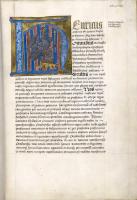
On 1st September 1532 Anne Boleyn [aged 31] was created 1st Marchioness Pembroke with Henry VIII [aged 41] performing the investiture at Windsor Castle [Map]. The Letter of Creation [Harley 303.1; see image] using the Latin 'marchionisse Penbrochie' i.e. "Marchioness of Pembroke". It isn't clear whether the Letter of Creation is a single page - we note the absence of any description of whether the title is to descend to her heir's, male, legitimate, otherwise. We also note the first letter contains Anne's emblem of a 'falcon on a stump' although Anne's falcon was white - age may have affected the colour of the Letter.
Thomas Boleyn 1st Earl Wiltshire and Ormonde [aged 55], Charles Brandon 1st Duke of Suffolk [aged 48], Thomas Howard 3rd Duke of Norfolk [aged 59], Eleanor Paston Countess Rutland [aged 37], Jean Dinteville, Archbishop Edward Lee [aged 50], Bishop John Stokesley [aged 57] were present.
Bishop Stephen Gardiner [aged 49] read the Patent of Creation.
Mary Howard Duchess Richmond and Somerset [aged 13] carried Anne's train replacing her mother Elizabeth Stafford Duchess Norfolk [aged 35] who had been banished from Court. Anne and Mary were cousins.
Charles Wriothesley [aged 24] attended.
Jean Dinteville: he was appointed Ambassador to England. Around 1532 Jean Dinteville posed for Holbein's painting The Ambassadors.
Archbishop Edward Lee: Around 1482 he was born to Richard Lee of Lee Magna. In 1531 he was appointed Archbishop of York. On 13th September 1544 he died.
Charles Wriothesley: On 8th May 1508 he was born to Thomas Wriothesley. After 24th November 1534 he was appointed Windsor Herald of Arms in Ordinary. On 25th January 1562 Charles Wriothesley died.


Annales of England by John Stow. 1st September 1532. The firste of September the Lady Anne Bolleine [aged 31] was made Marchionesse of Pembrooke at Windsore, and then was gyuen hir by the King, one thousande pounde by yeare, [out of the hishopricke of Durham].
Letters and Papers Foreign and Domestic Henry VIII 1532. 1st September 1532. 1274. Anne Boleyn [aged 31]. Creation as marchioness of Pembroke, and grants of land, annuities, &c. See Grants in September, Nos. 1—3.
2. "The true order of the ceremony of the creacion of the marchioness of Pembroke." Directions for the ceremony, which exactly correspond with the account which follows. Copy, temp. Jac. I., p. 1.
3. "Creacion of lady Anne, doughter to therle of Wilteshier, marquesse of Penbroke."
Sunday, 1 Sept. 1532, 24 Hen. VIII. The lady was conveyed by noblemen and the officers of arms at Windsor Castle to the King, who was accompanied by the dukes of Norfolk [aged 59] and Suffolk [aged 48] and other noblemen, and the ambassador of France. Mr. Garter bore her patent of creation; and lady Mary [aged 13], daughter to the duke of Norfolk, her mantle of crimson velvet, furred with ermines, and a coronet. The lady Marques, who was "in her hair," and dressed in a surcoat of crimson velvet, furred with ermines, with strait sleeves, was led by Elizabeth countess of Rutland [aged 37]1, and Dorothy countess of Sussex2. While she kneeled before the King, Garter delivered her patent, which was read by the bishop of Winchester [aged 49]. The King [aged 41] invested her with the mantle and coronet, and gave her two patents,—one of her creation, the other of £1,000 a year. She thanked the King, and returned to her chamber.
Gifts given by the lady Marques:—To Mr. Garter, for her apparel, £8; to the Office of Arms, £11. 13s. 4d. The King gave them £5.
Officers of Arms present:—Garter and Clarencieux, kings; Richmond, Carlisle, and Windsor, heralds; Rougecross, Portcullis, Bluemantle, and Guisnes, pursuivants.
P. 2.
5. Commission to Geo. Taylor, John Smith, and Wm. Brabzon, commissioners of the marchioness of Pembroke, to take possession of the lands granted to her.
Copy, p. 1.
6. Valuation of her lands.
Total of the lands of the lady Anne marchioness in Wales, over and above casualties not charged, £710 7s 10¾d, out of which she is charged to pay by the King's grants yearly, £199 5s 11d, "which the tallage or knowledge money will discharge for the time; and after that, the fines for the sessions and the customs which be not charged in the value will discharge them."
Sum of the lands in England: Corry Mallett, Soms., Hundesdon, and Estwyke, Herts, "lands late Philip Pary's, in Hundesdon," manors of Stansted, Roydon, Fylollyshall, and Cokkeshall, and Weston next Baldoke (value of each stated separately), 313l. 5s. 3¾d. Total for England and Wales by the last gift of the King, £1,023 13s 2¾d.
P. 1.
Note 1. Elizabeth appears to be a mistake for Eleanor.
Note 2. The Countess of Sussex at this time was Margaret Stanley Countess Sussex. The only Countess named Dorothy at this time was Dorothy Howard Countess Derby [aged 21]. Dorothy Neville Countess of Oxford did not marry, and become a Countess until 1536.

Letters and Papers Foreign and Domestic Henry VIII 1532. Grants in Sep 1532.
1. Anne Rocheford (Anne Boleyn [aged 31]), one of the daughters of Thomas earl of Wiltshire and Ormond [aged 55], keeper of the Privy Seal. Charter, granting her, in tail male, the title of marchioness of Pembroke. Witnesses not given [1 Sept.].— S.B. Pat. 24 Hen. VIII. p. 1, m. 26.
(2.) Two drafts of the preceding in R. O. in Wriothesley's hand, with witnesses as in the next charter.
2. Anne Rocheford, who was created marchioness of Pembroke on the 1st Sept. inst. Charter granting her and her heirs the prerogative and pre-eminence due to her title of marchioness in the realms of England and France. Witnesses: Edward archbp. of York; Stephen bp. of Winchester, the King's secretary; John bp. of London; Thomas duke of Norfolk [aged 59], treasurer of England; Charles duke of Suffolk [aged 48], steward marshal; Thomas earl of Wiltshire, keeper of the Privy Seal; John earl of Oxford [aged 61], the King's chamberlain; George earl of Shrewsbury [aged 64], steward of the King's household; Thomas Audeley [aged 44], knt., keeper of the Great Seal; William lord Sandys of Vynes [aged 62], chamberlain of the King's household; Walter Devereux lord Ferrers; William Fitzwilliam, treasurer of the King's household, and William Powlet, comptroller of the same, knts., and others. Windsor, 1 Sept. 24 Hen. VIII. — S.B. Pat. p. 1, m. 26.
(2.) Draft of the preceding in Wriothesley's hand in R. O.
3. Anne Rocheford, one of the daughters and heirs of Thomas earl of Wiltshire and Ormond, keeper of the Privy Seal, created marchioness of Pembroke by charter 1 Sept. 24 Hen. VIII. Annuity of £1,000. for life out of the issues of the honor, manor, or lordship of Hunnesdon, Herts, and of the manors of Stansted Abbot, Roydon, Bourehouse, Pisso, Filolls, and Coxhall, Herts and Essex; and of all Crown lands in co. Pembroke, and in Gilgarran, Emlyn, Diffrynbryan, Maynardove, Kenendrym, Llanstephan, Penryn, Oyesterlowe, Traynclynton, Westhaverforde, Llewelleston, Roche, Sayntismells, and Camrosse, S. Wales.— S B. (undated.) Pat. 24 Hen. VIII. p. 1, m. 25 (undated).
(2.) Fair copy of the preceding in R. O. Large paper, pp. 2.
Chronicle of Edward Hall [1496-1548]. 1st September 1535. The King being in progress this summer, was advertised that the Pope and the French King, had appointed to meet at Marseilles in Provence, in the beginning of the next spring, wherefore the King like a wise and politic prince, thought it convenient to speak with the French King in his own person, before the Pope and he should come together, and to declare to him both the determination, of the Universities and Doctors concerning his matrimony, and also the general counsels, which ordained such causes, to be tried in the provinces and countries, where the doubt should rise, trusting that the French King should cause the Pope to incline to God's law, and to leave his own traditions and avoid dispensations, whereupon both the princes concluded, to meet in October following, between Calais and Boulogne. Wherefore the King of England sent out his letters, to his nobility, prelates, and servants, commanding them to be ready at Canterbury, the 26th day of September, to passe the Seas with him, for the accomplishing of the interview, between him and his brother the Frenche King. Many men were sorry to hear, that the King should pass the sea in winter, and especially in October, when the seas be rough, but their sayings letted not his purpose: for he marched forward from Ampthill to Windsor, where on Sunday being the first day of September, he created the lady Anne Boleyn [aged 34], Marchioness of Pembroke, and gave to her one thousand pound land by the year, and that solemnity finished, he rode to the College to Masse, and when the Masse was ended, a new league was concluded and sworn, between the King and the French King, Monsieur Pomoray the French Ambassador then being present. After which oath taken, Doctor Fox the King's almoner, made an eloquent oration in Latin, in praise of peace, love, and amity. Which done the trumpets blew, and the King returned to the Castle, where was kept a solemn feast. From thence the King removed to Greenwich, and so forward to Canterbury, where at the day appointed, he found ready furnished, all such as were commanded to pass the sea with him, well and richly adorned, both they and their servants.

After 1st September 1532 Thomas Cranmer [aged 43], whilst staying in Mantua, received a royal letter dated 1st September 1532 by which he was appointed Archbishop of Canterbury; he was ordered to return to England. Cranmer's appointment, supported, if not arranged, by the Boleyn family who he subsequently supported.
Letters and Papers Foreign and Domestic Henry VIII 1533. 22nd February 1533. Add. MS. 28,585, f. 222, B.M. 178. Dr. Ortiz to the Empress.
Letters have come from Flanders of 24 Jan., stating that the brief has been received, and will be notified. The Emperor sends to order it to be notified at once.
Eustace Chapuis writes from England that on Christmas Eve Master Abel and another preacher were let out of the Tower, where they were confined, with orders not to preach or write until five days after Easter (Pascua). The truce between England and Scotland came to an end on St. Andrew's Day (por Santandres), and the English have invaded Scotland in three places and done much damage, taking more than 300 prisoners.
The Scotch ambassador in England had returned. It is feared there will be war. The Emperor has sent the count of Cifuentes here as ambassador.
Since writing the above, letters have arrived from the ambassador in England, dated 9 Feb., stating that the brief has been notified in Flanders, and that the king of England has given the archbishopric of Canterbury to a chaplain [aged 43] of "this Ana [aged 32]," which has been taken ill by many. Bolonia, 22 Feb. 1533.
Sp., pp. 3. Modern copy.
Spanish Chronicle Chapter 8. How the King made a Chaplain of Anne's father Archbishop of Canterbury.

In 1533 Parliament, steered by Thomas Cromwell 1st Earl Essex [aged 48], passed the 1533 Buggery Act, formally known as An Acte for the punishment of the vice of Buggerie, in which buggery was punishable by death.
In 1553 the 1533 Buggery Act was repealed by Catholic Queen Mary I of England and Ireland [aged 36] who preferred such matters to be dealt with by Ecclesiastical Courts.


The History of William Marshal was commissioned by his son shortly after William’s death in 1219 to celebrate the Marshal’s remarkable life; it is an authentic, contemporary voice. The manuscript was discovered in 1861 by French historian Paul Meyer. Meyer published the manuscript in its original Anglo-French in 1891 in two books. This book is a line by line translation of the first of Meyer’s books; lines 1-10152. Book 1 of the History begins in 1139 and ends in 1194. It describes the events of the Anarchy, the role of William’s father John, John’s marriages, William’s childhood, his role as a hostage at the siege of Newbury, his injury and imprisonment in Poitou where he met Eleanor of Aquitaine and his life as a knight errant. It continues with the accusation against him of an improper relationship with Margaret, wife of Henry the Young King, his exile, and return, the death of Henry the Young King, the rebellion of Richard, the future King Richard I, war with France, the death of King Henry II, and the capture of King Richard, and the rebellion of John, the future King John. It ends with the release of King Richard and the death of John Marshal.
Available at Amazon in eBook and Paperback format.
In 1563 the 1553 repeal of the 1533 Buggery Act was rescinded by Queen Elizabeth I of England and Ireland [aged 29].


On 27th November 1835 James Pratt and John Smith were the last two men to be executed under the 1828 Offences Against the Person Act which had replaced the 1533 Buggery Act. They were hanged in front of Newgate Prison, London [Map].
The 1861 Offences against the Person Act reduced the act of buggery to a non-captital offence.
On 5th December 1640 Bishop John Atherton [aged 42] was hanged at St Stephen's Green, Dublin for offences against the 1533 Buggery Act a law he had pushed for in Ireland.
On 28th July 1540 Walter Hungerford 1st Baron Hungerford Heytesbury [aged 37] was beheaded at Tower Hill [Map]. He was attainted; Baron Hungerford of Heytesbury forfeit. He, together with his chaplain, a Wiltshire clergyman named William Bird, Rector of Fittleton and Vicar of Bradford, who was suspected of sympathising with the pilgrims of grace of the north of England, was attainted by act of parliament. Hungerford was charged with employing Bird in his house as chaplain, knowing him to be a traitor; with ordering another chaplain, Hugh Wood, and one Dr. Maudlin to practise conjuring to determine the king's length of life, and his chances of victory over the northern rebels; and finally with committing offences forbidden by the 1533 Buggery Act.
On 14th May 1631 Mervyn Tuchet 2nd Earl Castlehaven [aged 38] was beheaded at Tower Hill [Map]. His English titles Baron Audley of Heighley in Staffordshire and Baron Tuchet were forfeited as a result of his attainder. His son James [aged 14] succeeded to his Irish titles 3rd Earl Castlehaven, 3rd Baron Audley of Orier in England.
He was executed for the unnatural crime of sodomy in accordance with the 1533 Buggery Act, committed with his page Laurence (or Florence) FitzPatrick, who confessed to the crime and was executed; and assisting Giles Browning (alias Broadway), who was also executed, in the rape of his wife Anne, Countess of Castlehaven [aged 51], in which Lord Castlehaven was found to have participated by restraining her.
On 8th July 1810 the Bow Street police raided the White Swan on Vere Street in London that had been established as a molly-house in early 1810 by two men, James Cook and Yardley. Twenty-seven men were arrested, but the majority of them were released (perhaps as a result of bribe); eight were tried and convicted. On 27th September 1810 six men were pilloried at the Haymarket. On 7th March 1811 John Hepburn (46) and Thomas White (16), a drummer boy, were hanged at Newgate Prison, London [Map] for 'for the perpetration of an unnatural crime' against the 1533 Buggery Act despite not being present on the night of the raid.
In March 1533 Parliament enacted the Statute in Restraint of Appeals by which Henry VIII [aged 41] forbade all appeals to the Pope in Rome on religious or other matters, making the King the final legal authority in all such matters in England, Wales, and other English possessions. Considered to be a cornerstone of the English Reformation.
On 12th April 1533, Saturday, Easter Eve, Queen Anne Boleyn of England [aged 32] made her first appearance as Queen attending mass at the Queen's Closet at Greenwich Palace [Map]. She was accompanied by sixty ladies including Margaret "Madge" Shelton.
The Venetian Ambassdor reported... "This morning of Easter Eve, the Marchioness Anne went with the King [aged 41] to high mass, as Queen, and with all the pomp of a Queen, clad in cloth of gold, and loaded (carga) with the richest jewels; and she dined in public; although they have not yet proclaimed the decision of the Parliament.".
Chronicle of Edward Hall [1496-1548]. [12th April 1533] After the Kyng perceiuyng his newe wife Quene Anne, to bee greate with childe, caused all officers necessary, to bee appoynted to her, and so on Easter cue, she went to her Closet openly as Quene, with all solempnitie, and then the Kyng appoynted the daie of her Coronacion, to bee kept on Whitsd Sondaie next folowyng, and writynges wer sent to all Shriues, to certifie the names of menne of fourtie pounde, to receiue the Ordre of knighthod, or els to make a fine: the assessement of whiche fines, were appoynted to Thomas Cromwell, Master of the Kynges luell house, and counsailer to the kyng, and newly in his high fauour, whiche so pollitikely handeled the matter, that he raised of that sessyng of fines, a greate somme of money to the Kynges vse: Also the Kyng wrote letters to the citee of London, to prepare pagiauntes against thesame coronacion.
Chronicle of Edward Hall [1496-1548]. After the King perceiving his new wife Queen Anne [aged 32], to be great with child, caused all officers necessary, to be appointed to her, and so on Easter eve, she went to her Closet openly as Queen, with all solemnity, and then the King appointed the day of her Coronation, to be kept on Whit Sunday next following, and writings were sent to all Shires, to certify the names of men of forty pound, to receive the Order of Knighthood, or else to make a fine: the assessment of which fines, were appointed to Thomas Cromwell, Master of the Kings Jewel House, and counsellor to the king, and newly in his high favour, which so politicly handled the matter, that he raised of that seizing of fines, a great sum of money to the Kings use. Also the King wrote letters to the city of London, to prepare pageants against the same coronation.
Wriothesley's Chronicle [1508-1562]. 12th April 1533. Memorandum: the 12th day of Aprill, Anno Domini 1533, beinge Easter eaven, Anne Bulleine [aged 32], Marques of Pembroke,d was proclaymed Queene at Greenewych, and ofired that daie in the Kinges Chappell as Queene of England.e
Note d. Anne Boleyn was raised to the dignity of Marchioness of Pembroke on Sunday, September 1st, 1532, at Windsor Castle, an honour which had never before been conferred on any unmarried female.
Note e. She had been some months preriously married to Henry VIII in great privacy by Dr. Rowland Lee [aged 46], afterwards Bishop of Lichfield and Coyentry, but whether the marriage took place, as Sanders says, November 14th, 1532, on their arrival at Dover from France, or was deferred, as Cranmer [aged 43] [?] supposed, to January 25th, 1533, still remains uncertain.
The Deeds of the Dukes of Normandy
The Gesta Normannorum Ducum [The Deeds of the Dukes of Normandy] is a landmark medieval chronicle tracing the rise and fall of the Norman dynasty from its early roots through the pivotal events surrounding the Norman Conquest of England. Originally penned in Latin by the monk William of Jumièges shortly before 1060 and later expanded at the behest of William the Conqueror, the work chronicles the deeds, politics, battles, and leadership of the Norman dukes, especially William’s own claim to the English throne. The narrative combines earlier historical sources with firsthand information and oral testimony to present an authoritative account of Normandy’s transformation from a Viking settlement into one of medieval Europe’s most powerful realms. William’s history emphasizes the legitimacy, military prowess, and governance of the Norman line, framing their expansion, including the conquest of England, as both divinely sanctioned and noble in purpose. Later chroniclers such as Orderic Vitalis and Robert of Torigni continued the history, extending the coverage into the 12th century, providing broader context on ducal rule and its impact. Today this classic work remains a foundational source for understanding Norman identity, medieval statesmanship, and the historical forces that reshaped England and Western Europe between 800AD and 1100AD.
Available at Amazon in eBook and Paperback format.
Letters and Papers Foreign and Domestic Henry VIII 1533. 15th April 1533. 351. On Saturday, Easter Eve, dame Anne [aged 32] went to mass in Royal state, loaded with jewels, clothed in a robe of cloth of gold friese. The daughter [aged 14] of the duke of Norfolk [aged 60], who is affianced to the duke of Richmond [aged 13], carried her train; and she had in her suite sixty young ladies, and was brought to church, and brought back with the solemnities, or even more, which were used to the Queen. She has changed her name from Marchioness to Queen, and the preachers offered prayers for her by name. All the world is astonished at it for it looks like a dream, and even those who take her part know not whether to laugh or to cry. The King is very watchful of the countenance of the people, and begs the lords to go and visit and make their court to the new Queen, whom he intends to have solemnly crowned after Easter, when he will have feastings and tournaments; and some think that Clarencieux went four days ago to France to invite gentlemen at arms to the tourney, after the example of Francis, who did so at his nuptials. I know not whether this will be before or after, but the King has secretly appointed with the archbishop of Canterbury that of his office, without any other pressure, he shall cite the King as having two wives; and upon this, without summoning the Queen, he will declare that he was at liberty to marry as he has done without waiting for a dispensation or sentence of any kind.
Calendar of State Papers of Spain. 15th April 1533. 1061. Eustace Chapuys [aged 43] to the Emperor [aged 33].
On Saturday, the eve of Easter, Lady Anne went to mass in truly Royal state, loaded with diamonds and other precious stones, and dressed in a gorgeous suit of tissue, the train of which was carried by the daughter [aged 34] of the duke of Norfolk [aged 80], betrothed to the Duke of Richmond. She was followed by numerous damsels, and conducted to and from the church [Map] with the same or perhaps greater ceremonies and solemnities than those used with former Queens on such occasions. She has now changed her title of marchioness for that of Queen, and preachers specially name her so in their church prayers. At which all people here are perfectly astonished, for the whole thing seems a dream, and even those who support her party do not know whether to laugh or cry at it. The King is watching what sort of mien the people put on at this, and solicits his nobles to visit and pay their court to his new Queen, whom he purposes to have crowned after Easter in the most solemn manner, and it is said that there will be banqueting and tournaments on the occasion. Indeed some think that Clarence, the king-at-arms who left for France four days ago, is gone for the purpose of inviting knights for the tournament in imitation of the Most Christian King when he celebrated his own nuptials. I cannot say whether the coronation will take place before or after these festivities, but I am told that this King has secretly arranged with the archbishop of Canterbury [aged 63], that in virtue of his office, and without application from anyone he is to summon him before his court as having two wives, upon which, without sending for the Queen, he (the Archbishop) will declare that the King can lawfully marry again, as he has done, without waiting for a dispensation, for a sentence from the Pope, or any other declaration whatever.


On 16th April 1533, Wednesday, Catherine of Aragon Queen Consort England [aged 47] was demoted from Queen to Princess.

Calendar of State Papers of Spain. 15th April 1533. 1061. Eustace Chapuys [aged 43] to the Emperor [aged 33].
On Wednesday the said Duke [aged 60], and the others of whom I wrote to Your Majesty in my last despatch, called upon the Queen [aged 47] and delivered their message, which was in substance as follows: "She was to renounce her title of Queen, and allow her case to be decided here, in England. If she did, she would confer a great boon on the kingdom and prevent much effusion of blood, and besides the King [aged 41] would treat her in future much better than she could possibly expect." Perceiving that there was no chance of the Queen's agreeing to such terms, the deputies further told her that they came in the King's name to inform her that resistance was useless (quelle se rompist plus la teste), since his marriage with the other Lady had been effected more than two months ago in the presence of several persons, without any one of them having been summoned for that purpose. Upon which, with much bowing and ceremony, and many excuses for having in obedience to the king's commands fulfilled so disagreeable a duty, the deputies withdrew. After whose departure the lord Mountjoy [aged 55], the Queen's chamberlain, came to notify to her the King's intention that in future she should not be called Queen, and that from one month after Easter the King would no longer provide for her personal expenses or the wages of her servants. He intended her to retire to some private house of her own, and there live on the small allowance assigned to her, and which, I am told, will scarcely be sufficient to cover the expenses of her household for the first quarter of next year. The Queen resolutely said that as long as she lived she would entitle herself Queen; as to keeping house herself, she cared not to begin that duty so late in life. If the King thought that her expenses were too great, he might, if he chose, take her own personal property and place her wherever he chose, with a confessor, a physician, an apothecary, and two maids for the service of her chamber; if that even seemed too much to ask, and there was nothing left for her and her servants to live upon, she would willingly go about the world begging alms for the love of God.
Though the King is by nature kind and generously inclined, this Anne has so perverted him that he does not seem the same man. It is, therefore, to be feared that unless Your Majesty applies a prompt remedy to this evil, the Lady [aged 32] will not relent in her persecution until she actually finishes with Queen Catharine, as she did once with cardinal Wolsey, whom she did not hate half as much. The Queen, however, is not afraid for herself; what she cares most for is the Princess [aged 17].
Calendar of State Papers of Spain. 15th April 1533. 1061. Eustace Chapuys [aged 43] to the Emperor [aged 33].
The name and title which the King [aged 41] wishes the Queen [aged 47] to take, and by which he orders the people to call her, is the old dowager princess (la vielle et vefve princesse). As to princess Mary [aged 17] no title has yet been given to her, and I fancy they will wait to settle that until the Lady [aged 32] has been confined (que la dame aye faict lenfant).
On 23rd May 1533 Thomas Cranmer Archbishop of Canterbury [aged 43] declared the marriage of Henry VIII [aged 41] and Catherine of Aragon [aged 47] invalid.
Letters and Papers Foreign and Domestic Henry VIII 1533. 23 May [1533]. R. O. 525. John Tregonwell to Cromwell.
My lord of Canterbury [aged 43] gave sentence this day at 11 o'clock in the great cause of matrimony; has declared it to be against the law of God, and has divorced the King from the noble lady Katharine. He has used himself in this matter very honourably, and all who have been sent hither on the King's behalf have acted diligently and towardly. Sentence shall be given for the King's second contract of matrimony before the Feast of Pentecost. The process is partly devised. 23 May.
Hol., p. 1. Add.: Of the Council. Endd.
Letters and Papers Foreign and Domestic Henry VIII 1533. 23 May [1533]. R. O. 526. Thomas Bedyll to Cromwell.
Sentence of divorce was given this day, 23 May, at 10 a.m., in open court, without contradiction. I have written this that you may signify it to the King if you be at court, that the King may have knowledge of it to his satisfaction. This day was appointed for the sentence at the last court. The King's commands, written to the Archbishop by Thirleby, were declared to my company here and to me, and we have done as much as the shortness of the time will allow. My servant comes post, having new horses at St. Alban's and Barnet. Dunstable, 23 May, after 10 o'clock a.m.
Hol., p. 1. Add.: Of the Council.
Letters and Papers Foreign and Domestic Henry VIII 1533. 23 May [1533]. R. O. St. P. I. 396. Cranmer's Letters, 243. 528. Cranmer to Henry VIII.
Today, 23 May, I have given sentence in your great and weighty cause. I send a copy thereof by the bearer, Ric. Watkyns. As I was advertised by the letters of Mr. Thurlesbye, your chaplain, that it was your pleasure that I should cause your counsel to conceive a procuracy concerning the second marriage, I have sent the letters to them, and required them to act accordingly. I desire to know your pleasure concerning the second matrimony as soon as you and your counsel are perfectly resolved therein, for the time of the coronation is so near at hand that the matter requires good expedition. Dunstaple, 23 May. Signed.
P. 1. Add. Endd.
Letters and Papers Foreign and Domestic Henry VIII 1533. [23rd May 1533]. R. O. Rym. XIV. 462. 529. The Divorce.
Notification of the sentence1 of divorce between Hen. VIII. and Katharine of Arragon pronounced by archbishop Cranmer. Dated in the monastery of Dunstable, 23 May 1533. Present, Gervase prior of the said monastery, Simon Haynes, S.T.P., John Newman, M.A., and others.
Two copies; one badly and the other slightly mutilated.
2. Part of the articles exhibited before Cranmer at Dunstable in favour of the divorce. Lat.
3. Proceedings of the court held before Cranmer at Dunstable, 10, 12, 16, 17, and 23 May. Copy, pp. 20.
4. Opinion touching Katharine's jointure. The matrimony between the King and the lady Katharine being dissolved by sufficient authority, all pactions made for the same marriage are also dissolved and of none effect. That ie, the jointure shall return again to the King's use, and the money paid to him by her friends shall be repaid to her.
The matrimony being dissolved, the lady Katharine shall return to the commodity and profits of the first matrimony, and the pactions of the same, made with prince Arthur, and shall enjoy the jointure assigned to her thereby, notwithstanding any quittance or renunciation made in the second pact. For as these renunciations were agreed unto for a sure trust and hope to enjoy the commodities and pactions of the second marriage, which now she cannot enjoy, unless without ult she should be deprived of both, equity and right restore her to the first. This, we think, by our poor learning, to be according both to canon and civil law, unless there are any other treaties and pactions which we have not seen.
For the more clear declaration hereof, we think that when a matrimony is dissolved, if there is no paction of a further bond, then by law the money paid by the woman or her friends shall be restored to her, and the jointure return to the man and his heirs. In this case there is an especial pact that she shall enjoy her jointure durante vita [i.e. during life], so that the said jointure is due to her by the pact, and the money paid by her and her friends by the law.
In Sampson's hand, pp.2. Endd.: A dissolution to be made of the matrimony of the lady Katharine, dowager, with the jointure thereto belonging, and restitution to the jointure had by prince Arthur.
Note 1. The sentence itself, as recited in the patent of 6 June (see Grants in June 1533, No. 7.), is printed both in Burnet and in Wilkins.
Chronicle of Abbot Ralph of Coggeshall
The Chronicle of Abbot Ralph of Coggeshall (Chronicon Anglicanum) is an indispensable medieval history that brings to life centuries of English and European affairs through the eyes of a learned Cistercian monk. Ralph of Coggeshall, abbot of the Abbey of Coggeshall in Essex in the early 13th century, continued and expanded his community’s chronicle, documenting events from the Norman Conquest of 1066 into the tumultuous reign of King Henry III. Blending eyewitness testimony, careful compilation, and the monastic commitment to record-keeping, this chronicle offers a rare narrative of political intrigue, royal power struggles, and social upheaval in England and beyond. Ralph’s work captures the reigns of pivotal figures such as Richard I and King John, providing invaluable insights into their characters, decisions, and the forces that shaped medieval rule. More than a simple annal, Chronicon Anglicanum conveys the texture of medieval life and governance, making it a rich source for scholars and readers fascinated by English history, monastic authorship, and the shaping of the medieval world.
Available at Amazon in eBook and Paperback format.
Ellis' Letters. This donne, and after our reiornynga1 home agayne, the Kings Highnes prepared al thyngs convenient for the Coronacion of the Queene, whiche also was after suche a maner as foloweth.
a1. re-journying.

On 25th June 1533 Mary Tudor Queen Consort France [aged 37] died at Westhorpe, Suffolk [Map]. She was buried at the monastery of St. Edmondsbury [Map] on 22nd July 1533. Her daughter Frances [aged 15] was Chief Mourner.

On 21st July 1533 Mary Tudor Queen Consort France [deceased] was buried at Bury St Edmund's Abbey [Map]. Catherine Willoughby [aged 14] was one of the chief mourners. She, Catherine, married Mary's former husband Charles Brandon 1st Duke of Suffolk [aged 49], who held her wardship, ten weeks later.
Wriothesley's Chronicle [1508-1562]. 25th June 1533. This yeare, on Midsommer eaven, died the French Queene [aged 37],a sister to the Kinge [aged 41], and wife to the Duke of Suffolke [aged 49], and was buried at Sainct Edmondesburie in Suffolke.
Note a. Mary, sister to Henry VIII and Queen Dowager of France, died at the manor of Westhorpe [Map], in Suffolk, on the 23rd June, and was buried (July 22) at the monastery of St. Edmondsbury [Map], where her corpse was found in a perfect state on September 6th, 1784, being 251 years after her interment.
During the dissolution, around 4th November 1539, the remains of Mary Tudor Queen Consort France were reburied at St Mary's Church, Bury St Edmunds.
On 6th September 1784 the grave of Mary Tudor Queen Consort France was opened and locks of her hair were taken by a number of people. In, or before, 1786 one lock was given to Horace Walpole [aged 66] by Jane Georgiana Fauquier.


On 7th September 1533 Queen Elizabeth I of England and Ireland was born to Henry VIII [aged 42] and Queen Anne Boleyn of England [aged 32].
On 10th September 1533 the future Elizabeth I was christened at the Palace of Placentia, Greenwich [Map].
Gertrude Blount Marchioness of Exeter [aged 30], Archbishop Thomas Cranmer [aged 44] and Margaret Wotton Marchioness Dorset [aged 46] were Godparents.
Henry Bourchier 2nd Earl Essex 3rd Count of Eu carried the covered gilt basin. Charles Brandon 1st Duke of Suffolk [aged 49] escorted the Dowager Duchess of Norfolk [aged 56]. Henry Grey 1st Duke of Suffolk [aged 16] carried the Salt. Elizabeth Stafford Duchess Norfolk [aged 36] carried the Chrisom. Agnes Tilney Duchess Norfolk carried Queen Elizabeth I of England and Ireland. Henry Courtenay 1st Marquess Exeter [aged 37] carried a taper of virgin wax.
Edward Stanley 3rd Earl of Derby [aged 24], Thomas Boleyn 1st Earl Wiltshire and Ormonde [aged 56], Henry Grey 4th Earl Kent [aged 38] and George Boleyn Viscount Rochford [aged 30] supported the train of the mantle.
Thomas Howard 3rd Duke of Norfolk [aged 60], William Howard 1st Baron Howard [aged 23], Thomas Howard [aged 22] and John Hussey 1st Baron Hussey of Sleaford [aged 68] carried the canopy.


Wriothesley's Chronicle [1508-1562]. 7th September 1533. Memorandum, the viith daie of September, 1533, being Sonndaie, Queene Anne [aged 32] was brought to bedd of a faire daughterc at three of the clocke in the after noune;d and the morrowe after, being the daie of the Nativitie of Our Ladie, Te Deum was songe solempnlie at Powles, the Major and Aldermen being present, with the head craftes of the Cittie of London.
Note c. The Princess Elizabeth, afterwards Queen of England.
Note d. Between three and four of the clock at afternoon. — Stow, p. 569.
Extracts from The Life of Anne Boleyn. [7th September 1533] On the other part, of her body she [Queen Anne Boleyn of England [aged 32]] bare him a daughter on the seventh12 of September, to the great joy then of all his people, both for that the king had now issue legitimate of his own body, and for the hope of more after. The king also he expressed his joy for that fruit sprung of himself, and his yet more confirmed love towards her, caused her child openly and publickly to be proclaimed Princess Elizabeth at the solemnity of her baptising, preferring his younger daughter legitimate before the elder in unlawful wedlock.
Note 12. So it is in the Calendars prefixed to the Book of Common Prayer in Queen Elizabeth's reign. Lord Herbert says it was the sixth, Sanders the eighth, and Archbishop Cranmer the thirteenth or fourteenth.
Letters and Papers Foreign and Domestic Henry VIII 1533. 10 Sept [1533]. Vienna Archives. 1112. Chapuys [aged 43] to Charles V.
Will not write at length, having only been informed of this courier at the moment of his departure; besides there is nothing important since his last. Has only to mention that on Sunday last, the eve of Our Lady (7 Sept.), about 3 p.m., the King's mistress (amie) [Queen Anne Boleyn of England [aged 32]] was delivered of a daughter, to the great regret both of him and the lady, and to the great reproach of the physicians, astrologers, sorcerers, and sorceresses, who affirmed that it would be a male child. But the people are doubly glad that it is a daughter rather than a son, and delight to mock those who put faith in such divinations, and to see them so full of shame. The mayor, aldermen, masters of trades, and others of the city, are called to be present this afternoon at the christening. The French ambassadors are also summoned. The christening is to be at Greenwich. The godmothers are to be the mother-in-law of the duke of Norfolk and the marchioness of Exeter. The archbishop of Canterbury is to be godfather. The bishop of London is to officiate. She is to be called Mary, like the Princess; which title, I hear in many quarters, will be taken from the true princess and given to her. If it be so. Misfortune manages well; and God has forgotten him entirely, hardening him in his obstinacy to punish and ruin him; of which there is the greatest probability in the world, seeing the indignation of the people, both small and great, which grows every day, and nothing could better augment it than defrauding the said Princess of her title; for she is, as she ought to be, adored by everybody. But the said indignation, like other things, may grow cool in time, so that it should be used in season; yet I think it so rooted and so just that the people will not forget it, or change, at least the most part of them.
It is appointed for me to be at Court tomorrow morning with the King's Council to take resolution about the restitution of the goods seized by the Lubeckers from the Spaniards. London, 10 Sept. 1533.
Fr., from a modern copy, pp. 4.
Wriothesley's Chronicle [1508-1562]. 10th September 1533. And the Wednesdaie next followinge,a the most honorable yonge ladie was christened at Greenewychb in the Friers Church, all the noble lordes and ladies doing service about the christening in their Elizabeth. offices after their degrees, which was a goodlie sight to see, and their shee had geaven her to name Elizabeth; my Lord Thomas Cranmer [aged 44], Archbishopp of Canterberie, godfather; the old Dutchesse of Northfolke [aged 56],c wydowe, my Ladie Marques of Dorcett [aged 46], widowe, godmothers at the fonte, and my Ladie Marques of Exceter [aged 30] godmother at the bishoppinge;d and the morrowe after their was fiers made in London, and at everie fire a vessell of wyne for people to drinke for the said solempnitie.
Note a. September 10.
Note b. Compare this with the accomit of the maimer of the chrifltening "of the Lady Elisabeth" in MS. Harleian. Cod. 643, fol. 128-80.
Note c. The Dowager Duchess of Norfolk carried the infant, in a mantle of purple velvet, with a long train furred with ermine. Hall's "Chronicle" ed. 1809, p. 806.
Note d. Immediately after the christening the Archbishop confirmed the infant princess, the Marchioness of Exeter being godmother.
Spanish Chronicle Chapter 21. How Queen Anne was delivereded of a daughter, and the rejoicings which took place.
On 28th November 1533 Henry Fitzroy 1st Duke Richmond and Somerset [aged 14] and Mary Howard Duchess Richmond and Somerset [aged 14] were married. She by marriage Duchess of Richmond and Somerset. Another coup for the Howard Family especially in view of Henry Fitzroy being considered by some as a possible heir in view of Anne Boleyn having given birth to a girl. She the daughter of Thomas Howard 3rd Duke of Norfolk [aged 60] and Elizabeth Stafford Duchess Norfolk [aged 36]. He the illegitmate son of King Henry VIII of England and Ireland [aged 42] and Elizabeth "Bessie" Blount Baroness Clinton and Tailboys [aged 35]. They were third cousins.
In March 1534 Parliament enacted the First Act of Succession. The Act made Queen Mary I of England and Ireland [aged 18] illegitimate and Queen Elizabeth I of England and Ireland the heir to King Henry VIII [aged 42]. The Act also required all subjects, if commanded, to swear an oath to recognize this Act as well as the king's supremacy.
William of Worcester's Chronicle of England
William of Worcester, born around 1415, and died around 1482 was secretary to John Fastolf, the renowned soldier of the Hundred Years War, during which time he collected documents, letters, and wrote a record of events. Following their return to England in 1440 William was witness to major events. Twice in his chronicle he uses the first person: 1. when writing about the murder of Thomas, 7th Baron Scales, in 1460, he writes '… and I saw him lying naked in the cemetery near the porch of the church of St. Mary Overie in Southwark …' and 2. describing King Edward IV's entry into London in 1461 he writes '… proclaimed that all the people themselves were to recognize and acknowledge Edward as king. I was present and heard this, and immediately went down with them into the city'. William’s Chronicle is rich in detail. It is the source of much information about the Wars of the Roses, including the term 'Diabolical Marriage' to describe the marriage of Queen Elizabeth Woodville’s brother John’s marriage to Katherine, Dowager Duchess of Norfolk, he aged twenty, she sixty-five or more, and the story about a paper crown being placed in mockery on the severed head of Richard, 3rd Duke of York.
Available at Amazon in eBook and Paperback format.
Chronicle of Edward Hall [1496-1548]. In this parliament also was made the Act of Succession for the surety of the crown, to the which every person being of lawful age should be sworn upon the pain expressed in that Act, as in the same you may most evidently see.
Extracts from The Life of Anne Boleyn. [30th March 1534] And after this again, at the prorogation of the parliament, the thirtieth of March13, he had every lord, knight, and burgess sworn to an act of succession, and their names subscribed to a schedule fixed to the same statute, where it was enacted, that his daughter princess Elizabeth, he having none other heir male, should succeed him to the crown. And after were commissioners sent to all parts of the realm to take the like oath of all men and women in the land. Neither also were her virtues only enclosed in her own breast or shut up in her own person. She had procured to her chaplains14, men of great learning and of no less honest conversing, whom she with hers heard much, and privately she heard them willingly and gladly to admonish her, and them herself exhorted and encouraged so to do. Also at the first, she had in court drawn about her, to be attending on her, ladies15 of great honour, and yet of greater choice for reputation of virtue, undoubted witnesses of her spousal integrity, whom she trained upon with all commendations of well ordered government, though yet above all by her own example she shined above them all, as a torch that all might take light of, being itself still more bright. Those that have seen at Hampton Court the rich and exquisite works by her self, for the greater part wrought by her own hand and needle, and also of her ladies, esteem them the most precious furniture that are to be accounted amongst the most sumptuous that any prince may be possessed of. And yet far more rich and precious were those works in the sight of God which she caused her maids and those about her daily to work in shirts and smocks for the poor. But not staying here her eye of charity, her hand of bounty passed through the whole land; each place felt that heavenly flame burning in her; all times will remember it, no place leaving for vain flames, no times for idle thoughts. Her ordinary amounted to fifteen hundred pounds at the least, yearly, to be bestowed on the poor. Her provisions of stock for the poor in sundry needy parishes were very great. Out of her privy purse went not a little to like purposes. To Scholars in exhibition very much: so as in three quarters of a year her alms was summed to fourteen or fifteen thousand pounds.
Note 13. A. D. 1534.
Note 14. Shaxton and Latimer.
Note 15. To every one of these she gave a little book of devotions, neatly written on vellum, and bound in covers of solid gold enamelled, with a ring to each cover to hang it at their girdles for their constant use and meditation.
One of these little volumes, traditionally said to have been given by the queen when on the scaffold to her attendant, one of the Wyatt family, and preserved by them through several generations, was described by Vertue as being seen by him in the possession of Mr. George Wyatt of Charterhouse Square, in 1721. Vide Walpole's Miscellaneous Antiquities, printed at Strawberry Hill, 1772, No. II. p. 13. It was a diminutive volume, consisting of one hundred and four leaves of vellum, one and seven-eighths of an inch long by one and five-eights of an inch broad; containing a metrical version of parts of thirteen Psalms: and bound in pure gold richly chased, with a ring to append it to the neck-chain or girdle. It was in Mr. Triphook's possession in the year 1817.
On 20th April 1534 Elizabeth "Holy Maid of Kent" Barton [aged 28] was hanged for treason at Tyburn [Map]. Five of her supporters were hanged alongside her:
Edward Bocking, Benedictine Monk of Christ Church, Canterbury
John Dering, Benedictine Monk
Henry Gold, Priest
Hugh Rich, Franciscan Friar
Richard Risby, Franciscan Friar
Chronicle of Edward Hall [1496-1548]. This yere also, one Pauier town clerk of the City of London, hanged himself, which surely was a man, that in nowise could abide to here that the Gospel should be in English, and I myself heard him once say to me and other that were by, swearing a great oath, that if he thought the King's highness, would set forth the scripture in English, and let it be read of the people by his authority, rather then he would so long live he would cut his own throat, but he broke promises, for as you have heard he hanged himself: but of what mind and intent he so did, God judge. About this season was espied a new found Saint, and holy Hypocrite, called the Maid of Kent, which by the great labour, diligence, and pain taking of the Archbishop of Canterbury, and the Lord Cromwell, and one called Hugh Latimer a priest (which shortly after was made bishop of Worcester,) the juggling and crafty deceit of this maid, was manifested and brought to light: whereupon after diverse examinations, she with all her adherents, were in November brought to the Star Chamber: the names of them all shall follow, first Elizabeth Barton, which was she that called herself the Holy Maid of Kent, Richard Master priest person of Aldington in the County of Kent, Edward Bocking doctor in Divinity, Monk of Canterbury, Richarde Dering Monk also of Canterbury, Edward Twaites gentleman, Thomas Laurece register to the Archdeacon of Canterbury, Henry Gold person of Aldermary bachelor of Divinity, Hugh Riche Friar Observant, and Richard Risby, Thomas Gold gentleman. These all being in the Star Chamber, before diverse of the King's Counsel, confessed their feigned hypocrisy, and dissimulated sanctity, and traitorous purposes and intents, and then was there by the King's counsel adjudged, to stand at Paul's Crosse, where they with their own hands, should severally deliver each of them to the preacher that should be appointed, a bill declaring their subtle, crafty and superstitious doings. Which thing the next Sunday after, they all above rehearsed, standing on a stage at Paul's Cross, made for that purpose did accomplish: but for their treasons committed, the matter thereof was respited to the Parliament next following, where all they above said, with other as after ye shall hear, were attainted by Act of Parliament, and suffered death as traitors, by hanging, drawing, and quartering at Tyburn.
Wriothesley's Chronicle [1508-1562]. 20th April 1534. This yeare, the 20th day of Aprill, beinge Mundaye, 1534, the Holie Maide of Kent [aged 28], beinge a nun of Canterburie,b two munckes of Canterburie of Christes Churche, one of them called Doctor Bockinge, two gray freeres observantes, and a priest, were drawne from the Tower of London to Tiburn, and there hanged,c and after cutt downe and their heades smitten of, and two of their heades were sett on London Bridge, and the other fower at diverse gates of the cittie.
Note b. In the priory of St Sepulchre.
Note c. The persons executed were Elizabeth Barton, Richard Master, parson of Aldington, Dr. Bocking, Richard Dering, Henry Gold, a London minister, and Richard Risby.
After 1534 Parliament enacted the Treason Act made it treason, punishable by death, to not swear an oath recognising the King Henry VIII [aged 42] as the "... Only Head of the Church of England...".
On 3rd November 1534 Parliament enacted the First Act of Supremacy by which Henry VIII [aged 43] and his heirs were declared to be Supreme Head of the Church of England.
Chronicle of Edward Hall [1496-1548]. 3rd November 1533. In this year the third day of November the King's Highness held his high court of Parliament, in the which was concluded and made many and sundry good, wholesome, and godly statutes: but among all one special statute, which authorised the King's highness to be Supreme Head of the Church of England, by the which the Pope with all his College of Cardinals abolished, with all their pardons and indulgences was utterly abolished out of this realm, God be everlastingly praised therefore. In this Parliament also was given to the King's highness the first fruits and tenths of all dignities and spiritual promotions. And in the end of the same Parliament the King's Majesty most graciously grannted (and willed it by the same Parliament to be established) his most gracious and general free pardon.
Spanish Chronicle Chapter 9. How the prelates swore to the King as Head of the Church.1
Letters and Papers Foreign and Domestic Henry VIII 1535. 14th January 1535. 48. Nothing is known about news from Ireland, except that about three days ago Cromwell delivered a good sum of money to two Irishmen, and said to some who were present that they had already taken one of the principal of those who had caused trouble there, and that Kildare would be taken and brought hither in a few days. Cromwell also mentioned that the king of France was raising lanceknights about Lorraine and the county of Montbeliard. Kildare has long been threatened, and will take as good care of himself as hitherto. It is true many fear that his men may betray him if he has not money to maintain them. I am told by a good man that about 60 English harquebusiers had entered some tower, but were surprised and driven out by Kildare, leaving their arms behind. I hear the King and Council are much disappointed at hearing nothing from France on the subject of the negotiations between the King and the Admiral [aged 43], and they fear some intelligence with your Majesty. The King hopes that at an interview with Francis, which he reckons will be very soon, he will break off all other understandings. And to persuade Francis the better to this assembly, in order that he may not excuse himself, as last year, I am told that the King has come to no determination on any of the matters proposed by the Admiral, but put off his answer till the meeting. That was the answer given (among other things) as to the marriage of this princess with the duke of Angouleme; which the Admiral, I am told, took very ill; and still worse what occurred at the feast the King gave him on the eve of his departure, when he, being seated next the Lady [aged 34], while they were dancing, she burst into a fit of incontrollable laughter without any occasion. The Admiral frowned, and said, "What, madam, do you laugh at me?" On which she excused herself by saying it was because the King had told her he was going to ask for the Admiral's secretary to amuse her, and that the King had met on the way a lady who made him forget the matter. I don't know if the excuse was accepted as satisfactory. The King, on the other hand, and the Lady were much disappointed that the Admiral showed no pleasure at any attention that was shown to him, even at the Tower of London and the Ordnance.
Spanish Chronicle Chapter 11. How the Carthusian martyrs died who would not take the oath.
Chronicle of Walter of Guisborough
A canon regular of the Augustinian Guisborough Priory, Yorkshire, formerly known as The Chronicle of Walter of Hemingburgh, describes the period from 1066 to 1346. Before 1274 the Chronicle is based on other works. Thereafter, the Chronicle is original, and a remarkable source for the events of the time. This book provides a translation of the Chronicle from that date. The Latin source for our translation is the 1849 work edited by Hans Claude Hamilton. Hamilton, in his preface, says: 'In the present work we behold perhaps one of the finest samples of our early chronicles, both as regards the value of the events recorded, and the correctness with which they are detailed; Nor will the pleasing style of composition be lightly passed over by those capable of seeing reflected from it the tokens of a vigorous and cultivated mind, and a favourable specimen of the learning and taste of the age in which it was framed.'
Available at Amazon in eBook and Paperback format.
On 4th May 1535 John Houghton [aged 48] was hanged, drawn and quartered.
Wriothesley's Chronicle [1508-1562]. And the 4th day of May [1535] followinge, being Tewsday in the Rogation week, the parties aforesayde were drawne from the Tower to Tybome [Map], and there had execution as afore is written, savinge the other priest called Jo. Ferne, who had his pardon delyvered him on the Tower Hill, and so was quitt.
Note a. It was with the full approral of his Council that Henry VIII took the resolution of executing the laws without mercy against such as impugned his spiritual authority.
Note b. Thomas Laurence, Prior of Hexham. — Stow.
Note c. Augustine Webster, Prior of "Bevall."— Stow.
Note d. Richard Reginalds, doctor, a monk of Sion.— Stow.
Note e. John Haile, Vicar of Isleworth.
Note f. Their heads and quarters were set on the gates of the City all sare one quarter, which was set on the Charterhouse at London.-Stow.
Letters and Papers Foreign and Domestic Henry VIII 1535. 5th May 1535. 666. The enormity of the case, and the confirmation it gives of the hopelessness of expecting the King to repent, compels me to write to your Majesty that yesterday there were dragged through the length of this city three Carthusians and a Bridgettine monk, all men of good character and learning, and cruelly put to death at the place of execution, only for having maintained that the Pope was the true Head of the universal Church, and that the King had no right in reason or conscience to usurp the sovereign authority over the clergy of this country. This they had declared to Cromwell, of their free will, about three weeks ago, in discharge of their own consciences and that of the King; and on Cromwell pointing out the danger, and advising them to reconsider it before the matter went further, they replied they would rather die a hundred times than vary. Eight days ago the duke of Norfolk sat in judgment on them, as the King's representative, assisted by the Chancellor and Cromwell, and the ordinary judges of the realm, and the knights of the Garter who had been at the feast (solempnite) of St. George. The monks maintained their cause most virtuously. No one being able to conquer them in argument, they were at last told that the statute being passed they could not dispute it, and that if they would not alter their language they were remanded till next day to hear their sentence. Next day, in the same presence, they were strongly exhorted to recant, and after a long discussion they were sentenced by lay judges and declared guilty of treason. Nothing was said about degrading them, or changing their habits. And the same fate has overtaken a priest for having spoken and written concerning the life and government of this King. It is altogether a new thing that the dukes of Richmond and Norfolk, the earl of Wiltshire, his son, and other lords and courtiers, were present at the said execution, quite near the sufferers. People say that the King himself would have liked to see the butchery; which is very probable, seeing that nearly all the Court, even those of the Privy Chamber, were there— his principal chamberlain, Norres, bringing with him 40 horses; and it is thought that he was of the number of five who came thither accoutred and mounted like Borderers (accoustrez et monstez comme ceulx des frontieres descosse), who were armed secretly, with vizors (?) before their faces, of which that of the duke of Norfolk's brother got detached, which has caused a great stir (que esbranle grandemen laffairez), together with the fact that while the five thus habited (vestuz et bouchez) were speaking all those of the Court dislodged.
Letters and Papers Foreign and Domestic Henry VIII 1535. 17th May 1535. 726. There is strange news here of the cruelty of the king of England to certain religious men. He caused them to be ripped up in each other's presence, their arms torn off (con farli scarpar le braccia), their hearts cut out and rubbed upon their mouths and faces; and this for having caused remorse (per haver fatto coscienza) to certain ecclesiastics who had sworn that the King was Head of the English Church, and not the Pope. Has seen a letter of the 5th from London, saying that on the 4th a prior of one of the three Charterhouses, two friars of the Order, a prior of Sion, and a priest, who refused to swear to the King's supremacy, were hanged without degradation, as rebels. They were dragged through the streets in carts, their heads and feet were to be placed on the public gates, and the rest of their bodies burnt. The whole city is displeased, as they were of exemplary and holy life. It was thought that 10 or 12 priests now in the Tower would be also executed for the same cause. The same letter states that this "Gherardo" (Fitzgerald) in Ireland has lost a strong castle, and retired with 50 horse to the bogs, where he is safe while the wet weather lasts; but when it changes it will be easy for the King to take him dead or alive, for most of his followers have returned to their allegiance.
Wriothesley's Chronicle [1508-1562]. 11th June 1535. This yeare, 11 June, were arreigned in the Kinges Benche at Westminster 3 munckes of the Charterhowsse of London, and there condempned of highe treason against the Kinge,b and judged to be drawne, hanged, bowelled, beheaded, and quartered; one of them was called Francis Nitigate,c another called Mr. Exmew,d prompter of the same place, and the third was called Mr. Middlemore, vicar of the same placee.
Note b. The treason against the King was for denying that Henry could be, in spiritual matters, the head of the Church.
Note c. Sebastian Nidigate. — Stow.
Note d. Thomas Exmew or de Exmouth.
Note e. Humphry Middlemore, Vicar of Exmonth.
Chronicle of Edward Hall [1496-1548]. 19th June 1535. And the nineteenth day of June was three monks of the Charterhouse hanged, drawn, and quartered at Tyborne [Map] and their quarters set up about London or denying the King to be Supreme Head of the Church. Their names were Exmewe, Myddlemore, and Nudigate. These men when they were arraigned at Westminster, behaved themselves very stiffly and stubbornly, for hearing their inditement read how traitorously they had spoken against the King's Majesty his crown and dignity, they neither blushed nor bashed at it, but very foolishly and hypocritically acknowledged their treason which maliciously they avouched, having no learning for their defence, but rather being asked diverse questions, they used a malicious silence, thinking as by their examinations afterward in the Tower of London it did appear, for so they said, that they thought those men which was the Lord Cromwell [aged 50] and other that there sat upon them in judgement to be heretics and not of the Church of God, and therefore not worthy to be either answered or spoken unto. And therefore as they deserved, they received as you have heard before.
Wriothesley's Chronicle [1508-1562]. 19th June 1535. The 19th day of June, beinge Saterday, the 3 muncks of the Charterhowsse, afore written, were drawne from the Tower to Tyborne, and there were executed accordinge to their judgment, and their heades and bodies hanged at diverse gates aboute the Cittie.
Wriothesley's Chronicle [1508-1562]. 4th June 1535. This yeare, the 4th day of June, were diverse Dutch men and weomen convicted for heresie to the number of 22,a of the which 14 were condemned, and two of them, that is to say a man and a woman, were brent in Smythfeild [Map] this day at three of the clocke in the aftemoone, and the other 12 were sent to diverse good townes in England, there to be brent; and the residue were converted and commaunded to departe out of this realme within 14 dayes into their countries, on payne of death at the Kings pleasure.
Note a. On the 25th May, in St. Paul's church at London, 19 men and 6 women, born in Holland, were examined, of whom 14 were convicted as Anabaptists.—Stow.
Letters and Papers Foreign and Domestic Henry VIII 1535. 5th June 1535. 826. About a score of Dutch Anabaptists have been taken here, of whom 13 have been condemned to the fire, and will be burnt in different parts of the kingdom, as the King and Cromwell have informed me. The others, who have been reconciled to the Church, will be sent into Flanders to the Queen to be dealt with as seems right. London, 5 June 1535.
Fr., from a modern copy, pp. 9.