


William of Worcester's Chronicle of England
William of Worcester, born around 1415, and died around 1482 was secretary to John Fastolf, the renowned soldier of the Hundred Years War, during which time he collected documents, letters, and wrote a record of events. Following their return to England in 1440 William was witness to major events. Twice in his chronicle he uses the first person: 1. when writing about the murder of Thomas, 7th Baron Scales, in 1460, he writes '… and I saw him lying naked in the cemetery near the porch of the church of St. Mary Overie in Southwark …' and 2. describing King Edward IV's entry into London in 1461 he writes '… proclaimed that all the people themselves were to recognize and acknowledge Edward as king. I was present and heard this, and immediately went down with them into the city'. William’s Chronicle is rich in detail. It is the source of much information about the Wars of the Roses, including the term 'Diabolical Marriage' to describe the marriage of Queen Elizabeth Woodville’s brother John’s marriage to Katherine, Dowager Duchess of Norfolk, he aged twenty, she sixty-five or more, and the story about a paper crown being placed in mockery on the severed head of Richard, 3rd Duke of York.
Available at Amazon in eBook and Paperback format.
Funeral of Catherine of Aragon is in 1536 Death of Catherine of Aragon and Anne Boleyn's Miscarriage.
On 29th January 1536 Catherine of Aragon [deceased] was buried at Peterborough Cathedral [Map] at a service for a Princess rather than Queen.
Bishop John Hilsey preached, alleging that, in the hour of death, she had acknowledged that she had never been Queen of England.
Eleanor Brandon Countess Cumberland [aged 17] was Chief Mourner. Henry VIII [aged 44] refused their daughter Mary [aged 19] permission to attend. On the same day Queen Anne Boleyn of England [aged 35] miscarried a child.
William Harvey [aged 26] attended; the only officer of arms to do so.
It isn't clear whether a monument was ever provided for her grave. If so, it was likely destroyed during the damage to Peterborough Cathedral during the English Civil War.
On 30th March 1558 Katherine's daughter Queen Mary I of England and Ireland [aged 42] wrote her will in which specified that "I will that the body of the vertuous Lady and my most dere and well-beloved mother of happy memory, Quene Kateryn, whych lyeth now buried at Peterborowh [Map], shall within as short tyme as conveniently yt may after my burial, be removed, brought and layde nye the place of my sepulture, in wch place I will my Executors to cawse to be made honorable tombs or monuments for a decent memory of us." See The History of Queen Mary I Appendix H
1895. The extant grave slab was installed in 1895 following a public appeal organised by Katharine Hare [aged 52], suffragette and wife of the bishop of Peterborough [aged 56], for "all Katharines of England to donate a penny to the cause" although it is also probable that the improvement of the grave was to attract more visitors to Peterborough Cathedral [Map].
Katharine Hare: In 1843 she was born to Thomas Hare. Before 1895 Bishop Lewis Clayton and she were married. In 1933 she died.


Letters and Papers. 21st January 1536. Vienna Archives. 141. Chapuys [aged 46] to Charles V.
Great preparation is made for the Queen's burial, which, as Cromwell sent to inform me, will be so magnificent that even those who see it all will hardly believe it. It is to take place on the 1st February. The chief mourner will be the King's niece [aged 17], daughter of the Duke of Suffolk [aged 52]; the Duchess of Suffolk [aged 16] will be the second; the third will be the wife of the Duke of Norfolk's son. of others there will be a great multitude; I think they mean to dress in mourning about 600 persons. Nothing is said yet of the lords who are to be present. Cromwell again, since I wrote to your Majesty, has twice sent to press on my acceptance the mourning cloth which the King wished to give me, and would gladly by this means bind me to be present at the interment, which the King greatly desires, but following the advice of the Queen Regent in Flanders, of the Princess, and of several good personages, I will not go, since they do not mean to bury her as Queen. I have refused the said cloth, saying simply that I did not do it of any ill intention, but only because I was already provided. The King had intended, or those of his Council, that solemn exequies should be made at the Cathedral Church of this city, and a number of carpenters and others had already been set to work to make preparations, but, since then, the whole thing has been broken off; I do not know if it was ever sincerely intended, or if it was only a pretence for the satisfaction of the people, to remove sinister opinions.


Calendar of State Papers of Spain. 21st January 1536. Wien, Rep. P.C., Fasc. 236, No. 3. Eustace Chapuys [aged 46] to the Emperor [aged 35].
From Flanders, where the Queen Recent still keeps him, my secretary has forwarded to me Your Majesty's letter of the 13th December last, which letter, as it refers to verbal instructions which my said secretary is to bring therefrom, I shall for the present delay to answer until his return. Meanwhile, I cannot but express my humble and most dutiful thanks for the singular kindness and regard with which Your Majesty has been pleased to signify that at the first distribution of ecclesiastical benefices I shall not be forgotten. This promise I hold as a most kind and considerate reward for the few services I may have rendered in this country to God and to Your Majesty since the time I came here; and I do not hesitate to say that, had I not entertained strong hopes of such a remuneration, I should scarcely have had the courage to apply for it.
Nor can I omit to say that the undertaking mentioned in the said letter of the 13th Dec. is becoming daily less practicable and more difficult, especially since the death of the good queen Katharine, for there have been no levees since, and greater vigilance is being exercised [over the Princess]. I shall, however, be on the look-out, and see what can be done in that way whilst waiting for the arrival of my said secretary, which must take place shortly.
Your Majesty's letter of the 29th has likewise come to hand, as well as the singularly wise and prudent considerations therein contained on the perplexing condition of the late good Queen and Princess' affairs, which considerations and remarks I myself did not fail to represent to the two ladies themselves, mother and daughter, whenever there was an opportunity, though, I must own, by no means so distinctly and cleverly expressed as in Your Majesty's letter to me.
Among other representations I made to them both, one was that I doubted much whether they would not have to consent in the end, and, take any oaths this King might wish to impose on them; since, besides the many inconveniences pointed out in Your Majesty's letter as likely to result from their holding out, innumerable people in this country might lose courage for resistance, and join at once in the new heresies against the Apostolic See. The danger lay not so much in the King's proceeding legally to punish what he considered their pertinacious disobedience to his commands, as in his obtaining his object under colour of perfect reconciliation and by good treatment. I feared not (I said) the King himself; I feared the concubine [aged 35], who had often sworn to take away their lives, and who will never rest until she has accomplished her object, believing, as she did, and does still, that, owing to this King's capricious humour and temper, her position will not be secure as long as the two ladies, mother and daughter, live. She would then have better opportunities than before of executing her damnable purpose, by having poison of some sort administered to them, as, owing to the King's apparent reconciliation, there would be less suspicion, and consequently less vigilance. Indeed had the two ladies yielded to the King's wishes by renouncing their respective rights, and therefore experienced more favourable treatment at his hands, there would no longer exist any cause for fearing them, and consequently there could be no suspicion of foul play on the part of their sworn enemy.
The King, therefore, and the concubine, impatient at the delay, and perceiving that legal proceedings were being taken at Rome, knowing also that should Your Majesty go thither the cause would certainly be hastened on, and a more rigorous sentence pronounced, had already decided, as it appears from what I shall say hereafter, to put an end at once to the good Queen's pleading. It was more convenient, the King and his concubine thought, that the mother should die before the daughter for many reasons, one being that, among others, she was the principal party in the suit at Rome; there was also less hope of making her yield to them, since, owing to her age and other circumstances, they must have felt that the mother would hold more firmly to her determination than the Princess, her daughter; to which may he added that the Queen, not being naturally subject to English law, they could not legally compel her as they might the daughter. There was, besides, another very potent reason for this King and his concubine wishing that the mother should die before the daughter, namely, their cupidity and insatiable lust of money, as in the event of the Queen dying before the daughter they would not be obliged to return her dowry.


 Become a Member via our Buy Me a Coffee page to read more.
Letters and Papers. 21st January 1536. Vienna Archives. 141. Chapuys [aged 46] to Charles V.
My man has sent me from Flanders, where the Queen has kept him some days, your Majesty's letters of the 13th ult., to which I must delay replying till his return. I thank you for writing that I shall not be forgotten when the time of distribution of benefices arrives. Must not omit to say that the enterprise mentioned in the said letters is becoming more difficult every day, especially since the death of the Queen [deceased], as they have kept more company than before ("lon a tenu plus de court et en plus de regard que par avant"). I have also received your Majesty's letters of the 29th, with your most prudent discourse touching the perplexity of the affairs of the late good Queen and of the Princess [aged 19], the substance of which considerations, though not so well put, has been already at times communicated to the said ladies. Moreover, I added another point, viz., that what was chiefly to be feared, if they were compelled to swear all that the King wished (besides the bad effect mentioned in your Majesty's letters, that so many would lose heart and join the new heresy), the danger would be, not that the King would proceed by law to punish daily disobedience, but that, under color of perfect reconciliation, if he were to treat them well,—I don't suppose the King but the Concubine [aged 35] (who has often sworn the death of both, and who will never be at rest till she has gained her end, suspecting that owing to the King's fickleness there is no stability in her position as long as either of the said ladies lives), will have even better means than before of executing her accursed purpose by administering poison, because they would be less on their guard; and, moreover, she might do it without suspicion, for it would be supposed when the said ladies had agreed to everything that the King wished and were reconciled and favorably treated after they had renounced their rights, there could be no fear of their doing any mischief, and thus no suspicion would arise of their having received foul play.
The King and Concubine, impatient of longer delay, especially as they saw that proceedings were taken at Rome in good earnest, and that when your Majesty goes thither the provisions will be enforced, determined to make an end of the Queen's process, as you will see by what follows. It must have been very convenient for them that she died before the Princess, for several reasons, and, among others, because it was at her instance that proceedings were taken at Rome, and because they had less hope of being able to bring her over to their opinions, reckoning more upon her constancy by reason of age than on that of her daughter, especially because, not being naturally subject to their laws, they could not constrain her by justice as they could her daughter. Further, I think the cupidity which governs them has led them more to anticipate the death of the mother, as they will not be obliged to restore the dowry.
Become a Member via our Buy Me a Coffee page to read more.

Letters and Papers. 22nd January 1536. R.O. 151. Richard Ryche [aged 39] to Cromwell.
In your letter I see it is the King's pleasure that we should be ruled by the advice of Mr. Controller when he repairs to Kimbolton, and declare to him our proceedings since I left London. Please let Mr. Controller know how the household is to be ordered, after the interment of the Princess Dowager. The gentlewomen claim divers apparel as given them by the lady Dowager, and the officers divers stuff as their fees. It would not be honorable to take the things given in her lifetime. Kimbolton, Saturday, 22 Jan.
Send letters to my lord Audley, the master of Corpus Christi College, Oxford, Warram, the prior of Martin; to be here at the beginning of the term that we may proceed in the assurance of the King's exchanges with them. Hol., p. 1. Add.: Secretary. Endd.
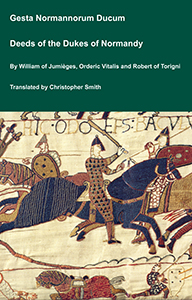
The Deeds of the Dukes of Normandy
The Gesta Normannorum Ducum [The Deeds of the Dukes of Normandy] is a landmark medieval chronicle tracing the rise and fall of the Norman dynasty from its early roots through the pivotal events surrounding the Norman Conquest of England. Originally penned in Latin by the monk William of Jumièges shortly before 1060 and later expanded at the behest of William the Conqueror, the work chronicles the deeds, politics, battles, and leadership of the Norman dukes, especially William’s own claim to the English throne. The narrative combines earlier historical sources with firsthand information and oral testimony to present an authoritative account of Normandy’s transformation from a Viking settlement into one of medieval Europe’s most powerful realms. William’s history emphasizes the legitimacy, military prowess, and governance of the Norman line, framing their expansion, including the conquest of England, as both divinely sanctioned and noble in purpose. Later chroniclers such as Orderic Vitalis and Robert of Torigni continued the history, extending the coverage into the 12th century, providing broader context on ducal rule and its impact. Today this classic work remains a foundational source for understanding Norman identity, medieval statesmanship, and the historical forces that reshaped England and Western Europe between 800AD and 1100AD.
Available at Amazon in eBook and Paperback format.
Wriothesley's Chronicle [1508-1562]. 29th January 1536. She was buried at Peterborowe [Map]c the 29th daie of Januarie, being Saturdaie.
Note c. In the Abbey Church, which Henry VIII afterwards converted into a Cathedral. The circular letter addressed by the King to many persons of quality, requiring their attendance in the conveyance of the corpse from Kimbolton to Peterborough, will be found in MS. Harleian. 540, fol 52b.
Spanish Chronicle Chapter 25. [29th January 1536]. How the blessed lady [deceased] was buried1
Note 1. A very minute account of the obsequies is written by Chapuys. The last wish of the Queen was disregarded, and she was buried at Peterborough, the body resting at Santry Abbey one night on the way. The body of the martyred Queen was consigned to the grave on 27th January, 1536. (Vienna Archives, Gairdner.)
Letters and Papers. 10th February 1536. Vienna Archives. 282. Chapuys [aged 46] to Charles V.
Wrote on the 29th ult. The same day the Queen [deceased] was buried, and besides the ladies whom I mentioned, there were present four bishops and as many abbots, but no other man of mark except the comptroller of the King's Household. The place where she is buried in the church is far removed from the high altar, and much less honorable than that of certain bishops buried there; and even if they had not taken her for princess dowager as they have done in death and life, but only as simple baroness, they could not have given her a less honorable place, as I am told by men acquainted with those matters. Such are the great miracles and incredible magnificence which they gave me to understand they would put forth in honour of her memory as due alike to her great virtues and to her kindred. Possibly they will repair the fault by making a becoming monument in some suitable place.

Letters and Papers. Vienna Archives. 284. Death and Burial of Katharine of Arragon.
The good Queen [deceased] died in a few days, of God knows what illness, on Friday, 7 Jan. 1536. Next day her body was taken into the Privy Chamber and placed under the canopy of State (sous le dhoussier et drapt destat), where it rested seven days, without any other solemnity than four flambeaux continually burning. During this time a leaden coffin was prepared, in which the body was enclosed on Saturday, the 15th, and borne to the chapel. The vigils of the dead were said the same day, and next day one mass and no more, without any other light than six torches of rosin. On Sunday, the 16th, the body was removed again into the Privy Chamber, where it remained till Saturday following. Meanwhile an "estalage," which we call a chapelle ardente, was arranged, with 56 wax candles in all, and the house hung with two breadths of the lesser frieze of the country. On Saturday, the 22nd, it was again brought to the chapel, and remained until the masses of Thursday following, during which time solemn masses were said in the manner of the country, at which there assisted by turns as principals the Duchess of Suffolk [aged 16], the Countess of Worcester [aged 34], the young Countess of Oxford [aged 39], the Countess of Surrey [aged 19], and Baronesses Howard [aged 21], Willoughby [aged 24], Bray, and Gascon (sic).
25th January 1536. On Tuesday1 following, as they were beginning mass, four banners of crimson taffeta were brought, two of which bore the arms of the Queen, one those of England, with three "lambeaulx blancs," which they say are of Prince Arthur; the fourth had the two, viz., of Spain and England, together. There were also four great golden [standards]. On one was painted the Trinity, on the second Our Lady, on the third St. Katharine, and on the fourth St. George; and by the side of these representations the said arms were depicted in the above order; and in like manner the said arms were simply, and without gilding (? dourance), painted and set over all the house, and above them a simple crown, distinguished from that of the kingdom which is closed. On Wednesday after the robes of the Queen's 10 ladies were completed, who had not till then made any mourning, except with kerchiefs on their heads and old robes. This day, at dinner, the countess of Surrey held state, who at the vigils after dinner was chief mourner. On Thursday, after mass, which was no less solemn than the vigils of the day before, the body was carried from the chapel and put on a waggon, to be conveyed not to one of the convents of the Observant Friars, as the Queen had desired before her death, but at the pleasure of the King, her husband, to the Benedictine Abbey of Peterborough, and they departed in the following order:—First, 16 priests or clergymen in surplices went on horseback, without saying a word, having a gilded laten cross borne before them; after them several gentlemen, of whom there were only two of the house, "et le demeurant estoient tous emprouvez," and after them followed the maître d'hotel and chamberlain, with their rods of office in their hands; and, to keep them in order, went by their sides 9 or 10 heralds, with mourning hoods and wearing their coats of arms; after them followed 50 servants of the aforesaid gentlemen, bearing torches and "bâtons allumés," which lasted but a short time, and in the middle of them was drawn a waggon, upon which the body was drawn by six horses all covered with black cloth to the ground. The said waggon was covered with black velvet, in the midst of which was a great silver cross; and within, as one looked upon the corpse, was stretched a cloth of gold frieze with a cross of crimson velvet, and before and behind the said waggon stood two gentlemen ushers with mourning hoods looking into the waggon, round which the said four banners were carried by four heralds and the standards with the representations by four gentlemen. Then followed seven ladies, as chief mourners, upon hackneys, that of the first being harnessed with black velvet and the others with black cloth. After which ladies followed the waggon of the Queen's gentlemen; and after them, on hackneys, came nine ladies, wives of knights. Then followed the waggon of the Queen's chambermaids; then her maids to the number of 36, and in their wake followed certain servants on horseback.
In this order the royal corpse was conducted for nine miles of the country, i.e., three French leagues, as far as the abbey of Sautry [Map], where the abbot and his monks received it and placed it under a canopy in the choir of the church, under an "estalage" prepared for it, which contained 408 candles, which burned during the vigils that day and next day at mass. Next day a solemn mass was chanted in the said abbey of Sautry [Map], by the Bishop of Ely, during which in the middle of the church 48 torches of rosin were carried by as many poor men, with mourning hoods and garments. After mass the body was borne in the same order to the abbey of Peterborough, where at the door of the church it was honourably received by the bishops of Lincoln, Ely, and Rochester, the Abbot of the place, and the abbots of Ramsey, Crolain (Crowland), Tournan (Thorney), Walden and Thaem (Tame), who, wearing their mitres and hoods, accompanied it in procession till it was placed under the chapelle ardente which was prepared for it there, upon eight pillars of beautiful fashion and roundness, upon which were placed about 1,000 candles, both little and middle-sized, and round about the said chapel 18 banners waved, of which one bore the arms of the Emperor, a second those of England, with those of the King's mother, prince Arthur, the Queen of Portugal, sister of the deceased, Spain, Arragon, and Sicily, and those of Spain and England with three "lambeaulx," those of John of Gaunt, duke of Lancaster, who married the daughter of Peter the Cruel, viz., "le joux des beufz," the bundle of Abbot of arrows, the pomegranate (granade), the lion and the greyhound. Likewise there were a great number of little pennons, in which were portrayed the devices of king Ferdinand, father of the deceased, and of herself; and round about the said chapel, in great gold letters was written, as the device of the said good lady, "Humble et loyale." Solemn vigils were said that day, and on the morrow the three masses by three bishops: the first by the Bishop of Rochester, with the Abbot of Thame as deacon, and the Abbot of Walden as sub-deacon; the second by the Bishop of Ely, with the Abbot of Tournay (Thorney) as deacon, and the Abbot of Peterborough as sub-deacon; the third by the Bishop of Lincoln [aged 63], with the Bishop of Llandaff as deacon, and that of Ely as sub-deacon; the other bishops and abbots aforesaid assisting at the said masses in their pontificals, so the ceremony was very sumptuous. The chief mourner was lady Eleanor [aged 17], daughter of the Duke of Suffolk [aged 52] and the French Queen, and niece of King Henry, widower now of the said good Queen. She was conducted to the offering by the Comptroller and Mr. Gust (Gostwick), new receiver of the moneys the King takes from the Church. Immediately after the offering was completed the Bishop of Rochester preached the same as all the preachers of England for two years have not ceased to preach, viz., against the power of the Pope, whom they call Bishop of Rome, and against the marriage of the said good Queen and the King, alleging against all truth that in the hour of death she acknowledged she had not been Queen of England. I say against all truth, because at that hour she ordered a writing to be made in her name addressed to the King as her husband, and to the ambassador of the Emperor, her nephew, which she signed with these words—Katharine, Queen of England—commending her ladies and servants to the favour of the said ambassador. At the end of the mass all the mourning ladies offered in the hands of the heralds each three ells in three pieces of cloth of gold which were upon the body, and of this "accoutrements" will be made for the chapel where the annual service will be performed for her. After the mass the body was buried in a grave at the lowest step of the high altar, over which they put a simple black cloth. In this manner was celebrated the funeral of her who for 27 years has been true Queen of England, whose holy soul, as every one must believe, is in eternal rest, after worldly misery borne by her with such patience that there is little need to pray God for her; to whom, nevertheless, we ought incessantly to address prayers for the weal (salut) of her living image whom she has left to us, the most virtuous Princess her daughter, that He may comfort her in her great and infinite adversities, and give her a husband to his pleasure, &c. Fr., from a modern copy, pp. 6.
Note 1. This would be Tuesday, 1 Feb., if the chronology were strict; but the latest Tuesday that can be intended is 25 Jan.
Become a Member via our Buy Me a Coffee page to read more.
Calendar of State Papers of Spain. 17th February 1536. Eustace Chapuys [aged 46] to the Emperor [aged 35].
On that very day the good Queen of England's [deceased] burial took place, which was attended by four bishops and as many abbots, besides the ladies mentioned in my preceding despatches. No other person of rank or name was present except the comptroller of the Royal household. The place where she lies in the cathedral church of Peterborough [Map] is a good way from the high altar, and in a less honourable position than that of several bishops buried in the same church. Had she not been a dowager Princess, as they have held her both in life and death, but simply a Lady, they could not have chosen a less distinguished place of rest for her, as the people who understand this sort of thing tell me. Such have been the wonderful display and incredible magnificence which these people gave me to understand would be lavished in honour and memory of one whose great virtues and royal relationship certainly entitled her to uncommon honours. Perhaps one of these days they will repair their fault, and erect a suitable monument or institute some pious foundation to her memory in some suitable spot or other.
Calendar of State Papers of Spain. 6th March 1536. 35. Dr. Ortiz to the Empress..
His last letter, announcing the death and martyrdom of the Queen of England, was dated the 30th of January.
Since then he (Ortiz) has received one, dated the 19th of January, [from Chapuys?], informing him that the Princess [aged 20] (Mary) was in good health. The Queen before dying showed well what her whole life had been; for not only did she ask for, and receive, all the sacraments ordained by the Church, but answered the questions put by the priest with such ardour and devotion that all present were edified. Some of those who were by her bedside, having suggested that it was not yet time to receive the sacrament of Extreme Unction, she replied that she wished to hear and understand everything that was said, and make fitting answers. She preserved her senses to the last, &c.
They say that when the king of England [aged 44] heard of the death of his Queen, dressed in mauve silk as he was at the time, and with a white feather in his cap, he went to solace himself with the ladies of the palace. In fact it may well be said of him and of his kingdom what the Prophet Isaias says, cap. lvii., "Justus periet, et non est qui recogitet in corde suo, et viri misericordia colliguntur quia non est qui intelligat."
Her Highness the Queen was buried with the honours of a Princess [dowager], 18 miles from the place where she died, at an abbey called Yperberu [Map] (Peterborough), the King having only sent thither some ladies of his Court to attend the funeral. The King and the concubine [aged 35] were not in London, but at a place on the road called Octinton [Map] [Huntingdon].
Letters and Papers. 6th March 1536. The Queen was buried as princess, at an abbey 18 miles from where she died, called Yperveru (Peterborough). The King only sent some ladies to assist in the interment. No exequies or honors were performed in London, but only at a town on the road (de camino) called Octuiton [Map].