

William of Worcester's Chronicle of England
William of Worcester, born around 1415, and died around 1482 was secretary to John Fastolf, the renowned soldier of the Hundred Years War, during which time he collected documents, letters, and wrote a record of events. Following their return to England in 1440 William was witness to major events. Twice in his chronicle he uses the first person: 1. when writing about the murder of Thomas, 7th Baron Scales, in 1460, he writes '… and I saw him lying naked in the cemetery near the porch of the church of St. Mary Overie in Southwark …' and 2. describing King Edward IV's entry into London in 1461 he writes '… proclaimed that all the people themselves were to recognize and acknowledge Edward as king. I was present and heard this, and immediately went down with them into the city'. William’s Chronicle is rich in detail. It is the source of much information about the Wars of the Roses, including the term 'Diabolical Marriage' to describe the marriage of Queen Elizabeth Woodville’s brother John’s marriage to Katherine, Dowager Duchess of Norfolk, he aged twenty, she sixty-five or more, and the story about a paper crown being placed in mockery on the severed head of Richard, 3rd Duke of York.
Available at Amazon in eBook and Paperback format.
May 1485 Dec 1485 Bosworth is in 15th Century Events.
Before 7th August 1485 Ralph Scrope 9th Baron Scrope of Masham and Cecily York, daughter of Edward IV [aged 16] were married. The marriage had been arranged by King Richard III of England [aged 32]. There had been rumours that the King was going to marry one of his nieces, Elizabeth York Queen Consort England [aged 19] or Cecily York Viscountess Welles so this marriage quelled those rumours. The marriage was annulled after the Battle of Bosworth as "as not being in the interests of the dynasty" [Note. No sources for this information.] The date of the marriage is unknown. However, see Mary Anne Everett Green Live of the Princesses of England Volume 1 Cecilia Third Daughter of Edward IV. She the daughter of King Edward IV of England and Elizabeth Woodville Queen Consort England [aged 48]. They were half second cousin once removed. He a great x 4 grandson of King Edward III of England.


On 7th August 1485 King Henry VII of England and Ireland [aged 28] landed at Mill Bay Milford Haven [Map] with John Blount 3rd Baron Mountjoy [aged 35], John Cheney 1st Baron Cheyne [aged 43], Richard Guildford [aged 35], John Welles 1st Viscount Welles [aged 35], Philibert Chandee 1st Earl Bath and Edward Courtenay 1st Earl Devon [aged 26] all of whom were knighted.


Croyland Chronicle 1485. [7th August 1485]. A great amount of provisions and money was wasted there in consequence of this uncalled-for policy the king being put to such great expense from the circumstance of his being deceived by a quibble on the name of that harbour, which had been mentioned by many as the place of their intended descent. For some say that there is a harbour in the neighbourhood of Southampton, called Milford, just as there is in Wales; and there being some persons endowed, as it were, with a spirit of prophecy, these predicted that those men would land at the harbour of Milford, and were in the habit of looking for the fulfilment of their prophecies to that effect, not at the most famous place, but most commonly at the other one which bore the same name. And then besides, the king, at this period, seemed especially to devote his attention to strengthening the southern parts of his kingdom. But it was all in vain: for, on the first day of August1 the enemy landed with a fair wind, and without opposition, at that most celebrated harbour, Milford Haven, near Pembroke.
Note 1. Most sources agree the 7th of August.
Historia Regis Henrici Septimi by Bernado Andrea. [7th August 1485] Therefore, the ships having been made ready under a favorable star, before the earl boarded the vessel, like a Catholic prince, with his knees placed upon the ground, humbly made use of such words to God:
Paratis itaque navibus felici comes sidere, priusquam navim ascenderet, sicut princeps Catholicus, talibus ad Deum, genibus ad terram positis, humiliter usus est:
Historia Regis Henrici Septimi by Bernado Andrea. These things having thus been openly set forth by him from his courageous breast, all the companies assented, and promised that whatever hands he should call to war they would lift high. So great a shout went up to the heavens, as great as when the Thracian Boreas has pressed upon the crags of pine-bearing Ossa, the sound comes from the bent timber as it is crushed, or again from the forests as they return back into the air. When the prince sees the war so welcome to his eager soldiers, and that the fates were answering him, lest by any delay he should linger while fortune was calling, he at once ordered all to go aboard the ships; and, the saints of the island of Britain being invoked before God to intercede for him and for his army, a favouring breeze opened a prosperous course for the voyage. Therefore, loosening the anchors under happy southern winds and with a propitious divine power, .... they made landfall in England1.
His ita ab illo animoso pectore palam expositis, cunctæ assensere cohortes, elatasque alte quæcumque ad bella vocaret promisere manus. It tantus ad æthera clamor, quantus, piniferi Boreas cum Thracius Ossæ rupibus incubuit, curvato robore pressæ fit sonus, aut rursus redeuntis in æthera silvæ. Princeps ut videt tam acceptum pronis militibus bellum, fataque sibi respondere, ne quo languore moretur fortunam se vocantem in naves illico cunctos jussit introire; vocatisque apud Deum Sanctis insula Britanniæ indigetibus ut pro se exercituque suo interpellarent, aura secunda navigationi prosperum iter aperuit. Solventes igitur felicibus austris et numine dextro ancras, .... in Angliam appulerunt.
Note 1. Henry Tudor landed at Mill Bay, in the very westernmost part of Pembrokeshire.
On 15th August 1485 King Richard [aged 32] was at Bestwood. King Richard spent a few days of August 1485 at the royal hunting lodge at Bestwood, (then known as Beskwood) in Nottingham. The news of Henry Tudor's invasion was brought to the King while he was there.
On 19th August 1485, King Richard [aged 32] left Nottingham to travel to Leicester, en route to meet Henry Tudor's army.
On 21st August 1485, King Richard [aged 32] and his army marched out of Leicester, leaving through the west gate and over Bow Bridge [Map], as they made their way towards Bosworth.
On 22nd August 1485 King Richard III of England [aged 32] was killed during the Battle of Bosworth. His second cousin once removed Henry Tudor [aged 28] succeeded VII King of England.
Humphrey Cotes [aged 35] died. It isn't clear on which side he was fighting.
Those supporting Henry Tudor included:
John Blount 3rd Baron Mountjoy [aged 35].
John Cheney 1st Baron Cheyne [aged 43].
Richard Guildford [aged 35].
Walter Hungerford [aged 21].
Thomas Stanley 1st Earl of Derby [aged 50].
Edward Woodville Lord Scales [aged 29].
Edward Courtenay 1st Earl Devon [aged 26].
Rhys ap Thomas Deheubarth [aged 36].
Jasper Tudor 1st Duke Bedford [aged 53].
William Beaumont 2nd Viscount Beaumont [aged 47].
Giles Daubeney 1st Baron Daubeney [aged 34].
William Stanley [aged 50].
Roger Kynaston of Myddle and Hordley [aged 52].
Henry Marney 1st Baron Marney [aged 38].
William Brandon [aged 29] was killed.
James Harrington [aged 55] was killed.
John Howard 1st Duke of Norfolk [aged 60] was killed and attainted. He was buried firstly at Thetford Priory, Norfolk [Map] and therafter at Church of St Michael the Archangel, Framlingham [Map]. Duke Norfolk, Baron Mowbray, Baron Segrave, Baron Howard forfeit.
John Sacheverell [aged 85] was killed.
Philibert Chandee 1st Earl Bath
William Norreys [aged 44], Gilbert Talbot [aged 33], John de Vere 13th Earl of Oxford [aged 42] and John Savage [aged 41] commanded,.
Robert Poyntz [aged 35] was knighted.
Those who fought for Richard III included:
John Bourchier 6th Baron Ferrers of Groby [aged 47].
John Conyers [aged 74].
Thomas Dacre 2nd Baron Dacre Gilsland [aged 17].
William Berkeley 1st Marquess Berkeley [aged 59].
Richard Fitzhugh 6th Baron Fitzhugh [aged 28].
John Scrope 5th Baron Scrope of Bolton [aged 48].
Thomas Scrope 6th Baron Scrope of Masham [aged 26].
Henry Grey 4th or 7th Baron Grey of Codnor [aged 50].
Edmund Grey 1st Earl Kent [aged 68].
Ralph Neville 3rd Earl of Westmoreland [aged 29].
John de la Pole Earl Lincoln 1st [aged 23].
Humphrey Stafford [aged 59].
George Talbot 4th Earl of Shrewsbury [aged 17].
Thomas Howard 2nd Duke of Norfolk [aged 42] was wounded, captured and imprisoned in the Tower of London [Map] for three years. He was attainted; Earl Surrey forfeit.
Francis Lovell 1st Viscount Lovell [aged 29] fought and escaped.
John Zouche 7th Baron Zouche Harringworth [aged 26] was captured.
John Babington [aged 62], William Alington [aged 65], Robert Mortimer [aged 43], Robert Brackenbury, Richard Ratclyffe [aged 55] and Richard Bagot [aged 73] were killed
Walter Devereux Baron Ferrers of Chartley [aged 53] was killed.
William Catesby [aged 35] was executed at Leicester, Leicestershire [Map] after the battle.
George Stanley 9th Baron Strange Knockin 5th Baron Mohun Dunster [aged 25] held as a hostage by Richard III before the Battle of Bosworth.
Henry Percy 4th Earl of Northumberland [aged 36] betrayed King Richard III of England by not committing his forces at the Battle of Bosworth.
John Iwardby [aged 35] was killed.
Abbot John Whethamstede’s Chronicle of the Abbey of St Albans
Abbot John Whethamstede's Register aka Chronicle of his second term at the Abbey of St Albans, 1451-1461, is a remarkable text that describes his first-hand experience of the beginning of the Wars of the Roses including the First and Second Battles of St Albans, 1455 and 1461, respectively, their cause, and their consequences, not least on the Abbey itself. His text also includes Loveday, Blore Heath, Northampton, the Act of Accord, Wakefield, and Towton, and ends with the Coronation of King Edward IV. In addition to the events of the Wars of the Roses, Abbot John, or his scribes who wrote the Chronicle, include details in the life of the Abbey such as charters, letters, land exchanges, visits by legates, and disputes, which provide a rich insight into the day-to-day life of the Abbey, and the challenges faced by its Abbot.
Available at Amazon in eBook and Paperback format.
Croyland Chronicle 1485. [15th August 1485]. A battle of the greatest severity now ensuing between the two sides, the earl of Richmond, together with his knights, made straight for king Richard: while the earl of Oxford, who was next in rank to him in the whole army and a most valiant soldier, drew up his forces, consisting of a large body of French and English troops, opposite the wing in which the duke of Norfolk had taken up his position. In the part where the earl of Northumberland was posted, with a large and wellprovided body of troops, there was no opposition made, as not a blow was given or received during the battle. At length a glorious victory was granted by heaven to the said earl of Richmond, now sole king, together with the crown, of exceeding value, which king Richard had previously worn on his head. For while fighting, and not in the act of flight, the said king Richard was pierced with numerous deadly wounds, and fell in the field like a brave and most valiant prince; upon which, the duke of Norfolk, before-mentioned, Sir Richard Ratclyffe, Sir Robert Brackenbury, keeper of the Tower of London, John Kendall, secretary, Sir Robert Percy, controller of the king's household, and Walter Devereux, lord Ferrers, as well as many others, chiefly from the north, in whom king Richard put the greatest confidence, took to flight without engaging; and there was left no part of the opposing army of sufficient importance or ability for the glorious conqueror Henry the Seventh to engage, and so add to his experience in battle, won.
Historia Regis Henrici Septimi by Bernado Andrea. [15th August 1485] This battle, although I have learned of it by hearsay, nevertheless Bosworth, in this matter, has the eye as a surer judge than the ear. Therefore the day, the place, and the order of the battle, because, as I have said, I am deprived of the light of the eyes in this matter, lest I affirm anything rashly, I pass over. And for so martial a field, until I shall have been more fully instructed, I likewise leave this broad field blank upon the page.
Hoc ego bellum quamvis auribus acceperim, tamen Bosworth. hac in parte certior aure arbiter est oculus. Diem, igitur, locum, ac belli ordinem, quia ut dixi sum privatus hac luce oculorum, ne quid temerarie affirmem, supersedeo. Et pro tam bellico campo, donec plenius instructus fuero, campum quoque latum hoc in albo relinquo.
Chronicles of London Vitellius A XVI. [15th August 1485] And after the ffeeld doon, the said Kyng Richard was caried vpon an hors behynd a man all naked to Leyciter, fast by the ffeeld; and there buryed wt in the ffreres [Map].
Annales of England by John Stow. 27th August 1485. In the mean season the king removed towards London, and then be had approched the city, on the 27 of August, the Mayour, Magistrates, and companies, all clothed in violet, met him at Shoreditch, and with great pomp conveyed him through the city to S. Paul's church, where be offered his three standards, one of S. George, the second a red Dagon, the third a dun Cow, after his prayers said and Te Deum sung, he departed to the hishops palace where he sojourned a season.
On Saturday 16th October 1485 Philibert Chandee 1st Earl Bath was created 1st Earl Bath at Tower of London [Map] by King Henry VII of England and Ireland [aged 28] for having supported Henry's claim to the throne.
On 27th October 1485 King Henry VII of England and Ireland [aged 28] and Robert Fitzroger 5th Baron Warkworth dined together at Lambeth Palace [Map].
On 28th October 1485 Jasper Tudor 1st Duke Bedford [aged 53] was created 1st Duke Bedford by Henry VII [aged 28] for having supported Henry's claim to the throne. Catherine Woodville Duchess Buckingham and Bedford [aged 27] by marriage Duchess Bedford.
Thomas Stanley 1st Earl of Derby [aged 50] was created 1st Earl Derby.
Edward Courtenay 1st Earl Devon [aged 26] was created 1st Earl Devon. It is believed he was restored as 11th Baron Okehampton at the same time?
Reginald Bray [aged 45], John Fitzwalter, Thomas Cokesge, Roger Lewknor, Henry Haydon and John Verney were appointed Knight of the Bath.
On 29th October 1485 King Henry VII of England and Ireland [aged 28] processed from Tower of London [Map] to Westminster Abbey [Map]. Ahead of him marched the heralds and serjeants-at-arms, the Esquire of the Body, the King's Secretary Richard Fox [aged 37], almoner Christopher Urswick [aged 37], the mayor of London and the Garter King of Arms. Also ahead of him were Thomas Stanley 1st Earl of Derby [aged 50], John de la Pole Earl Lincoln 1st [aged 23], John de Vere 13th Earl of Oxford [aged 43] and William Berkeley 1st Marquess Berkeley [aged 59]. Following behind were the only two Dukes: Jasper Tudor 1st Duke Bedford [aged 53], created the day before, and John de la Pole 2nd Duke of Suffolk [aged 43].
On 30th October 1485 King Henry VII of England and Ireland [aged 28] was crowned VII King of England by Cardinal Thomas Bourchier [aged 67] at Westminster Abbey [Map]. Earl Richmond merged with the crown. Margaret Beaufort Countess Richmond [aged 42], his mother, attended.
Robert Dymoke [aged 24] attended as the Kings' Champion.
John de Vere 13th Earl of Oxford [aged 43] carried the King's train.


Historia Regis Henrici Septimi by Bernado Andrea. [16th October 1485] The king himself, the Earl of Richmond, on the day of Saturn [Saturday], on which same day he had also triumphed over his enemies, entered the city of London joyfully, accompanied by a great company of nobles. At whose coming I, although deprived of sight, long since inflamed by love of him and desire, stood forth; and, glad and inspired by poetic frenzy, I sang openly this poem.
Rex ipse Richemundiæ comes Saturni luce, quo etiam die de hostibus triumpharat, urbem Londinum magna procerum comitante caterva lætanter ingressus est. Ad cujus adventum ego, etsi oculis captus, amore jampridem sui ac desiderio inflammatus astiti, lætusque poetico furore afflatus palam hoc carmen cecini:
Croyland Chronicle 1486. [29th October 1485] Influenced by this consideration, the writer before-mentioned determined to end his labours with the death of king Richard; only adding the fact that, after the victory of the said king Henry the Seventh, and the ceremonies of his anointing and coronation, on the last day but one of the following month, by the hand of the most reverend father, Thomas [aged 67], cardinal archbishop of Canterbury, ...
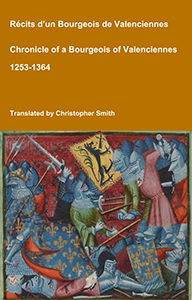
Chronicle of a Bourgeois of Valenciennes
Récits d’un bourgeois de Valenciennes aka The Chronicle of a Bourgeois of Valenciennes is a vivid 14th-century vernacular chronicle written by an anonymous urban chronicler from Valenciennes in the County of Hainaut. It survives in a manuscript that describes local and regional history from about 1253 to 1366, blending chronology, narrative episodes, and eyewitness-style accounts of political, military, and social events in medieval France, Flanders, and the Low Countries. The work begins with a chronological framework of events affecting Valenciennes and its region under rulers such as King Philip VI of France and the shifting allegiances of local nobility. It includes accounts of conflicts, sieges, diplomatic manoeuvres, and the impact of broader struggles like the Hundred Years’ War on urban life in Hainaut. Written from the perspective of a burgher (bourgeois) rather than a monastery or royal court, the chronicle offers a rare lay viewpoint on high politics and warfare, reflecting how merchants, townspeople, and civic institutions experienced the turbulence of the 13th and 14th centuries. Its narrative style combines straightforward reporting of events with moral and civic observations, making it a valuable source for readers interested in medieval urban society, regional politics, and the lived experience of war and governance in pre-modern Europe.
Available at Amazon in eBook and Paperback format.
Chronicle of Edward Hall [1496-1548]. 30th October 1485. After this he [King Henry VII of England and Ireland [aged 28]] with great pompe was cōueighed to Westmynster, and there the thirtye daye of Octobre was with all ceremonyes accustomed, enoynted & crouned kyng by the whole assent as well of the cōmons as of the nobilite, & was named kyng Henry the. vij. of that. name, which was in the yere of our redempcion. M. cece. Ixxxvi. Frederyke the. iij. then beynge Emperour of Almayne, Maximilian his sonne then beynge newely clected kyng of Romanes, Charles the. viij. reignyng over the Frenche nacion, & lames the iij. rulyng the realme of Scotland. Which kyngdome he obteyned & enioyed as a thyng by God elected. & prouided, and by his especiall fauoure & gracious aspecte compassed and acheved. In so muche that m& comonly reporte that. vii. C. xcvii. yeres passed, it was by a heavenly voyce reueled to Cadwalader last kyng of Brytons that his stocke and progeny should reigne in this land and beare domynion agayn: Wherupo most men were persuaded in their awne opinion that by this heauenly voyce he was prouided & ordeyned longe before to enioye and obteine this kyngdom, whiche thing kyng Henry the. vi. did also shewe before asyou have heard declared. Wherefore he beynge by right and iust tytle of temporal inheritaunce, & by prouision of deuyne purueyauce thus crouned and proclaimed kyng: First of all vsyng the antique example of the Athenienses, whiche is to perdon and put out of memory all crymes and offences before tyme agaynst hym or his lawes perpetrated or cōmitted, he called his high court of parliamét at Westmynster the. vii. daye of Nouembre for thestablishyng of all thinges aswell cGeernyng the preseruacion and maintenaֹֹֹūce of his royal person, as the admynistracion of iustice and preferment of the cōmon wealth of this realme and dominion, in the which he caused to be proclaimed that all men were perdoned, acquited & clerely discharged of all offences, peynes of death and execucions, and should be restored to their landes and moueable goodes whiche woulde submit them selfes to his clemency and by othe be obliged truly to serue and obeye bym as their sovereigne lorde, & who woulde be obstinate & refuse to returne to his parte, should be accepted and taken as a publike enemy to hym and his countrey. By reason of which proclamacion, a great nombre that came out of diverse sanctuaries and privileged places obteyned grace, forgetting clerely the diversite of faccions & voyce of partakyng. After this he began to remembre his es- peciall frendes & fautours, of whome sone he anaunced to honoure & dignite, & some he enriched with possessions & goodes, every ma according to his desert & merite. And to begvnne, laspar [aged 53] his vncle Erle of Penbrooke, he created duke of Bedforde, Thomas lorde Stanley [aged 50] he promoted to be erle of Darby, & lord Chandew of Briteine his especiall frende he made erle of Bathe, Sir Gyles Dawbeney [aged 34] was made lorde Dawbeney, Sir Robert Willoughby [aged 33] was made lord Brooke which be in their degree barons and peeres of the realme. And Edward Stafford [aged 7] eldest son to Henry late duke of Buckingham, he restored to his name dignitie and possessions, which kyng Richard did confiscate and attaynted. Beside this in this parliamēt was this notable acte assented to and concluded as foloweth.
Grafton's Chronicle [1507-1573]. [30th October 1485]. After thys, he wyth great pompe was conueyed to Westminster, and there the thirtie King Henry the daye of October was wyth all ceremonies accustomed, annoynted and crowned Kyng by seuenth crowned the whole assent as well of the commons as of the Nobilitie, and was named king Henry the seuenth of that name, Frederike the thirde then beyng Emperour of Almayne, Maximilian hys sonne then beyng newely elected king of Romaynes, Charles the eyght reygning ouer the French nation, and Iames the thirde rulyng the realme of Scotlande. Which James the thirde kingdome he obteyned and enioyed as a thing by God elected and prouided, & by hys king of Scottes, especiall fauour and gracious aspect compassed and acheeued. In so much that men commonly reported that. 797. yeres passed, it was by a heauenly voyce reuealed to Cadwalader last king of Brytons that his stock and progeny should reigne in thys land and beare dominyon agayne: Wherevpon most men were perswaded in their awne opinion that by this heauenly voyce he was prouided and ordeyned long before to enioy and obteyne this kingdome, which thing king Henry the sixt did also shew before, as you haue heard declared. Wherefore he beyng by right and iust tytle of temporall inheritaunce, and by the prouision of deuine purueyaunce thus crowned and proclaymed king: First of all vsyng the antique example of the Athenians, which is to pardon and put out of memorie all crymes and offences before tyme agaynst hym or hys lawes perpetrated or committed, he called hys high court of Parliament at Westmynster the seuenth day of Nouember for boldeeranwest the stablyshing of all things as well concerning the preseruation and mayntenaunce of hys general pardo royall person, as the admynistration of iustice and preferment of the common welth of A parliamēt graunted. thys realme and dominion, in the which he caused to be proclaymed that all inen were pardoned acquyted and cleerely discharged of all offences, paynes of deathe and executions, and should be restored to their landes and moueable goodes, which would submit themselues to his clemencie & by othe be bound truely to serue and obey him as their souereigne Lord, & who so would be obstinate and refuse to returne to hys part, should be accepted and taken as a publike enemy to him and his Countrey. By reason of which proclamation, a great number that came out of dyuers Sanctuaries and priuileged places obteyned grace, forgettyng clerely the diuersitie of factions and voyce of partaking. After this he began to remember his especiall friends and fautors, of whom some he aduaunced to honour and dignity, and some he enriched with possessions and goodes, euery man according to his desert and merite. And to begin, Iasper his Vncle Erle of Penbrooke, he created Duke of Bedforde, Thomas Lorde Stanley he promoted to the Erle of Darby, and the Lorde Chandew of Britayne his especiall friend he made Erle of Bathe, Syr Gyles Dawbeny was made Lorde Dawbeny, syr Robert Wylloughby was made Lorde Brooke which be in their degree Barons and Peeres of the realme. And Edwarde Stafford eldest sonne to Henry late Duke of Buckyngham, he restored to his name, dignitie and possessions, which king Richard did confiscate and attainted. Beside thys, in this Parliament was this notable act assented to and concluded as foloweth.
On 16th December 1485 Catherine of Aragon was born to Ferdinand II King Aragon [aged 33] and Isabella Queen Castile [aged 34] at the Palace of Alcalá de Henares, Madrid [Map]. She was possibly named after her Great Grandmother Catherine of Lancaster Queen Consort Castile daughter of John of Gaunt 1st Duke Lancaster and Constance of Castile Duchess of Lancaster. She a great x 3 granddaughter of King Edward III of England. Coefficient of inbreeding 3.23%. She married (1) 14th November 1501 her half third cousin once removed Prince Arthur Tudor, son of King Henry VII of England and Ireland and Elizabeth York Queen Consort England (2) 11th June 1509 her half third cousin once removed King Henry VIII of England and Ireland, son of King Henry VII of England and Ireland and Elizabeth York Queen Consort England, and had issue.


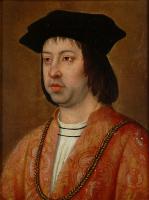


On 18th January 1486 King Henry VII of England and Ireland [aged 28] and Elizabeth of York [aged 19] were married at Westminster Abbey [Map]. She by marriage Queen Consort England. She the daughter of King Edward IV of England and Elizabeth Woodville Queen Consort England [aged 49]. He the son of Edmund Tudor 1st Earl Richmond and Margaret Beaufort Countess Richmond [aged 42]. They were third cousins. He a great x 3 grandson of King Edward III of England.
Croyland Chronicle 1486. ... and in due conformity with the ancient custom, the marriage was celebrated, which had from the first been hoped for, between him [King Henry VII] and the lady Elizabeth, the eldest daughter of king Edward the Fourth. This was duly solemnized , at the instance and urgent entreaty of all the three estates of the realm, in presence of the Church, on the eighteenth day of the month of January, in the year of our Lord, according to the computation of the Roman Church, 1486; a dispensation having been first obtained from the Apostolic See on account of the fourth degree of consanguinity, within which the king and queen were related to each other.
Historia Regis Henrici Septimi by Bernado Andrea. [18th January 1486] Accordingly, when the matter had been brought before and the supreme council of all the leading men of the realm convened, it was decreed that from two families formerly burdened with mortal hatred one house should be made in unanimous concord. Therefore fitting ornaments are prepared for the marriage torches and the nuptial bed. And in this matter too, the mind hesitates and wavers when it comes to describing the display in accordance with its dignity. And for that reason I have deliberately passed over the great abundance of things so lavishly displayed at the royal wedding itself and at the coronation of the queen, gifts freely bestowed everywhere upon all with overflowing generosity; banquets, dances, and tournaments provided most lavishly for the illustration and enlargement of that joy; celebrations marked by munificence in gold, silver, rings, and gems ....1
Facto igitur, convocatoque omnium regni optimatium supremo consilio, decretum est ut ex duabus olim mortali odio laborantibus familiis una domus unanimi concordia fieret. Ergo tedis jugalibus toroque maritali congrua parantur ornamenta. Ft in hoc etiam apparatu pro dignitate perscribendo hæret ac dubitat animus. Et idcirco tantam rerum affluentiam in ipsis regiis nuptiis ac reginæ coronatione affatim exhibitam, largifluis cireumquaque muneribus liberaliter omnibus præstitis, conviviis, choreis, torneamentis ad id gaudii illustrandum amplificandumque largissimis, auri, argenti, annulorum, gemmarumque munificentia concelebratis, consulto prætermisi ....
Note 1. Half a page blank in MS.
Chronicles of London Vitellius A XVI. [18th January 1486] In this yere was kyng Henry the VIJ maryed vnto Dame manage of Elizabeth, theldest Doughter of kyng Edward the IIIJ.
Vatican Regesta Vol. DCLXXXV Secretarum Tomus IV 2 Innocent VIII. [23rd July 1486] 10 Kal. Aug. Decree, at the petition of king Henry [aged 29] and queen Elizabeth [aged 20], that a notarial copy of the process before James, bishop of Imola, Apostolic Nuncio with the power of a legate de latere, in regard to the dispensation granted by him to them to contract marriage, notwithstanding the impediment arising from their being related in the double fourth degree of kindred, shall have the same credence as the original letters of the said bishop. The Pope [aged 54] exemplifies the said letters and process as follows:
Public instrument, setting forth that in the year of the Incarnation 1486, after the computation of the English church, the 4th indiction, anno 2 Innocent VIII [16th January 1486], in the chapel of St. Mary [the Virgin] on the east side of the cathedral church of St. Paul, London [Map], before James, bishop of Imola, apostolic legate to England and Scotland, in presence of the below-written notaries public, appointed by the said bishop as scribes in the below-written matter of dispensation, and witnesses below-named, there appeared in person Master Robert Morton [aged 51], Archdeacon of Winchester, and John de Giglis, I.U.D., as proctors of king Henry, and Richard Hill, dean of the chapel of the household of the said king, and David William, doctor of decrees, dean of St. Mary's Arches, London, as proctors of the lady Elizabeth, eldest daughter of the late king Edward IV, who produced their mandates of procuration and presented to the said legate a schedule of petition on behalf of the said king and lady, praying him to dispense them to marry, notwithstanding the impediment of their relationship in the fourth and fourth degrees of kindred, as was specified by the said Master Robert Morton.
The said instrument exemplifies the said procurations and schedule, as follows:
(i) A public instrument, setting forth that in the year of the Incarnation, etc., 1486, the 4th indiction, anno 2 Innocent VIII, January 14, in a certain great chamber within the palace royal at Westminster, before Thomas, archbishop of York [aged 62] and legate of the apostolic see, John, bishop of Worcester [aged 56], chancellor of England, and Jasper duke of Bedford [aged 54], and many other nobles and magnates, in the presence of me, Richard Spencer, notary public below-written, the said king, present in person, appointed Masters John de Giglis, I.U.D., and Robert Morton, master or keeper of the rolls of the chancery of the said king, as his proctors to appear before the said bishop and legate (who, as is said, has faculty from the apostolic see to dispense a certain number of persons related in the fourth and fourth degrees of kindred and affinity to contract marriage), and to request him to exhibit, etc., the said letters, and execute them in accordance with the desire of the said king, etc. Of all which things, done on the above date and in the above place, in the presence of the above-named witnesses and of Richard Spencer, clerk, of the diocese of Lincoln, notary public by apostolic and imperial authorities, registrar-principal of the court of Canterbury, and keeper of the registers of the same court, the said notary has made the present public instrument, and, being otherwise engaged, has caused it to be written by another, and has published and drawn it up in this public form, and has signed it with his wonted sign and name;.
(ii) A like public instrument, setting forth that on the same date as in the preceding, and in a certain chamber within the royal palace of Westminster, before John, bishop of Worcester, chancellor of England, John lord de Wellys [aged 36], Master William Smyth, dean of the chapel royal of Wymbourn in the diocese of Salisbury, and other witnesses, in the presence of the above notary, Richard Spencer, the above lady Elizabeth, present in person, appointed Masters Richard Hill, dean of the chapel of the king's household, and David William, doctor of decrees, dean of St. Mary's Arches, London, and commissary-general of the official of the court of Canterbury and president of the said court, in the absence of the said official, as her proctors to appear, etc., as in the preceding. Of all which things, done on the above date and in the above place, in the presence of the abovenamed witnesses and of … Richard Spencer, clerk, etc., as above, the said notary has made, written, subscribed, published, and drawn up in this public form the present public instrument, and has signed it with his wonted sign and name;.
(iii) The petition to James, bishop of Imola, apostolic legate to England and Scotland, on behalf of the most serene prince and lord, the lord Henry, by the grace of God king of England and France and lord of Ireland, of the one part, and of the most illustrious (clarissime) lady, the lady Elizabeth, eldest legitimate and natural daughter of the late Edward, sometime king of England and France and lord of Ireland, of the other part, setting forth that whereas the said king Henry has by God's providence won his realm of England, and is in peaceful possession thereof, and has been asked by all the lords of his realm, both spiritual and temporal, and also by the general council of the said realm, called Parliament, to take the said lady Elizabeth to wife, he, wishing to accede to the just petitions of his subjects, desires to take the said lady to wife, but cannot do so without dispensation, inasmuch as they are related in the fourth and fourth degrees of kindred, wherefore petition is made on their behalf to the said legate to grant them dispensation by his apostolic authority to contract marriage and remain therein, notwithstanding the said impediment of kindred, and to decree the offspring to be born thereof legitimate.

On 20th September 1486, eight months exactly after his parents married, Prince Arthur Tudor was born to King Henry VII of England and Ireland [aged 29] and Elizabeth York Queen Consort England [aged 20] at Winchester Priory [Map]. he was created Duke of Cornwall at birth. He married 14th November 1501 his half third cousin once removed Catherine of Aragon Queen Consort England, daughter of Ferdinand II King Aragon and Isabella Queen Castile.
On 24th September 1486 Prince Arthur Tudor was christened at Winchester Cathedral [Map] by Bishop John Alcock [aged 56].
Cecily "Rose of Raby" Neville Duchess York [aged 71] held the child. His godparents included Thomas Stanley 1st Earl of Derby [aged 51], William Fitzalan 9th or 16th Earl of Arundel [aged 68], John de Vere 13th Earl of Oxford [aged 44], Thomas Fitzalan 10th or 17th Earl of Arundel [aged 36], Elizabeth Woodville Queen Consort England [aged 49] and Cecily York Viscountess Welles [aged 17]. Richard Woodville 3rd Earl Rivers [aged 33] was present.
His grandmother Margaret Beaufort Countess Richmond [aged 43] has written the Ordinances as to what Preparation is to be made for the Christening of the Child of which she shall be delivered that describe the form of the Christening.
The History of William Marshal was commissioned by his son shortly after William’s death in 1219 to celebrate the Marshal’s remarkable life; it is an authentic, contemporary voice. The manuscript was discovered in 1861 by French historian Paul Meyer. Meyer published the manuscript in its original Anglo-French in 1891 in two books. This book is a line by line translation of the first of Meyer’s books; lines 1-10152. Book 1 of the History begins in 1139 and ends in 1194. It describes the events of the Anarchy, the role of William’s father John, John’s marriages, William’s childhood, his role as a hostage at the siege of Newbury, his injury and imprisonment in Poitou where he met Eleanor of Aquitaine and his life as a knight errant. It continues with the accusation against him of an improper relationship with Margaret, wife of Henry the Young King, his exile, and return, the death of Henry the Young King, the rebellion of Richard, the future King Richard I, war with France, the death of King Henry II, and the capture of King Richard, and the rebellion of John, the future King John. It ends with the release of King Richard and the death of John Marshal.
Available at Amazon in eBook and Paperback format.
Wriothesley's Chronicle [1508-1562]. 1486. This yeared Prince Arthure was borne at Windsore [Map].e
Note d. This paragraph is wrongly placed both in Arnold and our MS. after the next entry, but I hare restored it to its proper date.
Note e. A clerical error for Winchester [Map].
Historia Regis Henrici Septimi by Bernado Andrea. The queen, now pregnant and near to childbirth, while the king at that time, settling the affairs of his then new reign and restoring the whole body of the commonwealth, long before maimed in its individual members, was residing at Winchester. But when the time of birth drew near, and the months fit for timely delivery had been duly completed, behold a newborn prince1 is brought forth, displaying such beauty, grace, and excellence that he seemed to hold forth a happiness unheard of before in all ages. This future prosperity of the most fortunate prince, indeed, one inspired with a kind of divine frenzy had foretold long beforehand, while he was celebrating in song the coronation of Queen Elizabeth, his most illustrious mother, in these lyric verses.
Gravida jam sed partui proxima regina, rex per id tempus regni tunc novi negotia determinans ac totius reipublicæ corpus diu antea per singula mutilatum membra reintegrans Wyntoniæ residebat. Partus vero tempore appropinquante, et revolutis mature pariendi mensibus, ecce princeps novellus oritur, tantam venustatem, gratiam ac virtutem præ se ferens ut omnem omnibus sæculis inauditam ante felicitatem protenderet. Hanc, equidem, faustissimi principis futuram prosperitatem quidam furore divino afflatus, dum Elizabeth reginæ clarissimæ genitricis suæ coronationem præcineret, longe ante prædixerat hisce carminibus lyricis.
Note 1. Prince Arthur was born on 20th September 1486 eight months after the marriage of his parents on 18th January 1486.
Around April 1486 the Stafford and Lovell Rebellion was an armed uprising against King Henry VII of England and Ireland [aged 29]. With the failure of the plot Francis Lovell 1st Viscount Lovell [aged 30] fled to Margaret of York Duchess of Burgundy [aged 39] in Flanders.
On 8th July 1486 brothers Humphrey Stafford [aged 60] and Thomas Stafford was executed at Tyburn [Map].
Croyland Chronicle 1486. On passing from Lincoln on his way to York, by his castle of Nottingham, he there heard various rumours of a certain rising42 of the people in the north; upon which, for the more securely establishing his position, he caused a great multitude of men, but all of them unarmed, to be summoned and collected from the county of Lincoln; it being his wish to appear rather to pacify than exasperate the people who were opposed to him. When he had come to York, and was intent upon his devotions, on the feast of Saint George, he was nearly slain by means of a stratagem on part of the enemy. The earl of Northumberland, however, prudently quelled this insurrection at its first beginning, and caused certain of those who had prompted the movement to be hanged on the gallows: after which, the king returned in peace towards the southern parts.
Note 42. Headed by lord Lovel [aged 30], and Humphrey [aged 60] and Thomas Stafford.
In 1487 Bishop Robert Stillington [aged 67] was imprisoned during the Lambert Simnel Rebellion.
Historia Regis Henrici Septimi by Bernado Andrea. As the dreadful slaughter of King Edward’s sons was once again revived in memory, behold, seditious men devised another new crime; for, in order to cloak their fabrication with falsehood, they wickedly put forward a certain common-born boy, said to be the son either of a baker or of a cobbler, as Edward the Fourth’s son. So great is the power of audacity among them that, when they conceive hatred against their king, they take no care to fear either God or men. Thus, a deception having been contrived among them, rumor reported that Edward’s second son had been crowned king in Ireland. And when such a report had been brought to the king, he himself, being most shrewd, questioned them closely about everything: namely, how and by whom the boy had been brought there, where he had been brought up, where he had so long resided, what friends he had, and many other such matters he wisely investigated. Messengers were sent, various, according to the variety of circumstances, and .... who asserted that, if the boy were such as he was claimed to be, he would easily recognize him, was sent across. He, however, already schooled in wicked art by those who had known Edward’s times, answered with the utmost readiness all the questions put to him. At last, not to make the matter long, through the false instruction of those who prompted him, he was believed by many, men likewise prudent, that he was Edward’s son; and this belief was held so firmly that very many did not hesitate to face death on his behalf. Observe what follows. Such was in those days the ignorance even of illustrious men, such blindness (lest I call it pride or malice), that the Earl of Lincoln1 ....
Crudescente iterum filiorum Eduardi regis diro funere, ecce aliud novum facinus seditiosi homines excogitarunt; quippe ut fictionem suam mendacio velarent quemdam vulgo natum, puerum, sive pistoris, sive sutoris, filium Eduardi Quarti scelerata mente jactaverunt. Tantum apud eos valet audacia ut neque Deum neque homines, quum in regem suum odium conciperent, formidare curent. Sic, igitur, excogitata inter ipsos fallacia, Eduardi secundum filium in Hibernia regem coronatum fama retulit. Cumque ad regem talis rumor delatus esset, ipse ut est sagacissimus ab illis percontatur omnia; quomodo videlicet et a quibus illuc delatus sit, ubi educatus, ubi tamdiu moratus, quos haberet amicos, et alia hujusmodi permulta sapienter investigat. Nuncii missi pro rerum varietate varii, postremo .... qui se illum si talis esset facile cogniturum asserebat, transmissus est. Ille autem arte mala jam instructus ab his qui Eduardi tempora notaverant ad omnia caduciferi interrogata promptissime respondebat. Tandem, ne longum faciam, falsa suggerentium instructione a plurimis eisdemque prudentibus viris Eduardi filius credebatur, adeoque firmiter tenebatur ut plerique mortem oppetere pro illo minime dubitarent. Quod sequitur specta. Tanta fuit illis diebus illustrium etiam virorum ignorantia, tanta cæcitas (ne superbiam aut malitiam dixerim), ut comes Linconiensis ....
Note 1. John de la Pole [aged 25], around 1462-1487. He was created Earl of Lincoln by his uncle King Edward IV. He was a 3 x great grandson of King Edward IV through both his maternal grandparents Richard, Duke of York, and Cecily "Rose of Raby" Neville. He was killed at the Battle of Stoke Field on 16th June 1487.