

Jean de Waurin's Chronicle of England Volume 6 Books 3-6: The Wars of the Roses
Jean de Waurin was a French Chronicler, from the Artois region, who was born around 1400, and died around 1474. Waurin’s Chronicle of England, Volume 6, covering the period 1450 to 1471, from which we have selected and translated Chapters relating to the Wars of the Roses, provides a vivid, original, contemporary description of key events some of which he witnessed first-hand, some of which he was told by the key people involved with whom Waurin had a personal relationship.
Available at Amazon in eBook and Paperback format.
Tournament Bastard of Burgundy is in 1465-1469 Rise of the Woodville Family.
On 23rd May 1467 Antoine "Bastard of Burgundy" [aged 46] arrived at Greenwich, Kent [Map] with a retinue of 400 people to take part in a great Tournament. He was greeted by John "Butcher of England" Tiptoft 1st Earl of Worcester [aged 40].
On 29th May 1467 King Edward IV of England [aged 25] and Antoine "Bastard of Burgundy" [aged 46] met at Chelsea. William Hastings 1st Baron Hastings [aged 36], Henry Bourchier 2nd Count of Eu 1st Earl Essex [aged 63], Henry Stafford 2nd Duke of Buckingham [aged 12], Anthony Woodville 2nd Earl Rivers [aged 27], James Douglas 9th Earl Douglas 3rd Earl Avondale [aged 41] and Thomas Montgomery accompanied Edward.
On 30th May 1467 George York 1st Duke of Clarence [aged 17] and John "Butcher of England" Tiptoft 1st Earl of Worcester [aged 40] visited Antoine "Bastard of Burgundy" [aged 46] at his lodgings in Chelsea.
On 5th June 1467 the challenger Edward Woodville Lord Scales [aged 11] travelled to London and was conveyed to Ely Palace Camden by John "Butcher of England" Tiptoft 1st Earl of Worcester [aged 40].
On 8th June 1467 King Edward IV of England [aged 25] and John "Butcher of England" Tiptoft 1st Earl of Worcester [aged 40] went to Whitehall Palace [Map] to retrieve the Great Seal from Archbishop George Neville [aged 35]. Considered as a slight against the Neville family to whom King Edward IV of England was increasingly distant.
On 11th June 1467 the fighting on horseback took place witnessed by King Edward IV of England [aged 25]. John "Butcher of England" Tiptoft 1st Earl of Worcester [aged 40] was Master of the Ceremonies accompanied by John Howard 1st Duke of Norfolk [aged 42]. The day ended with the Bastard's [aged 46] horse having being accidentally fatally injured by Lord Scales' [aged 11] saddle.
On 12th June 1467 the fighting on foot commenced, with axes. The day ended with no clear winner; honours equal.
On 14th June 1467 the Tournament ended with a great banquet attended by King Edward IV of England [aged 25] and Elizabeth Woodville Queen Consort England [aged 30] at the Grocer's Hall. John "Butcher of England" Tiptoft 1st Earl of Worcester [aged 40] and William Fitzalan 9th or 16th Earl of Arundel [aged 49] were present.
On 16th June 1467 a great banquet was hosted by the King's older sister Anne York Duchess Exeter [aged 27] and, in the absence of her husband Henry Holland 3rd Duke Exeter [aged 36] who remained, her future husband Thomas St Leger [aged 27]. King Edward IV of England [aged 25] and Elizabeth Woodville Queen Consort England [aged 30] attended as did Antoine "Bastard of Burgundy" [aged 46].
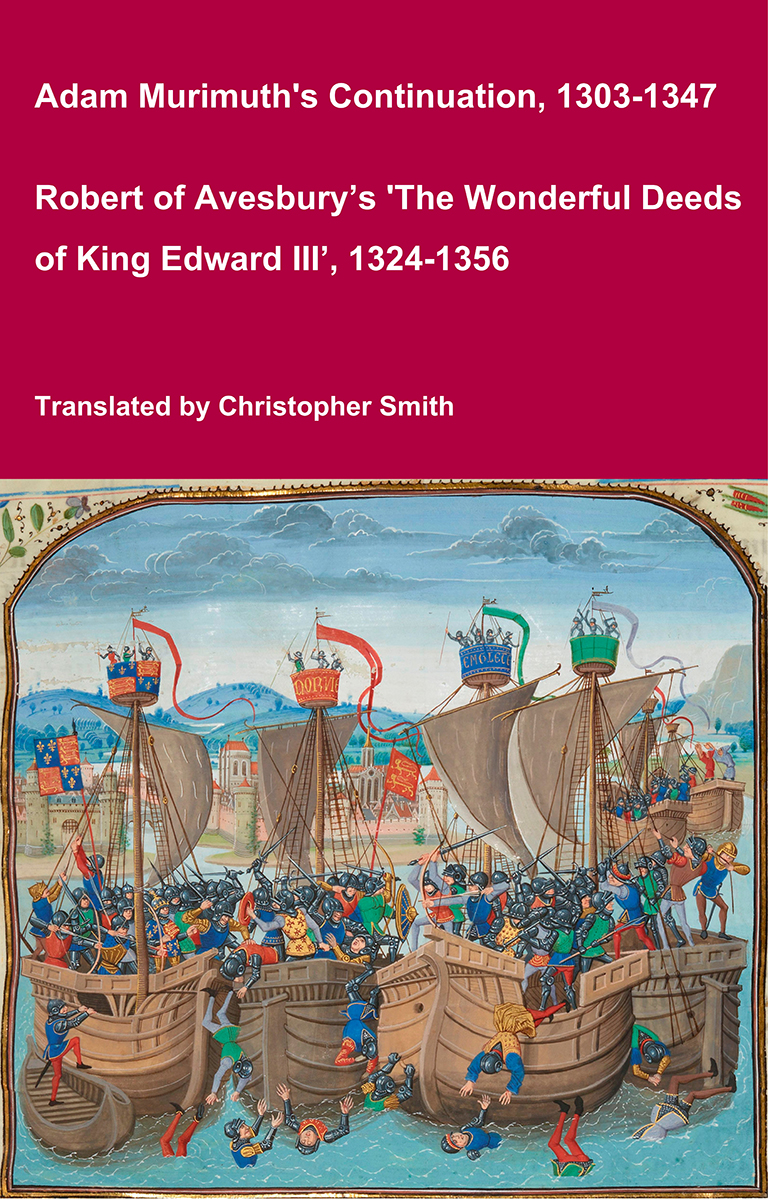
Adam Murimuth's Continuation and Robert of Avesbury’s 'The Wonderful Deeds of King Edward III'
This volume brings together two of the most important contemporary chronicles for the reign of Edward III and the opening phases of the Hundred Years’ War. Written in Latin by English clerical observers, these texts provide a vivid and authoritative window into the political, diplomatic, and military history of fourteenth-century England and its continental ambitions. Adam Murimuth Continuatio's Chronicarum continues an earlier chronicle into the mid-fourteenth century, offering concise but valuable notices on royal policy, foreign relations, and ecclesiastical affairs. Its annalistic structure makes it especially useful for establishing chronology and tracing the development of events year by year. Complementing it, Robert of Avesbury’s De gestis mirabilibus regis Edwardi tertii is a rich documentary chronicle preserving letters, treaties, and official records alongside narrative passages. It is an indispensable source for understanding Edward III’s claim to the French crown, the conduct of war, and the mechanisms of medieval diplomacy. Together, these works offer scholars, students, and enthusiasts a reliable and unembellished account of a transformative period in English and European history. Essential for anyone interested in medieval chronicles, the Hundred Years’ War, or the reign of Edward III.
Available at Amazon in eBook and Paperback format.
On 23rd June 1467 the Tournament was brought to a premature close following the announcement of the death of the Bastard's [aged 46] father Philip "Good" Valois III Duke Burgundy [deceased].
A Brief Latin Chronicle. In the year of our Lord 1467, during the week of Pentecost, the Bastard of Burgundy came to England to fight a single combat with Lord Anthony, Lord Scales. Barriers and pavilions having been set up in Smithfield, London, on the feast of Saint Barnabas (11th June 1467), they entered the designated place and engaged each other almost playfully, but quickly broke off. And certain others who fought afterward there also departed unharmed.
Anno Domini 1467, in ebdomada Pentecostes venit in Angliam bastardus Burgundie dimicaturus certamine singulari cum domino Antonio, domino de Scales; factisque in Smythfeld, London, barris et tentoriis, &c., in festo Sancti Barnabe, ingressi locum dictum quasi ludentes congressi cito cessaverunt. Et alii quidam post eos inibi congressi immunes a plaga recesserunt.
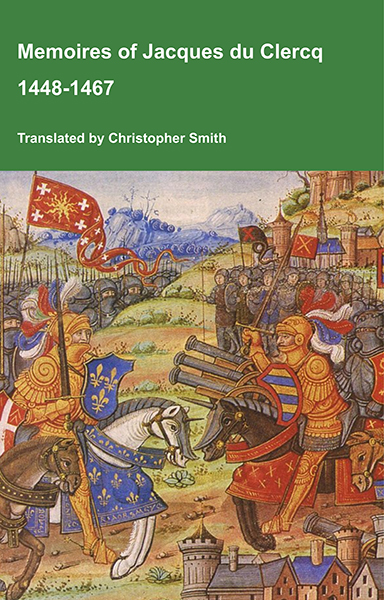 Memoires Jacques du Clercq. Around that time, Anthony, bastard of Burgundy, put to sea from the port of Sluys and went to England, and he went well accompanied, furnished with engines and men of war, because certain sea raiders, who called themselves Spaniards, though they did not speak the truth, for it was said they were from the borders of France, had taken to the sea intending to capture him and cast him down. Of these raiders, two ships were taken by the men of the said bastard, in which there were many goods and men of war, and these ships were plundered. What was done with those inside, I do not know. But the said bastard went safely to England and carried out his feats of arms, of which I say nothing further, for this was a great martial display, as was said, though in truth they were only exercises for pleasure and at the king's will.
Environ ce temps, Anthoine, bastard de Bourgogne, monta en mer au port de l'Escluse, et s'en alla en Angleterre, et y alla bien accompagnié, furny d'engins et de gens de guerre, pour ce que aulcuns escumeurs de mer, qui se disoient Espagnols, mais ils ne disoient pas vray, ains disoit on qu'ils estoient des marches de Franche, s'estoient mis sur la mer pour le cuider prendre et ruer jus. Desquels escu meurs, par les gens dudit bastard feurent prinses deux nefs ou il y avoit plusieurs biens et gens de guerre, lesquelles feurent butinées; que on feit de ceulx de dedans je ne sçay; mais ledit bastard sans dangier alla en Angleterre et feit ses armées, desquelles je me tais, pour ce grand fait d'armes, comme on disoit; car ce n'estoient que armées a plaisance et a la vollonté du roy.