


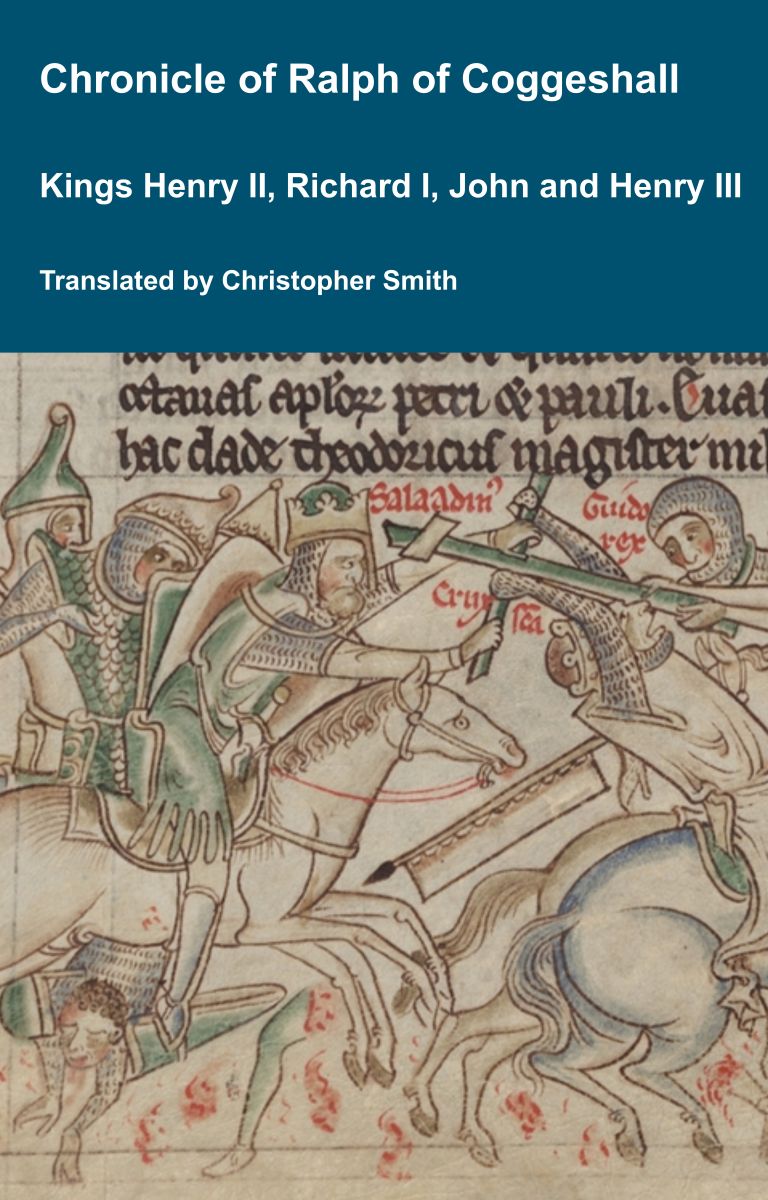
Chronicle of Abbot Ralph of Coggeshall
The Chronicle of Abbot Ralph of Coggeshall (Chronicon Anglicanum) is an indispensable medieval history that brings to life centuries of English and European affairs through the eyes of a learned Cistercian monk. Ralph of Coggeshall, abbot of the Abbey of Coggeshall in Essex in the early 13th century, continued and expanded his community’s chronicle, documenting events from the Norman Conquest of 1066 into the tumultuous reign of King Henry III. Blending eyewitness testimony, careful compilation, and the monastic commitment to record-keeping, this chronicle offers a rare narrative of political intrigue, royal power struggles, and social upheaval in England and beyond. Ralph’s work captures the reigns of pivotal figures such as Richard I and King John, providing invaluable insights into their characters, decisions, and the forces that shaped medieval rule. More than a simple annal, Chronicon Anglicanum conveys the texture of medieval life and governance, making it a rich source for scholars and readers fascinated by English history, monastic authorship, and the shaping of the medieval world.
Available at Amazon in eBook and Paperback format.
Antiquarian Repertory is in Georgian Books.
The following very curious piece is taken from a manuscript of the time which remains in the College of Arms. It was doubtless the work of an officer of arms, who attended the ceremonies which it describes, and was probably composed by the order of Henry the 7th himself, for it exhibits some internal evidence in support of that conjecture which cannot but strike an attentive reader. Many considerations combine to render it peculiarly interesting. It is a complete work, evidently intended for publication at a period when the English, as to original composition, was, with the exception of a most meagre private correspondence, and a very few poems, almost an unwritted language: It relates to a reign of which nothing has been handed down to us but the dry detail of broad historical facts, given by persons who were not born till the succeeding century: It delineates the elegancies, the luxuries, and the general manners of a court almost as little known as those of Egbert or Alfred: It discloses many curious specimens of the rude metrical compositions of that age; and it affords, particularly in the very curious account of the palace of Richmond, a variety of miscellaneous intelligence, absolutely unique.
Some extracts from this manuscript were published in 1774, in the additions to Leland's Collectanea. Edmondson, who furnished those additions, was a coach painter by trade, an antiquary by profession, and a herald by name. Little was to be reasonably expected from selections made by such a person, and he accordingly gave no more of the manuscript than enough to make us wish for the rest. Those who may think it worth while to turn to that edition of the Collectanea will find that the extracts consist almost wholly of a narration of the tournaments, a subject admitting of little or no variety, and on which we had already abundant general information.
I have much pleasure in being the means of enriching your collection with a complete copy of the work; for, curious as it is in all it's parts, it is rendered far more curious by the preservation of it's integrity.
I am, & c.
E. L.
 Become a Member via our Buy Me a Coffee page to read more.