


The True Chronicles of Jean le Bel Volume 1 Chapters 1-60 1307-1342
The True Chronicles of Jean le Bel offer one of the most vivid and immediate accounts of 14th-century Europe, written by a knight who lived through the events he describes, and experienced some of them first hand. Covering the early decades of the Hundred Years’ War, this remarkable chronicle follows the campaigns of Edward III of England, the politics of France and the Low Countries, and the shifting alliances that shaped medieval warfare. Unlike later historians, Jean le Bel writes with a strong sense of eyewitness authenticity, drawing on personal experience and the testimony of fellow soldiers. His narrative captures not only battles and sieges, but also the realities of military life, diplomacy, and the ideals of chivalry that governed noble society. A key source for Jean Froissart, Le Bel’s chronicle stands on its own as a compelling and insightful work, at once historical record and literary achievement. This translation builds on the 1905 edition published in French by Jules Viard, adding extensive translations from other sources Rymer's Fœdera, the Chronicles of Adam Murimuth, William Nangis, Walter of Guisborough, a Bourgeois of Valenciennes, Geoffrey le Baker of Swinbroke and Richard Lescot to enrich the original text and Viard's notes.
Available at Amazon in eBook and Paperback format.
Close Rolls Edward IV Edward V Richard III 1476-1485 is in Close Rolls Edward IV Edward V Richard III.
16th May 1483. King Richard III of England [aged 30]. Westminster Palace [Map]. Grant for life to the king's servant Henry Duke of Buckingham [aged 28], of the offices of chief justice and chamberlain in South and North Wales, constable of the castles and counties of Kermerdyn and Cardigan, the castles of Abrustwith, co Cardigan, and Denevour in South Wales, the castle and town of Tonebigh, co. Pembroke, the castle and lordship of Kylgarvan in South Wales, the castle and town of Llan Stepham in South Wales, the lordship of Wallewynscastell in South Wales, the lordship of Westhaverford in South Wales, constable, steward, and receiver of the castle, lordshiop and manor of Uske, the castle and lordship of Carlion, the castle, lordship and manor of Dynas, the castle and a moiety of the lordship of Ewyas Lacy [Map], the castles, lordships and manors of Belth,Clifford, Radnore, Melenyth, Montgomery, Dynbigh, Elvell and Narberth, the castle, lordship and manors of Wygmore [Map] and Holt [Map] in the marches of Wales, and the lordship and manor of Bromfield [Map] in the same marches, steward and receiver of the lordships and manors of Norton, Knyghton, Raydor, Guerthrenyon, Comotoyder, Glasbury, Weryfreton, Cherbury, Terthic, Halcetur, Kadewyn, Newton, Kyry in the marches.
20th May 1483 King Richard III of England [aged 30]. Westminster Palace [Map]. Grant to the king's kinsman Henry Duke of Buckingham [aged 28], of the supervision and power of array of the king's subjects in the counties of Salop, Hereford, Somerset, Dorset and Wilts. By p.s.
20th May 1483 King Richard III of England [aged 30]. Westminster Palace [Map]. Grant for life to the king's servant William Hastings [aged 52], knight, of the office of master and worker of the king's moneys and keeper of the exchange within the Tower of London [Map], the realm of England and the town of Calais according to the form of certain indentures, receiving the accustomed fees. By p.s.
30th June 1483 King Richard III of England [aged 30]. Westminster Palace [Map]. Commission to the king's kinsman John duke of Norfolk [aged 58], to execute the office of steward of England at the king's coronation. By K.
30th June 1483 William Catesby [aged 33] was appointed Chancellor of the Exchequer. King Richard III of England [aged 30]. Westminster Palace [Map] Grant for life to William Catesby, esquire, of the office of Baron of the Exchequer, receiving the accustomed fees at the Exchequer or the receipt of the Exchequer, with all rights, profits and commodities. By p.s.
15th July 1483 Henry Stafford 2nd Duke of Buckingham [aged 28] was appointed Constable of England. King Richard III of England [aged 30]. Westminster Palace [Map]. Grant for life to the king's kinsman Henry, Duke of Buckingham, of divers specified offices and powers in North and South Wales and the marches.
The like to the same of the office of constable of England, with the accustomed fees. By p.s.
25th July 1483. John Howard 1st Duke of Norfolk [aged 58] was appointed Lord Admiral of all England Ireland and Aquitaine. King Richard III of England [aged 30]. Westminster Palace [Map]. Grant for life to the king's kinsman Henry, duke of Norfolk, of the office of admiral of England, Ireland and Aquitaine, with certain specified powers and the accustomed fees. By p.s.
14th August 1483 Francis Lovell 1st Viscount Lovell [aged 27] was appointed Chief Butler of England. King Richard III of England [aged 30]. Westminster Palace [Map]. Grant for life to the king's kinsman Francis Lovell, knight, Viscount Lovel, the king's chamberlain, of the office of Chief Butler of England, void by the death of Anthony, late earl Rivers, receiving fees of 100l yearly from the customs and prises of wines and other issues of his office, with all other profits. By p.s.
23rd October 1483 King Richard III of England [aged 31]. Leicester, Leicestershire [Map]. Precept to the Sheriff of Devon to issue a proclamation (English) denouncing Thomas Dorset, late Marquess of Dorset [aged 28], who holds unshameful and mischievous woman called Shore's wife in adultery, Sir William Noreys [aged 42], Sir William Knevet [aged 43], Sir Thomas Bourghchier of Barnes, Sir George Broun, knights, John Cheyne, John Noreis, Walter Hungerford, John Russh and John Harecourt of Staunton, who have assembled the Person by the comfort of the great rebel the late duke of Bukyngham [aged 29] and bishops of Ely and Salisbury, and offering rewards for their capture and pardon for all who withdraw from them. By K.
28th October 1483 King Richard III of England [aged 31]. Leicester, Leicestershire [Map]. General commission of array to the king's kinsman Francis Lovell, Viscount Lovel his chamberlain, for the resistance of the rebel Henry, duke of Buskingham. Mutilated. By K. by word of mouth.
On 5th November 1483 King Richard III of England [aged 31]. Bridport, Dorset [Map]. Commission of array in Wales to the king's kinsman William, Earl of Huntingdon [aged 32], and James Tyrrell [aged 28], knight, for the resistance of the rebels. By K. by word of mouth.
The like to James Tyrell, knight.
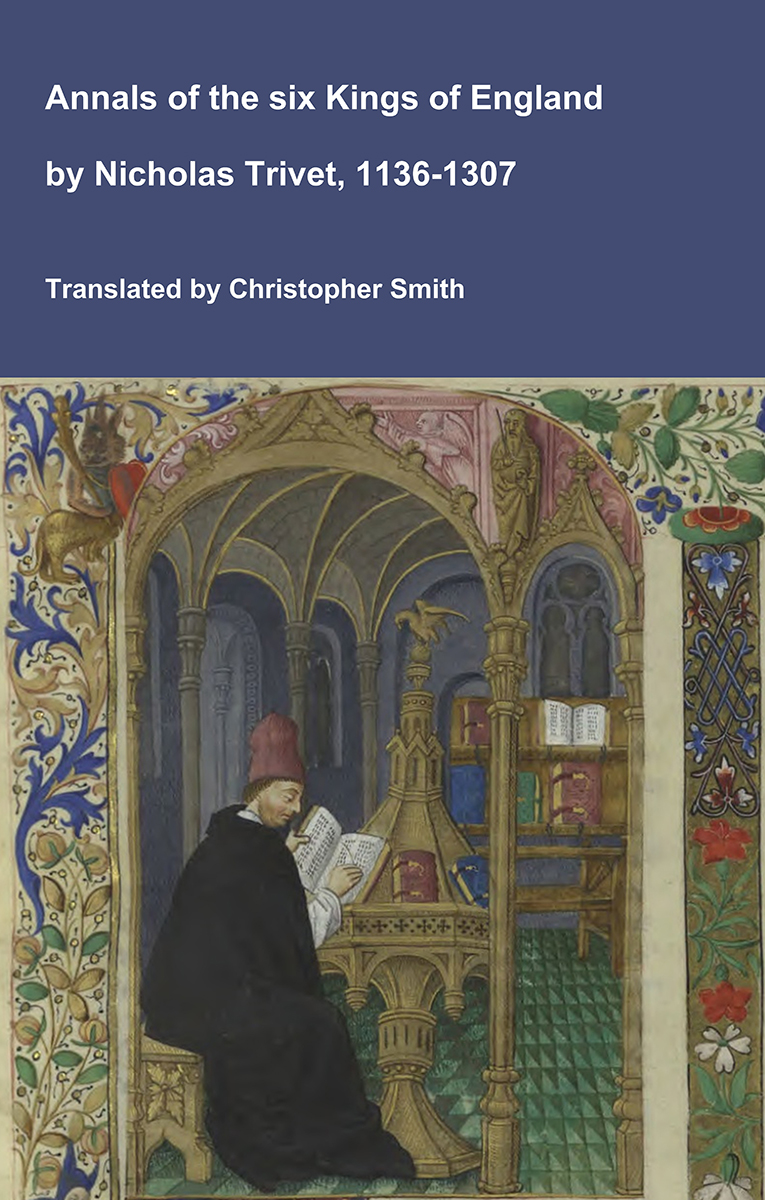
Annals of the six Kings of England by Nicholas Trivet
Translation of the Annals of the Six Kings of England by that traces the rise and rule of the Angevin aka Plantagenet dynasty from the mid-12th to early 14th century. Written by the Dominican scholar Nicholas Trivet, the work offers a vivid account of English history from the reign of King Stephen through to the death of King Edward I, blending political narrative with moral reflection. Covering the reigns of six monarchs—from Stephen to Edward I—the chronicle explores royal authority, rebellion, war, and the shifting balance between crown, church, and nobility. Trivet provides detailed insight into defining moments such as baronial conflicts, Anglo-French rivalry, and the consolidation of royal power under Edward I, whose reign he describes with particular immediacy. The Annals combines careful year-by-year reporting with thoughtful interpretation, presenting history not merely as a sequence of events but as a moral and political lesson. Ideal for readers interested in medieval history, kingship, and the origins of the English state, this chronicle remains a valuable and accessible window into the turbulent world of the Plantagenet kings.
Available at Amazon in eBook and Paperback format.
9th March 1484 King Richard III of England [aged 31]. Westminster Palace [Map]. Grant for life to the king's servant Robert Brackenbury of the office of Constable of the Tower of London and £100 yearly for his wages from the issues of the manors or lordships of Wrottell, Haveryng, Boyton, Hadlegh, Raylegh and Rocheford, co Essex, and Tunbrich, Penshurste, Middleton and Merdon and the hundred of Middleton, co Kent, with arrears from 17 July last, in lieu of a grant to him by letters patent of that date surrendered. By p.s.