

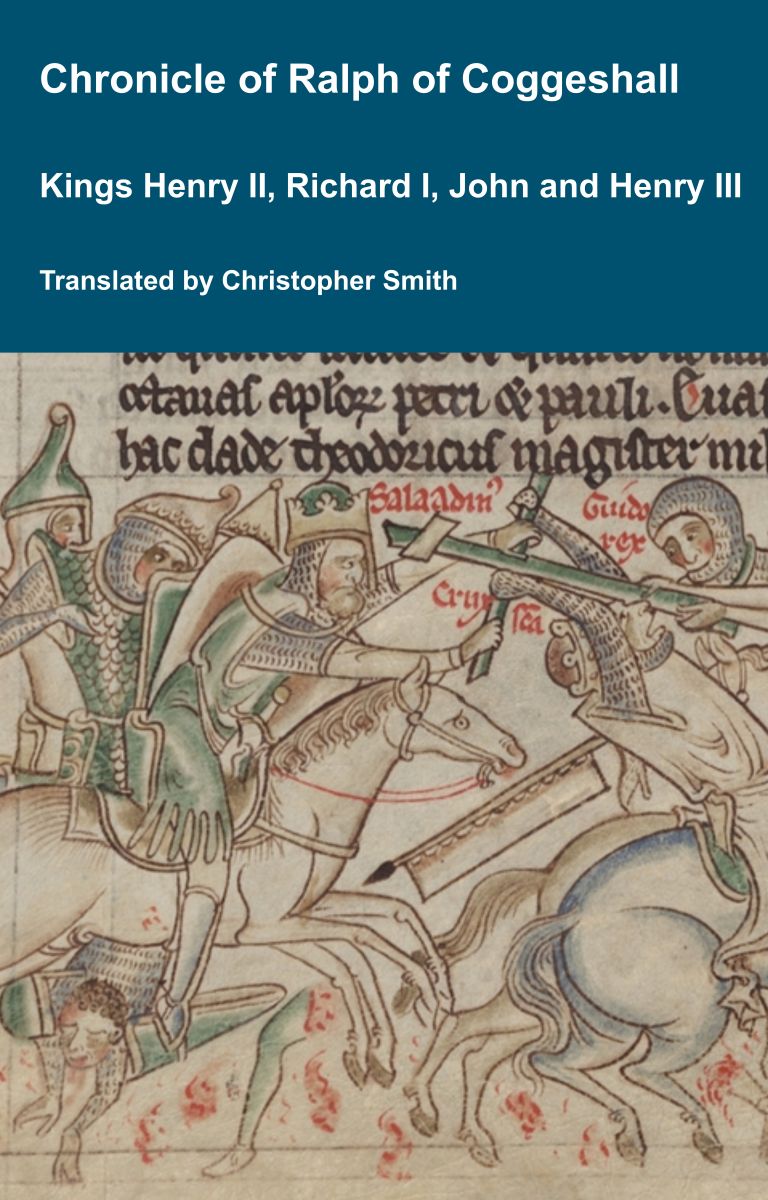
Chronicle of Abbot Ralph of Coggeshall
The Chronicle of Abbot Ralph of Coggeshall (Chronicon Anglicanum) is an indispensable medieval history that brings to life centuries of English and European affairs through the eyes of a learned Cistercian monk. Ralph of Coggeshall, abbot of the Abbey of Coggeshall in Essex in the early 13th century, continued and expanded his community’s chronicle, documenting events from the Norman Conquest of 1066 into the tumultuous reign of King Henry III. Blending eyewitness testimony, careful compilation, and the monastic commitment to record-keeping, this chronicle offers a rare narrative of political intrigue, royal power struggles, and social upheaval in England and beyond. Ralph’s work captures the reigns of pivotal figures such as Richard I and King John, providing invaluable insights into their characters, decisions, and the forces that shaped medieval rule. More than a simple annal, Chronicon Anglicanum conveys the texture of medieval life and governance, making it a rich source for scholars and readers fascinated by English history, monastic authorship, and the shaping of the medieval world.
Available at Amazon in eBook and Paperback format.
Effigy of John Wantley is in Monumental Effigies of Great Britain.
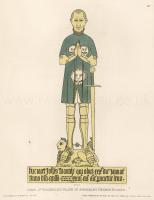
ALL that we can find relative to the person represented by this sepulchral brass, is little more than may be learned from its inscription. He was of an ancient family, settled at Amberley, in Sussex, died in 1424, and was buried in the village church. Two farms in the parish of Amberley are called Wantley's at this day. In his dress we have an example of the surcoat, assuming the form of the habiliment commonly known as a tabard: the surcoat and tabard are, however, synonymous terms. Wantley's tabard bears, Vert, three lions' heads langued Argent, represented in enamel on the brass. The upper part of a shirt of mail appears about the neck, where uncovered by the tabard. Under his feet, in the black letter, is this inscription:
Hic jacet Joh'es Wantele, qui obiit xxix die Januar', anno D'ni mill'o CCCCXXIIII, cui' aie' p'picetur deus.