

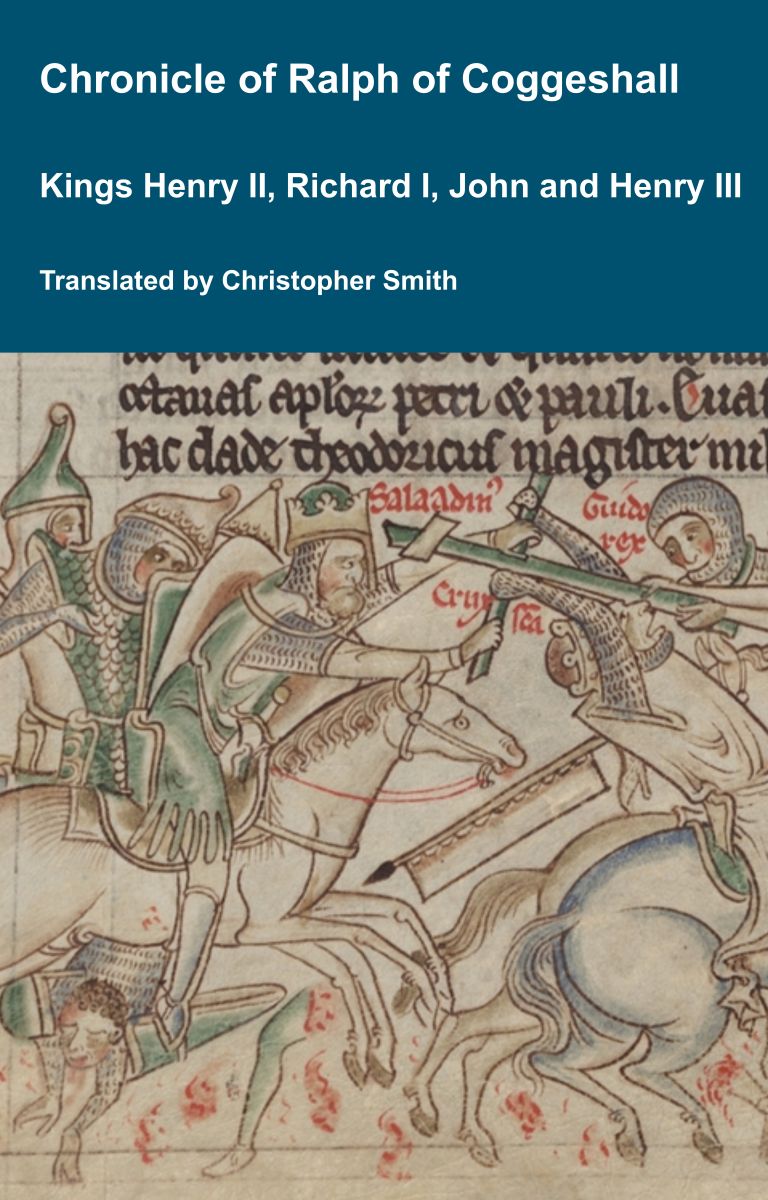
Chronicle of Abbot Ralph of Coggeshall
The Chronicle of Abbot Ralph of Coggeshall (Chronicon Anglicanum) is an indispensable medieval history that brings to life centuries of English and European affairs through the eyes of a learned Cistercian monk. Ralph of Coggeshall, abbot of the Abbey of Coggeshall in Essex in the early 13th century, continued and expanded his community’s chronicle, documenting events from the Norman Conquest of 1066 into the tumultuous reign of King Henry III. Blending eyewitness testimony, careful compilation, and the monastic commitment to record-keeping, this chronicle offers a rare narrative of political intrigue, royal power struggles, and social upheaval in England and beyond. Ralph’s work captures the reigns of pivotal figures such as Richard I and King John, providing invaluable insights into their characters, decisions, and the forces that shaped medieval rule. More than a simple annal, Chronicon Anglicanum conveys the texture of medieval life and governance, making it a rich source for scholars and readers fascinated by English history, monastic authorship, and the shaping of the medieval world.
Available at Amazon in eBook and Paperback format.
Memoirs of the Anthropological Society of London is in Prehistory.
Skulls from Long Barrow, Oldbury [Map], Wilts.—In the same year (1864), in digging in a chalk-pit near the ancient British camp of Oldbury, North Wiltshire, about three miles from the elebrated megalithic circles at Avebury, two or three skeletons were uncovered at the base of the east end of what turned out to be a long barrow, of low elevation. The measurements of three skulls, which, though quite dolichocephalous, are of small size, and not very characteristic, are given in the table. Two of the skulls appear to be those of women, and are in the possession of Mr. Cunnington, of Devizes, who assisted in their exhumation. The other skull, that of a man, has been added to my collection (No. 198). Near the skeletons were a number of flint flakes, with one or two cores, from which they had been broken off. At the centre of the mound was a small irregularly-shaped cist, built up with sarsen stones: it was empty. This tumulus, though of oblong form, has not the unequivocal characters of a long barrow; it appears, however, to have belonged to that class.