

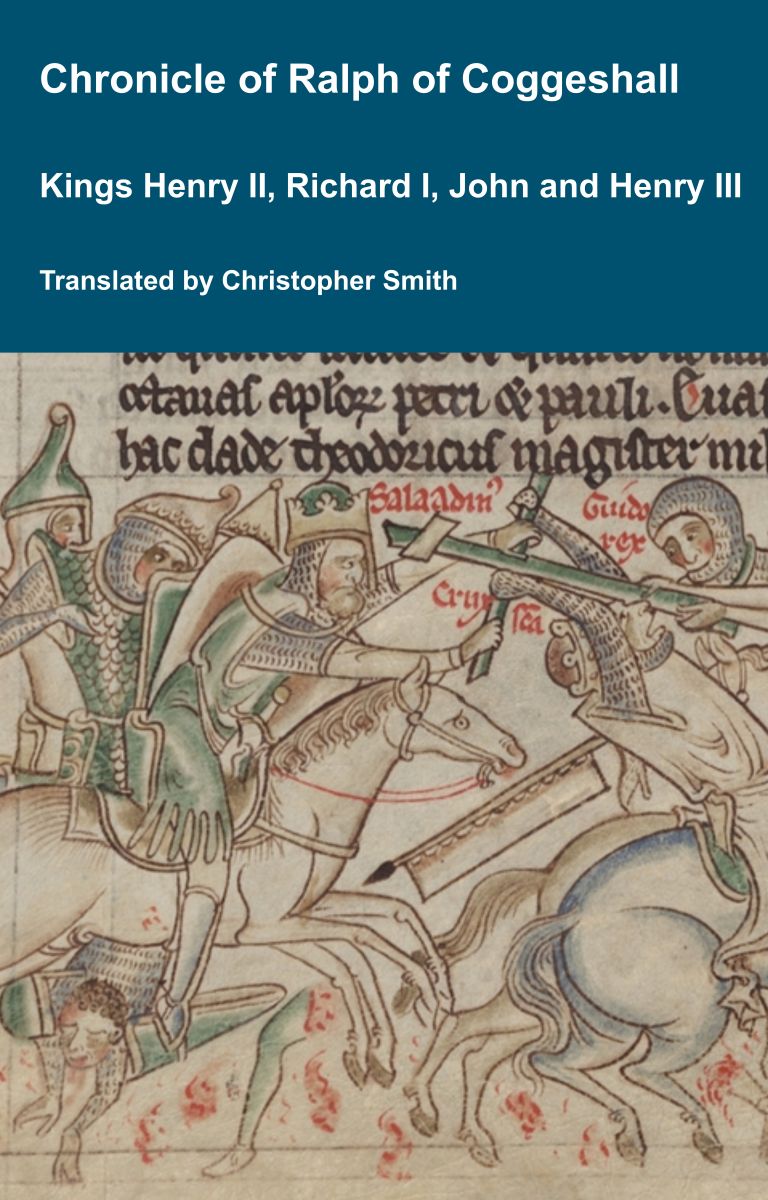
Chronicle of Abbot Ralph of Coggeshall
The Chronicle of Abbot Ralph of Coggeshall (Chronicon Anglicanum) is an indispensable medieval history that brings to life centuries of English and European affairs through the eyes of a learned Cistercian monk. Ralph of Coggeshall, abbot of the Abbey of Coggeshall in Essex in the early 13th century, continued and expanded his community’s chronicle, documenting events from the Norman Conquest of 1066 into the tumultuous reign of King Henry III. Blending eyewitness testimony, careful compilation, and the monastic commitment to record-keeping, this chronicle offers a rare narrative of political intrigue, royal power struggles, and social upheaval in England and beyond. Ralph’s work captures the reigns of pivotal figures such as Richard I and King John, providing invaluable insights into their characters, decisions, and the forces that shaped medieval rule. More than a simple annal, Chronicon Anglicanum conveys the texture of medieval life and governance, making it a rich source for scholars and readers fascinated by English history, monastic authorship, and the shaping of the medieval world.
Available at Amazon in eBook and Paperback format.
Paternal Family Tree: Macedonia
Before 69BC [her father] Ptolemy XII Auletes Pharoah of Egypt 117BC 51BC (age 47) and [her mother] Cleopatra V Tryphaena 57BC were married. They were uncle and niece.
In 69BC Cleopatra VII Philopator 69BC 30BC was born to [her father] Ptolemy XII Auletes Pharoah of Egypt 117BC 51BC (age 48) and [her mother] Cleopatra V Tryphaena 57BC. Coefficient of inbreeding 47.27%.
Before 21st March 51BC [her father] Ptolemy XII Auletes Pharoah of Egypt 117BC 51BC (age 66) died. His daughter Cleopatra (age 18) succeeded Pharaoh of Egypt.
Around October 50BC Ptolemy XIII Theos Philopator 61BC 47BC (age 11) and Cleopatra VII Philopator 69BC 30BC (age 19) were married. They were brother and sister.
On 13th January 47BC [her half-brother] Ptolemy XIII Theos Philopator 61BC 47BC (age 14) drowned in the River Nile following, or during the course of, the Battle of the Nile.
After 13th January 47BC Ptolemy XIV Philopator 59BC 44BC and Cleopatra VII Philopator 69BC 30BC (age 22) were married. They were brother and sister.
On 23rd June 47BC [her son] Ptolemy XV Ceasar aka Caesarion 47BC 30BC was born to Gaius Julius Caesar 100BC 44BC and Cleopatra VII Philopator 69BC 30BC (age 22).
After 26th March 44BC [her half-brother] Ptolemy XIV Philopator 59BC 44BC died.
Around July 40BC [her daughter] Cleopatra Selene II 40BC 5BC was born to Mark Antony 83BC 30BC (age 43) and Cleopatra VII Philopator 69BC 30BC (age 29).
On 10th August 30BC Cleopatra VII Philopator 69BC 30BC (age 39) committed suicide.
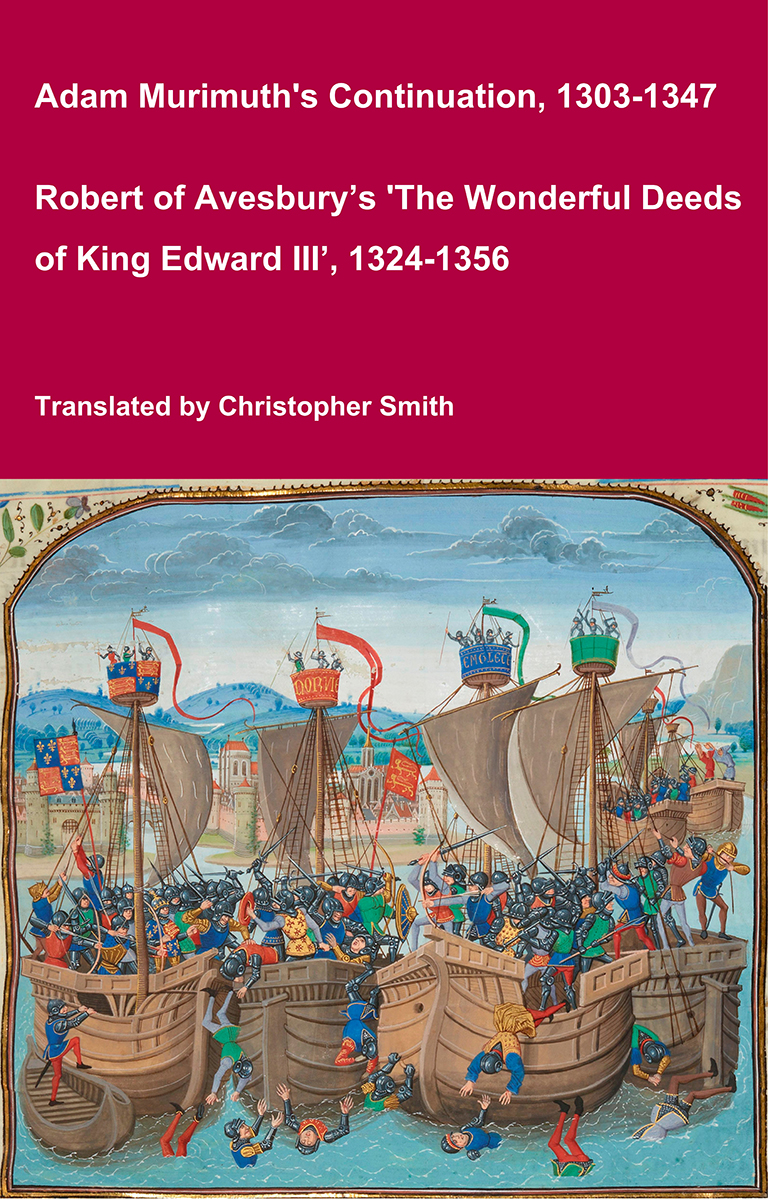
Adam Murimuth's Continuation and Robert of Avesbury’s 'The Wonderful Deeds of King Edward III'
This volume brings together two of the most important contemporary chronicles for the reign of Edward III and the opening phases of the Hundred Years’ War. Written in Latin by English clerical observers, these texts provide a vivid and authoritative window into the political, diplomatic, and military history of fourteenth-century England and its continental ambitions. Adam Murimuth Continuatio's Chronicarum continues an earlier chronicle into the mid-fourteenth century, offering concise but valuable notices on royal policy, foreign relations, and ecclesiastical affairs. Its annalistic structure makes it especially useful for establishing chronology and tracing the development of events year by year. Complementing it, Robert of Avesbury’s De gestis mirabilibus regis Edwardi tertii is a rich documentary chronicle preserving letters, treaties, and official records alongside narrative passages. It is an indispensable source for understanding Edward III’s claim to the French crown, the conduct of war, and the mechanisms of medieval diplomacy. Together, these works offer scholars, students, and enthusiasts a reliable and unembellished account of a transformative period in English and European history. Essential for anyone interested in medieval chronicles, the Hundred Years’ War, or the reign of Edward III.
Available at Amazon in eBook and Paperback format.
Cassius Dio Roman History Book 51 Chapter 14. 10th August 30BC. 1. And no one knows clearly by what means she [Cleopatra VII Philopator 69BC 30BC (age 39)] was destroyed: for only small punctures were found around her arm: some say that an asp was brought to her in a water jar or even in some flowers.
1. καὶ τὸ μὲν σαφὲς οὐδεὶς οἶδεν ᾧ τρόπῳ διεφθάρη: κεντήματα γὰρ λεπτὰ περὶ τὸν βραχίονα αὐτῆς μόνα εὑρέθη: λέγουσι δὲ οἱ μὲν ὅτι ἀσπίδα ἐν ὑδρίᾳ ἢ καὶ ἐν ἄνθεσί τισιν ἐσκομισθεῖσάν οἱ.
Cassius Dio Roman History Book 51 Chapter 13. 10th August 30BC. 5. She [Cleopatra VII Philopator 69BC 30BC (age 39)] gave orders to Epaphroditus, so that under the pretext of taking him away, she could have something else cleared from her path, and thus she attended to the task. After putting on her most splendid clothing, arranging herself in the most becoming manner, and assuming her entire royal appearance, she died.
5. Ἐπαφροδίτῳ σεσημασμένον, ὅπως προφάσει τῆς ἀποκομιδῆς αὐτοῦ ὡς καὶ ἄλλο τι ἔχοντος ἐκποδών οἱ γένηται, δοῦσα ἔργου εἴχετο. τήν τε γὰρ ἐσθῆτα τὴν περικαλλεστάτην ἐνδῦσα, καὶ ἑαυτὴν εὐπρεπέστατα εὐθετήσασα, τό τε σχῆμα τὸ βασιλικὸν πᾶν ἀναλαβοῦσα, ἀπέθανε.

1658. Guido Cagnacci (age 56). "The Death of Cleopatra".

1674 to 1675. Benedetto Gennari II (age 40). "Cleopatra".

1797. Jean-Baptiste Regnault (age 42). "The Death of Cleoptra".

1874. Jean-André Rixens (age 27). "The Death of Cleopatra".

1890. John Collier (age 39). The Death of Cleopatra.

1892. Reginald Arthur Smith (age 21). "Cleopatra".
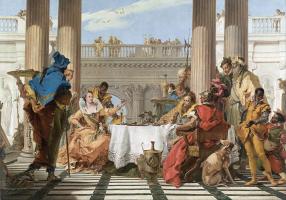
1744. Giovanni Battista Tiepolo (age 47). "The Banquet of Cleopatra".
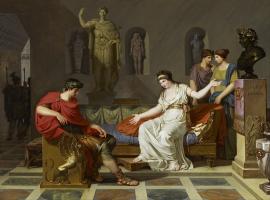
1787. Louis Gauffier (age 25). "Cleopatra and Octavian".

Anne Boleyn. Her Life as told by Lancelot de Carle's 1536 Letter.
In 1536, two weeks after the execution of Anne Boleyn, her brother George and four others, Lancelot du Carle, wrote an extraordinary letter that described Anne's life, and her trial and execution, to which he was a witness. This book presents a new translation of that letter, with additional material from other contemporary sources such as Letters, Hall's and Wriothesley's Chronicles, the pamphlets of Wynkyn the Worde, the Memorial of George Constantyne, the Portuguese Letter and the Baga de Secrets, all of which are provided in Appendices.
Available at Amazon in eBook and Paperback format.
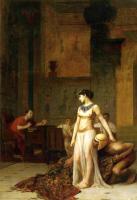
1866. Jean-Léon Gérôme (age 41). "Cleopatra and Ceasar".

1881. Frank Bernard Dicksee (age 27). "Cleopatra".

1885. Lawrence Alma-Tadema (age 48). "The Meeting of Antony and Cleopatra".

1887. Alexandre Cabanel (age 63). "Cleopatra Testing Poisons on Condemned Prisoners".
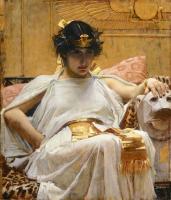
1888. John William Waterhouse (age 38). "Cleopatra".
Great x 4 Grandfather: Ptolemy III Euergetes 280BC 222BC
Great x 3 Grandfather: Ptolemy IV Philopator 244BC 204BC
Great x 4 Grandmother: Berenice II
Great x 2 Grandfather: Ptolemy V Epiphanes 210BC 180BC
Great x 4 Grandfather: Ptolemy III Euergetes 280BC 222BC
Great x 3 Grandmother: Arsinoe III 246BC 204BC
Great x 4 Grandmother: Berenice II
Great x 1 Grandfather: Ptolemy VIII Physcon 184BC 116BC
Great x 3 Grandfather: Antiochus III King of the Seleucids
Great x 2 Grandmother: Cleopatra I
GrandFather: Ptolemy IX Soter 142BC 81BC
Great x 4 Grandfather: Ptolemy IV Philopator 244BC 204BC
Great x 3 Grandfather: Ptolemy V Epiphanes 210BC 180BC
Great x 4 Grandmother: Arsinoe III 246BC 204BC
Great x 2 Grandfather: Ptolemy VI 186BC 145BC
Great x 4 Grandfather: Antiochus III King of the Seleucids
Great x 3 Grandmother: Cleopatra I
Great x 1 Grandmother: Cleopatra III 160BC 101BC
Great x 4 Grandfather: Ptolemy IV Philopator 244BC 204BC
Great x 3 Grandfather: Ptolemy V Epiphanes 210BC 180BC
Great x 4 Grandmother: Arsinoe III 246BC 204BC
Great x 2 Grandmother: Cleopatra II 186BC 115BC
Great x 4 Grandfather: Antiochus III King of the Seleucids
Great x 3 Grandmother: Cleopatra I
Father: Ptolemy XII Auletes Pharoah of Egypt 117BC 51BC
Great x 4 Grandfather: Ptolemy III Euergetes 280BC 222BC
Great x 3 Grandfather: Ptolemy IV Philopator 244BC 204BC
Great x 4 Grandmother: Berenice II
Great x 2 Grandfather: Ptolemy V Epiphanes 210BC 180BC
Great x 4 Grandfather: Ptolemy III Euergetes 280BC 222BC
Great x 3 Grandmother: Arsinoe III 246BC 204BC
Great x 4 Grandmother: Berenice II
Great x 1 Grandfather: Ptolemy VIII Physcon 184BC 116BC
Great x 3 Grandfather: Antiochus III King of the Seleucids
Great x 2 Grandmother: Cleopatra I
GrandMother: Cleopatra IV 138BC 112BC
Great x 4 Grandfather: Ptolemy IV Philopator 244BC 204BC
Great x 3 Grandfather: Ptolemy V Epiphanes 210BC 180BC
Great x 4 Grandmother: Arsinoe III 246BC 204BC
Great x 2 Grandfather: Ptolemy VI 186BC 145BC
Great x 4 Grandfather: Antiochus III King of the Seleucids
Great x 3 Grandmother: Cleopatra I
Great x 1 Grandmother: Cleopatra III 160BC 101BC
Great x 4 Grandfather: Ptolemy IV Philopator 244BC 204BC
Great x 3 Grandfather: Ptolemy V Epiphanes 210BC 180BC
Great x 4 Grandmother: Arsinoe III 246BC 204BC
Great x 2 Grandmother: Cleopatra II 186BC 115BC
Great x 4 Grandfather: Antiochus III King of the Seleucids
Great x 3 Grandmother: Cleopatra I
Cleopatra VII Philopator 69BC 30BC
Great x 4 Grandfather: Ptolemy III Euergetes 280BC 222BC
Great x 3 Grandfather: Ptolemy IV Philopator 244BC 204BC
Great x 4 Grandmother: Berenice II
Great x 2 Grandfather: Ptolemy V Epiphanes 210BC 180BC
Great x 4 Grandfather: Ptolemy III Euergetes 280BC 222BC
Great x 3 Grandmother: Arsinoe III 246BC 204BC
Great x 4 Grandmother: Berenice II
Great x 1 Grandfather: Ptolemy VIII Physcon 184BC 116BC
Great x 3 Grandfather: Antiochus III King of the Seleucids
Great x 2 Grandmother: Cleopatra I
GrandFather: Ptolemy X Alexander I 140BC 88BC
Great x 4 Grandfather: Ptolemy IV Philopator 244BC 204BC
Great x 3 Grandfather: Ptolemy V Epiphanes 210BC 180BC
Great x 4 Grandmother: Arsinoe III 246BC 204BC
Great x 2 Grandfather: Ptolemy VI 186BC 145BC
Great x 4 Grandfather: Antiochus III King of the Seleucids
Great x 3 Grandmother: Cleopatra I
Great x 1 Grandmother: Cleopatra III 160BC 101BC
Great x 4 Grandfather: Ptolemy IV Philopator 244BC 204BC
Great x 3 Grandfather: Ptolemy V Epiphanes 210BC 180BC
Great x 4 Grandmother: Arsinoe III 246BC 204BC
Great x 2 Grandmother: Cleopatra II 186BC 115BC
Great x 4 Grandfather: Antiochus III King of the Seleucids
Great x 3 Grandmother: Cleopatra I
Mother: Cleopatra V Tryphaena 57BC
Great x 4 Grandfather: Ptolemy IV Philopator 244BC 204BC
Great x 3 Grandfather: Ptolemy V Epiphanes 210BC 180BC
Great x 4 Grandmother: Arsinoe III 246BC 204BC
Great x 2 Grandfather: Ptolemy VIII Physcon 184BC 116BC
Great x 4 Grandfather: Antiochus III King of the Seleucids
Great x 3 Grandmother: Cleopatra I
Great x 1 Grandfather: Ptolemy IX Soter 142BC 81BC
Great x 4 Grandfather: Ptolemy V Epiphanes 210BC 180BC
Great x 3 Grandfather: Ptolemy VI 186BC 145BC
Great x 4 Grandmother: Cleopatra I
Great x 2 Grandmother: Cleopatra III 160BC 101BC
Great x 4 Grandfather: Ptolemy V Epiphanes 210BC 180BC
Great x 3 Grandmother: Cleopatra II 186BC 115BC
Great x 4 Grandmother: Cleopatra I
GrandMother: Berenice III 115BC 80BC
Great x 4 Grandfather: Ptolemy IV Philopator 244BC 204BC
Great x 3 Grandfather: Ptolemy V Epiphanes 210BC 180BC
Great x 4 Grandmother: Arsinoe III 246BC 204BC
Great x 2 Grandfather: Ptolemy VIII Physcon 184BC 116BC
Great x 4 Grandfather: Antiochus III King of the Seleucids
Great x 3 Grandmother: Cleopatra I
Great x 1 Grandmother: Cleopatra Selene of Syria 135BC 130BC
Great x 4 Grandfather: Ptolemy V Epiphanes 210BC 180BC
Great x 3 Grandfather: Ptolemy VI 186BC 145BC
Great x 4 Grandmother: Cleopatra I
Great x 2 Grandmother: Cleopatra III 160BC 101BC
Great x 4 Grandfather: Ptolemy V Epiphanes 210BC 180BC
Great x 3 Grandmother: Cleopatra II 186BC 115BC
Great x 4 Grandmother: Cleopatra I