

The History of William Marshal was commissioned by his son shortly after William’s death in 1219 to celebrate the Marshal’s remarkable life; it is an authentic, contemporary voice. The manuscript was discovered in 1861 by French historian Paul Meyer. Meyer published the manuscript in its original Anglo-French in 1891 in two books. This book is a line by line translation of the first of Meyer’s books; lines 1-10152. Book 1 of the History begins in 1139 and ends in 1194. It describes the events of the Anarchy, the role of William’s father John, John’s marriages, William’s childhood, his role as a hostage at the siege of Newbury, his injury and imprisonment in Poitou where he met Eleanor of Aquitaine and his life as a knight errant. It continues with the accusation against him of an improper relationship with Margaret, wife of Henry the Young King, his exile, and return, the death of Henry the Young King, the rebellion of Richard, the future King Richard I, war with France, the death of King Henry II, and the capture of King Richard, and the rebellion of John, the future King John. It ends with the release of King Richard and the death of John Marshal.
Available at Amazon in eBook and Paperback format.
In or before 1632 [his father] Chaloner Chute of The Vyne and [his mother] Anne Scory were married.
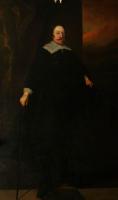

In 1632 Chaloner Chute was born to Chaloner Chute of The Vyne and Anne Scory.
In 1654 Chaloner Chute [aged 22] and Catherine Lennard were married.
In 1659 Chaloner Chute [aged 27] was elected MP Devizes.

Before 14th April 1659 [his father] Chaloner Chute of The Vyne and [his step-mother] Dorothy North Baroness Dacre of Gilsland [aged 54] were married.
On 14th April 1659 [his father] Chaloner Chute of The Vyne died.
On 17th May 1661 Chaloner Chute [aged 29] was elected MP Haslemere but was unseated three days later on the merits of the election.
In 1666 Chaloner Chute [aged 34] died.
Letters of Horace Walpole. 5th August 1752. Here our woes increase. The roads row bad beyond all badness, the night dark beyond all darkness, our guide frightened beyond all frightfulness. However, without being at all killed, we got UP, or down,-I forget which, it was so dark,-a famous precipice called Silver Hill, and about ten at night arrived at a wretched village called Rotherbridge. We had still six miles hither, but determined to stop, as it would be a pity to break our necks before we had seen all we intended. But alas! there was only one bed to be had: all the rest were inhabited by smugglers, whom the people of the house called mountebanks; and with one of whom the lady of the den told Mr. Chute he might lie. We did not at all take to this society, but, armed with links and lanthems, set out again upon this impracticable journey. At two o'clock in the morning we got hither to a still worse inn, and that crammed with excise officers, one of whom had just shot a smuggler. However, as we were neutral powers, we have passed safely through both armies hitherto, and can give you a little farther history of our wandering through these mountains, where the young gentlemen are forced to drive their curricles with a pair of oxen. the only morsel of good road we have found, was what even the natives had assured us was totally impracticable: these were eight miles to Hurst Monceaux.338 It is seated at the end of a large vale, five miles in a direct line to the sea, with wings of blue hills covered with wood, one of which falls down to the in a sweep of a hundred acres. The building, for the convenience of water to the moat, sees nothing at all; indeed it is entirely imagined on a plan of defence, with drawbridges actually in being, round towers, watch-towers mounted on them, and battlements pierced for the passage of arrows from long bows. It was built in the time of Henry VI, and is as perfect as the first day. It does not seem to have been ever quite finished, or at least that age was not arrived at the luxury of white-wash; for almost all the walls, except in the principal chambers, are in their native brickhood. It is a square building, each side about two hundred feet in length; a porch and cloister, very like Eton College; and the whole is much in the same taste, the kitchen extremely so, with three vast funnels to the chimneys going up on the inside. There are two or three little courts for offices, but no magnificence of apartments. It is scarcely furnished with a few necessary beds and chairs: one side has been sashed, and a drawing-room and dining-room and two or three rooms wainscoted by the Earl of Sussex, who married a natural daughter of Charles II. Their arms with delightful carvings by Gibbons-, particularly two pheasants, hang over the chimneys. Over the great drawing-room chimney is the first coat armour of the first Leonard, Lord Dacre, with all his alliances. Mr. Chute was transported, and called cousin with ten thousand quarterings.339 The chapel is small, and mean: the Virgin and seven long lean saints, ill done, remain in the windows. There have been four more, but seem to have been removed for light; and we actually found St. Catherine, and another gentlewoman with a church in her hand, exiled into the buttery. There remain two odd cavities, with very small wooden screens on each side the altar, which seem to have been confessionals. The outside is a mixture of gray brick and stone, that has a very venerable appearance. The drawbridges are romantic to a degree; and there is a dungeon, that gives one a delightful idea of living in the days of soccage and under such goodly tenures. They showed us a dismal chamber which they called Drummer's-hall, and suppose that Mr. Addison's comedy is descended from it. In the windows of the gallery over the cloisters, which leads all round to the apartments, is the device of the Fienneses, a wolf holding a baton with a scroll, Le roy le veut - an unlucky motto, as I shall tell you presently, to the last peer of that line. The estate is two thousand a year, and so compact as to have but seventeen houses upon it. We walked up a brave old avenue to the church, with ships sailing on our left hand the whole way. Before the altar lies a lank brass knight, knight William Fienis, chevalier, who obiit c.c.c.c.v. that is in 1405. By the altar is a beautiful tomb, all in our trefoil taste, varied into a thousand little canopies and patterns, and two knights reposing on their backs. These were Thomas, Lord Dacre, and his only son Gregory, who died sans issue. An old grayheaded beadsman of the family talked to us of a blot in the scutcheon; and we had observed that the field of the arms was green instead of blue, and the lions ramping to the right, contrary to order. This and the man's imperfect narrative let us into the circumstances of the personage before us; for there is no inscription. He went in a Chevy-chase style to hunt in a Mr. Pelham's [aged 57]340 park at Lawton: the keepers opposed, a fray ensued, a man was killed. The haughty baron took the death upon himself, as most secure of pardon; but however, though there was no chancellor of the exchequer in the question, he was condemned to be hanged: Le roy le Vouloist.
Note 338. the ancient inheritance of Lord Dacre of the South.-E.
Note 339. Chaloner Chute, Esq, of the Vine, married [his wife] Catherine, daughter of Richard, Lord Dacre.-E.
Note 340. At the date of this letter Mr. Pelham was prime minister.


[his son] Edward Chute was born to Chaloner Chute and Catherine Lennard. He married before 6th March 1691 Katherine Keck and had issue.
[his daughter] Elizabeth Chute was born to Chaloner Chute and Catherine Lennard. She married before 1710 Charles Lodowick Cotterell.
Father: Chaloner Chute of The Vyne
GrandFather: John Scory of Wormesley, Herefordshire
Mother: Anne Scory