

Chronicle of Walter of Guisborough
A canon regular of the Augustinian Guisborough Priory, Yorkshire, formerly known as The Chronicle of Walter of Hemingburgh, describes the period from 1066 to 1346. Before 1274 the Chronicle is based on other works. Thereafter, the Chronicle is original, and a remarkable source for the events of the time. This book provides a translation of the Chronicle from that date. The Latin source for our translation is the 1849 work edited by Hans Claude Hamilton. Hamilton, in his preface, says: 'In the present work we behold perhaps one of the finest samples of our early chronicles, both as regards the value of the events recorded, and the correctness with which they are detailed; Nor will the pleasing style of composition be lightly passed over by those capable of seeing reflected from it the tokens of a vigorous and cultivated mind, and a favourable specimen of the learning and taste of the age in which it was framed.'
Available at Amazon in eBook and Paperback format.
Around February 1811 Ellen Turner was born to [her father] William Turner of Pott Shrigley.
In 1816 [her future husband] Edward Gibbon Wakefield (age 19) and Eliza Pattle (age 16) were married. She died four years later. He, thereafter, lived off her fortune in Paris.
On 14th May 1826 [her future husband] Edward Gibbon Wakefield (age 29) and his brother William were found guilty of abduction and both were sentenced to three years in prison. Edward's marriage to Ellen Turner (age 15) was annulled by Act of Parliament.
On 7th March 1827 Ellen Turner (age 16) was abducted from Margaret Daulby's elite boarding school for girls in Liverpool by, Edward Thevenot, a servant of Edward Gibbon Wakefield (age 30). Edward Gibbon Wakefield and Ellen Turner were married at Gretna Green, Dumfrieshire, she believing she was marrying to protect her father from financial ruin. After the marriage they set out for France, another jurisdiction, where he intended they settle as man and wife. He was subsequently arrested, tried and imprisoned.
On 14th January 1828 Thomas Legh (age 35) and Ellen Turner (age 16) were married.
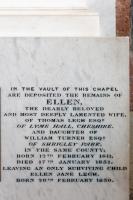
On 20th February 1830 [her daughter] Ellen Jane Legh was born to [her husband] Thomas Legh (age 37) and Ellen Turner (age 19). She married 22nd January 1847 Reverend Brabazon Lowther.
On 17th January 1831 Ellen Turner (age 19) died from childbirth at Lyme Hall, Cheshire [Map].
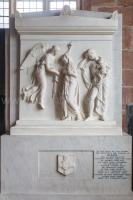
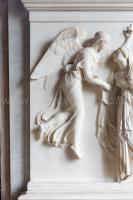
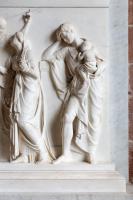
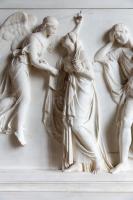
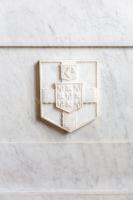
On 27th January 1831 Ellen Turner (deceased) was buried at St Oswald's Church, Winwick [Map]. The service was performed by Reverend Thomas Hinde. Monument sculpted by Richard James Wyatt (age 35).
On 3rd October 1843 [her former husband] Thomas Legh (age 50) and Maud Lowther were married.

On 8th May 1857 [her former husband] Thomas Legh (age 64) died at Milford Lodge, Lymington. His nephew William John Legh 1st Baron Newton (age 28) inherited his estates including Lyme Hall, Cheshire [Map].