Annals of the six Kings of England by Nicholas Trivet
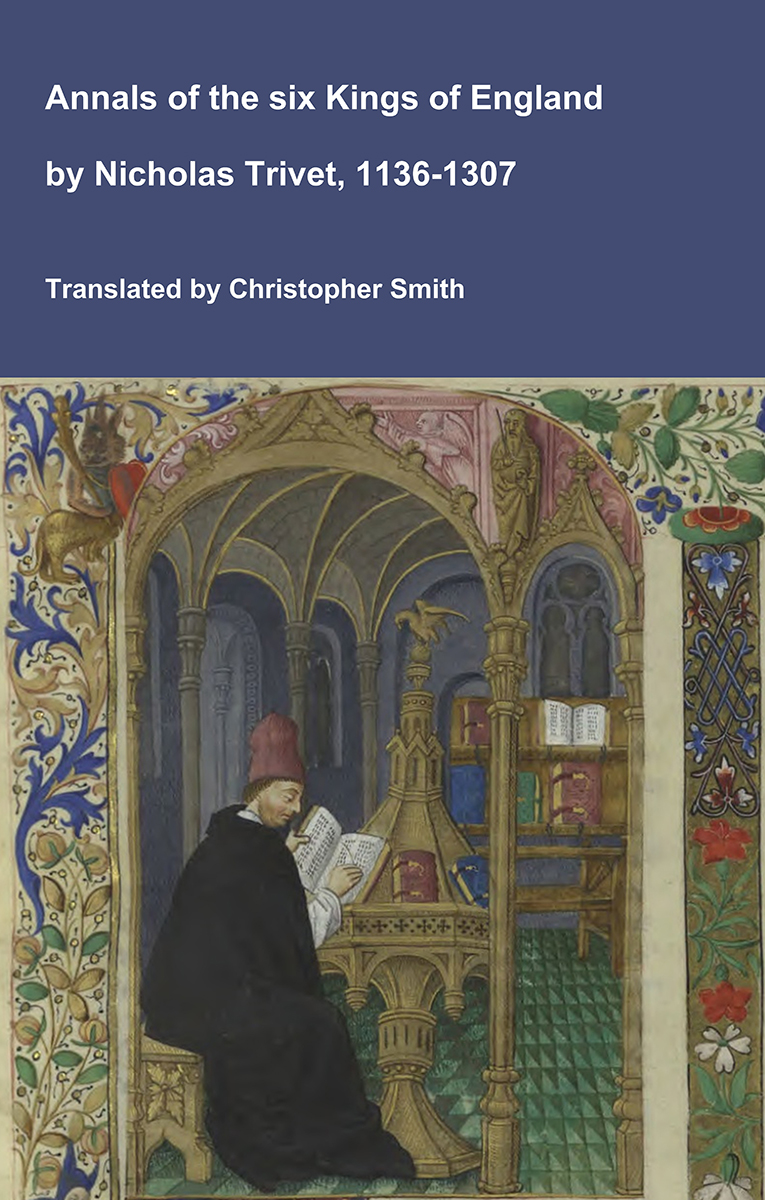
Translation of the Annals of the Six Kings of England by that traces the rise and rule of the Angevin aka Plantagenet dynasty from the mid-12th to early 14th century. Written by the Dominican scholar Nicholas Trivet, the work offers a vivid account of English history from the reign of King Stephen through to the death of King Edward I, blending political narrative with moral reflection. Covering the reigns of six monarchs—from Stephen to Edward I—the chronicle explores royal authority, rebellion, war, and the shifting balance between crown, church, and nobility. Trivet provides detailed insight into defining moments such as baronial conflicts, Anglo-French rivalry, and the consolidation of royal power under Edward I, whose reign he describes with particular immediacy. The Annals combines careful year-by-year reporting with thoughtful interpretation, presenting history not merely as a sequence of events but as a moral and political lesson. Ideal for readers interested in medieval history, kingship, and the origins of the English state, this chronicle remains a valuable and accessible window into the turbulent world of the Plantagenet kings.
Available at Amazon in eBook and Paperback format.
On 11th October 1872 Emily Wilding Davison was born.
The Suffragette Annual. 1. March 30th, 1909, [Emily Wilding Davison [aged 36]] one month for going on deputation;
The Suffragette Annual. [Emily Wilding Davison [aged 36]] was arrested on great deputation together with Mrs. Pankhurst, June 29th, 1909; January 19th, 1910, won case against visiting magistrates of Strangeways Prison, Manchester; has three times hidden in House of Commons—April, 1910, in hot-air shaft, April, 1911 in crypt and also in June, 1911; marches in which took part—March, 1907, July, 1910, June, 1911 and July, 1911.
The Suffragette Annual. 2. July 30th, 1909, [Emily Wilding Davison [aged 36]] two months for obstruction at Limehouse, released after five and a-half days' hunger strike;
The Suffragette Annual. 3. September 4th, 1909, [Emily Wilding Davison [aged 36]] stone-throwing at White City, Manchester, two months, but released after two and a-half days' hunger strike;
The Suffragette Annual. 4. October 20th, 1909, [Emily Wilding Davison [aged 37]] stone-throwing at Radcliffe, one month's hard labour on each count, hunger struck, forcibly fed, hosepipe incident in Strangeways prison and released at end of eight days;
The Suffragette Annual. 5. November 19th, 1910, [Emily Wilding Davison [aged 38]] broke a window inside the House of Commons; one month, hunger struck, forcibly fed, and released after eight days.
The Suffragette Annual. 6. December 14th, 1911, [Emily Wilding Davison [aged 39]] arrested for setting fire to pillar-boxes in City of Westminster; Holloway, remand one week, and
The Suffragette Annual. 7. January 10th, 1912 [Emily Wilding Davison [aged 39]] for above, sentenced at Old Bailey to six months' imprisonment; hunger struck twice with others, and twice forcibly fed; released 10 days before sentence finished on account of injuries sustained in protest made against forcible feeding;
The Suffragette Annual. 8. November 30th, 1912, [Emily Wilding Davison [aged 40]] sentenced to 10 days' imprisonment for assaulting a Baptist Minister by mistake for Mr. Lloyd-George at Aberdeen Station; hunger struck and released at end of 4 days' fast;
On 4th June 1913 Emily Wilding Davison [aged 40] was hit by the King's [aged 48] horse Anmer after she had stepped into its path at Tattenham Corner during the Derby at Epsom Racecourse. The jockey Herbert Jones was injured. The King and Queen [aged 46] were present. The King recorded in his diary "a most regrettable and scandalous proceeding". She was operated on two days later, but she never regained consciousness.





On 8th June 1913 Emily Wilding Davison [aged 40] died from a fracture at the base of her skull.
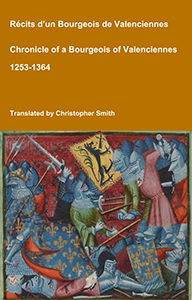
Chronicle of a Bourgeois of Valenciennes
Récits d’un bourgeois de Valenciennes aka The Chronicle of a Bourgeois of Valenciennes is a vivid 14th-century vernacular chronicle written by an anonymous urban chronicler from Valenciennes in the County of Hainaut. It survives in a manuscript that describes local and regional history from about 1253 to 1366, blending chronology, narrative episodes, and eyewitness-style accounts of political, military, and social events in medieval France, Flanders, and the Low Countries. The work begins with a chronological framework of events affecting Valenciennes and its region under rulers such as King Philip VI of France and the shifting allegiances of local nobility. It includes accounts of conflicts, sieges, diplomatic manoeuvres, and the impact of broader struggles like the Hundred Years’ War on urban life in Hainaut. Written from the perspective of a burgher (bourgeois) rather than a monastery or royal court, the chronicle offers a rare lay viewpoint on high politics and warfare, reflecting how merchants, townspeople, and civic institutions experienced the turbulence of the 13th and 14th centuries. Its narrative style combines straightforward reporting of events with moral and civic observations, making it a valuable source for readers interested in medieval urban society, regional politics, and the lived experience of war and governance in pre-modern Europe.
Available at Amazon in eBook and Paperback format.

14th June 1913. Coffin of Emily Wilding Davison [deceased] at Victoria Station [Map].
14th June 1913. Funeral Procession of Emily Wilding Davison [deceased] at Morpeth, Northumberland [Map].


14th June 1913. The Central News reported:
Emily Wilding Davison's [deceased] funeral procession passing Piccadilly Circus [Map], 14th June 1913. Following her tragic death, Davison was instantly embraced as a martyr to the cause. On 14 June 1913 her body was borne on an open hearse through London to a memorial service at St George's Church, Bloomsbury before being taken by train to Morpeth, Northumberland [Map] for a family funeral. The funeral procession (the last great suffrage march) was organised by fellow suffragette Grace Roe, and the memorial service was presided over by clergy from the Church League for Women's Suffrage.
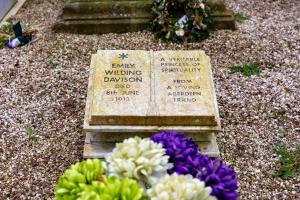
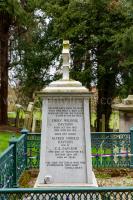
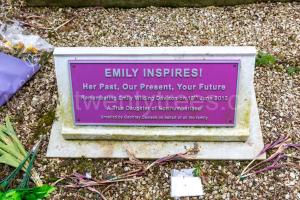
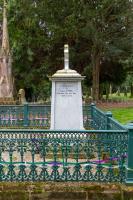
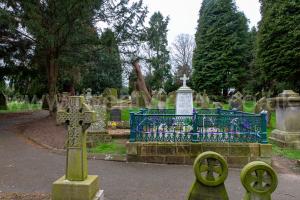
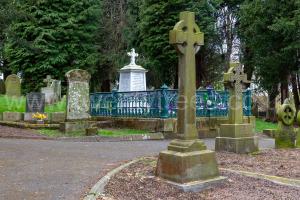
On 15th June 1913 Emily Wilding Davison [deceased] was buried at St Mary the Virgin Church Morpeth, Northumberland [Map].