


The True Chronicles of Jean le Bel Volume 1 Chapters 1-60 1307-1342
The True Chronicles of Jean le Bel offer one of the most vivid and immediate accounts of 14th-century Europe, written by a knight who lived through the events he describes, and experienced some of them first hand. Covering the early decades of the Hundred Years’ War, this remarkable chronicle follows the campaigns of Edward III of England, the politics of France and the Low Countries, and the shifting alliances that shaped medieval warfare. Unlike later historians, Jean le Bel writes with a strong sense of eyewitness authenticity, drawing on personal experience and the testimony of fellow soldiers. His narrative captures not only battles and sieges, but also the realities of military life, diplomacy, and the ideals of chivalry that governed noble society. A key source for Jean Froissart, Le Bel’s chronicle stands on its own as a compelling and insightful work, at once historical record and literary achievement. This translation builds on the 1905 edition published in French by Jules Viard, adding extensive translations from other sources Rymer's Fœdera, the Chronicles of Adam Murimuth, William Nangis, Walter of Guisborough, a Bourgeois of Valenciennes, Geoffrey le Baker of Swinbroke and Richard Lescot to enrich the original text and Viard's notes.
Available at Amazon in eBook and Paperback format.
In 1782 Frederick Nash was born.
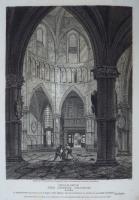
1805. Frederick Nash [aged 23]. "View of the Circular part of Temple Church, London [Map]".
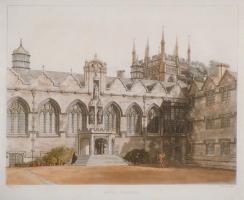
Around 1813. Frederick Nash [aged 31]. "Oriel College, Oxford University.

1813. Frederick Nash [aged 31]. "Founders Tower, Magdalen College.
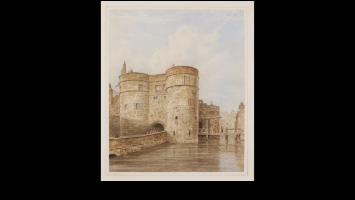
Around 1821. Frederick Nash [aged 39]. "Byward Tower, Tower of London [Map]".
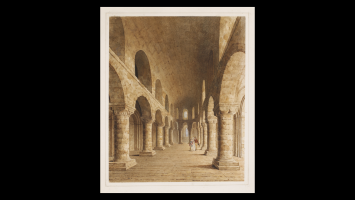
Around 1821. Frederick Nash [aged 39]. "Chapel in the White Tower [Map]".
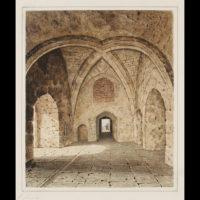
Around 1821. Frederick Nash [aged 39]. "Bowyer Tower, Tower of London [Map].
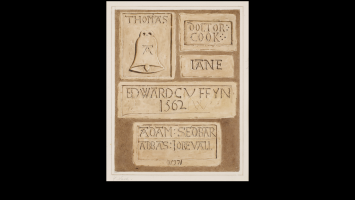
Around 1821. Frederick Nash [aged 39]. "Inscriptions in the Prison Room, Beauchamp Tower, Tower of London [Map].
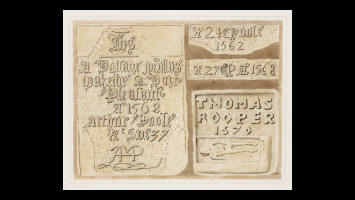
Around 1821. Frederick Nash [aged 39]. "Inscriptions in the Prison Room, Beauchamp Tower, Tower of London [Map].

Around 1821. Frederick Nash [aged 39]. "Inscriptions in the Prison Room, Beauchamp Tower, Tower of London [Map].
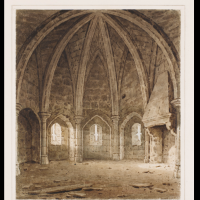
Around 1821. Frederick Nash [aged 39]. "Inside the Byward Tower, Tower of London [Map].
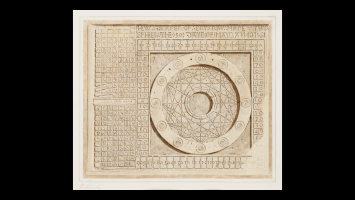
Around 1821. Frederick Nash [aged 39]. "Inscription inside the Salt Tower, Tower of London [Map].

Around 1821. Frederick Nash [aged 39]. "Inside the Well Tower, Tower of London [Map].

Around 1821. Frederick Nash [aged 39]. "Inscriptions in Prison Room, Beauchamp Tower, Tower of London [Map]", probably by John Dudley 1st Duke Northumberland.

Around 1821. Frederick Nash [aged 39]. "Inscriptions in Prison Room, Beauchamp Tower, Tower of London [Map]".
Around 1821. Frederick Nash [aged 39]. "Entrance under the Bloody Tower, Tower of London [Map]".
6th March 1821. Frederick Nash [aged 39]. "Bloody Tower, Tower of London [Map].
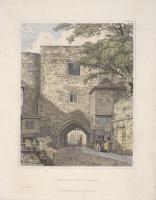
28th May 1821. Frederick Nash [aged 39]. "View of the Bloody Tower, Tower of London [Map]".

1822. Frederick Nash [aged 40]. "View of Berry Pomeroy Castle [Map]".
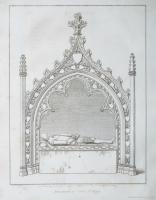
1822. Frederick Nash [aged 40]. "Monument at St Mary's Church, Ottery St Mary".
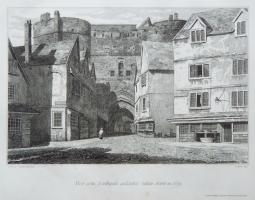
1822. Frederick Nash [aged 40]. "View of the Southgate at Exeter, taken down in 1819".
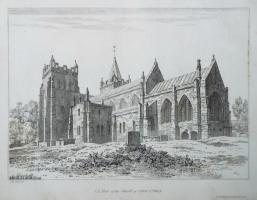
1822. Frederick Nash [aged 40]. "St Mary's Church, Ottery St Mary".
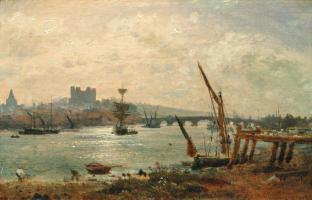
Around 1825. Frederick Nash [aged 43]. "Rochester Cathedral [Map] and Castle [Map].
1829. Frederick Nash [aged 47]. View of the Ruins adjoining the South Transept of the Church [St Mary's Abbey, York [Map]], with the Palace of K. James 2nd and the Tower of the Minster in the Back Ground.".
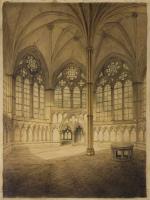
Before 1856. Frederick Nash [aged 73]. "Interior of Chapter House, Salisbury Cathedral [Map]".
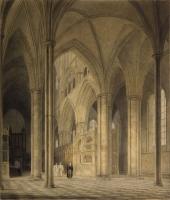
Before 1856. Frederick Nash [aged 73]. "The Choir of Salisbury Cathedral [Map]".
In 1856 Frederick Nash [aged 74] died.