

William of Worcester's Chronicle of England
William of Worcester, born around 1415, and died around 1482 was secretary to John Fastolf, the renowned soldier of the Hundred Years War, during which time he collected documents, letters, and wrote a record of events. Following their return to England in 1440 William was witness to major events. Twice in his chronicle he uses the first person: 1. when writing about the murder of Thomas, 7th Baron Scales, in 1460, he writes '… and I saw him lying naked in the cemetery near the porch of the church of St. Mary Overie in Southwark …' and 2. describing King Edward IV's entry into London in 1461 he writes '… proclaimed that all the people themselves were to recognize and acknowledge Edward as king. I was present and heard this, and immediately went down with them into the city'. William’s Chronicle is rich in detail. It is the source of much information about the Wars of the Roses, including the term 'Diabolical Marriage' to describe the marriage of Queen Elizabeth Woodville’s brother John’s marriage to Katherine, Dowager Duchess of Norfolk, he aged twenty, she sixty-five or more, and the story about a paper crown being placed in mockery on the severed head of Richard, 3rd Duke of York.
Available at Amazon in eBook and Paperback format.
Before 6th October 1642 [his father] Isaac Newton [aged 36] and [his mother] Hannah Ayscough were married.
On 6th October 1642 [his father] Isaac Newton [aged 36] died.
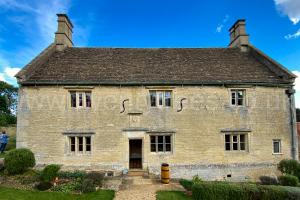
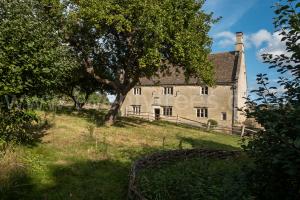
On 25th December 1642 Isaac Newton was born to Isaac Newton and Hannah Ayscough posthumously at Woolsthorpe Manor [Map]. His father had died three months before Isaac was born.
Around 1645 Reverend Barnabas Smith and [his mother] Hannah Ayscough were married.
In 1654 Isaac Newton [aged 11] entered The King's School, Grantham [Map].
In June 1661 Isaac Newton [aged 18] entered Trinity College, Cambridge University [Map] which become his home for the next thirty-five years.
In September 1670 John Flamsteed [aged 24] visited Cambridge and entered his name as an undergraduate at Jesus College. While it seems he never took up full residence, he was there for two months in 1674, and had the opportunity to hear Isaac Newton's [aged 27] Lucasian Lectures.
In 1672 Isaac Newton [aged 29] was elected Fellow of the Royal Society.
In 1679 Catherine Barton was born to Robert Barton of Brigstock, Northamptonshire and Hannah Smith. She a niece of Isaac Newton [aged 36] being the daughter of his maternal half-sister Hannah Smith. She married 26th August 1717 John Conduit and had issue.
In April 1686 Isaac Newton [aged 43] submitted Mathematical Principles of Natural Philosophy to the Royal Society.
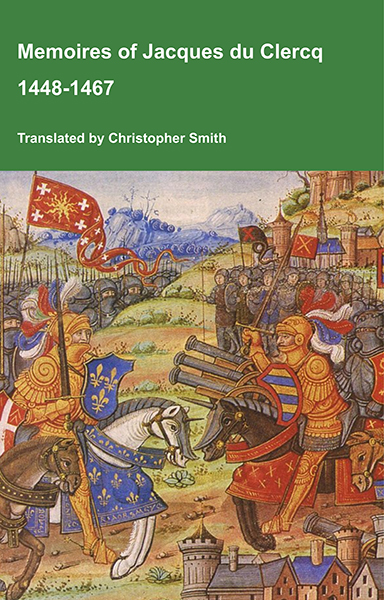
This is a translation of the 'Memoires of Jacques du Clercq', published in 1823 in two volumes, edited by Frederic, Baron de Reissenberg. In his introduction Reissenberg writes: 'Jacques du Clercq tells us that he was born in 1424, and that he was a licentiate in law and a counsellor to Philip the Good, Duke of Burgundy, in the castellany of Douai, Lille, and Orchies. It appears that he established his residence at Arras. In 1446, he married the daughter of Baldwin de la Lacherie, a gentleman who lived in Lille. We read in the fifth book of his Memoirs that his father, also named Jacques du Clercq, had married a lady of the Le Camelin family, from Compiègne. His ancestors, always attached to the counts of Flanders, had constantly served them, whether in their councils or in their armies.' The Memoires cover a period of nineteen years beginning in in 1448, ending in in 1467. It appears that the author had intended to extend the Memoirs beyond that date; no doubt illness or death prevented him from carrying out this plan. As Reissenberg writes the 'merit of this work lies in the simplicity of its narrative, in its tone of good faith, and in a certain air of frankness which naturally wins the reader’s confidence.' Du Clercq ranges from events of national and international importance, including events of the Wars of the Roses in England, to simple, everyday local events such as marriages, robberies, murders, trials and deaths, including that of his own father in Book 5; one of his last entries.
Available at Amazon in eBook and Paperback format.

1689. Godfrey Kneller [aged 42]. Portrait of Isaac Newton [aged 46].
In 1699 Isaac Newton [aged 56] was appointed Master of the Mint.
In 1705 Isaac Newton [aged 62] served as President of the Royal Society. He served until 1727.
In April 1705 Isaac Newton [aged 62] was knighted.
Memoirs of Sir Isaac Newton's Life. 20th February 1721. A Lincolnshire feast was held at the Ship tavern, Temple bar. when I went into the dining room above stairs, where the better sort of company was; it was talkd, that there was an old gentleman belowstairs whom they fancied to be Sir Isaac Newton [aged 78]. I instantly went down, & finding it to be so, sat down with him. they above sent to desire us to walk up into the chief room. I answerd, the chief room was where Sir Isaac Newton sat. upon which the upper room was immediately left to the ordinary company, and the better sort came to us.
Sir Isaac enjoy'd himself extremely in this society of his countrymen; & talkd much, & pleasantly. particularly I remember one part of the conversation turn'd upon musick, of which Sir Isaac was fond; & of the opera's then beginning to be in vogue among us. it was no wonder, his soul should be delighted with harmony. Sir Isaac said they were very fine entertainments; but that "there was too much of a good thing; it was like a surfiet at dinner. I went to the last opera," says he, "The first act gave me the greatest pleasure. The second quite tired me: at the third I ran away." He left 5 guineas, & desired the stewards to call upon him for every subscription relating to his countrymen .
About this time upon the request of my friend Mr Maurice Johnson, he readily enterd himself a member of the literary society at Spalding, which still subsists. he made them a present of books: desirous of incouraging every laudable attempt to promote learning, in any branch.
He carryed me with him in his chariot to see the coinage at the Mint, in the Tower: their method of weighing to an extreme nicety, & the rest of thir operations.
On 20th March 1727 Isaac Newton [aged 84] died in his sleep; he was unmarried.
On 28th March 1727 Isaac Newton [deceased] was buried in Scientist's Corner, Westminster Abbey [Map]; the first scientist to be buried there. The service was performed by the Bishop of Rochester [aged 74].
Before the funeral his body lay in state in the Jerusalem Chamber, Cheyneygates, Westminster Abbey [Map]. His coffin was followed by most of the Fellows of the Royal Society.
The Pall Bearers were the Lord Chancellor Peter King 1st Baron King [aged 58], James Graham 1st Duke Montrose [aged 44], Robert Ker 2nd Duke Roxburghe [aged 18], Thomas Herbert 8th Earl Pembroke 5th Earl Montgomery [aged 71], Talbot Yelverton 1st Earl of Sussex [aged 36] and Thomas Parker 1st Earl Macclesfield [aged 60].
The Chief Mourner was Michael Newton 4th Baronet [aged 32]; his third cousin.
Voltaire observed, "He was buried like a king who had done well by his subjects.".
The inscription on his John Michael Rysbrack [aged 32] monument reads "Here is buried Isaac Newton, Knight, who by a strength of mind almost divine, and mathematical principles peculiarly his own, explored the course and figures of the planets, the paths of comets, the tides of the sea, the dissimilarities in rays of light, and, what no other scholar has previously imagined, the properties of the colours thus produced. Diligent, sagacious and faithful, in his expositions of nature, antiquity and the holy Scriptures, he vindicated by his philosophy the majesty of God mighty and good, and expressed the simplicity of the Gospel in his manners. Mortals rejoice that there has existed such and so great an ornament of the human race! He was born on 25th December 1642, and died on 20th March 1726."


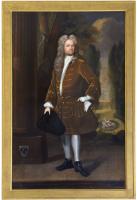
Memoirs of Sir Isaac Newton's Life. In magnis, voluisse sat est. Being some account of his family; & chiefly of the junior part of his life. By William Stukeley [aged 64]. 1752.
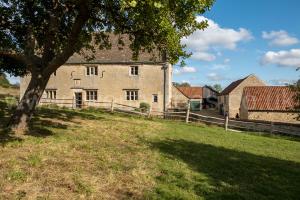
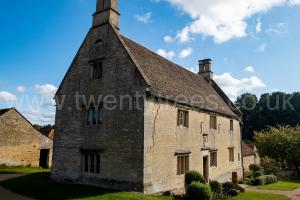
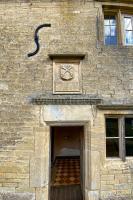
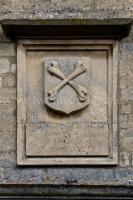
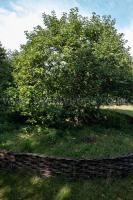
Woolsthorpe Manor [Map]. Birthplace of Isaac Newton.
Great x 3 Grandfather: John Newton 
Great x 2 Grandfather: John Newton
Great x 1 Grandfather: Richard Newton
GrandFather: Robert Newton
Father: Isaac Newton
Mother: Hannah Ayscough 