

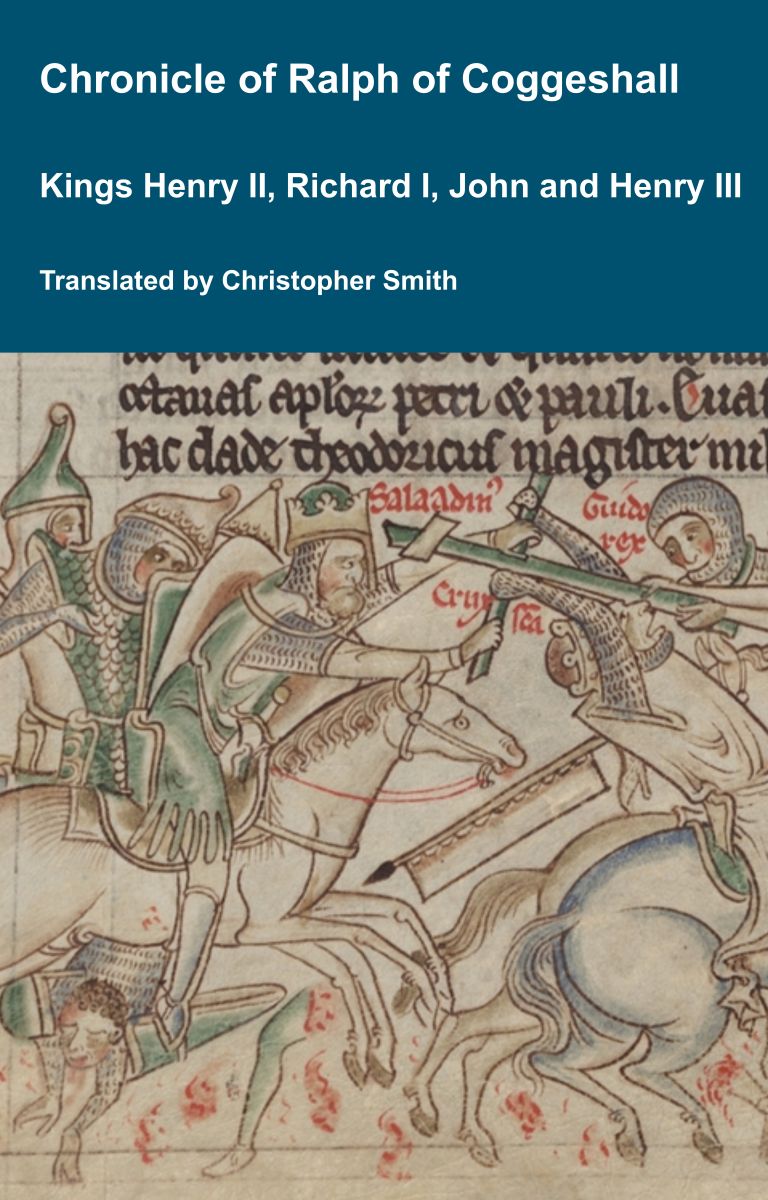
Chronicle of Abbot Ralph of Coggeshall
The Chronicle of Abbot Ralph of Coggeshall (Chronicon Anglicanum) is an indispensable medieval history that brings to life centuries of English and European affairs through the eyes of a learned Cistercian monk. Ralph of Coggeshall, abbot of the Abbey of Coggeshall in Essex in the early 13th century, continued and expanded his community’s chronicle, documenting events from the Norman Conquest of 1066 into the tumultuous reign of King Henry III. Blending eyewitness testimony, careful compilation, and the monastic commitment to record-keeping, this chronicle offers a rare narrative of political intrigue, royal power struggles, and social upheaval in England and beyond. Ralph’s work captures the reigns of pivotal figures such as Richard I and King John, providing invaluable insights into their characters, decisions, and the forces that shaped medieval rule. More than a simple annal, Chronicon Anglicanum conveys the texture of medieval life and governance, making it a rich source for scholars and readers fascinated by English history, monastic authorship, and the shaping of the medieval world.
Available at Amazon in eBook and Paperback format.
In May 1687 Mary Brookes aka Channing was born.
On 15th January 1705 Richard Channing and Mary Brookes aka Channing (age 17) were married.
On 17th April 1705 Mary Brookes aka Channing (age 17) administered a dose of mercury purchased from the maid of the apothecary the previous day to her husband Richard Channing. After eating the dish of rice milk Thomas was violently ill and began vomiting. The following day, prompted possibly by the suspicion that he was being poisoned, he made out a last will and testament entirely disinheriting his wife except for one shilling. On 21st April 1705 Richard Channing died. Following the post-mortem sixty to eighty people attended Channing's funeral at St. Mary's back in Maiden Newton.
On 28th April 1705 the trial of Mary Brookes aka Channing (age 17) began at the Dorchester Assizes and she conducted her own defence. Channing was declared guilty but the sentence was suspended when she was found to be pregnant. In prison she gave birth to a son on 19 December 1705.
Serious Admonitions to Youth. Serious admonitions to youth, in a short account of the life, trial, condemnation and execution. Of Mrs. Mary Channing (age 18). Who, for poisoning her husband, was burnt at Dorset ... 1706.
Serious Admonitions to Youth. [21st March 1706] After the Under Sheriff had taken some Refreshment, she [Mary Brookes aka Channing (age 18)] was brought out of Prison, and drag'd by her Fathers and Husband's Houses, to the Place of Execution [Maumbury Rings [Map]]. Here Mr. Hutchins and other Clergy continued a long time with her in Prayer, and supposing that Death being now in View, might mollifie her hard Heart, repeated their Exhortations to Confession, but to no purpose., they found no the least Alteration. In the midst of her Prayers she was strangely concern'd at the Sight of Mr. Richard Channing her Husband's eldest Brother, and 'twas with some Difficulty Mr. Hutchins brought her again to a calm Attendance on her Devotians. She manifested nothing of Alteration when fixed to the Stake, but justified her Innocence to the very last, and left the World with a Courage seldom found in her Sex. She being first strangled, the Fire was kindled five in the Afternoon, and in the sight of many thousand Spoctmors she was consum'd to Ashes.
On 21st March 1706 Mary Brookes aka Channing (age 18) was strangled then burned at the stake at Maumbury Rings [Map].
History of Dorset by John Hutchins Volume 1. At Mrs. Channing's execution1, there were supposed to be 10,000 spectators present, who filled the sides, tops and area of this work, which is the compleatest of this kind in England.
Note 1. Mary, daughter of ... Brookes of Dorchester, was married fo Mr. Richard Channing, a grocer, by compulsion of her parents; but keeping company with some former gallants, she, by her extravagance almost ruined her husband, and then poisoned him, by giving him white mercury, first in rice milk, and twice afterwards in a glass of wine. At the summer assizes, 1705. she was tried before judge Price, made a notable defence, was found guilty and condemned, but pleaded her belly. She was removed, and delivered of a child 18 weeks betore her death. At the Lent assizes following, she was recalled to her former sentence, and was first; strangled, then burnt, in the middle of the area of this work, March 21, 1705 [1706], æt. 19; but persisted in her innocence to the last. Tradition reports, that there was a woman burnt in the same place, for the same crime, 100 years before.