

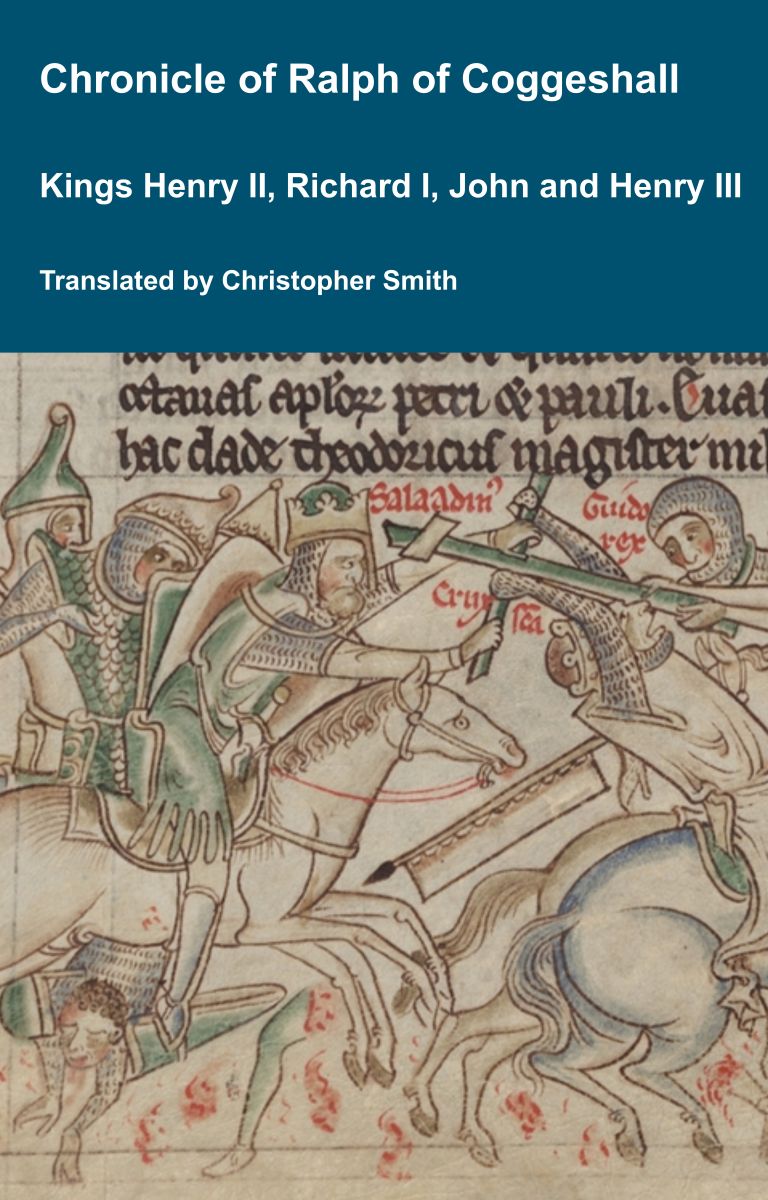
Chronicle of Abbot Ralph of Coggeshall
The Chronicle of Abbot Ralph of Coggeshall (Chronicon Anglicanum) is an indispensable medieval history that brings to life centuries of English and European affairs through the eyes of a learned Cistercian monk. Ralph of Coggeshall, abbot of the Abbey of Coggeshall in Essex in the early 13th century, continued and expanded his community’s chronicle, documenting events from the Norman Conquest of 1066 into the tumultuous reign of King Henry III. Blending eyewitness testimony, careful compilation, and the monastic commitment to record-keeping, this chronicle offers a rare narrative of political intrigue, royal power struggles, and social upheaval in England and beyond. Ralph’s work captures the reigns of pivotal figures such as Richard I and King John, providing invaluable insights into their characters, decisions, and the forces that shaped medieval rule. More than a simple annal, Chronicon Anglicanum conveys the texture of medieval life and governance, making it a rich source for scholars and readers fascinated by English history, monastic authorship, and the shaping of the medieval world.
Available at Amazon in eBook and Paperback format.
On 18th November 1882 Percy Wyndham Lewis was born to [his father] Charles Edward Lewis and [his mother] Anne Stuart Prickett, reputedly on his father's yacht off the Canadian province of Nova Scotia. He parents separated when he was around eleven years old at which time he returned to England with his mother and began his education at Rugby School, and after, aged 16, the Slade School of Art.
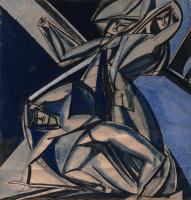
1912. Percy Wyndham Lewis (age 29). "The Dancers".

1913. George Charles Beresford (age 48). Portrait of Percy Wyndham Lewis (age 30).

1917. George Charles Beresford (age 52). Portrait of Percy Wyndham Lewis (age 34).
In January 1917 Percy Wyndham Lewis (age 34) was posted to the newly-raised 330th Siege Battery, RGA. 330th Siege Battery embarked on 24 May 1917 for the Western Front. It served on the Flanders coast and then at Ypres during the Third Ypres offensive. Much of Lewis's time was spent in Forward Observation Posts looking down at apparently deserted German lines, registering targets and calling down fire from batteries massed around the rim of the Ypres Salient.
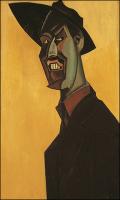
1921. Percy Wyndham Lewis (age 38). Self-portrait as Tyro.
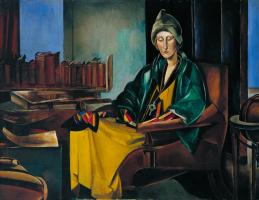
1923-1935. Percy Wyndham Lewis (age 40). Portrait of Edith Sitwell (age 35).

1929. George Charles Beresford (age 64). Portrait of Percy Wyndham Lewis (age 46).
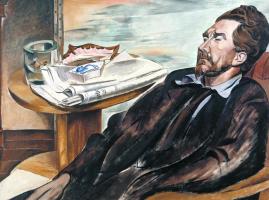
1939. Percy Wyndham Lewis (age 56). Portrait of Ezra Pound.
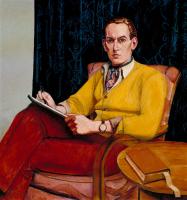
1946. Percy Wyndham Lewis (age 63). Portrait of Nigel Trevithick Tangye (age 36).
On 7th March 1957 Percy Wyndham Lewis (age 74) died.