


Henrici Quinti, Angliæ Regis, Gesta, is a first-hand account of the Agincourt Campaign, and subsequent events to his death in 1422. The author of the first part was a Chaplain in King Henry's retinue who was present from King Henry's departure at Southampton in 1415, at the siege of Harfleur, the battle of Agincourt, and the celebrations on King Henry's return to London. The second part, by another writer, relates the events that took place including the negotiations at Troye, Henry's marriage and his death in 1422.
Available at Amazon in eBook and Paperback format.
William Etty is in Painters.
On 10th March 1787 William Etty was born.

1808. William Etty (age 20). Portrait of Mary Montagu Viscountess Templetown (age 34) and Her Eldest Son, after Thomas Lawrence.

1820. William Etty (age 32). "The Coral Finder Venus and her Youthful Satellites".

1823. William Etty (age 35). Self-portrait.

1835. William Etty (age 47). "Preparing for a Fancy Dress Ball". Portrait of Charlotte Williams-Wynn (age 27) and Mary Williams-Wynn.
Charlotte Williams-Wynn: On 16th January 1807 she was born to Charles Williams-Wynn and Mary Cunliffe. On 26th April 1869 Charlotte Williams-Wynn died unmarried.
Mary Williams-Wynn: she was born to Charles Williams-Wynn and Mary Cunliffe.

1838. William Etty (age 50). Portrait of Miss Elizabeth Potts.

1838. William Etty (age 50). Monk Bar, York [Map].
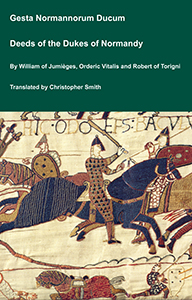
The Deeds of the Dukes of Normandy
The Gesta Normannorum Ducum [The Deeds of the Dukes of Normandy] is a landmark medieval chronicle tracing the rise and fall of the Norman dynasty from its early roots through the pivotal events surrounding the Norman Conquest of England. Originally penned in Latin by the monk William of Jumièges shortly before 1060 and later expanded at the behest of William the Conqueror, the work chronicles the deeds, politics, battles, and leadership of the Norman dukes, especially William’s own claim to the English throne. The narrative combines earlier historical sources with firsthand information and oral testimony to present an authoritative account of Normandy’s transformation from a Viking settlement into one of medieval Europe’s most powerful realms. William’s history emphasizes the legitimacy, military prowess, and governance of the Norman line, framing their expansion, including the conquest of England, as both divinely sanctioned and noble in purpose. Later chroniclers such as Orderic Vitalis and Robert of Torigni continued the history, extending the coverage into the 12th century, providing broader context on ducal rule and its impact. Today this classic work remains a foundational source for understanding Norman identity, medieval statesmanship, and the historical forces that reshaped England and Western Europe between 800AD and 1100AD.
Available at Amazon in eBook and Paperback format.
On 13th November 1849 William Etty (age 62) died.

1861. William Etty. Railway lines entering York station through the city walls.