

Chronicle of Walter of Guisborough
A canon regular of the Augustinian Guisborough Priory, Yorkshire, formerly known as The Chronicle of Walter of Hemingburgh, describes the period from 1066 to 1346. Before 1274 the Chronicle is based on other works. Thereafter, the Chronicle is original, and a remarkable source for the events of the time. This book provides a translation of the Chronicle from that date. The Latin source for our translation is the 1849 work edited by Hans Claude Hamilton. Hamilton, in his preface, says: 'In the present work we behold perhaps one of the finest samples of our early chronicles, both as regards the value of the events recorded, and the correctness with which they are detailed; Nor will the pleasing style of composition be lightly passed over by those capable of seeing reflected from it the tokens of a vigorous and cultivated mind, and a favourable specimen of the learning and taste of the age in which it was framed.'
Available at Amazon in eBook and Paperback format.
Memoir of the Life of William James Müller. Of this marriage three sons were born ; also one daughter, who died in infancy. The eldest son, Henry, born in 1808, was brought up to the medical profession, and having early in life obtained a country practice at Congresbury, about ten miles from Bristol, he married. But he only lived or one year after his marriage, and died in 1843. William James Müller was the second son; and the youngest, Edmund G. Muller, born in 1816, still survives. Like his brother William he has followed the profession of an artist, although educated first for the medical profession, and is a resident in the neighbourhood of Bristol.
On 28th June 1812 William James Müller was born.

1831-1833. William James Müller [aged 18]. "Four Stars Inn, Counterslip, Bristol".
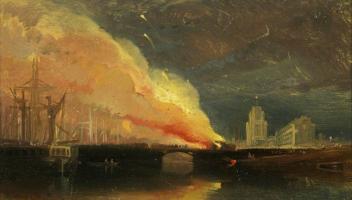
1831. William James Müller [aged 18]. "Bristol Riots: The Burning of the Toll Houses on Prince Street Bridge with St Mary Redcliffe".

1831. William James Müller [aged 18]. Font at St Mary's and All Saints Church, Little Walsingham.
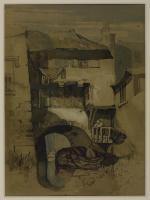
1831-1833. William James Müller [aged 18]. "Castle Ditch, Bristoj Castle [Map]".
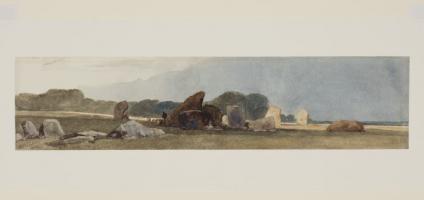
1832. William James Müller [aged 19]. Watercolor of Stanton Drew Great Circle.
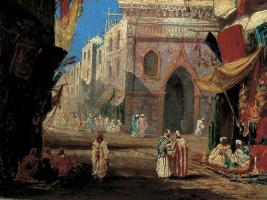
Around 1832. William James Müller [aged 19]. "A Street in Cario, Egypt.
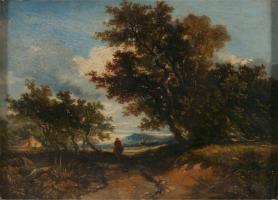
Around 1832. William James Müller [aged 19]. Landscape with Horseman.

The True Chronicles of Jean le Bel Volume 1 Chapters 1-60 1307-1342
The True Chronicles of Jean le Bel offer one of the most vivid and immediate accounts of 14th-century Europe, written by a knight who lived through the events he describes, and experienced some of them first hand. Covering the early decades of the Hundred Years’ War, this remarkable chronicle follows the campaigns of Edward III of England, the politics of France and the Low Countries, and the shifting alliances that shaped medieval warfare. Unlike later historians, Jean le Bel writes with a strong sense of eyewitness authenticity, drawing on personal experience and the testimony of fellow soldiers. His narrative captures not only battles and sieges, but also the realities of military life, diplomacy, and the ideals of chivalry that governed noble society. A key source for Jean Froissart, Le Bel’s chronicle stands on its own as a compelling and insightful work, at once historical record and literary achievement. This translation builds on the 1905 edition published in French by Jules Viard, adding extensive translations from other sources Rymer's Fœdera, the Chronicles of Adam Murimuth, William Nangis, Walter of Guisborough, a Bourgeois of Valenciennes, Geoffrey le Baker of Swinbroke and Richard Lescot to enrich the original text and Viard's notes.
Available at Amazon in eBook and Paperback format.
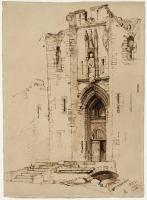
1833. William James Müller [aged 20]. "Gateway of Caernarfon Castle [Map]".

1835. William James Müller [aged 22]. View of Bristol Cathedral [Map].
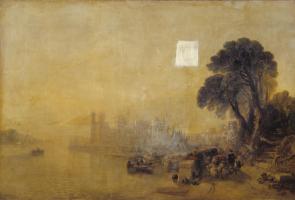
1837. William James Müller [aged 24]. "Caernarfon Castle [Map]".

1837. William James Müller [aged 24]. View of Bristol Cathedral [Map].

1837. William James Müller [aged 24]. "View of Bristol, Gloucestershire [Map] from Clifton Wood".
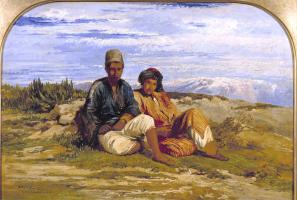
1837. William James Müller [aged 24]. "Eastern Landscape".
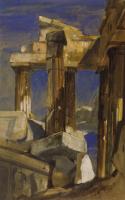
1838. William James Müller [aged 25]. "The Parthenon, Athens".

1842. William James Müller [aged 29]. Gillingham, Kent [Map] on the River Medway.

1842. William James Müller [aged 29]. Gillingham, Kent [Map].
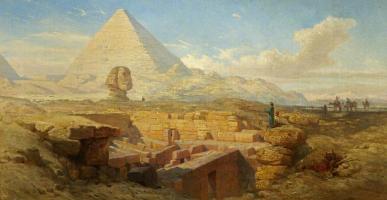
1843. William James Müller [aged 30]. "The Pyramids".
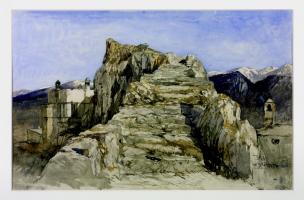
1844. William James Müller [aged 31]. "Lycia: The Rocky Stair at Tlos".
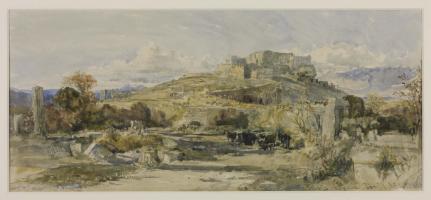
1844. William James Müller [aged 31]. "Lycia: The Citadel of Tlos".
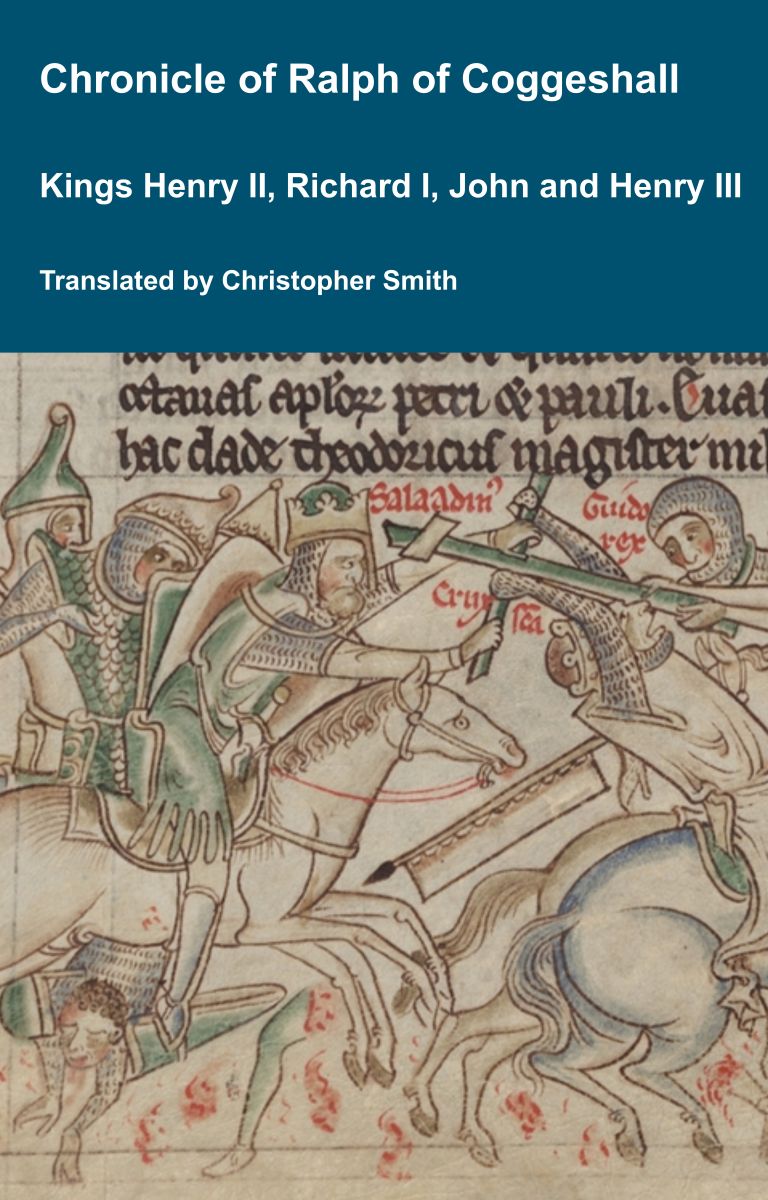
Chronicle of Abbot Ralph of Coggeshall
The Chronicle of Abbot Ralph of Coggeshall (Chronicon Anglicanum) is an indispensable medieval history that brings to life centuries of English and European affairs through the eyes of a learned Cistercian monk. Ralph of Coggeshall, abbot of the Abbey of Coggeshall in Essex in the early 13th century, continued and expanded his community’s chronicle, documenting events from the Norman Conquest of 1066 into the tumultuous reign of King Henry III. Blending eyewitness testimony, careful compilation, and the monastic commitment to record-keeping, this chronicle offers a rare narrative of political intrigue, royal power struggles, and social upheaval in England and beyond. Ralph’s work captures the reigns of pivotal figures such as Richard I and King John, providing invaluable insights into their characters, decisions, and the forces that shaped medieval rule. More than a simple annal, Chronicon Anglicanum conveys the texture of medieval life and governance, making it a rich source for scholars and readers fascinated by English history, monastic authorship, and the shaping of the medieval world.
Available at Amazon in eBook and Paperback format.
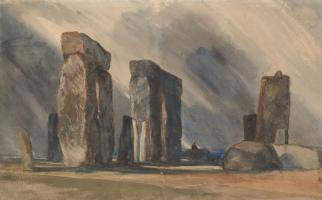
Before 1845. William James Müller [aged 32]. "Historic Stonehenge".
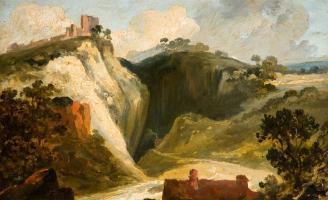
Before 1845. William James Müller [aged 32]. "The Peak Cavern [Map], Derbyshire, Peveril Castle [Map]".
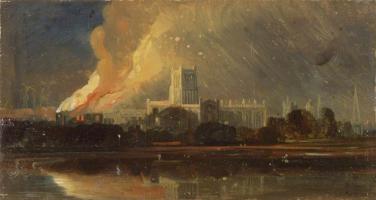
Before 1845. William James Müller [aged 32]. "Bristol Riots: The Burning of the Bishop's Palace".
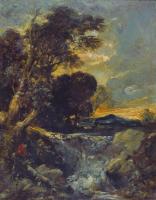
Before 1845. William James Müller [aged 32]. "Waterfall with Fisherman".

Before 1845. William James Müller [aged 32]. "The Ramesseum at Thebes".
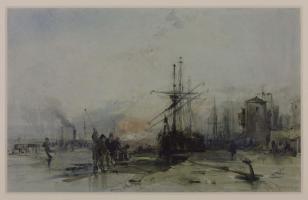
Before 1845. William James Müller [aged 32]. "Bristol Harbour in ice".

Before 1845. William James Müller [aged 32]. Bristol Harbour with St Mary Redcliffe Church, Bristol.

Before 1845. William James Müller [aged 32]. "Santa Maria della Salute, Venice".

1845. William James Müller [aged 32]. "Compton Dando, Somerset [Map]".
Memoir of the Life of William James Müller. A few more lines, brief and sad, and this memoir will be finished. On Monday morning, the 8th of September [1845], Edmund Muller had commenced to set his brother's palette after breakfast, as was his wont; and William Muller [aged 33], who was propped up, seemed about as well as he had been of late, when suddenly a change came over him. He appears to have broken an internal blood-vessel. He had just strength to call to his brother for help, and then said, "Remember Gooden and — and — that other." He could not pronounce the name, but it was supposed to be Charles Bentley, to whom he was much attached. Soon after this, exhausted nature gave way, his head fell, and he never spoke again. He had entered "the Silent Land," and all his work and sufferings were over.
On Friday, the 12th, he was quietly laid to rest in the old Lewin's Mead burial-ground, situated in a retired part of Bristol, leading out of Brunswick Square. Several of his mother's relatives, the Jameses, had long been buried there. It is a small and secluded cemetery, with a few trees, shrubs, and flowers ; and the grave of Muller, marked only with a flat stone and a simple inscription, is situated at its furthest end, and is placed underneath an overhanging elder-bush. As Tennyson sang in memory of another young Englishman, we may say of Muller —
"'Tis well; 'tis something ; we may stand
Where he in English earth is laid.
And from his ashes may be made
The violets of his native land.
'Tis little; but it looks in truth
As if the quiet bones were blest
Among familiar names to rest.
And in the places of his youth."
On 8th September 1845 William James Müller [aged 33] died.

Chronicle of a Bourgeois of Valenciennes
Récits d’un bourgeois de Valenciennes aka The Chronicle of a Bourgeois of Valenciennes is a vivid 14th-century vernacular chronicle written by an anonymous urban chronicler from Valenciennes in the County of Hainaut. It survives in a manuscript that describes local and regional history from about 1253 to 1366, blending chronology, narrative episodes, and eyewitness-style accounts of political, military, and social events in medieval France, Flanders, and the Low Countries. The work begins with a chronological framework of events affecting Valenciennes and its region under rulers such as King Philip VI of France and the shifting allegiances of local nobility. It includes accounts of conflicts, sieges, diplomatic manoeuvres, and the impact of broader struggles like the Hundred Years’ War on urban life in Hainaut. Written from the perspective of a burgher (bourgeois) rather than a monastery or royal court, the chronicle offers a rare lay viewpoint on high politics and warfare, reflecting how merchants, townspeople, and civic institutions experienced the turbulence of the 13th and 14th centuries. Its narrative style combines straightforward reporting of events with moral and civic observations, making it a valuable source for readers interested in medieval urban society, regional politics, and the lived experience of war and governance in pre-modern Europe.
Available at Amazon in eBook and Paperback format.
Memoir of the Life of William James Müller. Memoir of the life of William James Müller: a native of Bristol, landscape and figure painter: with original letters and an account of his travels and of his principal works by Solly, N. Neal (Nathaniel Neal). 1875.


