Chronicle of Abbot Ralph of Coggeshall
The Chronicle of Abbot Ralph of Coggeshall (Chronicon Anglicanum) is an indispensable medieval history that brings to life centuries of English and European affairs through the eyes of a learned Cistercian monk. Ralph of Coggeshall, abbot of the Abbey of Coggeshall in Essex in the early 13th century, continued and expanded his community’s chronicle, documenting events from the Norman Conquest of 1066 into the tumultuous reign of King Henry III. Blending eyewitness testimony, careful compilation, and the monastic commitment to record-keeping, this chronicle offers a rare narrative of political intrigue, royal power struggles, and social upheaval in England and beyond. Ralph’s work captures the reigns of pivotal figures such as Richard I and King John, providing invaluable insights into their characters, decisions, and the forces that shaped medieval rule. More than a simple annal, Chronicon Anglicanum conveys the texture of medieval life and governance, making it a rich source for scholars and readers fascinated by English history, monastic authorship, and the shaping of the medieval world.
Available at Amazon in eBook and Paperback format.
Brereton Hall, Cheshire is in Brereton, Cheshire [Map].
Around 1585 William Brereton 1st Baron Brereton [aged 34] and his wife Margaret Savage [aged 36] commissioned the building of Brereton Hall, Cheshire [Map]; a Prodigy House.
Margaret Savage: In 1549 she was born to John Savage and Elizabeth Manners. Before 25th February 1591 William Brereton 1st Baron Brereton and she were married. They were third cousins. On 7th April 1597 Margaret Savage died.
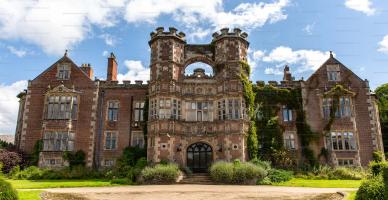
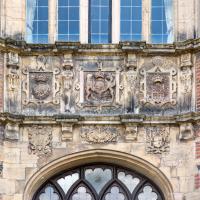
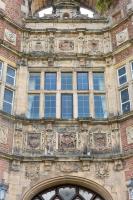

On 1st October 1631 William Brereton 1st Baron Brereton [aged 81] died. His grandson William [aged 20] succeeded 2nd Baron Brereton and inherited Brereton Hall, Cheshire [Map]. Elizabeth Goring Baroness Brereton by marriage Baroness Brereton.
In 1649 Jane Brereton died. Charles Holte 3rd Baronet inherited Brereton Hall, Cheshire [Map].
In April 1664 William Brereton 2nd Baron Brereton [aged 53] died. His son William [aged 32] succeeded 3rd Baron Brereton and inherited Brereton Hall, Cheshire [Map]. Frances Willoughby Baroness Brereton [aged 39] by marriage Baroness Brereton.
On 17th March 1680 William Brereton 3rd Baron Brereton [aged 48] died. His son John [aged 20] succeeded 4th Baron Brereton and inherited Brereton Hall, Cheshire [Map].
In 1718 John Brereton 4th Baron Brereton [aged 58] died without issue. His brother Francis [aged 55] succeeded 5th Baron Brereton and inherited Brereton Hall, Cheshire [Map].
Before 18th June 1722 Charles Holte 3rd Baronet [aged 73] died. His son Clobery [aged 40] succeeded 4th Baronet Holte of Aston in Warwickshire and inherited Brereton Hall, Cheshire [Map].
Around 1729 Clobery Holte 4th Baronet [aged 47] died. His son Lister [aged 8] succeeded 5th Baronet Holte of Aston in Warwickshire and inherited Brereton Hall, Cheshire [Map].
On 8th April 1770 or 21st April 1770 Lister Holte 5th Baronet [aged 49] died. His brother Charles [aged 48] succeeded 6th Baronet Holte of Aston in Warwickshire and inherited Brereton Hall, Cheshire [Map].
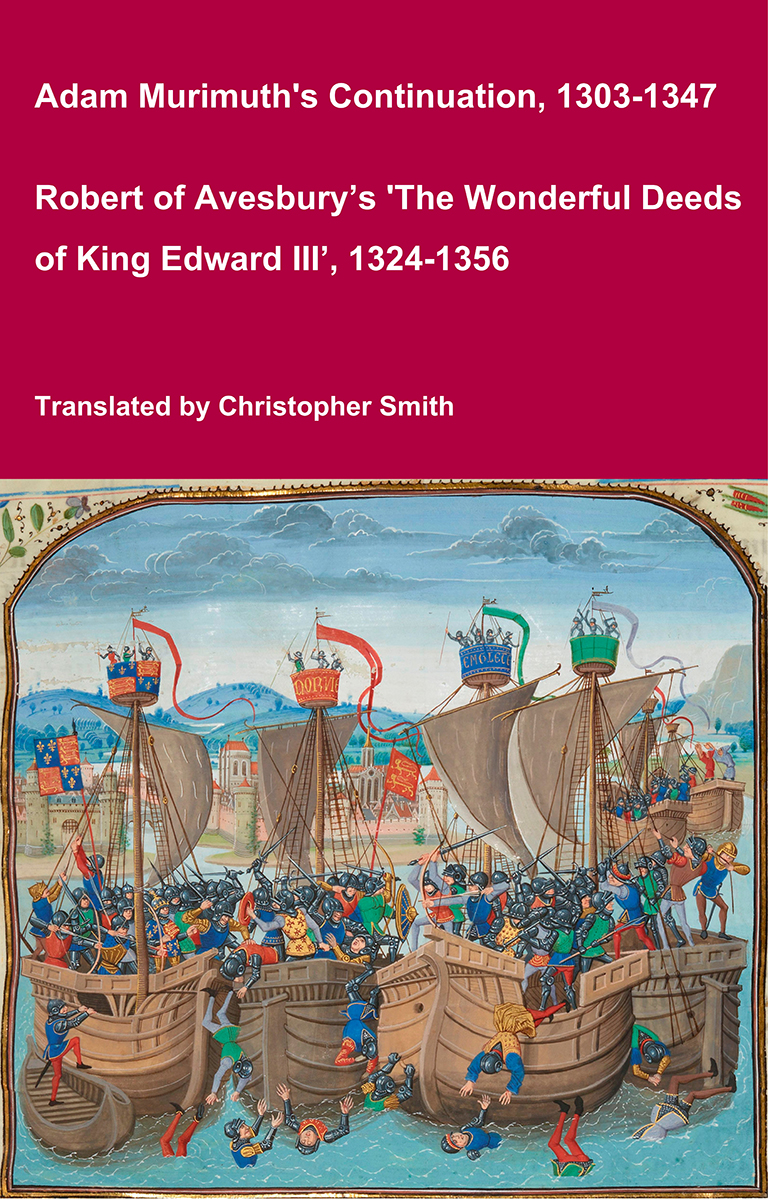
Adam Murimuth's Continuation and Robert of Avesbury’s 'The Wonderful Deeds of King Edward III'
This volume brings together two of the most important contemporary chronicles for the reign of Edward III and the opening phases of the Hundred Years’ War. Written in Latin by English clerical observers, these texts provide a vivid and authoritative window into the political, diplomatic, and military history of fourteenth-century England and its continental ambitions. Adam Murimuth Continuatio's Chronicarum continues an earlier chronicle into the mid-fourteenth century, offering concise but valuable notices on royal policy, foreign relations, and ecclesiastical affairs. Its annalistic structure makes it especially useful for establishing chronology and tracing the development of events year by year. Complementing it, Robert of Avesbury’s De gestis mirabilibus regis Edwardi tertii is a rich documentary chronicle preserving letters, treaties, and official records alongside narrative passages. It is an indispensable source for understanding Edward III’s claim to the French crown, the conduct of war, and the mechanisms of medieval diplomacy. Together, these works offer scholars, students, and enthusiasts a reliable and unembellished account of a transformative period in English and European history. Essential for anyone interested in medieval chronicles, the Hundred Years’ War, or the reign of Edward III.
Available at Amazon in eBook and Paperback format.
On 13th March 1782 Charles Holte 6th Baronet [aged 60] died. Baronet Holte of Aston in Warwickshire extinct. His daughter Mary Elizabeth Holte [aged 26] and her husband Abraham Bracebridge inheritedBrereton Hall, Cheshire [Map]. The inheritance complicated since Lister Holte, 5th Baronet, appears to have bequeathed Heneage Legge a lifetime's interest in the Hall.
Archaeologia Volume 9 Appendix. Sir William Brereton, who signs the writing, was lord of the manor, and built a noble house [Brereton Hall, Cheshire [Map]] close to it in 1579. He was the son of that William Brereton who was one of the persons put to death by king Henry VIII. as a pretence for his charge against his queen Anne Boleyn.
Note. This appears to be a mistake. William Brereton didn't have children. William Brereton 1st Baron Brereton, the building of Brereton Hall, was the son of William Brereton.
10th July 1817. Act of Parliament. Cap. 38. An Act for confirming an Agreement relating to the Reversion expectant of certain Estates in the Counties of Warwick and Chester [Brereton Hall, Cheshire [Map]], late of Sir Lister Holte, Baronet, deceased, and property belonging to Abraham Bracebridge Esquire, and for vesting such Estates and Property in Trustees, to convey and assure the same according to the said Agreement.
On September 18, 1817 the following notice regarding the sale of a property [Brereton Hall, Cheshire [Map]] in Cheshire appeared in 'The Times':
A very valuable and highly important freehold estate, together with the extensive Manor and Advowson of the Rectory of Brereton, the latter estimated at 100 pounds sterling per annum, with chief rents, quit rents, courts, etc., situate in the parish of Brereton, in the county of Cheshire, on the high road to Liverpool, about 160 miles from London - the estate is nearly in a ring fence and comprises the whole parish of Brereton, except one farm, a capital spacious mansion called Brereton Hall, seated in a park of considerable extent, in which are two fine sheets of water, and about 1,100 acres of land attached, and of value of nearly 2,000 pounds sterling per annum.
In 1830 John Howard [aged 49] puchased Brereton Hall, Cheshire [Map].
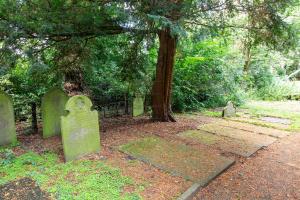
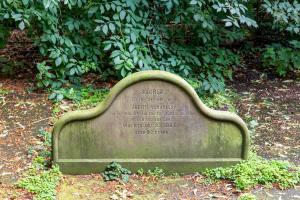
Around 1884. Graves of servants of Brereton Hall, Cheshire [Map] in the churchyard of St Oswald's Church, Brereton [Map].