

Jean de Waurin's Chronicle of England Volume 6 Books 3-6: The Wars of the Roses
Jean de Waurin was a French Chronicler, from the Artois region, who was born around 1400, and died around 1474. Waurin’s Chronicle of England, Volume 6, covering the period 1450 to 1471, from which we have selected and translated Chapters relating to the Wars of the Roses, provides a vivid, original, contemporary description of key events some of which he witnessed first-hand, some of which he was told by the key people involved with whom Waurin had a personal relationship.
Available at Amazon in eBook and Paperback format.
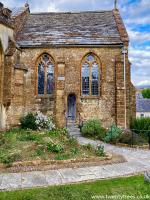
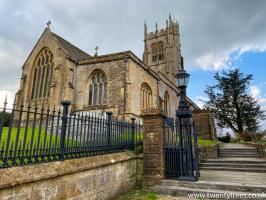
Church of St Mary, Beaminster is in Beaminster, Dorset, Churches in Dorset.
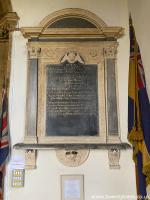
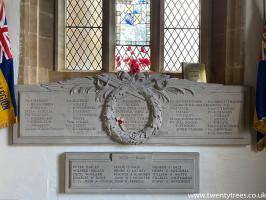
Church of St Mary, Beaminster [Map]. General monuments.
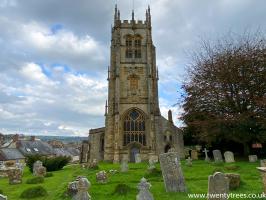
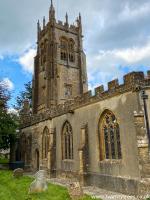
Church of St Mary, Beaminster [Map]. External.
On 4th February 1698 Thomas Strode of Parnham (age 70) died. Monument in Church of St Mary, Beaminster [Map]. William and Mary. Marble with standing figure in wig, gown, side pilasters support cornice. Possibly by John Nost.
To God, the Best and Greatest. Here lie the mortal remains of THOMAS STRODE, Serjeant-at-Law, who peacefully fell asleep in Christ on February 4th, 1698, in the 70th year of his age. A man consecrated to immortal memory, renowned for jurisprudence, piety, and wisdom; of integrity no less than gentleness of character; always faithful to God, to his sovereign, and to his friends. He was the son of Sir John Strode, Knight, of Parnham in the county of Dorset. He chose for himself a most beloved wife, Mary Adams, widow of Parkinson Odber, Esquire, by whom he had one daughter, still surviving. She, most sorrowfully and with tears, set up this monument of final devotion.
D.O.M.P.Q. Mortalitatis Exuvias hic deposuit THOMAS STRODE Serviens ad Legem; Qui in Christo placidè obdormivit Feb: 4o. 1698. Ætat.: suae 70. Vir Immortali Memoriæ sacratus; Jurisprudentiâ, pietate, & Consilio, Insignis; Moribus Integris Juxta ac Suavissimis: Deo, Principi & amicis semper fidus: Patre JOHANE STRODE Equite Aurato de Parnham in Comitatu Dorset oriundus; Charissmam sibi adscîvit Conjugem MARIAM ADAMS relic: de PARKINSON ODBER Armigero; Ex quâ filiam suscepit unicam adhue superstitem. Quæ hoc supræmu: pietatis Monument:, Mœsstissima & cum lacrymis gemens, L.M.D.P.Q. To God the Greatest and Best and to Posterity
Thomas Strode of Parnham: In 1628 he was born to John Strode of Parnham and Anne Wyndham. On 1st July 1642 he matriculated Oxford University. On 1st February 1665 Thomas Strode of Parnham and Mary Adams were married. In 1677 he was appointed Serjeant at Law.


On 30th June 1753 George Strode of Parnham died. On 14th September 1746 Catherine Brodrepp died. Monument in Church of St Mary, Beaminster [Map]. Classical Period.
Probably by Peter Scheemakers (age 62), erected by Thomas Strode, brother of George, with reclining figures of a man and woman on a sarcophagus and on either side standing allegorical figures one with a cornucopia the other an anchor, above is an achievement-of-arms.
George Strode of Parnham: George Strode of Parnham and Catherine Brodrepp were married. he was born to Thomas Strode of Parnham.
Catherine Brodrepp: she was born to Richard Brodrepp of Maperton.
Thomas Strdode of Parnham: he was born to Thomas Strode of Parnham.


