

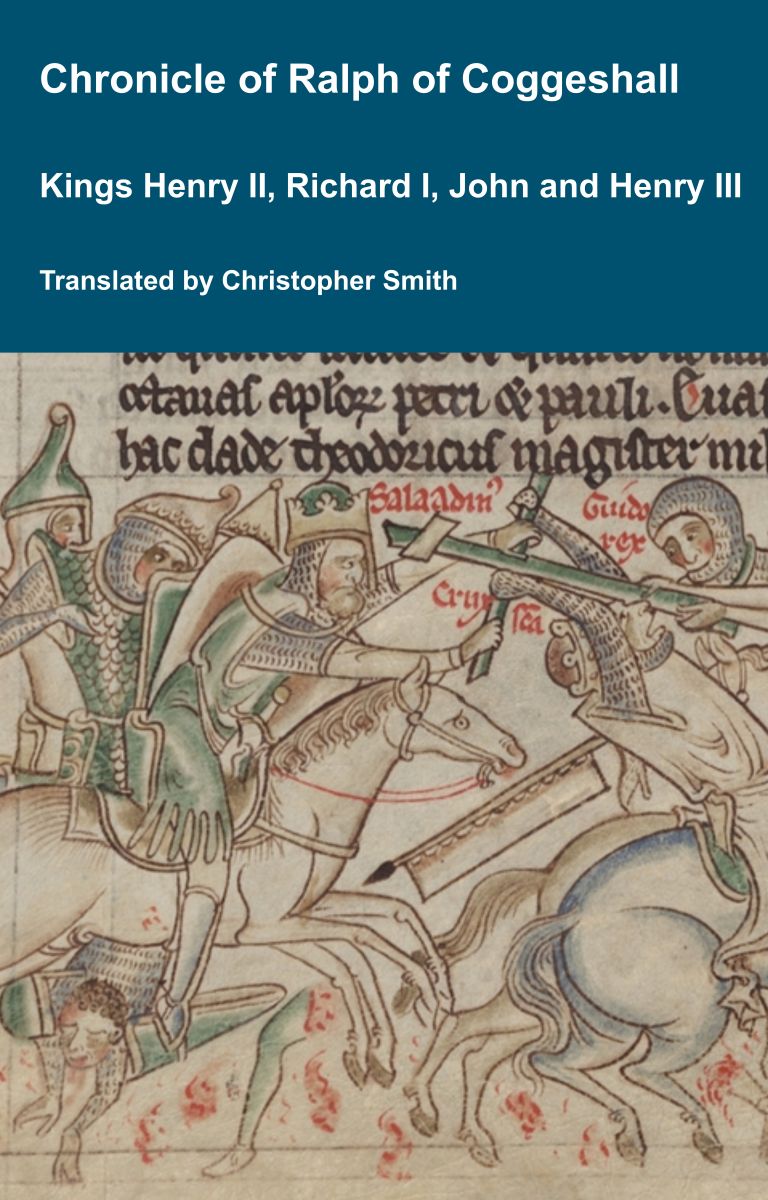
Chronicle of Abbot Ralph of Coggeshall
The Chronicle of Abbot Ralph of Coggeshall (Chronicon Anglicanum) is an indispensable medieval history that brings to life centuries of English and European affairs through the eyes of a learned Cistercian monk. Ralph of Coggeshall, abbot of the Abbey of Coggeshall in Essex in the early 13th century, continued and expanded his community’s chronicle, documenting events from the Norman Conquest of 1066 into the tumultuous reign of King Henry III. Blending eyewitness testimony, careful compilation, and the monastic commitment to record-keeping, this chronicle offers a rare narrative of political intrigue, royal power struggles, and social upheaval in England and beyond. Ralph’s work captures the reigns of pivotal figures such as Richard I and King John, providing invaluable insights into their characters, decisions, and the forces that shaped medieval rule. More than a simple annal, Chronicon Anglicanum conveys the texture of medieval life and governance, making it a rich source for scholars and readers fascinated by English history, monastic authorship, and the shaping of the medieval world.
Available at Amazon in eBook and Paperback format.
Church of St Mary Magdalen, Castle Ashby is in Castle Ashby, Northamptonshire [Map], Churches in Northamptonshire.
Floor tiles at Church of St Mary Magdalen, Castle Ashby [Map]: Here lies the bodies of Jane the first wife of Spencer Compton 8th Earl of Northampton, Charles Compton 1st Marquess Northampton, Mary his wife also of Spencer Second Marquis of Northampton and Margaret his wife and also his grandchildren.
Jane Lawton Countess Northampton: In 1758 Spencer Compton 8th Earl of Northampton and she were married. On 18th October 1763 Charles Compton 7th Earl of Northampton died. His brother Spencer succeeded 8th Earl of Northampton. She by marriage Countess of Northampton. On 26th November 1767 she died.


Churchyard at Church of St Mary Magdalen, Castle Ashby [Map] with various graves of the Compton family.


Monument to an unknown knight. Early Medieval Period. Church of St Mary Magdalen, Castle Ashby [Map].


Circa 1410. Brass at Church of St Mary Magdalen, Castle Ashby [Map] to Walter Ermyn Rector He is represented vested in a cope, upon the borders of which are engraved small figures of St. Peter, St. Paul, St. Andrew, St. Nicholas, and St. Lawrence on one side, and on the other St. Anne, St. Katharine, St. Margaret, St. Mary Magdalene, and St. Elena.


On 2nd April 1830 Margaret Douglas-Maclean-Clephane Marchioness Northampton [aged 38] died in Rome. She was buried in Naples. Monument at Church of St Mary Magdalen, Castle Ashby [Map] sculpted by Pietro Tenerani [aged 40] in 1836.


On 17th January 1851 Spencer Compton 2nd Marquess Northampton [aged 61] died. He was buried at Church of St Mary Magdalen, Castle Ashby [Map]. His son Charles [aged 35] succeeded 3rd Marquess Northampton, 11th Earl of Northampton, 3rd Earl Compton of Compton in Warwickshire, 3rd Baron Wilmington of Wilmington in Sussex.
After 17th January 1851. Monument to Spencer Compton 2nd Marquess Northampton [deceased] at Church of St Mary Magdalen, Castle Ashby [Map]. Angel of the Resurrection sculpted by Pietro Tenerani [aged 61] in 1866. The quote from First Letter to the Corinthians Chapter 15 Verse 52. The inscription on the side Marmoris hoc sculpti eloquens silentium spe futuri patri charissimo dicavit filius.


On 22nd May 1858 Margaret Compton [aged 28] died from childbirth. Monument at Church of St Mary Magdalen, Castle Ashby [Map] erected by her husband Edward Frederick Leveson-Gower [aged 39]. Sculpted by Baron Pietro Carlo Marochetti [aged 53].
Margaret Compton: On 14th March 1830 she was born to Spencer Compton 2nd Marquess Northampton and Margaret Douglas-Maclean-Clephane Marchioness Northampton in Rome, Italy [Map]. On 1st June 1851 Edward Frederick Leveson-Gower and she were married at St Margaret's Church, Westminster [Map]. She the daughter of Spencer Compton 2nd Marquess Northampton and Margaret Douglas-Maclean-Clephane Marchioness Northampton. He the son of Granville Leveson-Gower 1st Earl Granville and Harriet Cavendish Countess Granville. They were half fifth cousin once removed.


After 1945. Memorial to those who died in WWII at Church of St Mary Magdalen, Castle Ashby [Map].