

Chronicle of Abbot Ralph of Coggeshall
The Chronicle of Abbot Ralph of Coggeshall (Chronicon Anglicanum) is an indispensable medieval history that brings to life centuries of English and European affairs through the eyes of a learned Cistercian monk. Ralph of Coggeshall, abbot of the Abbey of Coggeshall in Essex in the early 13th century, continued and expanded his community’s chronicle, documenting events from the Norman Conquest of 1066 into the tumultuous reign of King Henry III. Blending eyewitness testimony, careful compilation, and the monastic commitment to record-keeping, this chronicle offers a rare narrative of political intrigue, royal power struggles, and social upheaval in England and beyond. Ralph’s work captures the reigns of pivotal figures such as Richard I and King John, providing invaluable insights into their characters, decisions, and the forces that shaped medieval rule. More than a simple annal, Chronicon Anglicanum conveys the texture of medieval life and governance, making it a rich source for scholars and readers fascinated by English history, monastic authorship, and the shaping of the medieval world.
Available at Amazon in eBook and Paperback format.
Golden Barrow aka Upton Lovell 2e is in Upton Lovell, Wiltshire [Map], Wyle Valley Barrow Group.
Golden Barrow aka Upton Lovell 2e [Map]. Bronze Age Barrow containing a rich collection of artefacts including:
[All information and photos sourced from Wiltshire Museum]
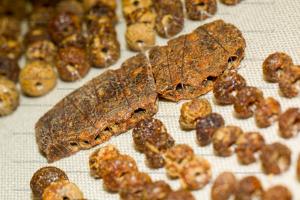
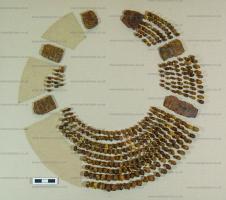
Amber spacer-plate necklace. This necklace was once made of around 1,000 amber beads, but now just over 300 survive. The flat 'spacer-plates' were drilled to hold the six strings of beads in place. Detailed examination suggests that the beads may have been from two necklaces. The necklace may have been made in Denmark or on the Baltic Coast. Necklaces with similar 'spacer-plates' have been found that are made of jet, which comes from Whitby. This suggests that this style of necklace was also made in Britain, using local materials.
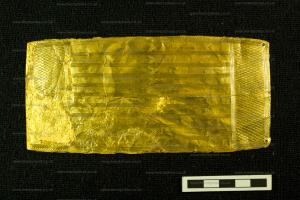
Gold plaque. Made from gold sheet less than 0.1mm thick, originally it was fixed to a backing, probably of wood. The plaque would have been sewn to an item of clothing, perhaps a cloak.
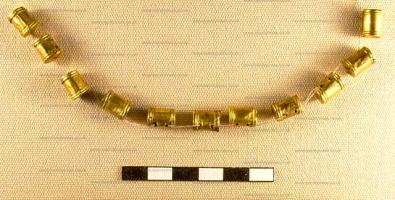
Gold drum-shaped beads. These eleven beads may have been part of a necklace or were possibly sewn onto clothing as decoration. They were made from coiled strips of gold with a gold cap at each end.
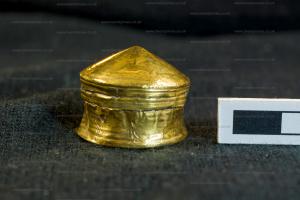
Gold caps. May have once decorated the ends of wooden staffs or sceptres.
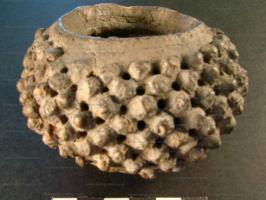
Incense 'grape cup'. These miniature pottery vessels were specially made to be used in funeral ceremonies and were placed in cremation burials, usually of women. These may have been fired on the funeral pyre and used to burn scented plants, hallucinogens or oils during a funeral ceremony. Holes in the side allowed the fragrant smoke to escape into the air.
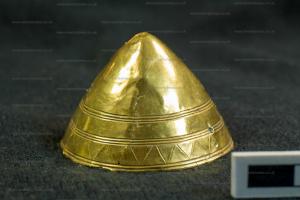
Shale pendant and gold cover. Cone-shaped shale pendant, decorated with incised lines. The cone was encased in gold sheet, decorated with the same incised lines.

Archaeologia Volume 15 Section XI Page 126. 1st August 1803. Description of the opening of Golden Barrow aka Upton Lovell 2e [Map] by William Cunnington [aged 49].

Archaeologia Volume 15 Section XI Page 128. Description of the opening of Golden Barrow aka Upton Lovell 2e [Map] by William Cunnington [aged 51].
Wiltshire Archaeological Magazine 1913 V38 Pages 153-378. [2e.] "Golden Barrow [Map]" in valley on N. bank of Wily River, about mile S.E. of Upton Lovell Manor Farm. Opened 1803 and 1807. In centre a heap of burnt bones in oblong cist about 1ft. 6in. deep without relics. Nearer surface of barrow a second pile of burnt bones, and 1ft. away a quantity of ashes with small fragments of burnt bone. 2ft. from the pile of burnt bones were 13 small drum-shaped beads or buttons of thin gold ; a plate of thin gold which had probably covered a wooden foundation covered with engraved ornament, 6in. X 3in.; a large conical lignite button covered with thin gold ; two small conical orna- ments of thin gold ; a necklace composed of several flat perfor- ated plates and more than 1,000 beds of amber ; a long tanged bronze awl ; a "grape cup" ; a small thin bronze knife dagger ; a small plain urn-shaped vessel inside a larger urn. 4.W. 1 98; Pls. X., XI.,Station IV. ; Stourkead Cat. 50—62 figs. ; Evans' Bronze 189 figs. 223, 224 ; Evans' Stone 414; Arch. xliii. 466 ; not in 0.3. 58 NE.