


Chronicle of a Bourgeois of Valenciennes
Récits d’un bourgeois de Valenciennes aka The Chronicle of a Bourgeois of Valenciennes is a vivid 14th-century vernacular chronicle written by an anonymous urban chronicler from Valenciennes in the County of Hainaut. It survives in a manuscript that describes local and regional history from about 1253 to 1366, blending chronology, narrative episodes, and eyewitness-style accounts of political, military, and social events in medieval France, Flanders, and the Low Countries. The work begins with a chronological framework of events affecting Valenciennes and its region under rulers such as King Philip VI of France and the shifting allegiances of local nobility. It includes accounts of conflicts, sieges, diplomatic manoeuvres, and the impact of broader struggles like the Hundred Years’ War on urban life in Hainaut. Written from the perspective of a burgher (bourgeois) rather than a monastery or royal court, the chronicle offers a rare lay viewpoint on high politics and warfare, reflecting how merchants, townspeople, and civic institutions experienced the turbulence of the 13th and 14th centuries. Its narrative style combines straightforward reporting of events with moral and civic observations, making it a valuable source for readers interested in medieval urban society, regional politics, and the lived experience of war and governance in pre-modern Europe.
Available at Amazon in eBook and Paperback format.
St Denys' Church, Sleaford is in Sleaford, Lincolnshire, Churches in Lincolnshire.
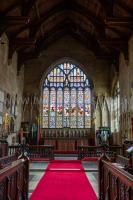
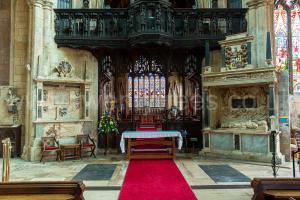
Chancel of St Denys' Church, Sleaford [Map].
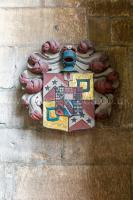
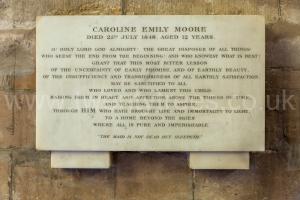
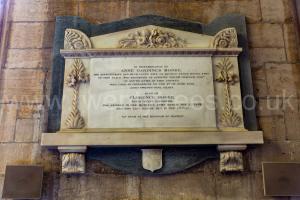
General monuments to the Moore family at St Denys' Church, Sleaford [Map].
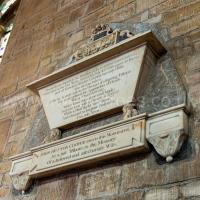
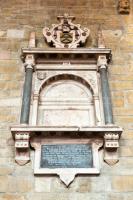
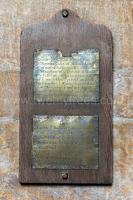
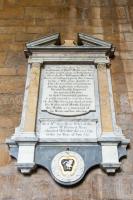
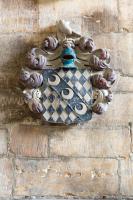
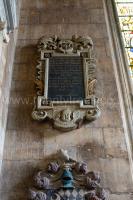
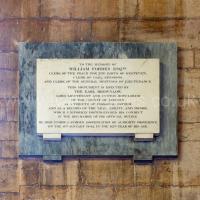
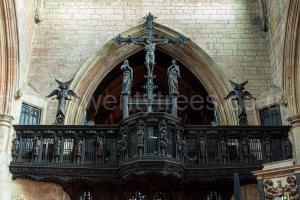
Interior of St Denys' Church, Sleaford [Map].
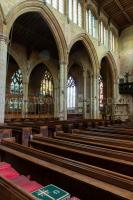
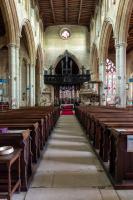
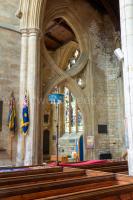
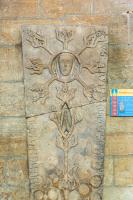
Around 1200. Medieval Grave Slab at St Denys' Church, Sleaford [Map].
After 1590. Monument to Robert Carr [aged 79] at St Denys' Church, Sleaford [Map]. Possibly sculpted by Maximilian Colt [aged 15].
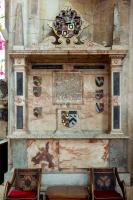
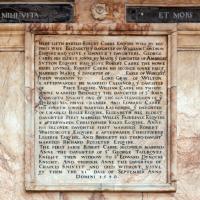
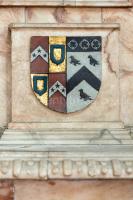
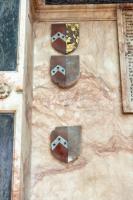
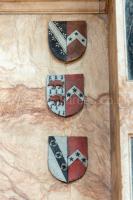
After 1st October 1618. Monument to Edward Carr 1st Baronet [deceased] at St Denys' Church, Sleaford [Map] sculpted by Maximilian Colt [aged 43].
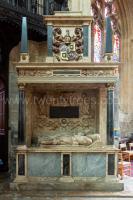
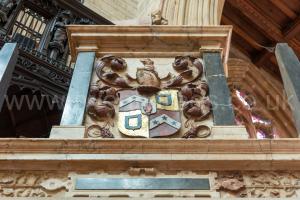
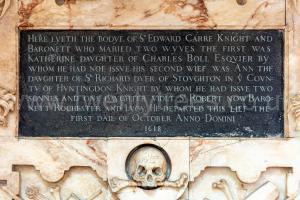
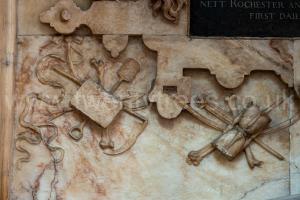
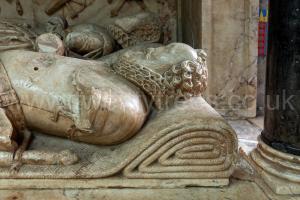
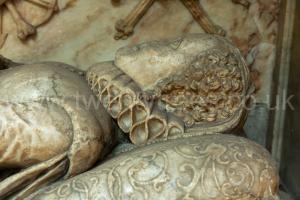
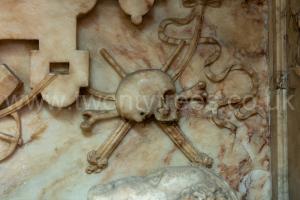
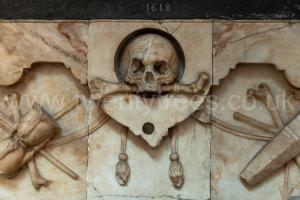
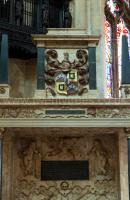
On 29th August 1667 Robert Carr 2nd Baronet [deceased] was buried at St Denys' Church, Sleaford [Map].
On 17th November 1682 Robert Carr 3rd Baronet [deceased] was buried at St Denys' Church, Sleaford [Map].
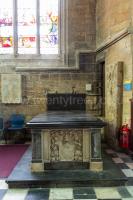
After 28th December 1683. Chest tomb of Edward Carr 4th Baronet [deceased] at St Denys' Church, Sleaford [Map].
Edward Carr 4th Baronet: In 1666 he was born to Robert Carr 3rd Baronet and Elizabeth Bennet Lady Carr in Aswarby. On 14th November 1682 Robert Carr 3rd Baronet died in Aswarby. His son Edward succeeded 4th Baronet Carr of Sleaford in Lincolnshire. On 28th December 1683 Edward Carr 4th Baronet died unmarried. His great uncle Rochester succeeded 5th Baronet Carr of Sleaford in Lincolnshire.
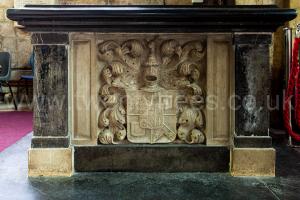
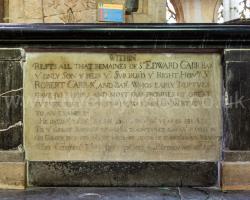
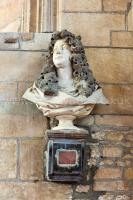
On 16th September 1690 Robert Carr was buried at St Denys' Church, Sleaford [Map].
The History of William Marshal was commissioned by his son shortly after William’s death in 1219 to celebrate the Marshal’s remarkable life; it is an authentic, contemporary voice. The manuscript was discovered in 1861 by French historian Paul Meyer. Meyer published the manuscript in its original Anglo-French in 1891 in two books. This book is a line by line translation of the first of Meyer’s books; lines 1-10152. Book 1 of the History begins in 1139 and ends in 1194. It describes the events of the Anarchy, the role of William’s father John, John’s marriages, William’s childhood, his role as a hostage at the siege of Newbury, his injury and imprisonment in Poitou where he met Eleanor of Aquitaine and his life as a knight errant. It continues with the accusation against him of an improper relationship with Margaret, wife of Henry the Young King, his exile, and return, the death of Henry the Young King, the rebellion of Richard, the future King Richard I, war with France, the death of King Henry II, and the capture of King Richard, and the rebellion of John, the future King John. It ends with the release of King Richard and the death of John Marshal.
Available at Amazon in eBook and Paperback format.
After 1725. General memorials at St Denys' Church, Sleaford [Map].
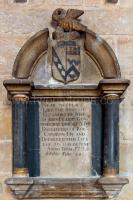
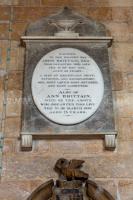
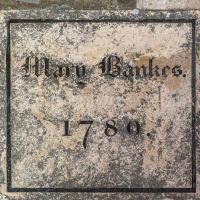
After 1780. Memorial to Mary Bankes at St Denys' Church, Sleaford [Map].
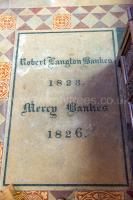
After 1826. Memorial to Robert Langton Bankes and his wife Mercy Tanner [aged 65] at St Denys' Church, Sleaford [Map].
Robert Langton Bankes: In 1747 he was born. In 1798 he and Mercy Tanner were married. On 30th June 1823 he died.
Mercy Tanner: In 1761 she was born. On 18th November 1826 she died.
After 11th February 1834. Monument to Anne Bankes nee Truman at St Denys' Church, Sleaford [Map] sculpted by Richard Westmacott [aged 58].


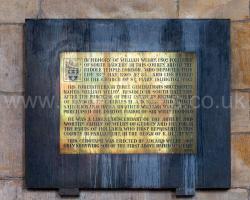
1858. Monument to William Welby erected by his son Adlard Welby at St Denys' Church, Sleaford [Map].
William Welby: Around 1725 he was born. On 18th May 1809 he died. He was buried at St Mary's Chapel, Islington.
Adlard Welby: he was born to William Welby.
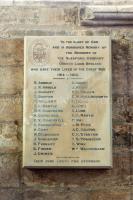
After 1919. First World War Memorial at St Denys' Church, Sleaford [Map].