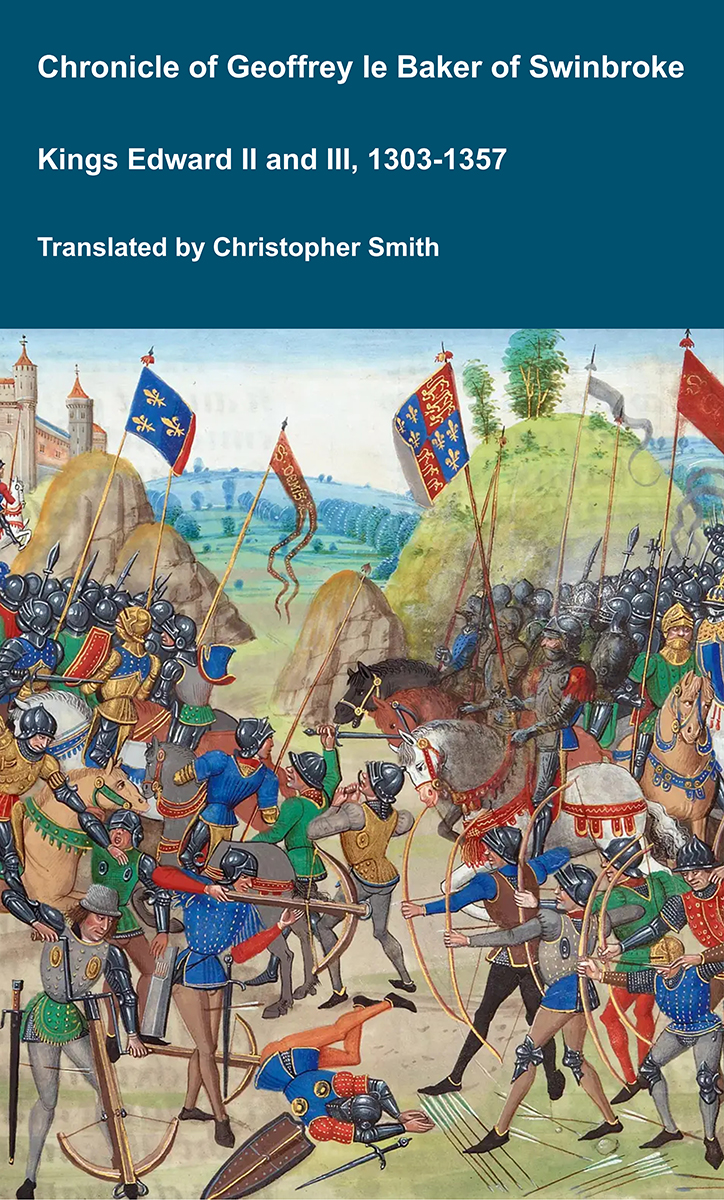
Chronicle of Geoffrey le Baker of Swinbroke
Baker was a secular clerk from Swinbroke, now Swinbrook, an Oxfordshire village two miles east of Burford. His Chronicle describes the events of the period 1303-1356: Gaveston, Bannockburn, Boroughbridge, the murder of King Edward II, the Scottish Wars, Sluys, Crécy, the Black Death, Winchelsea and Poitiers. To quote Herbert Bruce 'it possesses a vigorous and characteristic style, and its value for particular events between 1303 and 1356 has been recognised by its editor and by subsequent writers'. The book provides remarkable detail about the events it describes. Baker's text has been augmented with hundreds of notes, including extracts from other contemporary chronicles, such as the Annales Londonienses, Annales Paulini, Murimuth, Lanercost, Avesbury, Guisborough and Froissart to enrich the reader's understanding. The translation takes as its source the 'Chronicon Galfridi le Baker de Swynebroke' published in 1889, edited by Edward Maunde Thompson.
Available at Amazon in eBook and Paperback format.
St Mary Magdalene's Church, Leintwardine is in Leintwardine, Herefordshire [Map], Churches in Herefordshire.
Between 1174 and 1179 Hugh Mortimer granted St Mary Magdalene's Church, Leintwardine [Map] to his new foundation of Wigmore Abbey [Map]. The St Mary Magdalene's Church, Leintwardine [Map] is built partly in the vallum, or ditch, that enclosed the Roman town of Bravonium. The foundations are Saxon and Norman but the main part of the church is 13th and 14th century. The earliest detail in the church is the blocked 12th-century W. doorway, which is probably not in situ. Towards the end of the thirteenth century a south aisle was added to the nave and in the first half of the fourteenth century a north aisle and two chapels were added together with a new chancel and an impressive south tower of five storeys over a powerful porch.
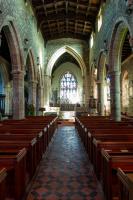
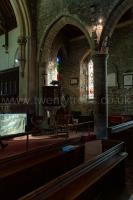
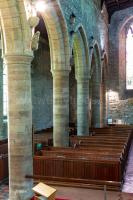
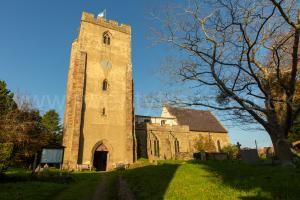
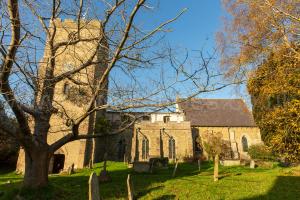
After 1326 Roger Mortimer 1st Earl March (age 38) commissioned the building of the Mortimer chapel, now known as the Lady Chapel, at St Mary Magdalene's Church, Leintwardine [Map].
Around September 1353 King Edward III of England (age 40) visited St Mary Magdalene's Church, Leintwardine [Map] and laid a cloth of gold at the feet of the statue of the Virgin Mary.
Memorials inside St Mary Magdalene's Church, Leintwardine [Map].
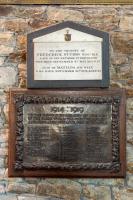
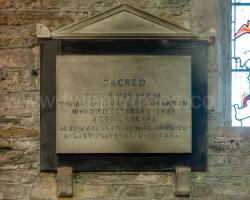
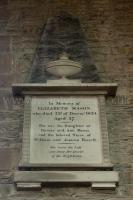
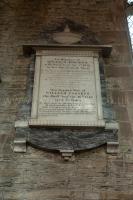
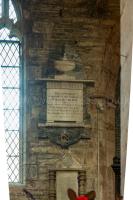
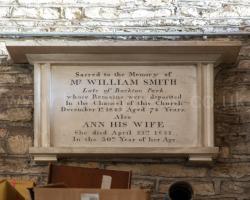
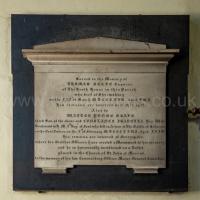
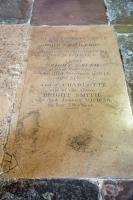
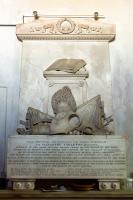
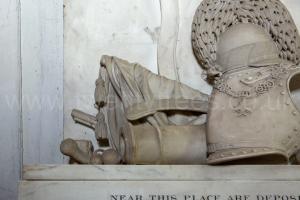
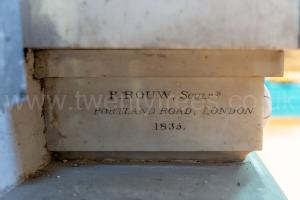
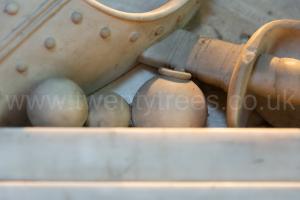
1835. Memorial to Banastre Tarleton 1st Baronet sculpted by Peter Rouw (age 63) at St Mary Magdalene's Church, Leintwardine [Map].

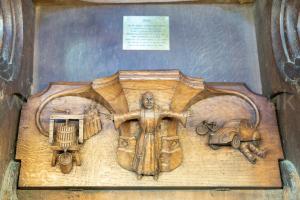
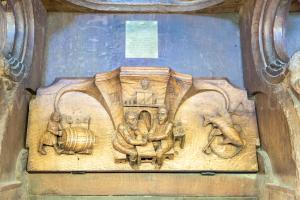
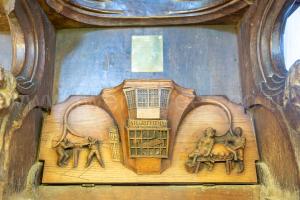
2010. A number of new misericords added to St Mary Magdalene's Church, Leintwardine [Map] after 2010.