

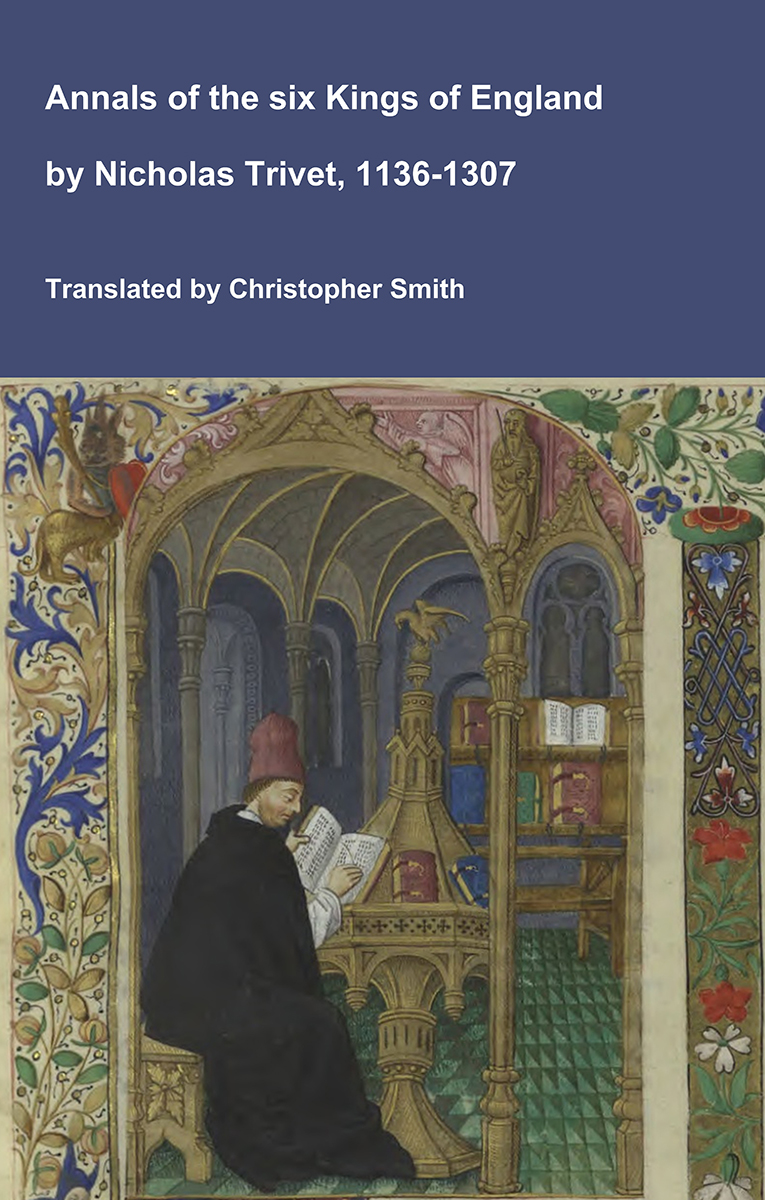
Annals of the six Kings of England by Nicholas Trivet
Translation of the Annals of the Six Kings of England by that traces the rise and rule of the Angevin aka Plantagenet dynasty from the mid-12th to early 14th century. Written by the Dominican scholar Nicholas Trivet, the work offers a vivid account of English history from the reign of King Stephen through to the death of King Edward I, blending political narrative with moral reflection. Covering the reigns of six monarchs—from Stephen to Edward I—the chronicle explores royal authority, rebellion, war, and the shifting balance between crown, church, and nobility. Trivet provides detailed insight into defining moments such as baronial conflicts, Anglo-French rivalry, and the consolidation of royal power under Edward I, whose reign he describes with particular immediacy. The Annals combines careful year-by-year reporting with thoughtful interpretation, presenting history not merely as a sequence of events but as a moral and political lesson. Ideal for readers interested in medieval history, kingship, and the origins of the English state, this chronicle remains a valuable and accessible window into the turbulent world of the Plantagenet kings.
Available at Amazon in eBook and Paperback format.
St Mary Spital is in Spitalfields.
Henry Machyn's Diary. 19th April 1557. The xix day of Aprell dyd pryche at sant Mare spyttell docthur Pendyltun [aged 33], and mad a goodly sermon; ther was my lord mare [aged 57] and xxiij althermen besyd my lord mayre, and iij juges, and alle the masters of the hospetall with grenstayffes in ther handes, and alle the chylderyn of the hospetall in bluw garmenttes boyth men chylderyn and women chylderyn, that be kept with serten landes and the cherete of the nobull cette of London, and aboyff xx M. pepull of old and yonge, to her the sermon of old custom, and my lade mares and the (unfinished).
Henry Machyn's Diary. 20th April 1557. The xx day of Aprell dyd pryche docthur Yonge at santt Mare spyttylle; and ther was my lord mare [aged 57] and xxv althermen, none lackyng butt master Wodderoff, the wyche makyth the full nom bur of xxvj; and my lord Broke the cheff justes, and my lord justes Browne [aged 48], and my ser John Baker, and ser Roger Chamley, and mony nobull gentyllmen, with the holl cete [whole city] boythe old and yonge, boythe men and women.
Henry Machyn's Diary. 22nd April 1557. The xxij of Aprell dyd pryche at sant Mare speytyll [doctor] Watsun [aged 42] nuw-choyssen bysshope of Lynckolne a godly sermon.
Henry Machyn's Diary. 27th March 1559. The xxvij day of Marche dyd pryche at sant Mare Spyttyl doctur Bylle [aged 54] the quen('s) [aged 25] amner [almoner].
Henry Machyn's Diary. 29th March 1559. The xxix day of Marche dyd pryche at sant Mare Spyttyll master Horne [aged 49], parsun sum-tyme at Allalows in Bredstrett.
Henry Machyn's Diary. 10th April 1560. The x day of Aprell cam from sant Mare spytyll the Quen (of the May?) wyth a (blank) M. men in harnes, boyth queners [queen's attendants] in shurth [shirts] of malle and cosselet and mores pykes and a x gret pesses, cared thrugh London unto the court, with drumes and fluttes and trumpetes, and ij mores dansyng, in the cartt wher ij quyke bers [live bears], and London fond a (unfinished)
Henry Machyn's Diary. 15th April 1560. The xv day of Aprell dyd pryche at sant Mare spyttyl withowt Byshope-gatt master Bentun [aged 46].
Henry Machyn's Diary. 16th April 1560. The sam day dyd pryche at sant Mare spyttyll master Colle.
Henry Machyn's Diary. 17th April 1560. The xvij day of Aprell dyd pryche at sant Mare spytyll master Juelle [aged 37].
Henry Machyn's Diary. 7th April 1561. The vij day of Aprell dyd pryche at sant Mare spytyll the nuwe byshope of Wynchester master Horne [aged 51], and ther was all the masters of the hospetall, and the chylderyn in bluw cotes, and my lord mayre [aged 52] and the althermen, and mony worshephull men.
Henry Machyn's Diary. 8th April 1561. The viij day of Aprell dyd pryche at sant Mare spytyll the byshope of Durham master Pylkyngtun [aged 41], and ther was gret audyense, and my lord mare [aged 52] and my masters the althermen, with the masters of the hospetall.
Henry Machyn's Diary. 9th April 1561. The ix day of Aprell dyd pryche at sant Mare spyttell master Colle the parsun of Hehonger in Essex.
Henry Machyn's Diary. 1st April 1562. The furst day of Aprell master Torner of Cantur[bury preached,] the wedynsday in Ester wekke, at sant Mare spytty I, and the pepull kept haleday thrughe London do yt was n[ight.]
Henrici Quinti, Angliæ Regis, Gesta, is a first-hand account of the Agincourt Campaign, and subsequent events to his death in 1422. The author of the first part was a Chaplain in King Henry's retinue who was present from King Henry's departure at Southampton in 1415, at the siege of Harfleur, the battle of Agincourt, and the celebrations on King Henry's return to London. The second part, by another writer, relates the events that took place including the negotiations at Troye, Henry's marriage and his death in 1422.
Available at Amazon in eBook and Paperback format.
Henry Machyn's Diary. 2nd February 1563. The ij day of Feybruary callyd Candyllmasse day ther was serten men whent to Duram plase and to sant Mare spyttyll to here masse, and ther was serten of them cared by the gard and othur men to the contur and odur plases.
Henry Machyn's Diary. 12th April 1563. The xij day of Aprell, was Ester monday, dyd pryche at sant Mare spyttyll master Horne [aged 53] the byshope of Wynchastur, and ther was my lord mare [aged 54] and the althermen in skarlett, and certen juges and serjantes of the law, and mony worshephulle men and women, and the masturs of the hospetall with ther gren stayffes in ther handes, [and the] chylderyne of the hospetall boyth boysse and wenchys in bluw [coats and] red capes [caps] to the nombur of a (blank), and ther was geydered at the sermon for the Frenche men [refugees] in-to England women and chylderyn the sum of xlv li.
Henry Machyn's Diary. 13th April 1563. The xiij day of Aprell dyd pryche at sant Mare spyttyll tuwysday in Ester weeke master Colle parsun of Hehenger in Essex and (dean elect) of Norwyche, and my lord mare [aged 54] and ij juges and the althermen and byshopes, with all the masturs of the hospetall and the chylderyn.
Henry Machyn's Diary. 14th April 1563. The xiiij day of Aprell dyd pryche at the spyttylle the wedynsday the dene of Powlles [aged 46] in Ester wyke.