

Abbot John Whethamstede’s Chronicle of the Abbey of St Albans
Abbot John Whethamstede's Register aka Chronicle of his second term at the Abbey of St Albans, 1451-1461, is a remarkable text that describes his first-hand experience of the beginning of the Wars of the Roses including the First and Second Battles of St Albans, 1455 and 1461, respectively, their cause, and their consequences, not least on the Abbey itself. His text also includes Loveday, Blore Heath, Northampton, the Act of Accord, Wakefield, and Towton, and ends with the Coronation of King Edward IV. In addition to the events of the Wars of the Roses, Abbot John, or his scribes who wrote the Chronicle, include details in the life of the Abbey such as charters, letters, land exchanges, visits by legates, and disputes, which provide a rich insight into the day-to-day life of the Abbey, and the challenges faced by its Abbot.
Available at Amazon in eBook and Paperback format.
St Mary The Virgin Church, Rufford is in Rufford, Lancashire, Churches in Lancashire.

World War II Memorial at St Mary The Virgin Church, Rufford [Map], and memorial to more recent services' deaths.
West wall of St Mary The Virgin Church, Rufford [Map] with windows commissioned by Thomas Fermor-Hesketh 5th Baronet in memory of his wife Arabella Fermor Lady Hesketh.


St Mary The Virgin Church, Rufford [Map]


On 8th October 1463 Thomas Hesketh of Rufford [aged 57] died. Alasbaster grave slab at St Mary The Virgin Church, Rufford [Map] to Thomas and his wife Margaret Massey with their children depicted at his feet.
Thomas Hesketh of Rufford: Around 1406 he was born. In 1428 Thomas Hesketh of Rufford and Margaret Massey were married.
Margaret Massey: she was born to Hamon Massey of Rixton.


On 8th February 1539 Robert Hesketh [aged 29] died. He was buried at St Mary The Virgin Church, Rufford [Map]. Brass to Robert and his wife Grace Towneley [aged 34].
Robert Hesketh: After 1510 he was born to Thomas Hesketh of Hesketh and Rufford. In 1521 Robert Hesketh and Grace Towneley were married.
Grace Towneley: Around 1505 she was born to John Towneley. On 28th May 1543 she died. She was buried at St Mary The Virgin Church, Rufford [Map].
On 28th May 1543 Grace Towneley [aged 38] died. She was buried at St Mary The Virgin Church, Rufford [Map].

St Mary The Virgin Church, Rufford [Map]. Grave of Margaret Hesketh, died 1680. Possibly Margaret Hesketh [aged 28].
Margaret Hesketh: Before 1652 she was born to Robert Hesketh and Lucy Rigby Lady Molyneux.
In 1769 Robert Hesketh [aged 99] died. He was buried at St Mary The Virgin Church, Rufford [Map].
On 4th March 1778 Thomas Hesketh 1st Baronet [aged 51] died. His brother Robert [aged 48] succeeded 2nd Baronet Hesketh of Rufford in Lancashire. Memorial at St Mary The Virgin Church, Rufford [Map].
Thomas Hesketh 1st Baronet: In 1727 he was born to Thomas Hesketh. In 1761 Thomas Hesketh 1st Baronet was created 1st Baronet Hesketh of Rufford in Lancashire.
Robert Hesketh 2nd Baronet: On 23rd April 1729 he was born to Thomas Hesketh. On 30th December 1796 Robert Hesketh 2nd Baronet died. His grandson Thomas succeeded 3rd Baronet Hesketh of Rufford in Lancashire.


On 6th February 1817 Sophia Hinde Lady Hesketh [aged 39] died. She was buried at St Mary The Virgin Church, Rufford [Map]. Monument by John Flaxman [aged 61].
Sophia Hinde Lady Hesketh: In 1778 she was born. On 1st February 1798 Thomas Dalrymple Hesketh 3rd Baronet and she were married. She by marriage Lady Hesketh of Rufford in Lancashire.


On 27th July 1842 Thomas Dalrymple Hesketh 3rd Baronet [aged 65] died. He was buried at St Mary The Virgin Church, Rufford [Map]. His son Thomas [aged 43] succeeded 4th Baronet Hesketh of Rufford in Lancashire. Annette Maria Bomford Lady Hesketh [aged 43] by marriage Lady Hesketh of Rufford in Lancashire.
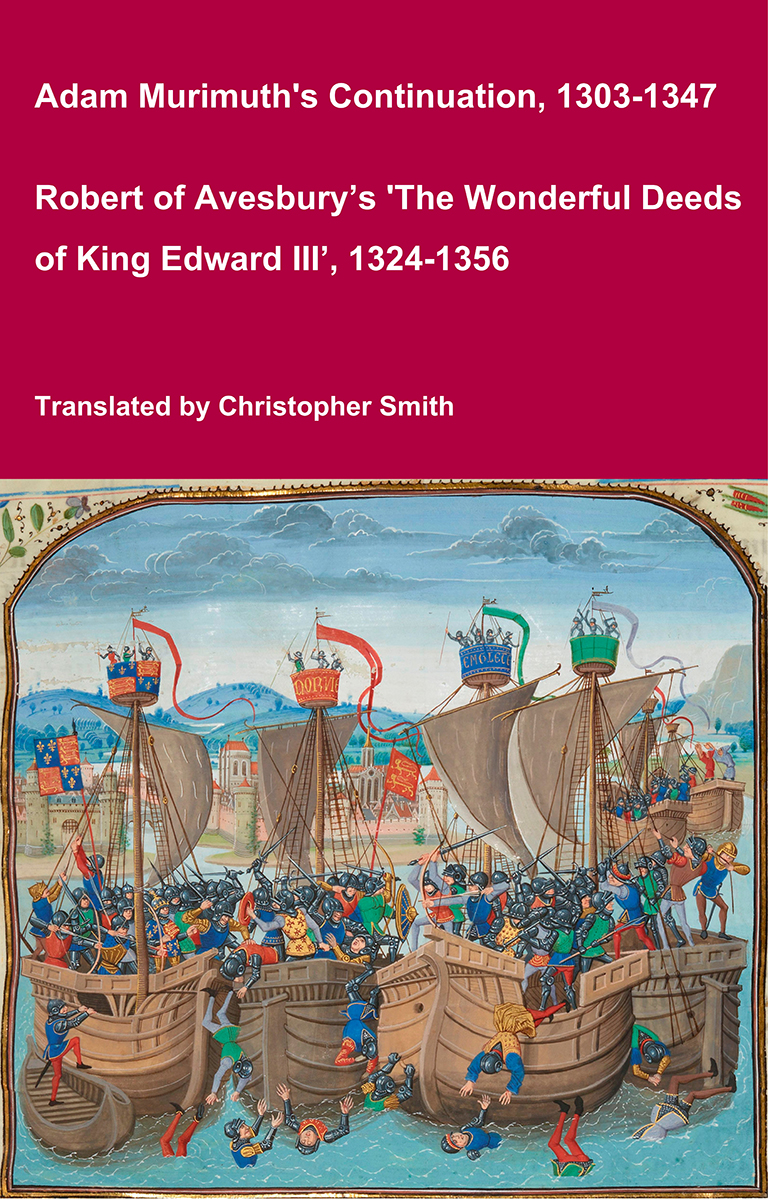
Adam Murimuth's Continuation and Robert of Avesbury’s 'The Wonderful Deeds of King Edward III'
This volume brings together two of the most important contemporary chronicles for the reign of Edward III and the opening phases of the Hundred Years’ War. Written in Latin by English clerical observers, these texts provide a vivid and authoritative window into the political, diplomatic, and military history of fourteenth-century England and its continental ambitions. Adam Murimuth Continuatio's Chronicarum continues an earlier chronicle into the mid-fourteenth century, offering concise but valuable notices on royal policy, foreign relations, and ecclesiastical affairs. Its annalistic structure makes it especially useful for establishing chronology and tracing the development of events year by year. Complementing it, Robert of Avesbury’s De gestis mirabilibus regis Edwardi tertii is a rich documentary chronicle preserving letters, treaties, and official records alongside narrative passages. It is an indispensable source for understanding Edward III’s claim to the French crown, the conduct of war, and the mechanisms of medieval diplomacy. Together, these works offer scholars, students, and enthusiasts a reliable and unembellished account of a transformative period in English and European history. Essential for anyone interested in medieval chronicles, the Hundred Years’ War, or the reign of Edward III.
Available at Amazon in eBook and Paperback format.

On 10th February 1843 Thomas Hesketh 4th Baronet [aged 43] died the day before his 44th birthday. His son Thomas [aged 18] succeeded 5th Baronet Fermor-Hesketh of Rufford in Lancashire. Memorial at St Mary The Virgin Church, Rufford [Map].
Thomas Hesketh 4th Baronet: On 11th February 1799 he was born to Thomas Dalrymple Hesketh 3rd Baronet and Sophia Hinde Lady Hesketh. On 3rd April 1824 Thomas Hesketh 4th Baronet and Annette Maria Bomford Lady Hesketh were married. On 27th July 1842 Thomas Dalrymple Hesketh 3rd Baronet died. He was buried at St Mary The Virgin Church, Rufford [Map]. His son Thomas succeeded 4th Baronet Hesketh of Rufford in Lancashire. Annette Maria Bomford Lady Hesketh by marriage Lady Hesketh of Rufford in Lancashire.

On 22nd May 1849 Thomas Richard Hesketh [aged 1] died. Memorial at St Mary The Virgin Church, Rufford [Map].
Thomas Richard Hesketh: Around February 1848 he was born to Thomas Fermor-Hesketh 5th Baronet and Arabella Fermor Lady Hesketh.

On 17th October 1849 Thomas Buckler Lethbridge 2nd Baronet [aged 71] died. He was buried at St Mary The Virgin Church, Rufford [Map]. His son John [aged 51] succeeded 3rd Baronet Lethbridge of Westaway House in Devon and Winkley Court in Somerset.
St Mary The Virgin Church, Rufford [Map]. Memorial of the three children of Thomas ffoster, sometime Rector of Rufford, and his wife Mary Elizabeth Christian, who died young.


On 14th June 1863 Anna Maria Lake [aged 88] died. Memorial window at St Mary The Virgin Church, Rufford [Map] commissioned by her grand-daughter Arabella Fermor Lady Hesketh [aged 35].
Anna Maria Lake: In 1775 she was born to Gerard Lake 1st Viscount Lake and Elizabeth Barker. On 21st August 1799 Richard Borough 1st Baronet and she were married.


St Mary The Virgin Church, Rufford [Map]. The font now in use is a handsome modern one of red granite, a Masonic gift in memory of Sir Thomas Fermor-Hesketh 5th Baronet [aged 46], but the 18th-century hexagonal font is still preserved, with a wooden canopy, round the bottom of which is the inscription: 'NI[PS]ON ANOMHMA MH MONAN O[PS]IN.'
On 20th August 1872 Thomas Fermor-Hesketh 5th Baronet [aged 47] died. His son Thomas [aged 25] succeeded 6th Baronet Fermor-Hesketh of Rufford in Lancashire. Monument at St Mary The Virgin Church, Rufford [Map] by Matthew Noble [aged 55].
Thomas Henry Fermor-Hesketh 6th Baronet: In 1847 he was born to Thomas Fermor-Hesketh 5th Baronet and Arabella Fermor Lady Hesketh. In 1876 Thomas Henry Fermor-Hesketh 6th Baronet died unmarried. His brother Thomas succeeded 7th Baronet Fermor-Hesketh of Rufford in Lancashire.


On 17th December 1879 Annette Maria Bomford Lady Hesketh [aged 80] died. She was buried at St Mary The Virgin Church, Rufford [Map].

St Mary The Virgin Church, Rufford [Map] Memorial to Sunday School teacher Annie Maude Hogg-Goggin, died 9th April 1902.

1918. World War I Memorial at St Mary The Virgin Church, Rufford [Map].
Adam Murimuth's Continuation and Robert of Avesbury’s 'The Wonderful Deeds of King Edward III'
This volume brings together two of the most important contemporary chronicles for the reign of Edward III and the opening phases of the Hundred Years’ War. Written in Latin by English clerical observers, these texts provide a vivid and authoritative window into the political, diplomatic, and military history of fourteenth-century England and its continental ambitions. Adam Murimuth Continuatio's Chronicarum continues an earlier chronicle into the mid-fourteenth century, offering concise but valuable notices on royal policy, foreign relations, and ecclesiastical affairs. Its annalistic structure makes it especially useful for establishing chronology and tracing the development of events year by year. Complementing it, Robert of Avesbury’s De gestis mirabilibus regis Edwardi tertii is a rich documentary chronicle preserving letters, treaties, and official records alongside narrative passages. It is an indispensable source for understanding Edward III’s claim to the French crown, the conduct of war, and the mechanisms of medieval diplomacy. Together, these works offer scholars, students, and enthusiasts a reliable and unembellished account of a transformative period in English and European history. Essential for anyone interested in medieval chronicles, the Hundred Years’ War, or the reign of Edward III.
Available at Amazon in eBook and Paperback format.

Curates and Rectors of St Mary The Virgin Church, Rufford [Map].