

Jean de Waurin's Chronicle of England Volume 6 Books 3-6: The Wars of the Roses
Jean de Waurin was a French Chronicler, from the Artois region, who was born around 1400, and died around 1474. Waurin’s Chronicle of England, Volume 6, covering the period 1450 to 1471, from which we have selected and translated Chapters relating to the Wars of the Roses, provides a vivid, original, contemporary description of key events some of which he witnessed first-hand, some of which he was told by the key people involved with whom Waurin had a personal relationship.
Available at Amazon in eBook and Paperback format.
Baronet Fermor is in Baronetcies of England Alphabetically.
Baronet Fermor of Easton Neston in Northamptonshire is also in Baronetcies of England Chronologically, Extinct Baronetcies of England.
Summary
6th September 1641. William Fermor 1st Baronet [aged 20] created.
14th May 1661. Son William Fermor 1st Baron Leominster [aged 12] succeeded.
7th December 1711. Son Thomas Fermor 1st Earl Pomfret [aged 13] succeeded.
8th July 1753. Son George Fermor 2nd Earl Pomfret [aged 31] succeeded.
1785. Son George Fermor 3rd Earl Pomfret [aged 16] succeeded.
29th June 1833. Nephew George William Fermor 5th Earl Pomfret [aged 8] succeeded.
8th June 1867. George William Fermor 5th Earl Pomfret extinct.
On 6th September 1641 William Fermor 1st Baronet [aged 20] was created 1st Baronet Fermor of Easton Neston in Northamptonshire by King Charles I of England, Scotland and Ireland [aged 40] who also gave him the command of a troop of horse, and afterwards made him a Privy Councillor to Charles, Prince of Wales [aged 11].
On 8th September 1646 William Fermor 1st Baronet [aged 25] and Mary Perry Lady Fermor were married. She by marriage Lady Fermor of Easton Neston in Northamptonshire.
On 14th May 1661 William Fermor 1st Baronet [aged 40] died. His son William [aged 12] succeeded 2nd Baronet Fermor of Easton Neston in Northamptonshire.
On 7th December 1711 William Fermor 1st Baron Leominster [aged 63] died. His son Thomas [aged 13] succeeded 2nd Baron Leominster, 3rd Baronet Fermor of Easton Neston in Northamptonshire.
On 8th July 1753 Thomas Fermor 1st Earl Pomfret [aged 55] died. His son George [aged 31] succeeded 2nd Earl Pomfret aka Pontefract, 3rd Baron Leominster, 4th Baronet Fermor of Easton Neston in Northamptonshire.
In 1785 George Fermor 2nd Earl Pomfret [aged 63] died. His son George [aged 16] succeeded 3rd Earl Pomfret aka Pontefract, 4th Baron Leominster, 5th Baronet Fermor of Easton Neston in Northamptonshire.
On 29th June 1833 Thomas Fermor 4th Earl Pomfret [aged 62] died. His son George [aged 8] succeeded 5th Earl Pomfret aka Pontefract, 5th Baron Leominster, 6th Baronet Fermor of Easton Neston in Northamptonshire.
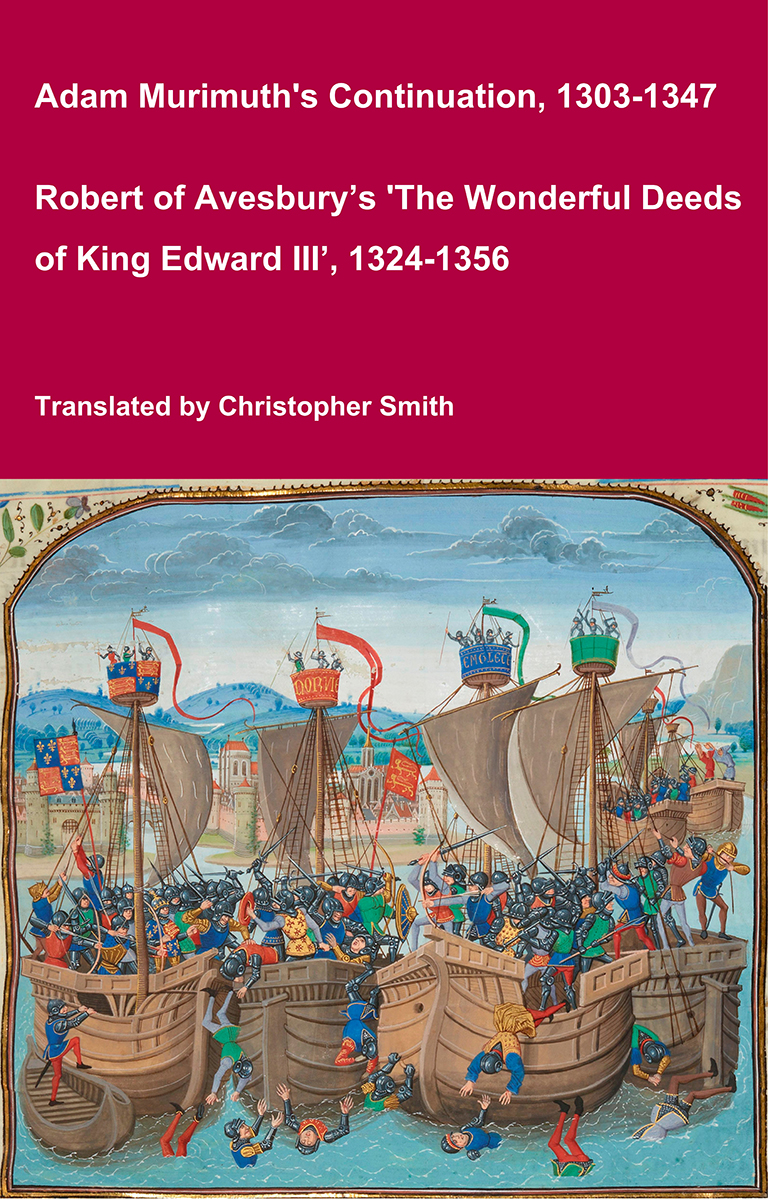
Adam Murimuth's Continuation and Robert of Avesbury’s 'The Wonderful Deeds of King Edward III'
This volume brings together two of the most important contemporary chronicles for the reign of Edward III and the opening phases of the Hundred Years’ War. Written in Latin by English clerical observers, these texts provide a vivid and authoritative window into the political, diplomatic, and military history of fourteenth-century England and its continental ambitions. Adam Murimuth Continuatio's Chronicarum continues an earlier chronicle into the mid-fourteenth century, offering concise but valuable notices on royal policy, foreign relations, and ecclesiastical affairs. Its annalistic structure makes it especially useful for establishing chronology and tracing the development of events year by year. Complementing it, Robert of Avesbury’s De gestis mirabilibus regis Edwardi tertii is a rich documentary chronicle preserving letters, treaties, and official records alongside narrative passages. It is an indispensable source for understanding Edward III’s claim to the French crown, the conduct of war, and the mechanisms of medieval diplomacy. Together, these works offer scholars, students, and enthusiasts a reliable and unembellished account of a transformative period in English and European history. Essential for anyone interested in medieval chronicles, the Hundred Years’ War, or the reign of Edward III.
Available at Amazon in eBook and Paperback format.
On 8th June 1867 George William Fermor 5th Earl Pomfret [aged 42] died unmarried. Earl Pomfret aka Pontefract, Baron Leominster, Baronet Fermor of Easton Neston in Northamptonshire extinct.
Baronet Fermor of Welches in Suffolk and Sevenoak in Kent is also in Baronetcies of England Chronologically, Extinct Baronetcies of England.
Summary
7th May 1725. Henry Fermor 1st Baronet created.
3rd July 1734. Charles Eversfield 2nd Baronet [aged 26] succeeded.
1784. Charles Eversfield 2nd Baronet extinct.
The London Gazette 6370. Whitehall, May 7.
His Majesty [aged 64] has been pleased to order Letters Patents to pass the Great Seal for granting the Dignity of a Baronet of the Kingdom of Great Britain unto Henry Fermor, of Welche alias Welckes, in the County of Sussex, and of Sevenoak in the County of Kent, Esq; [Note. The Baronetcy was created with a special remainder, in default of male issue, to Charles Eversfield 2nd Baronet [aged 17] who was a first cousin twice removed of his then wife's (Catherine Thomas) first husband Thomas Eversfield of Grove, Hastings. This suggests the Baronectcy was being awarded to his wife rather than him?]
His Majesty has been pleased to confer the Honour of Knighthood on Pr. Conrad Sprengell, Member of the College of Physicians, and Fellow bf the Royal Society.
On 3rd July 1734 Henry Fermor 1st Baronet died. Charles Eversfield 2nd Baronet [aged 26] succeeded 2nd Baronet Eversfield of Welches in Suffolk and Sevenoak in Kent. He was a first cousin twice removed of his wife's first husband John Eversfield of Horsham, Sussex.
In 1784 Charles Eversfield 2nd Baronet [aged 76] died unmarried. Baronet Fermor of Welches in Suffolk and Sevenoak in Kent extinct.