

Henrici Quinti, Angliæ Regis, Gesta, is a first-hand account of the Agincourt Campaign, and subsequent events to his death in 1422. The author of the first part was a Chaplain in King Henry's retinue who was present from King Henry's departure at Southampton in 1415, at the siege of Harfleur, the battle of Agincourt, and the celebrations on King Henry's return to London. The second part, by another writer, relates the events that took place including the negotiations at Troye, Henry's marriage and his death in 1422.
Available at Amazon in eBook and Paperback format.
MP Banbury is in Member Parliament. See Banbury, Oxfordshire [Map].
In 1571 Anthony Cope 1st Baronet (age 23) was elected MP Banbury.
In 1586 Anthony Cope 1st Baronet (age 38) was elected MP Banbury.
In 1604 William Cope 2nd Baronet (age 27) was elected MP Banbury.
In 1614 William Cope 2nd Baronet (age 37) was elected MP Banbury.
In 1621 William Cope 2nd Baronet (age 44) was elected MP Banbury.
In 1625 James Fiennes 2nd Viscount Saye and Sele (age 23) was elected MP Banbury.
In 1625 William Cope 2nd Baronet (age 48) was elected MP Banbury.
In 1722 Monoux Cope 7th Baronet (age 26) was elected MP Banbury.
In 1746 John Willes (age 25) was elected MP Banbury which seat he held until 1754.
In 1792 Frederick North 5th Earl Guildford (age 25) was elected MP Banbury.
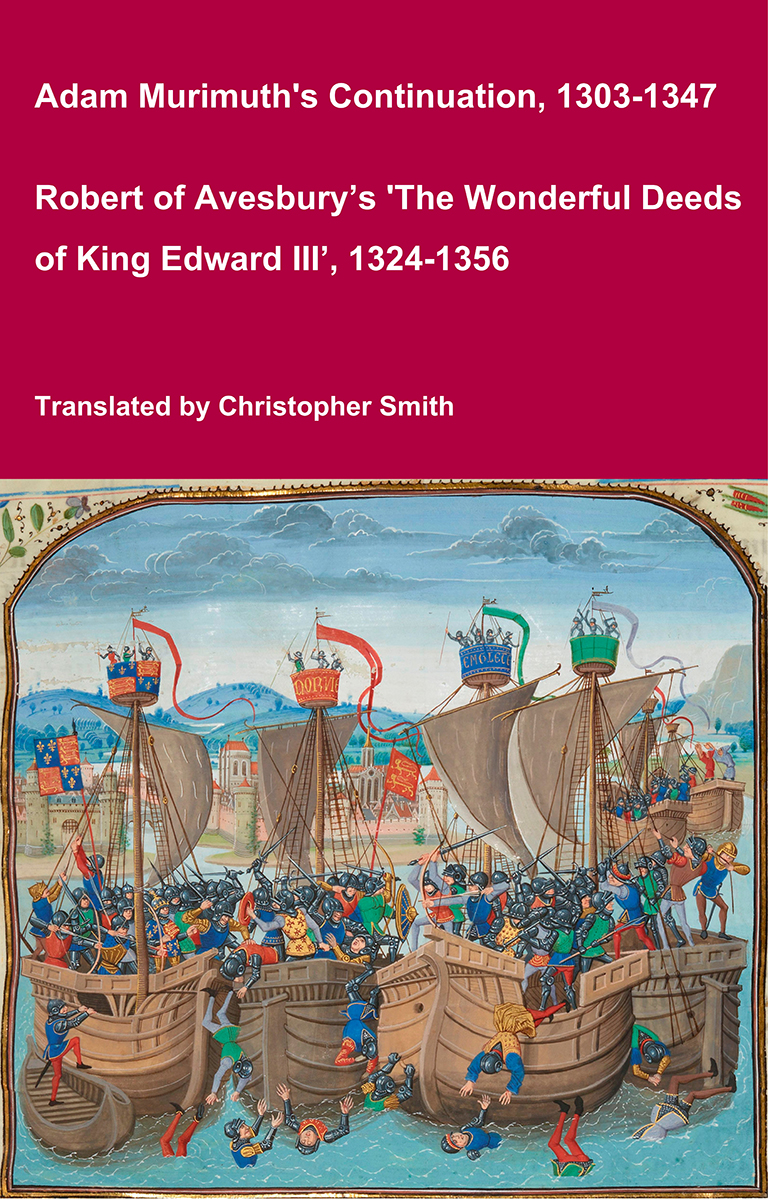
Adam Murimuth's Continuation and Robert of Avesbury’s 'The Wonderful Deeds of King Edward III'
This volume brings together two of the most important contemporary chronicles for the reign of Edward III and the opening phases of the Hundred Years’ War. Written in Latin by English clerical observers, these texts provide a vivid and authoritative window into the political, diplomatic, and military history of fourteenth-century England and its continental ambitions. Adam Murimuth Continuatio's Chronicarum continues an earlier chronicle into the mid-fourteenth century, offering concise but valuable notices on royal policy, foreign relations, and ecclesiastical affairs. Its annalistic structure makes it especially useful for establishing chronology and tracing the development of events year by year. Complementing it, Robert of Avesbury’s De gestis mirabilibus regis Edwardi tertii is a rich documentary chronicle preserving letters, treaties, and official records alongside narrative passages. It is an indispensable source for understanding Edward III’s claim to the French crown, the conduct of war, and the mechanisms of medieval diplomacy. Together, these works offer scholars, students, and enthusiasts a reliable and unembellished account of a transformative period in English and European history. Essential for anyone interested in medieval chronicles, the Hundred Years’ War, or the reign of Edward III.
Available at Amazon in eBook and Paperback format.
In 1830 Henry Villiers Stuart (age 26) was elected MP Banbury which seat he held until 1801.