

William of Worcester's Chronicle of England
William of Worcester, born around 1415, and died around 1482 was secretary to John Fastolf, the renowned soldier of the Hundred Years War, during which time he collected documents, letters, and wrote a record of events. Following their return to England in 1440 William was witness to major events. Twice in his chronicle he uses the first person: 1. when writing about the murder of Thomas, 7th Baron Scales, in 1460, he writes '… and I saw him lying naked in the cemetery near the porch of the church of St. Mary Overie in Southwark …' and 2. describing King Edward IV's entry into London in 1461 he writes '… proclaimed that all the people themselves were to recognize and acknowledge Edward as king. I was present and heard this, and immediately went down with them into the city'. William’s Chronicle is rich in detail. It is the source of much information about the Wars of the Roses, including the term 'Diabolical Marriage' to describe the marriage of Queen Elizabeth Woodville’s brother John’s marriage to Katherine, Dowager Duchess of Norfolk, he aged twenty, she sixty-five or more, and the story about a paper crown being placed in mockery on the severed head of Richard, 3rd Duke of York.
Available at Amazon in eBook and Paperback format.
Before 28th March 1133 [his father] William V Marquis of Montferrat [aged 18] and [his mother] Judith of Babenburg [aged 13] were married.
Aroound 1146 Conrad of Montferrat King of Jerusalem was born to William V Marquis of Montferrat [aged 31] and Judith of Babenburg [aged 26].
In 1190 Conrad of Montferrat King of Jerusalem [aged 44] and Isabella Anjou Queen Jerusalem [aged 18] were married; see 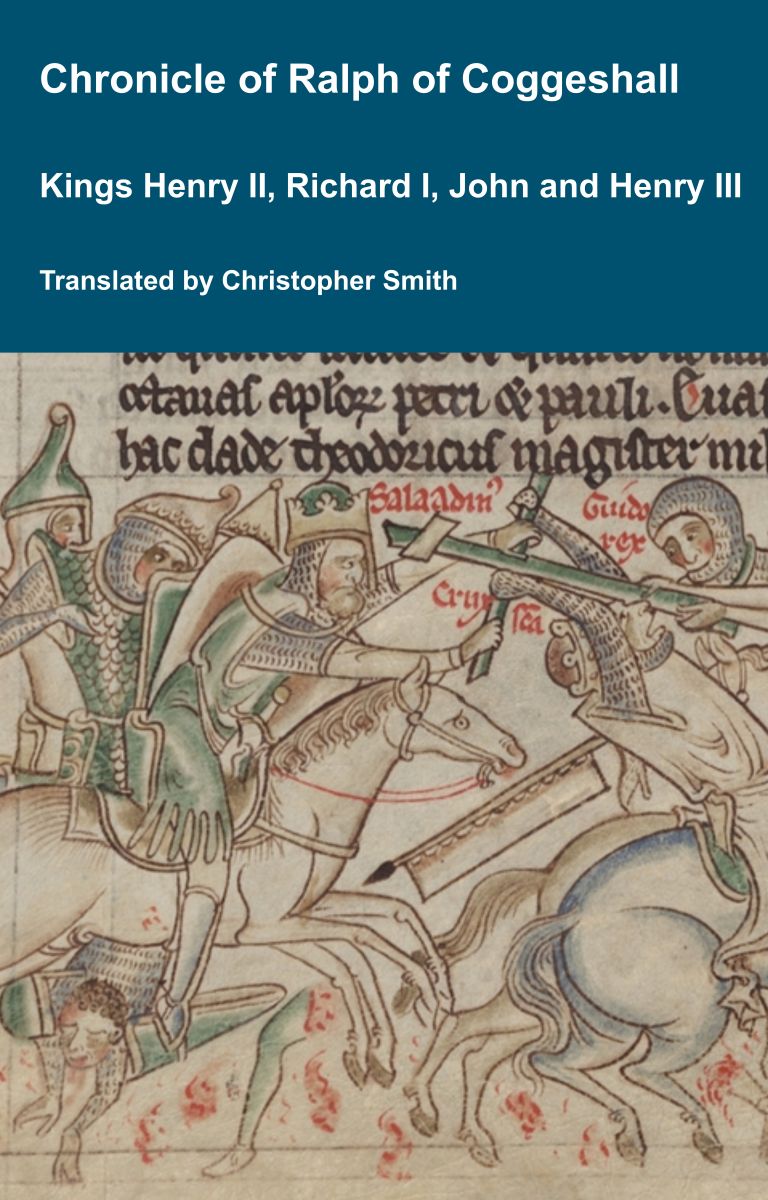 Ralph of Coggeshall. The difference in their ages was 26 years. She the daughter of Almaric I King Jerusalem and Maria Komnenos Queen Jerusalem [aged 36].
In 1190 [his sister-in-law] Sibylla Anjou Queen Jerusalem [aged 30] died. Her half sister [his wife] Isabella [aged 18] succeeded Queen Jerusalem.
In 1191 [his father] William V Marquis of Montferrat [aged 76] died.
In 1191 [his mother] Judith of Babenburg [aged 71] died.
On 28th April 1192 Conrad of Montferrat King of Jerusalem [aged 46] died.
On 6th May 1192 Henry of Champagne [aged 25] and [his former wife] Isabella Anjou Queen Jerusalem [aged 20] were married eight days after the assassination of her husband Conrad of Montferrat [deceased]. She the daughter of Almaric I King Jerusalem and [his former mother-in-law] Maria Komnenos Queen Jerusalem [aged 38]. He the son of Henry Blois I Count Champagne and Marie Capet Countess Champagne [aged 47]. They were half third cousin twice removed. He a great x 2 grandson of King William "Conqueror" I of England.
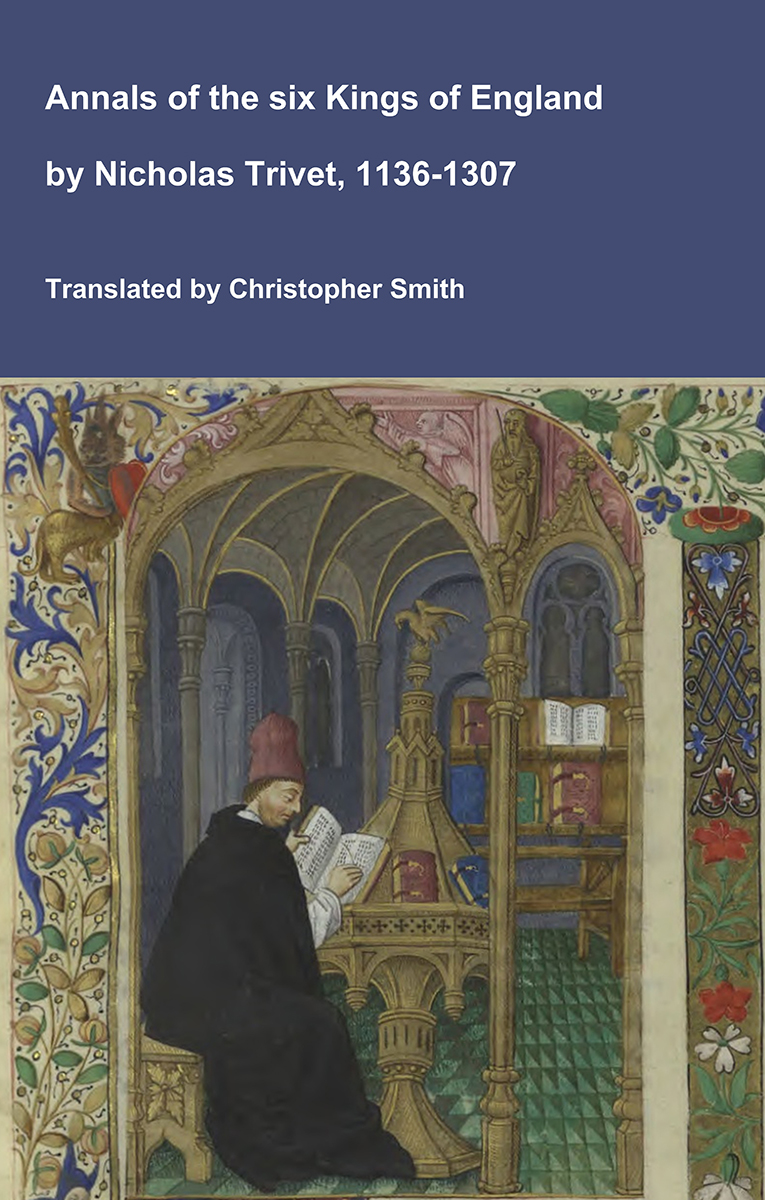 Annals of Six Kings of England by Nicholas Trivet [1258-1328]. Meanwhile a ship for King Richard was prepared and all the necessities for his return were made ready. At that time he released ten of the more noble Turks in exchange for the ransom of William of Pratelles. On the feast of St Denis [9th October 1192] King Richard boarded his ships; and about the feast of St Martin [11th November], after a long tossing on the stormy sea and now weary of the voyage, he landed in the territory of the Byzantine Empire. But because he suspected the cunning of the emperor and of the Greeks, and did not wish to be recognized there, he made an agreement with some pirates whom he happened to find. After paying them the fare they demanded, he required them to carry him more quickly to a safer land. Leaving behind the royal fleet and changing his appearance so as to conceal that he was the king, he crossed with only four companions into Slavonia. From there, passing through Aquileia, he entered the land of Leopold, duke of Austria, and was captured in the city of Vienna on the thirteenth day before the Kalends of January [20th December 1192]. Duke Leopold, who hated him because of the death of the Marquis1, of which he suspected the king, threw him into prison. However, concerning that death, the prince of the Assassins, by whose men (as was mentioned above) the Marquis had been killed, cleared King Richard by a letter of the following kind.
Interea regis Ricardi navigium instruitur, et King omnia necessaria ad reditum præparantur. Tunc leaves the pro Willelmo de Pratellis redimendo, decem ex nobilioribus Turcis commutandos liberos dimisit. Die autem S. Dionysii Ricardus rex naves ascendit; et circa festum beati Martini ex diuturna tumultuantis pelagi jactatione, jam pertæsus navigationis, applicuit in terra imperii Constantinopolitani: verum quoniam suspectam habuit imperatoris et Græcorum suorum versutiam, nolens ibi videri, cum piratis forte inventis paciscens, dato quantum postulaverant naulo, exegit ab eis ut expeditius ipsum in terram commodiorem transveherent. Relicta igitur classe regia, habitu mutato se regem dissimulans, cum quatuor tantum sociis transvectus est Sclavoniam: inde pertransiens Aquileiam, cum intrasset terram Limpoldi ducis Austriæ, captus est in civitate Wienna decimotertio cal. Januarii; quem dux Limpoldus exosum habens pro morte Marchisi, de qua suspectum regem habebat, carceri mancipavit. hac tamen morte princeps Hassacenorum, a quibus (ut supra patuit) interfectus est Marchisus, regem Ricardum per litteras hujuscemodi excusavit:
Note 1. Namely, Conrad, marquis of Montferrat and prince of Tyre, whose cause Richard had espoused, the successful competitor for the throne of Jerusalem over Guy of Lusignan. The accusation alluded to in the text was preferred by the emperor, to whom Richard was sold for sixty thousand pounds of silver of Cologne weight; Roger of Wendover: 'King Richard remained a prisoner of the duke of Austria till that prince sold him to the Roman emperor for sixty thousand pounds of silver, Cologne weight, and then on the Tuesday after Palm Sunday he caused him to be carefully guarded; and that he might compel the king to pay an immoderate sum for his ransom, he ordered him to be imprisoned in Treves, from which prison no one who had entered there up to that time had ever come out again,... Into this place was the king put under a strong guard of soldiers and attendants, who accompanied him wherever he went with drawn swords, day and night, and even kept guard by turns round his couch, not allowing any of his own followers to remain with him at night. None of these circumstances could ever cloud the calm countenance of the king, but he always seemed cheerful and agreeable in his conversation, and brave and daring in his acts, as time, place, cause, or person required. To others I leave the relation of his jokes to his guards; how he made them drunk, and assaulted their huge persons by way of amusement.' The ruins of the castle of Tyernstein (now Dürrenstein) still exist as one of the most interesting features of the picturesque banks of the Danube, between Lintz and Vienna.
On 5th April 1205 [his former wife] Isabella Anjou Queen Jerusalem [aged 33] died.
Chronicum Anglicanum by Ralph Coggeshall. The wife1 of the marquis King Richard gave to his nephew Henry, count of Troyes, together with the kingdom of Jerusalem, for she was the heiress of the whole kingdom, her sister the queen being now dead, with King Guy of Lusignan gladly consenting to this arrangement for the sake of establishing peace. But the island of Cyprus, which he had taken from the emperor, he granted to King Guy, having received his homage.
Uxorem vero marchisii dedit rex Ricardus Henrico nepoti suo, comiti Trecensium, cum regno Hierosolymitano, utpote hæredem totius regni, sorore ejus regina jam defuncta, rege Guidone de Lezinan hoc ipsum pro pacis stabilitate libenter annuente. Insulam autem Cypri, quam ab imperatore obtinuerat, regi Guidoni concessit, accepto ejus homagio.
Note 1. Isabella Anjou Queen Jerusalem and Henry of Champagne were married eight days after her husband Conrad's murder. He, Henry, was a son of Henry I, Count of Champagne, and Marie of France, one of two daughters of King Louis VII of France and Eleanor of Aquitaine.
Chronicle of Abbot Ralph of Coggeshall
The Chronicle of Abbot Ralph of Coggeshall (Chronicon Anglicanum) is an indispensable medieval history that brings to life centuries of English and European affairs through the eyes of a learned Cistercian monk. Ralph of Coggeshall, abbot of the Abbey of Coggeshall in Essex in the early 13th century, continued and expanded his community’s chronicle, documenting events from the Norman Conquest of 1066 into the tumultuous reign of King Henry III. Blending eyewitness testimony, careful compilation, and the monastic commitment to record-keeping, this chronicle offers a rare narrative of political intrigue, royal power struggles, and social upheaval in England and beyond. Ralph’s work captures the reigns of pivotal figures such as Richard I and King John, providing invaluable insights into their characters, decisions, and the forces that shaped medieval rule. More than a simple annal, Chronicon Anglicanum conveys the texture of medieval life and governance, making it a rich source for scholars and readers fascinated by English history, monastic authorship, and the shaping of the medieval world.
Available at Amazon in eBook and Paperback format.
Chronicum Anglicanum by Ralph Coggeshall. After these things had been done, King Philip wished to hand over that city [Acre], and the other cities which were to be taken, to the marquis of Montferrat1, and to establish him as king in the land of Jerusalem, since he had married the younger daughter of King Amalric, whose sister, namely the queen, had already died. But King Richard altogether opposed this plan, asserting that it would be more just to restore the kingdom, long since despoiled, to King Guy, rather than to substitute another while he was still living, since it was clear that Guy had not lost the kingdom through cowardice or sloth, but in hard battle, when, because of the number of the enemy and the fewness of his own forces, he had been captured by the Saracens together with the Lord's Cross. This, indeed, is recognised as having been the seed of an inexorable discord between the aforesaid princes. Yet this discord had first sprouted earlier, at the city of Messina in Sicily, when King Richard had taken that city by armed force, and slain many, while King Philip was staying there, on account of the insults and vexations which the army of the king of France was inflicting on his own army.
His itaque gestis, voluit rex Philippus urbem illam, et reliquas quas capturi erant urbes, marchisio de Monteferrato tradere, eumque in terra Hierosolymitana regem constituere, eo quod juniorem filiam regis Amalarii duxisset in uxorem, sorore ejus, regina scilicet, jam defuncta. Cujus voluntati rex Ricardus prorsus obstitit; asserens justius fore regi Guidoni, regno jampridem spoliato, regnum suum restituere, quam alium, illo adhuc vivente, substituere, cum constaret hunc non per ignaviam vel socordiam regnum amisisse, sed in gravi belli certamine, ob inimicorum numerositatem ac sui exercitus paucitatem, simul cum cruce Dominica a Sarracenis fuisse captum. Quod nimirum inexorabilis discordiæ inter prædictos principes seminarium ibidem fuisse dinoscitur. Cum tamen hæc discordia primo apud Messanam Siciliæ civitatem inter eosdem pullulaverat, cum rex Ricardus eamdem urbem armata manu cepit, plurimosque prostravit, rege Philippo in ea commorante, ob convitia et vexationes quæ exercitus regis Francorum exercitui suo inferebat.
Note 1. Conrad of Montferrat King of Jerusalem had married Isabella following the death of her sister Sibylla Anjou Queen Jerusalem in 1190 and so became, jure uxoris i.e. by right of his wife, King of Jerusalem. King Richard's plan to reinstate Guy had no basis in the laws of succession since Guy was King by right of his wife who had died.