


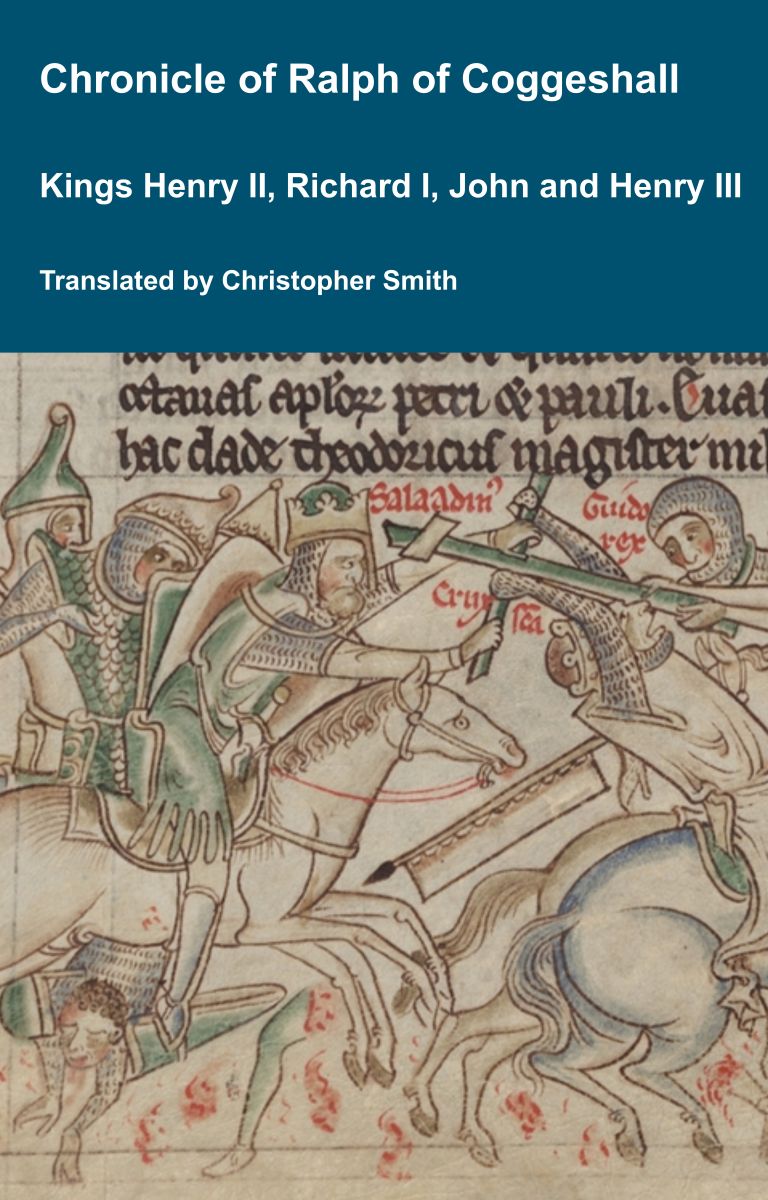
Chronicle of Abbot Ralph of Coggeshall
The Chronicle of Abbot Ralph of Coggeshall (Chronicon Anglicanum) is an indispensable medieval history that brings to life centuries of English and European affairs through the eyes of a learned Cistercian monk. Ralph of Coggeshall, abbot of the Abbey of Coggeshall in Essex in the early 13th century, continued and expanded his community’s chronicle, documenting events from the Norman Conquest of 1066 into the tumultuous reign of King Henry III. Blending eyewitness testimony, careful compilation, and the monastic commitment to record-keeping, this chronicle offers a rare narrative of political intrigue, royal power struggles, and social upheaval in England and beyond. Ralph’s work captures the reigns of pivotal figures such as Richard I and King John, providing invaluable insights into their characters, decisions, and the forces that shaped medieval rule. More than a simple annal, Chronicon Anglicanum conveys the texture of medieval life and governance, making it a rich source for scholars and readers fascinated by English history, monastic authorship, and the shaping of the medieval world.
Available at Amazon in eBook and Paperback format.
1549 Prayer Book Rebellion is in 1547-1550 Edward VI.
Between June 1549 and August 1549 the 1549 Prayer Book Rebellion was an uprising against the Book of Common Prayer.
After June 1549 John Russell 1st Earl Bedford [aged 64] appointed Anthony Kingston [aged 41] to bring the 1549 Prayer Book Rebellion rebels to justice. They included: Nicholas Boyer, the mayor of Bodmin and John Payne, portreeve of St Ives; Mayor Mayow of Gluvian in the parish of St Columb was hanged outside a tavern in St Columb. A number of priests were hanged, including Richard Bennett, vicar of St Veep and St Neot, Simon Morton, vicar of Poundstock, and the curate of Pillaton.

Diary of Edward VI. August 1549. After that thei gathered at Launston, to whom the lord Prevy scale [aged 64] and sir William Herbert [aged 48]2 went, and overthrue them, taking their chief heades and executing them. Nevertheles some sayled to Brigewater [Map] and went about sedicion, but were quikely repressed. Hitherto of Devonshire.
Note 2. Sir William Herbert, then master of the King's horses, and afterwards earl of Pembroke, brought a thousand Welshmen, who, says Hooker, though they came too late to the fray, were yet soon enough to the play; for the whole country was then put to the spoil.
Holinshed's Chronicle [1525-1582]. August 1549. For the pacifieng of these rebels, were appointed by the king and his councell, sir John Russell [aged 64] knight lord priuie seale, the lord Greie of Wilton [aged 40], sir William Herbert [aged 48] after earle of Penbroke, sir John Paulet, sir Hugh Paulet, sir Thomas Speake, and others, with a conuenient power of men of warre both on horssebacke and foot. Amongst others, there were certeine strangers that came with my lord Greie, as capteine Germane an Hennower, with a band of horssemen, most part Albanoises and Italians. Also capteine Paule Baptist Spinola an Italian borne of a noble house in Genoa, with a band of Italian footmen. But now the lord priuie seale that was ordeined by the king and his councell, generall of that armie, upon his first approching towards them, sent unto them the kings maiesties proclamation: the effect whereof was, that all such persons as were vnlawfullie assembled, and did not within thrée daies next after the proclaming thereof, yéeld and submit themselues to the lord priuie seale (the kings lieutenant) they should from thenceforth be deemed, accepted, and taken for rebels against his roiall person, and his imperiall crowne and dignitie.
Diary of Edward VI. August 1549. To Devonshier the lord Previ-seal [aged 64]1 was sent, who with his band, being but smal, lay at Honington whils the rebels besieged Exciter [Map], who did rise divers preaty feates of warre. For after divers skirmishes, when the gatis were burnt, thei in the cite did continew the fir(e), til thei had mad a ramper within. Also afterward, when they were underminded and pouder was laid in the mind, thei within drouned the pouder and the mind with water they cast in; wich the lord Previ-seal hearing, thought to a gone to renforce them a bie way; of wich the rebels having spial, cut al the trees betwixt St. Mary-Outrie and Exciter. For wich cause the lord Previ-seal burnt that toun, and thought to returne home. The rebels kept a brig behind his bake, and so compelled him with his smal band to set upon them, wich he did and overcam them, killing 600 of them, and returning hom without any loss of men. Then the lord Gray [aged 40] and Spinula2 with their bandis came to him, and afterward Gray (sic) with 200 of Reding, with wich bands he being renforcid came to raise the sieg at Exciter, for bicaus thei had scarcety of vitel; and as he passed from Hunniagton, he cam to a little towne of his owne, whether cam but only tow waies, wich thei had ranforced with tow bulwarkes mad of earth, and had put to the defence of the same about 2000 men, and the rest the(y) had layed, some at a brige called Honnington brige, partly at a certein hedg in a hie way, and the most part at the sieg of Exciter. The rierward of the horsmen, of which Travers was captain, set upon the on(e) bulwark, the vauard and battail on the tother. Spiaula's band kept them occupied at their wale. At lenght Travers drove them into the towne, wich the lord Previ-seal burnt. Then thei rane to a bridg thereby; from whence being driven their were in a plain about 900 of them slain. The next day ther wer mete about other 2000 of them at the entrie of a hie way, who first desired to talk, and in the meane season fortified them selves, wich being perceived they ranne ther wayes, and that same night the cite of Exitter was delivered of the siege.1a
Note 1. John lord Russell, shortly after made earl of Bedford. Some of his despatches to the council on this occasion will be found in Strype's Memorials, vol. ii. Records, DD.; also in Wiffen's Memorials of the House of Eussell, i. 369.
Note 2. "Captaine Paule Baptist Spinola, an Italian, borne of a noble house in Genoa, with a band of Italian footmen" Holinshed, p. 1651.
Note 1a. A very full narrative of the Devonshire rebellion, written by John Vowell, alias Hooker, chamberlain of Exeter, accompanied by a "description of the citie," was first published in the edition of 1586 of Holinshed's Chronicle, and it occupies in the edition of 1808 pp. 926-963 of vol. iii. It was also printed distinctly in 4to. 1775. Great pains were taken to refute the religious doctrines advanced in their "supplication" or manifesto: and several drafts of "the King's answer" thereto are preserved in the State Paper office, which Mr. Tytler has partly printed, i. 178 — 182; but a much more elaborate reply was compiled by Cranmer, which will be found at length in his works (Parker Soc, edition), ii. 163—187.
 Become a Member via our Buy Me a Coffee page to read more.
Annales of England by John Stow. 27th January 1550. the 27 of January, Humfrey Arundell [aged 37] esquire, Thomas Holmes, Winslowe and Bery, captaines of the rebels in Devonshire, were hanged and quartered at Tyboure [Map].
On 27th January 1550 Humphrey Arundell of Helland [aged 37] was executed.
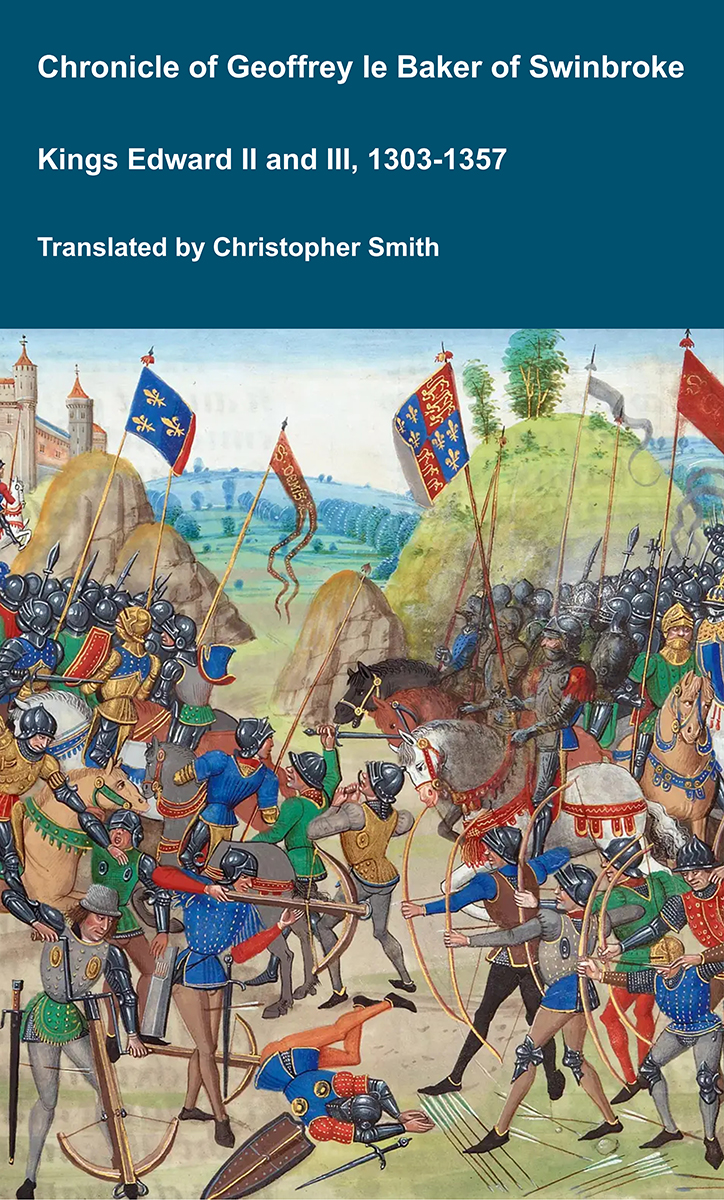
Chronicle of Geoffrey le Baker of Swinbroke
Baker was a secular clerk from Swinbroke, now Swinbrook, an Oxfordshire village two miles east of Burford. His Chronicle describes the events of the period 1303-1356: Gaveston, Bannockburn, Boroughbridge, the murder of King Edward II, the Scottish Wars, Sluys, Crécy, the Black Death, Winchelsea and Poitiers. To quote Herbert Bruce 'it possesses a vigorous and characteristic style, and its value for particular events between 1303 and 1356 has been recognised by its editor and by subsequent writers'. The book provides remarkable detail about the events it describes. Baker's text has been augmented with hundreds of notes, including extracts from other contemporary chronicles, such as the Annales Londonienses, Annales Paulini, Murimuth, Lanercost, Avesbury, Guisborough and Froissart to enrich the reader's understanding. The translation takes as its source the 'Chronicon Galfridi le Baker de Swynebroke' published in 1889, edited by Edward Maunde Thompson.
Available at Amazon in eBook and Paperback format.
The Life and Reign of King Edward VI. At this time the seditious lived by rapine and ruine of all the country, omitting nothing of that which savages enraged in the height of their unruly behaviour doe commit, but the Citizens driven to great distresse for want of vicuales, bread they made of coursest branne moulded in cloathes, for that otherwise it would not cleave together. Their finest flesh was of their owne horses, especially for 12 daies they endured most extreame famine. During this time they were much encouraged by an aged cittizen, who brought forth all his provisions and said, that as hee did communicate unto them his store, so would he participate of their wants. And that for his part he would feed on the one arme and fight with the other before he would consent to put the citty into the seditious hands. Herewith the Lord privy Seale [John Russell 1st Earl Bedford [aged 64]] for want of power to performe any services, was about to rise and returne to London. But in good time the Lord Gray [aged 40] came to him with supply of forces most Almane horsemen, and with him came Spinola with his band of Italians consisting of 300 shot, purposed for Scotland, also 200 men were sent unto him from Reading, so being in all not much above 1000 strong, he made head against the seditious [2nd July 1549].
The Life and Reign of King Edward VI. [4th August 1549]. So departing from Honington he came to a little Village [Clyst St Mary, Exeter [Map]] from whence lay 2 waies towards Exeter, both which were blocked up with 2 bulwarkes of earth, made by the seditious, hither they had driven 2000 men from before Exeter whom they divided into 4 companies. In either of the Bulwarkes they lodged one, at the bridge neere the backe of one of the fortes, a third company was placed, neere the back was laid in ambush behinde a hedge on the high way, at the backe of the other fortresse, the Arriere of the kings forces led by captaine Wavers set upon one of the fortes, the vaward and battaile upon the other, Spinola with his shot did beare upon those within, who offered to appeare upon the walls. At length Captaine Wavers wonn the fort which he assailed and drave the defendands to the bridge where one of their companies made stand. Herewith the other two companies did forthwith resort unto them, one from the second fort, the other trom the Ambush. These casting a strong guard upon the bridge, marshalied the residue upon a plaine ground behinde the bridge. The Kirgs forces coming forward drave the guard from the bridge, and making profit of the fresh terror set upon those who were upon the plaine. The kings footmen were firmely ranked, the troopes of horse in good array, whereas the seditions had neither weapons, order nor counsaile, but being in all things unprovided were slaine like beasts. They tooke their flight towards St Mary cliffe but the souldiers upon disdaine of their unworthy actions filled themselues with revenge and blood, and slue of them above 900 not sparing one.
The Life and Reign of King Edward VI. [6th August 1549]. Now the seditious driven almost to a dead dispaire and supported only by the vehemency of desire, brought forth their forces to Clifton heath [Map], to whom many of the most vile vulgars resorted hourely, which much enlarged their numbers but nothing their strength, but what measure have men in the encrease of madnes, if they keepe nor themselves from falling into it, they brought with them a crucifix upon a carte covered with a canopie, and beset with crossses, tapers, banners, holy bread and holy water as a representation of those things for which they fought. The Lord Gray [aged 40] encouraged his men to set sharpely upon the vague villaines good neither to live peaceably nor to fight, and to win at once both quiet to the Realme and to themselves glory, so he brought the Kings forces upon them rather as to a carnage then to a fight, insomuch as without any great either losse or danger to themselues, the greatest part of the seditious were slaine, divers also were taken, of whom the common sort were forthwith executed by martiall law, the chiefest leaders were sent to receive justice at London. Some escaped and sailed to Bridgewater, who taking dangers to be the only remedy against dangers, endeavoured to set up the sedition againe, but they were speedily repressed, and thereby the sedition suppressed wholly.