

Jean de Waurin's Chronicle of England Volume 6 Books 3-6: The Wars of the Roses
Jean de Waurin was a French Chronicler, from the Artois region, who was born around 1400, and died around 1474. Waurin’s Chronicle of England, Volume 6, covering the period 1450 to 1471, from which we have selected and translated Chapters relating to the Wars of the Roses, provides a vivid, original, contemporary description of key events some of which he witnessed first-hand, some of which he was told by the key people involved with whom Waurin had a personal relationship.
Available at Amazon in eBook and Paperback format.
Death of King Stephen is in 1130-1154 Anarchy.
On 25th October 1154 King Stephen I England [aged 60] died at Priory of St Martin, Dover [Map]. His first cousin once removed Henry [aged 21] succeeded II King of England.
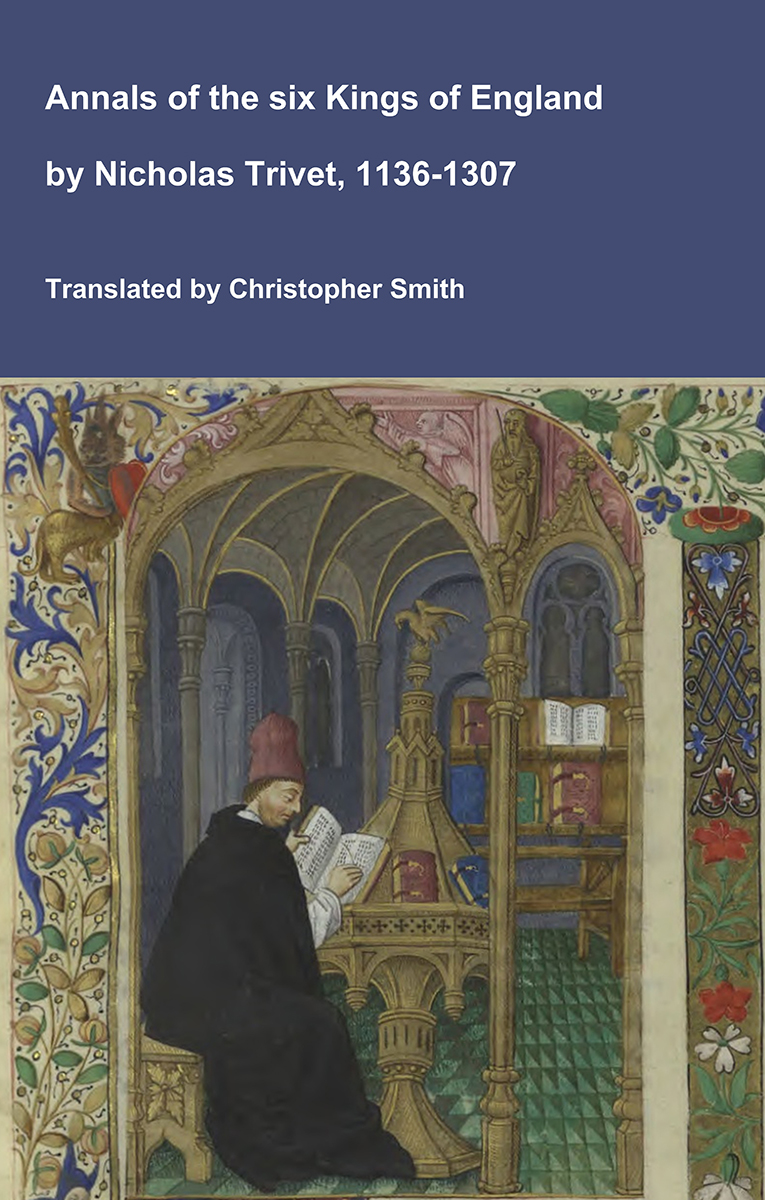 Annals of Six Kings of England by Nicholas Trivet [1258-1328]. 1154. Stephen forced a certain Philip of Coleville, who refused to destroy a fortification he had built in the province of York, to obey by capturing it through force. Roger, archdeacon of Canterbury, elected archbishop of York, received the rite of consecration from the archbishop of Canterbury, but in order to obtain the pallium he set out in person on a journey to the Roman court. Roger, king of Sicily, died, leaving his son William as his successor. Pope Anastasius IV also died. King Stephen likewise died in Kent, laid low by illness, on the eighth day before the Kalends of November [25th October 1144]. He was buried in the church of the monks of Faversham1, whose monastery his wife Queen Matilda had founded and endowed with many great estates. Here end the deeds of Stephen, king of the English.
1154. STEPHANUS Philippum quendam de Coleville, nolentem munitionem quandam, quam fecerat in provincia Eboracensi, destruere, expugnando coegit finaliter obedire. Rogerus, Cantuariensis archidiaconus, in Eboracensem archiepiscopum electus, ab archipræsule Cantuariensi munus consecrationis accepit, sed pro pallio obtinendo ad Romanam curiam in propria persona iter arripuit. Obiit Rogerus, rex Siciliæ, filium suum Willelmum successorem relinquens. Defunctus est et papa Anastasius quartus. Rex etiam Stephanus in Cantia infirmitate decumbens oct. cal. Novembris decessit. Sepultus est in ecclesia monachorum de Faversham, quorum monasterium uxor ejusdem Stephani regina Matildis fundaverat, et prædiis magnis plurimisque dotarat. Expliciunt gesta Stephani regis Anglorum.
Note 1. The abbey of Faversham, in Kent, was founded 1148, for the Cluniacs; a charter of lands given to it by Matilda, 1150; confirmed, 1153. Chronologia August. Cant. X. Script. col. 2254. At the dissolution the body of King Stephen was thrown into the Swale, for the sake of the leaden coffin.
Anglo-Saxon Chronicle. 1154. In this year died the King Stephen [aged 60]; and he was buried where his wife and his son were buried, at Faversham [Map]; which monastery they founded.
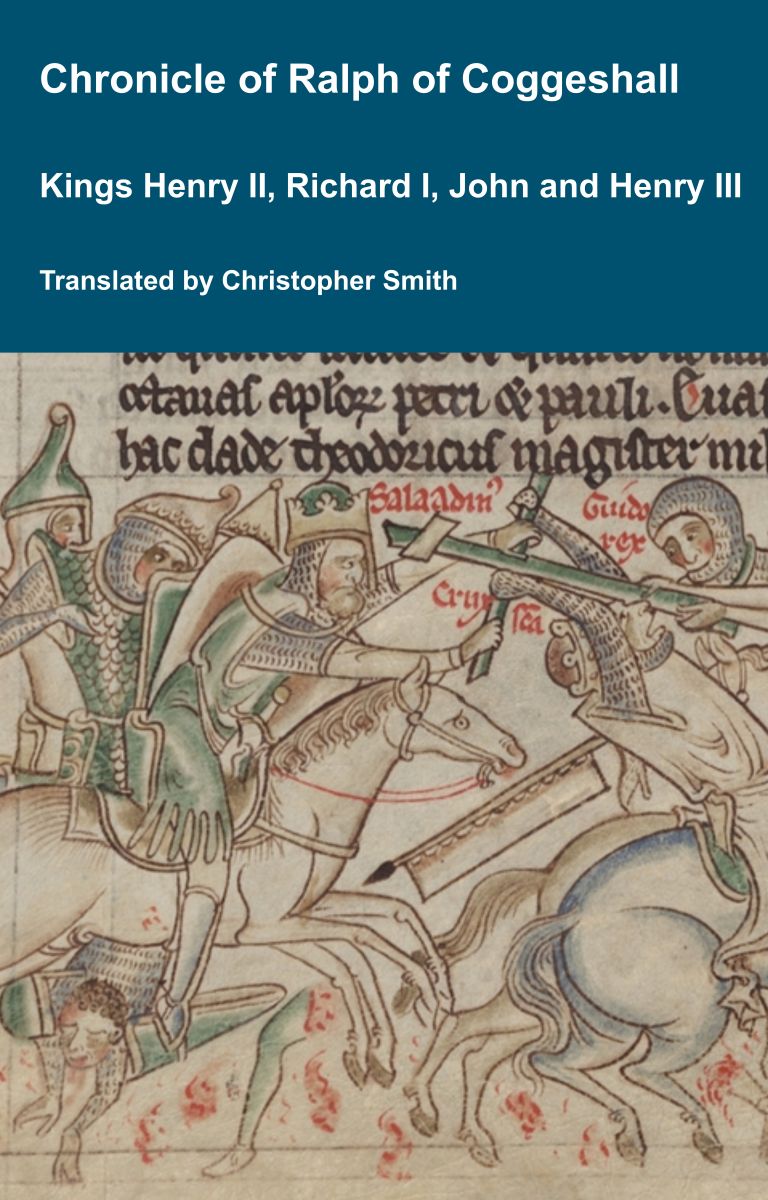 Chronicum Anglicanum by Ralph Coggeshall. 1154. The most pious King Stephen died on the 9th day before the Kalends of November [24th October] and was buried in the church of Faversham, which he himself had founded with his queen, Matilda.
MCLIV. Obiit piissimus rex Stephanus nono calendas Novembris, sepultusque est in ecclesia de Faveresham, quam ipse fundaverat cum regina sua Mathildi.