

William of Worcester's Chronicle of England
William of Worcester, born around 1415, and died around 1482 was secretary to John Fastolf, the renowned soldier of the Hundred Years War, during which time he collected documents, letters, and wrote a record of events. Following their return to England in 1440 William was witness to major events. Twice in his chronicle he uses the first person: 1. when writing about the murder of Thomas, 7th Baron Scales, in 1460, he writes '… and I saw him lying naked in the cemetery near the porch of the church of St. Mary Overie in Southwark …' and 2. describing King Edward IV's entry into London in 1461 he writes '… proclaimed that all the people themselves were to recognize and acknowledge Edward as king. I was present and heard this, and immediately went down with them into the city'. William’s Chronicle is rich in detail. It is the source of much information about the Wars of the Roses, including the term 'Diabolical Marriage' to describe the marriage of Queen Elizabeth Woodville’s brother John’s marriage to Katherine, Dowager Duchess of Norfolk, he aged twenty, she sixty-five or more, and the story about a paper crown being placed in mockery on the severed head of Richard, 3rd Duke of York.
Available at Amazon in eBook and Paperback format.
The Black Death is in 1340-1349 Plague and Crecy.
In June 1348 the The Black Death arrived in England. The first of many occurrences. It is estimated to have killed between 25 to 60 percent of the population of around six million. The outbreak lasted through 1349 recurring in 1362, 1369 and regularly thereafter until its last significant outbreak in The Great Plague of 1666.
On 11th September 1349 Bonne Luxemburg Queen Consort France [aged 34] died of plague in Maubisson, Pontoise.
In 1348 John Savoy [aged 10] died of plague during the The Black Death.
In 1348 John Barcelona [aged 31] died of plague.
Annales of England by John Stow. 1348. There began amongst the East Indians and Tartarians a certaine pestilence, which at length waxed so general, infecting the middle region of the ayre so greatly, that it destroyed the Saracens, Turks, Syrians, Palestinians, and the Grecians with a woonderfull or rather incredible death, in so much that those peoples, being exceedingly dismaid with the terrour therof, consulted amongst themselves and thought it good to receive the Christian faith and Sacraments, for they had intelligence that the Christians which dwelt on this side the Greekish sea were not so greatly (more then common custome was) troubled with sicknesse and mortalitie. At length this terrible slaughter passed over into those countries which are on this side the Alpes, and from thence to the partes of Fraunce which are called Hesperia, and so by order along into Germany and Dutchland. And the seventh yeere after it began, it came into England and first began in the townes and ports joyning on the sea coasts, in Dorsetshire, where, even as in other countries, it made the country quite void of inhabitants, so that there were almost none left alive. From thence it passed into Devonshire and Somersetshire, even unto Bristow, and raged in such sort that the Glocestershire men would not suffer the Bristow men to have any accesse unto them or into their countrey by any meanes. But at length it came to Glocester, yea even to Oxford, and London, and finally it spred over all England, and so wasted and spoyled the people that scarce the tenth person of all sorts was left alive.
Deeds of King Edward III by Robert of Avesbury. The pestilence, which first began in lands occupied by the Saracens, grew so powerful that, sparing no realm, it spread from one region to another of all the kingdoms stretching northward from that land, reaching even Scotland, and in each place, struck down the greater part of the population with the blows of sudden death. It began in England in the region of Dorset, around the Feast of Saint Peter in Chains [1st August] in the year of our Lord 1348, and at once moved rapidly from place to place, suddenly killing many who had been well in the morning before noon. Indeed, those whom death struck were rarely permitted to live more than three or four days, without distinction of persons, except for a few of the very wealthy. On the same day, 20, 40, 60, and often many more bodies were committed to ecclesiastical burial in a single grave. When it arrived in London around the Feast of All Saints [1st November], it took the lives of many every day, and it grew so severe in London that, from the Feast of the Purification [2nd February] until after Easter, more than 200 corpses were buried each day in the newly established cemetery near Smithfield, not including those buried in other cemeteries of the city. But when the grace of the Holy Spirit arrived, on the Feast of Pentecost, the plague ceased in London, and continued to move northward. In those parts it finally ceased around the Feast of Saint Michael [29th September], in the year of our Lord 1349.
Pestilentia, que in terra per Saracenos occupata primitus inchoavit, in tantum invaluit quod, nulli dominio parcendo, singula loca regnorum omnium se de terra illa versus boream protendentium usque Scociam inclusive, majorem partem populi perimendo, in subitaneæ mortis verberibus visitavit. Incepit enim in Anglia in partibus Dorcestriæ, circiter festum sancti Petri, quod dicitur Ad vincula, anno Domini millesimo CCCXLVIII, statimque de loco ad locum progrediens subito et occidens sanos quamplurimos de mane ante meridiem rebus exemit humanis; nullum quidem quem mori voluit ultra tres vel quatuor dies vivere vix permisit, sine delectu etiam personarum, paucis divitibus dumtaxat exceptis. Eodem die mortis XX, XL, LX, et multotiens multo plura corpora defunctorum simul in eadem fovea tradebantur ecclesiasticæ sepulture. Circiterque festum Omnium Sanctorum Londonias veniens, cotidie multos vita privavit, et in London. tantum excrevit quod, a festo Purificationis usque post Pascha, in novo tune facto cimiterio juxta Smethfeld plus quam CC corpora defunctorum, præter corpora quæ in alis cimiteriis civitatis ejusdem sepeliebantur, quasi diebus singulis sepulta fuerunt. Superveniente vero Spiritus Sancti gratia, videlicet in festo Pentecostes, cessavit Londoniis, versus boream continue procedendo; in quibus partibus cessavit etiam circiter festum sancti Michaelis, anno Domini millesimo CCCXLIX.
 Become a Member via our Buy Me a Coffee page to read more.
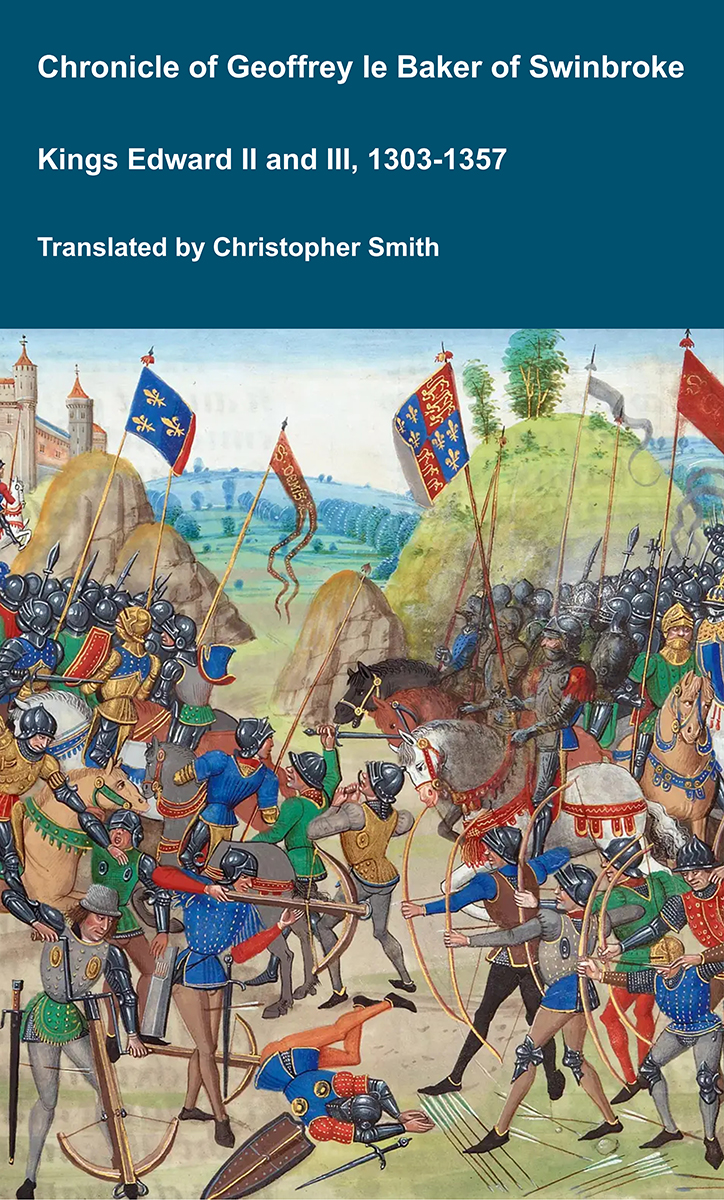 Chronicle of Geoffrey le Baker of Swinbroke. In the year of Christ 1349, the 23rd year of the king's reign, a widespread plague arising from the East, from the lands of the Indians1 and Turks, infected the central regions of the inhabited world. It ravaged the Saracens, Turks, Syrians, and Palestinians, and finally the Greeks, with such slaughter that many, driven by terror, considered it wise to receive the faith and sacraments of Christ, hearing that death had struck Christians on this side of the Greek sea neither as frequently nor as suddenly as it did among them. At last, this cruel plague rolled onward to the transalpine regions, and from there to the western lands of Gaul and the Germanic peoples, and in the seventh year after its outbreak, it reached England. First, it struck the seaports of Dorset, nearly depopulating the region, and then swept through Devon and Somerset as far as Bristol with such ferocity that the people of Gloucester refused to let those from Bristol enter their area, fearing that even the breath of the living among the dying was contagious.
Anno Christi MCCCXLIX, regni regis anno XXIIJ, ab oriente Indorum et Turcorum repens pestilencia generalis, medium nostri habitabilis inficiens, Saracenos, Turkos, Siriacos, Palestinos, et demum Grecos depopulavit tanta strage, quod terrore compulsi fidem atque sacramenta Christ! recipere consult! diiudicabant, audientes quod Christianos cis mare Grecum mors non terruit crebrius aut magis repente consueto. Tandem ad partes transalpinas et abhinc ad Gallias hesperias et Teutonicas seva clades successive devoluta, anno septimo sue incoacionis ad Angliam devenit. Primo quidem portus maris in Dorsetia et rursus patriam suis incolis fere privavit, et abhinc Devonian! ac Somersetiam usque Bristolliam ita desevit, quod Glovernienses illis de Bristollia ad suas partes denegarunt accessus, quolibet putante anelitus vivencium inter sic morientes fuisse infectivos.
Note 1. Stow Annales 384.
The Black Death, so called from the dark blotches which appeared on the skin, owing to the infiltration of the blood into the disorganized tissues, was the Levant or oriental plague. This fearful outbreak is said to have had its origin in central China, in 1333. It reached Europe in 1347, and appeared at Avignon at the beginning of 1348. Thence it spread northwards through France and Germany, and reached England in August of that year. It is said to have extended even to Iceland and Greenland. After making the circuit of Europe it visited Russia in 1351, and seems to have been finally stopped at the Caucasus. Baker's account of its progress in England has formed the chief basis of all later notices, through the medium of Stow's Annales. According to Professor Thorold Rogers, from one-third to one-half the population of the country perished. See Hecker, Epidemics of the Middle Ages (Sydenham Society), 1846; Rogers, History of Agriculture and Prices in England, 1.292; also, with regard to the extent of its ravages, see papers by Mr. Seebohm and Professor Rogers in The Fortnightly Review, 2.149, 268, 3.191; and The Black Death in East Anglia, by Dr. Jessopp, in The Nineteenth Century, 16.915, 17.599.
It will be observed that Baker dates its appearance at Bristol on the festival of the Assumption of the Virgin [15th August 1348]; its first entry into the country on the Dorsetshire coast is placed by Avesbury 406.
According to the Eulogium Historiarum (Rolls Series), 3.213.
Baker states that London was attacked about Michaelmas; Avesbury, about All Saints. The progress of the epidemic into the Eastern counties was remarkably slow, for it does not seem to have made its mark in Norfolk until about the end of March 1349.
On 6th June 1349 William Harcourt [aged 49] died of plague at Stanton Harcourt, Oxfordshire [Map].
On 20th September 1349 Archbishop Simon Islip was elected Archbishop of Canterbury. His two predecessors Archbishop Thomas Bradwardine [deceased] and Archbishop John de Ufford having died of plague in quick succession during the The Black Death.
Before 21st September 1349 Hugh Fitzhugh Fitzhenry [aged 15] died. Possibly by plague given the The Black Death occurring at this time.
Abbot John Whethamstede’s Chronicle of the Abbey of St Albans
Abbot John Whethamstede's Register aka Chronicle of his second term at the Abbey of St Albans, 1451-1461, is a remarkable text that describes his first-hand experience of the beginning of the Wars of the Roses including the First and Second Battles of St Albans, 1455 and 1461, respectively, their cause, and their consequences, not least on the Abbey itself. His text also includes Loveday, Blore Heath, Northampton, the Act of Accord, Wakefield, and Towton, and ends with the Coronation of King Edward IV. In addition to the events of the Wars of the Roses, Abbot John, or his scribes who wrote the Chronicle, include details in the life of the Abbey such as charters, letters, land exchanges, visits by legates, and disputes, which provide a rich insight into the day-to-day life of the Abbey, and the challenges faced by its Abbot.
Available at Amazon in eBook and Paperback format.
On 29th September 1349 Margaret Wake Countess Kent [aged 52] died of plague. Her son John [aged 19] succeeded 4th Baron Wake of Liddell and inherited her dower lands and the estates she had inherited from her brother Thomas Wake 2nd Baron Wake of Liddell.
On 26th March 1350 Alfonso "Avenger" XI King Castile [aged 38] died of plague. His son Peter [aged 15] succeeded I King Castile.
Chronicle of Geoffrey le Baker of Swinbroke. At the same time, after the capture of Calais, that great plague, which had gradually flowed from the eastern regions, began in those parts. As a result, in every part of the world, a great multitude of people, of both sexes, entered the way of all flesh, as will be described more fully below.
Eodem tempore, post Kalesii capcionem, incepit illis in partibus ilia generalis pestilencia a partibus orientis successive defluxa, unde in qualibet parte mundi magna multitude hominum utriusque sexus viam universe carnis ingrediebatur, sicud infra plenius dicetur.
John of Fordun's Chronicle. 167. Pestilence among men.
In the year 1350, there was, in the kingdom of Scotland, so great a pestilence and plague among men (which also prevailed for a great many years before and after, in divers parts of the world, nay, all over the whole earth), as, from the beginning of the world even unto modern times, had never been heard of by man, nor is found in books, for the enlightenment of those who come after. For, to such a pitch did that plague wreck its cruel spite, that nearly a third of mankind were thereby made to pay the debt of nature. Moreover, by God's will, this evil led to a strange and unwonted kind of death, insomuch that the flesh of the sick was somehow puffed out and swollen, and they dragged out their earthly life for barely two days. Now this everywhere attacked especially the meaner sort and common people; seldom the magnates. Men shrank from it so much that, through fear of contagion, sons, fleeing as from the face of leprosy or from an adder, durst not go and see their parents in the throes of death.