

The History of William Marshal was commissioned by his son shortly after William’s death in 1219 to celebrate the Marshal’s remarkable life; it is an authentic, contemporary voice. The manuscript was discovered in 1861 by French historian Paul Meyer. Meyer published the manuscript in its original Anglo-French in 1891 in two books. This book is a line by line translation of the first of Meyer’s books; lines 1-10152. Book 1 of the History begins in 1139 and ends in 1194. It describes the events of the Anarchy, the role of William’s father John, John’s marriages, William’s childhood, his role as a hostage at the siege of Newbury, his injury and imprisonment in Poitou where he met Eleanor of Aquitaine and his life as a knight errant. It continues with the accusation against him of an improper relationship with Margaret, wife of Henry the Young King, his exile, and return, the death of Henry the Young King, the rebellion of Richard, the future King Richard I, war with France, the death of King Henry II, and the capture of King Richard, and the rebellion of John, the future King John. It ends with the release of King Richard and the death of John Marshal.
Available at Amazon in eBook and Paperback format.
Spion Kop is in Natal, South Africa.
Between 20th January 1900 and 24th January 1900 General Buller (age 60) with 30,000 men under his command attempted to capture Scion Kop hill as a step towards relieving Ladysmith. On the night of 23 January in heavy mist the British launched an attack on what they thought was Spion Kop, but it turned out to be a smaller mound some 500 m from the main peak. The following day there was bloody fighting as the British tried to force their way to the top of the main peak. By nightfall both sides thought that the other had taken the hill, so they abandoned their positions and it was only once a Boer scout realised the situation that the Boers retook the hill and the British withdrew back across the Tugela.
John Spencer Cavendish (age 24) was present.
On 23 and 24th January 1900 the Battle of Spion Kop was fought between British and Boer forces.
Robert Calverley Bewicke fought.
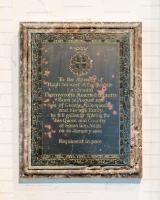
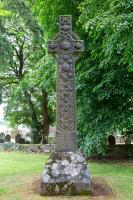
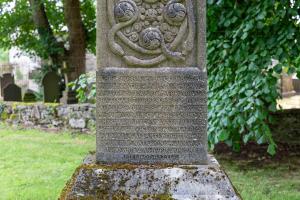
On 24th January 1900 Lieutenant Neville Windsor Hill-Trevor (age 31) was killed in action at the battle of Battle of Spion Kop serving with the 2nd Life Guards of Thornycroft's Mounted Infantry.
On 24th January 1900 Hugh Stewart McCorquodale (age 24) was killed in action at the Battle of Spion Kop.
Hugh Stewart McCorquodale: On 18th August 1875 he was born to George McCorquodale and Emily Sanderson at Miningsby, Kirkcudbrightshire.