


Chevron
Chevron is in Charges.
Chevron. A v-shape, pointing upwards unless specified inverted.
 Monck Arms. Gules, a chevron between three lion's heads erased argent. Source.
 Berkeley Arms. Gules a chevron between ten crosses pattee six in chief and four in base argent.
 Mordaunt Arms. Argent, a chevron between three estoiles sable. Source.
 Chicheley Arms. Or, a chevron between three cinquefoils gules. Source.
 Mosley Arms. Sable a chevron between three pickaxes argent. Source.
 Finch Arms. Argent, a chevron between three griffins passant sable. Source.
 Ponsonby Arms. Gules, a chevron between three combs argent. Source.
 Rich Arms. Gules, a chevron between three crosses botonée or. Source.
 Lyttleton Arms. Argent, a chevron between three escallops sable. Source.
 Robinson Arms. Vert, a chevron between three bucks at gaze or. Source.
 Braye Arms. Argent, a chevron between three eagle's legs erased sable. Source.
 Tilney Arms. Azure, a chevron between three griffin's heads erased or. Source.
 Mansel Arms. Argent, a chevron between three maunches. Source.
 Fanshawe Arms. Or a chevron between three fleur de lys sable. Source.
 Littleton Arms. Argent, a chevron between three escallops sable. Source.
 Trefusis Arms. Argent, a chevron between three spindles sable. Source.
 Wyndham Arms. Azure, a chevron between three lion's heads erased or.
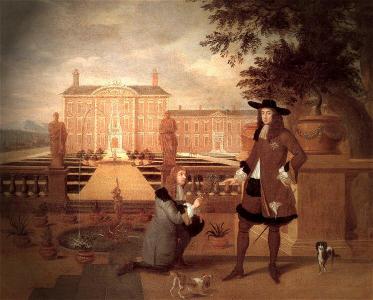
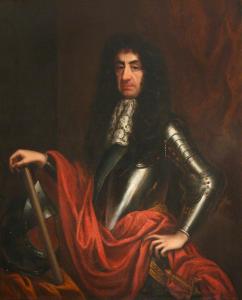
 Fox Arms. Ermine, on a chevron azure three fox's heads and necks erased or on a canton of the second a fleur de lys of the third. The canton is an augmentation of honour to his paternal arms, granted out of the Royal Arms as a mark of esteem to him and his heirs forever, by King Charles II following the Restoration of the Monarchy. Source.
Chevron Argent
 Brooke Arms. Gules, on a chevron argent a lion rampant sable crowned or. Source.
 Carr Arms. Gules, on a chevron argent, three mullets, of the field.
 Knollys Arms. Gules, on a chevron argent, three roses gules, barbed and seeded proper. Source.
Chevron Engrailed
 Loftus Arms. Sable, a chevron engrailed ermine, between three trefoils slipped argent. Source.
 Child Villiers Arms. Quarterly 1&4
  Villiers Arms and 2&3 Child Arms gules a chevron engrailed ermine between three eaglets argent gorged or. Source.
 Watson Arms. Argent, on a chevron engrailed azure between three martlets sable as many crescents or. Source.
 Baron Annaly Arms. Argent, on a chevron engrailed gules, between three roses of the last, a cross crosslet or. Source.
Chevron Ermine
 Beaumont Arms. Chequy or and azure a chevron ermine. Source.
 Blennerhassett Arms. Gules, a chevron ermine, between three dolphins naiant embowed argent. Source.
 Clotworthy Arms. Azure, a chevron ermine between three chaplets or. Source.
 Gresham Arms. Argent, a chevron ermine between three mullets pierced sable.
 Townshend Arms. Azure, a chevron ermine between three escallops argent. Source.
 Turner Baronets Arms. Sable, a chevron ermine between three fers de moline or on a chief argent a lion passant gules. Source.
Chevron Gules
 Tuchet Arms. Ermine, a chevron gules. Source.
 Brudenell Arms. Argent, a chevron gules between three morion caps azure pointed to the sinister. Source.
 Boleyn Arms. Argent, a chevron gules between three bull's heads afrontée. Source.
 Gorges Arms. Lozengy or and azure, a chevron gules. Source.
 Newport Arms. Argent, a chevron gules between three leopard's faces sable. Source.
 Stafford Arms. Or, a chevron gules.
 Belasyse Arms. Argent a chevron gules between three fleur de lys azure. Source.
Chevron Or
 Barkham Arms. Paly argent and gules a chevron or.
 Cobham Arms. Gules a chevron or three lions rampant sable. Source.
 Danvers Arms. Gules a chevron or three estoiles. Source.
 Wentworth Arms. Sable, a chevron or three leopard's faces or. Source.
 Wodehouse Arms. Sable a chevron or between three cinquefoils. Source.
 Wodehouse Augmented Arms. Wodehouse Arms augmented with a chevron or guttée de sang. The Wodehouse arms were augmented after the Battle of Agincourt. Source.
Chevrons
Three Chevrons
 Clare Arms. Or three chevrons gules. Source.
 Fitzhugh Arms. Azure, three chevrons interlaced in base or a chief of the last. Source.
 Hainault Arms. Or, three chevrons sable. Source.
Two Chevrons
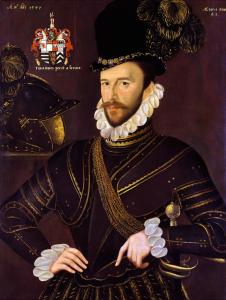 Around 1577 George Gower (age 37). Portrait of Richard Drake (age 42). The heraldic escutcheon shows seven quarters as follows:
1:  Drake of Ash Arms. Drake of Ash in the parish of Musbury, Devon.
2: Argent, on a chief gules three cinquefoils of the first; Billet of Ash.
3: Gules, on a fess argent two mullets sable; Hamton of Rockbere and Ash.
4: Ermine, on a chief indented sable three crosslets fitchee or; Orwey of Orwey and Ash.
5: Barry of seven argent and sable.
6: Azure, six lions rampant argent crowned Gules, 3, 2, 1; Forde of Forde.
7: Argent, two chevrons sable (Esse/Ash of Ash); Esse or Ash of Ash.
 Daubeney Arms. Or, two chevrons gules three griffin's heads. Source.
 Fitzwalter Arms. Or, a fess gules between two chevrons of the last. Source.
 Lisle Arms. Or a fess between two chevrons sable. Source.
 Walpole Arms. Or a fess between two chevrons sable three cross crosslets of the field. Source.


_Arms.png)


.svg)


.png)


#/media/File:Blason_Louise_d'Abos.svg)


.svg)

.svg)
