


Crescent
Crescent is in Charges.
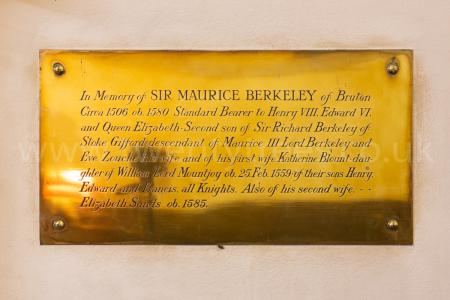
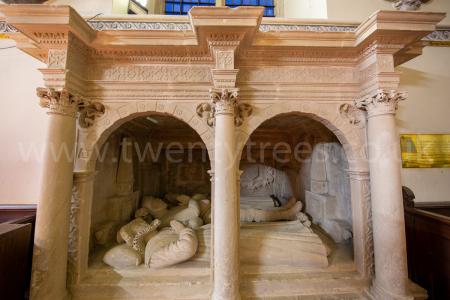
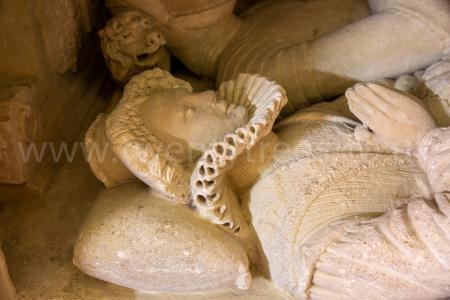
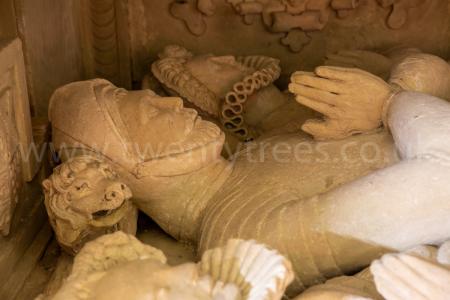
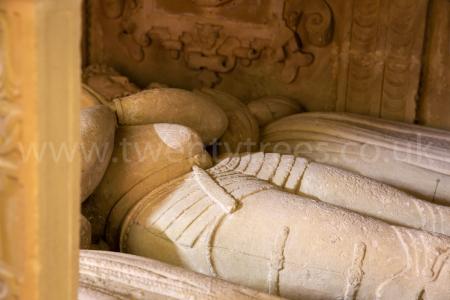
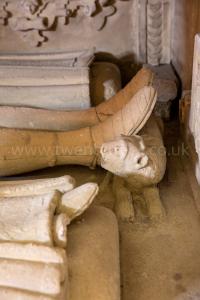
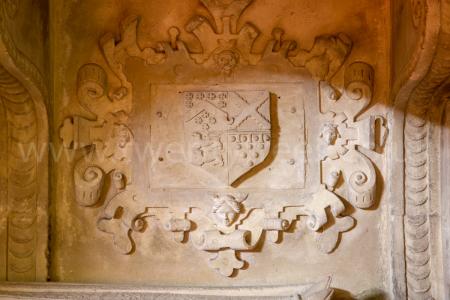
On 12 Mar 1560. [Some sources say 25 Feb 1560] Catherine Blount (deceased) died. On 11 Aug 1580 Maurice Berkeley (age 74) died. Church of St Mary, Bruton [Map]. Elizabethan Period recumbent effigies of himself and his two wives Catherine Blount (deceased) and Elizabeth Sands (age 27) in an Easter sepulchre-type recess with double round arched front, Corinthian pilasters and strapwork panels. Ruff. Panel with quartered arms 1  Berkeley Arms 2 probably
  Tiptoft Arms, possibly Wotton Arms 3 Unknown Arms 4 probably
  Babington Arms, possibly
  Zouche Arms differenced with a label three points, overall a Crescent.
Catherine Blount: John Champernowne and she were married. Around 1518 she was born to William Blount 4th Baron Mountjoy and Alice Keble Baroness Mountjoy. After 1541 Maurice Berkeley and she were married. Henry Machyn's Diary. 12 Mar 1560. The xij day of Marche was bered at Dyttun my lade Barkeley, the wyff of ser Mores Barthelay knyght, with a penon of armes and a iiij dosen of skochyons, and a harold of armes, master Rychemond.
Elizabeth Sands:
In 1533 she was born to Anthony Sands of Throwley in Kent.
In 1562 Maurice Berkeley and she were married. The difference in their ages was 27 years.
On 16 Jun 1585 she died at Berkeley House. She was buried at the St James' Church, Clerkenwell where a monument was constructed.
Before 16 Jun 1685 she was appointed Lady of the Bedchamber to Queen Elizabeth I of England and Ireland.
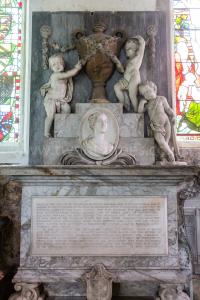
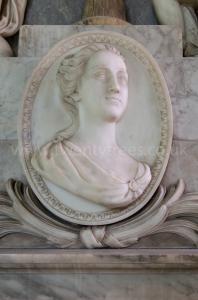
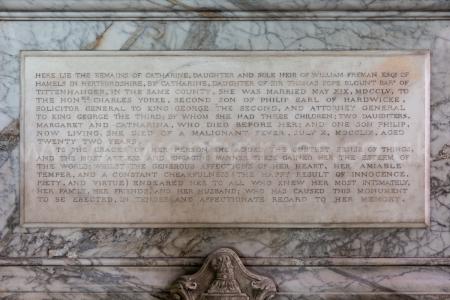
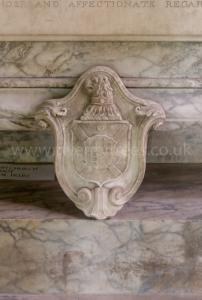
On 10 Jul 1759 Catherine Blount Freeman (age 22) died of a malignant fever. She was buried at St Andrew's Church, Wimpole [Map]. Armorial  Yorke Arms differencede with a crescent to indicate son of the current holder; her husband Charles Yorke (age 36) with an inescutcheon of Freeman Arms quartered with unknown arms two lions passant guardant with a bordure engrailed.
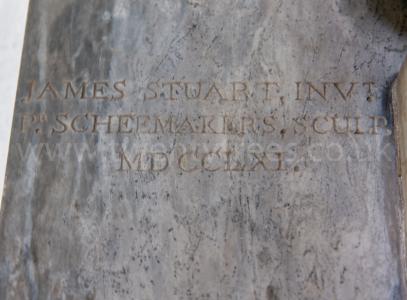
Stylised sarcophagus in white veined marble, bearing a white inscription panel; above is an urn in brown marble against a grey background standing on a base of three steps around which are grouped three putti: two garlanding the urn while the third stands by in dejection with reversed torch; in front of the steps is a portrait medallion and at the base of the sarcophagus is an achievement of arms; signed 'JAMES STUART (age 46), INVT. PR. SCHEEMAKERS (age 68), SCULP. MDCCLXI'.
Catherine Blount Freeman: Around 1737 she was born to William Freeman of Hamels in Hertfordshire and Catherine Blount. On 19 May 1755 Charles Yorke and she were married. He the son of Philip Yorke 1st Earl of Hardwicke and Margaret Cocks Countess Hardwicke.
 Scott Arms. Or, on a bend azure a mullet of six points between two crescents of the field. Source.
 Salusbury Arms. Gules a lion rampant argent three crescents argent.
 Jermyn Arms. Sable, a crescent between two mullets in pale argent. Source.
 Tennant Arms. Argent, two crescents in fess sable on a chief gules a boar's head couped of the first. Source.
 Hovell Arms. Sable, a crescent or.
NO IMAGE. Or, a chief indented azure, a crescent for difference. Source.
Crescents Or
 Coventry Arms. Sable a fess between three crescents or. Source.
 Dorward Arms. Ermine on a chevron sable, three crescents or.
 Preston Arms. Or, a chief sable three crescents or.
 Watson Arms. Argent, on a chevron engrailed azure between three martlets sable as many crescents or. Source.


.svg)

#/media/File:Strode_OfParnham_Arms.svg)

#/media/File:Butler_arms_(Earl_of_Carrick).svg)


