


Ermine
Ermine is in Field.
 Weston Arms. Ermine, on a chief azure five bezants.
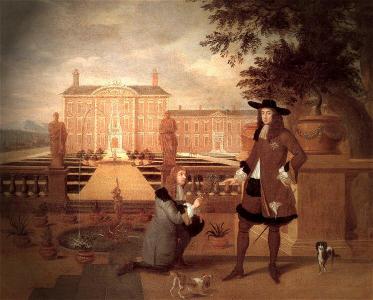
 Fox Arms. Ermine, on a chevron azure three fox's heads and necks erased or on a canton of the second a fleur de lys of the third. The canton is an augmentation of honour to his paternal arms, granted out of the Royal Arms as a mark of esteem to him and his heirs forever, by King Charles II following the Restoration of the Monarchy. Source.
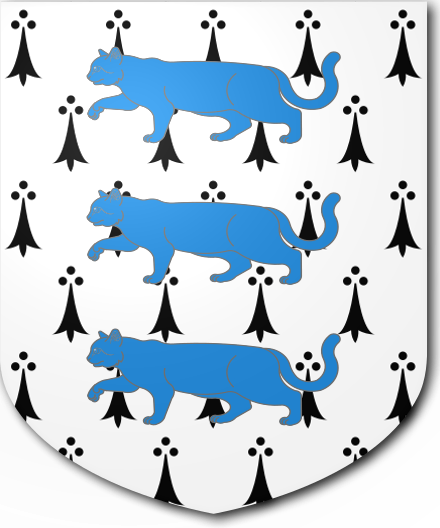 Adams Arms. Ermine three cats argent. Source
 Ingram Arms. Ermine on a fess gules three escallops or. Source.
 Bagot Arms. Ermine, two chevronels azure. Source.
 Jodrell Arms. Ermine. Source.
 Calthorpe Arms. Ermine, a maunch gules. Source.
 Knightley Arms. Quarterly 1&4 Ermine, 2&3 Unknown. Source.
 Chudleigh Arms. Ermine, three lions rampant gules. Source.
 Lister Arms. Ermine, a fess sable three mullets or. Source.
 Denison Arms. Ermine, a bend azure cotised sable between a unicorn's head erased in chief and a cross crosslet fitchy in base gules. Source.
 Pye Arms. Ermine, a bend lozengy gules. Source.
 Chaplin Arms. Ermine a chief azure three griffin's heads erased or.
 Dagworth Arms. Ermine, a fess gules three torteaux. Source.
 Dorward Arms. Ermine on a chevron sable, three crescents or.
 Boscawen Arms. Ermine, a rose gules barbed and seeded proper. Source.
 Tuchet Arms. Ermine, a chevron gules. Source.
 Wendesley Arms. Ermine, on a bend gules three escallops argent. Source.
 Arden Arms. Ermine, a fess chequy or and azure. Source.

_Arms.png)
.svg)


.svg)

.svg)


#/media/File:Strode_OfParnham_Arms.svg)


