

Chronicle of Walter of Guisborough
A canon regular of the Augustinian Guisborough Priory, Yorkshire, formerly known as The Chronicle of Walter of Hemingburgh, describes the period from 1066 to 1346. Before 1274 the Chronicle is based on other works. Thereafter, the Chronicle is original, and a remarkable source for the events of the time. This book provides a translation of the Chronicle from that date. The Latin source for our translation is the 1849 work edited by Hans Claude Hamilton. Hamilton, in his preface, says: 'In the present work we behold perhaps one of the finest samples of our early chronicles, both as regards the value of the events recorded, and the correctness with which they are detailed; Nor will the pleasing style of composition be lightly passed over by those capable of seeing reflected from it the tokens of a vigorous and cultivated mind, and a favourable specimen of the learning and taste of the age in which it was framed.'
Available at Amazon in eBook and Paperback format.
On 28th June 1577 Peter Paul Rubens was born.
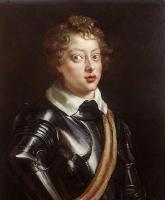
1605-1615. Peter Paul Rubens [aged 27]. Portrait of Vincenzo Gonzaga II Duke of Mantua [aged 10].
Vincenzo Gonzaga II Duke of Mantua: On 8th February 1594 he was born to Vincenzo Gonzaga III Duke Mantua and Eleanor de Medici Duchess Mantua. Coefficient of inbreeding 6.51%. On 29th October 1626 Ferdinando Gonzaga Duke of Mantua died. His brother Vincenzo succeeded Duke Mantua. On 25th December 1627 Vincenzo Gonzaga II Duke of Mantua died.
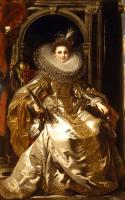
Around 1607. Peter Paul Rubens [aged 29]. "Marchesa Maria Serra Pallavicino". acquired by William Bankes (1786–1855) in 1840 as a portrait of the Marchesa Isabella Grimaldi. It would appear that the identification of the sitter had been made by the Grimaldi family, which had latterly owned it. When first referred to, in Ratti's guide to Genoa of 1780, the sitter was anonymous. New research into the heraldic motifs of the curtain drawn up above the sitter's head has identified her as Maria Serra, the wife of Niccolò Pallavicino, banker and host to Rubens' employer, Duke Vincenzo Gonzaga I of Mantua.
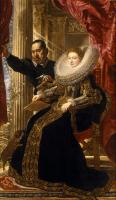
Around 1607. Peter Paul Rubens [aged 29]. "Marchesa Maria Grimaldi, and Her Dwarf".
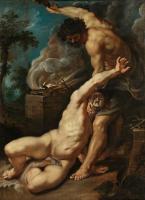
1608-1609. Peter Paul Rubens [aged 30]. "Cain Slaying Abel".
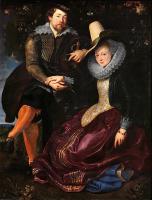
1609. Peter Paul Rubens [aged 31]. Self-portrait known as 'The Honeysuckle Bower'.
On 3rd October 1609 Peter Paul Rubens [aged 32] and Isabella Brant [aged 18] were married.
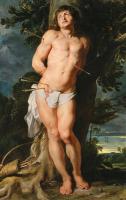
1614. Peter Paul Rubens [aged 36]. "St. Sebastian".
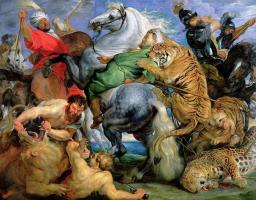
1616. Peter Paul Rubens [aged 38]. "The Tiger Hunt".
The History of William Marshal was commissioned by his son shortly after William’s death in 1219 to celebrate the Marshal’s remarkable life; it is an authentic, contemporary voice. The manuscript was discovered in 1861 by French historian Paul Meyer. Meyer published the manuscript in its original Anglo-French in 1891 in two books. This book is a line by line translation of the first of Meyer’s books; lines 1-10152. Book 1 of the History begins in 1139 and ends in 1194. It describes the events of the Anarchy, the role of William’s father John, John’s marriages, William’s childhood, his role as a hostage at the siege of Newbury, his injury and imprisonment in Poitou where he met Eleanor of Aquitaine and his life as a knight errant. It continues with the accusation against him of an improper relationship with Margaret, wife of Henry the Young King, his exile, and return, the death of Henry the Young King, the rebellion of Richard, the future King Richard I, war with France, the death of King Henry II, and the capture of King Richard, and the rebellion of John, the future King John. It ends with the release of King Richard and the death of John Marshal.
Available at Amazon in eBook and Paperback format.
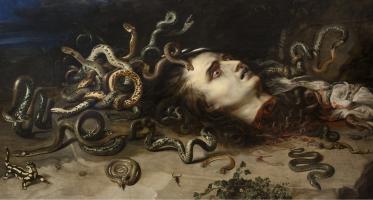
1617-1618. Peter Paul Rubens [aged 39]. "Head of Medusa".
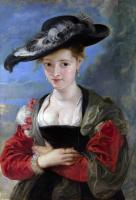
1622-25. Peter Paul Rubens [aged 44]. Portrait of Susanna Lunden née Forment (1599–1628) formerly known as 'Le Chapeau de Paille' i.e. 'The Straw Hat', the older sister of Rubens' future second wife Helena Fourment [aged 7]. The painting being the inspiration for Elisabeth Louise Vigée Le Brun's painting 'Self-Portrait in a Straw Hat',
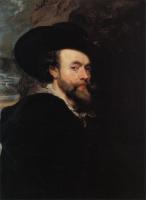
1623. Peter Paul Rubens [aged 45]. Self-portrait.

Around 1625. Peter Paul Rubens [aged 47]. Portrait of Anne of Austria Spain Queen Consort France [aged 23].

Around 1625. Peter Paul Rubens [aged 47]. Portrait of Anne of Austria Spain Queen Consort France [aged 23] in her coronation robes.
On 15th July 1626 [his wife] Isabella Brant [aged 35] died.

1627-28. Peter Paul Rubens [aged 49]. Portrait of Anthony Van Dyck [aged 27].
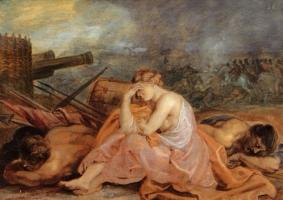
1628. Peter Paul Rubens [aged 50]. "Allegory of War".

Around 1629 Peter Paul Rubens [aged 51]. Portrait of Thomas Howard 14th or 21st Earl of Arundel 4th Earl of Surrey 1st Earl Norfolk [aged 43].

1630. Peter Paul Rubens [aged 52]. "Joan of Arc".

In 1630 Peter Paul Rubens [aged 52] and Helena Forment [aged 15] were married. The difference in their ages was 36 years.
Jean de Waurin's Chronicle of England Volume 6 Books 3-6: The Wars of the Roses
Jean de Waurin was a French Chronicler, from the Artois region, who was born around 1400, and died around 1474. Waurin’s Chronicle of England, Volume 6, covering the period 1450 to 1471, from which we have selected and translated Chapters relating to the Wars of the Roses, provides a vivid, original, contemporary description of key events some of which he witnessed first-hand, some of which he was told by the key people involved with whom Waurin had a personal relationship.
Available at Amazon in eBook and Paperback format.
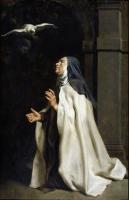
1630. Peter Paul Rubens [aged 52]. "Teresa of Avila's Vision of the Dove".
Around 1630. Peter Paul Rubens [aged 52]. Portrait of [his wife] Helena Forment [aged 15] in her Wedding Dress.
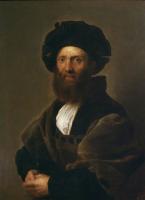
1630-1609. Peter Paul Rubens [aged 52]. "Baldassare Castiglione".
1635. Peter Paul Rubens [aged 57]. Portrait of [his wife] Helena Forment [aged 20].
1635. Peter Paul Rubens [aged 57]. Portrait of [his wife] Helena Forment [aged 20] with her son Frans.
1636-1638. Peter Paul Rubens [aged 58]. '[his wife] Helena Forment [aged 21] in a Fur Wrap'.
On 30th May 1640 Peter Paul Rubens [aged 62] died.
John Evelyn's Diary. 4th October 1641. The lodgings here are very handsome and convenient. I lost little time; but, with the aid of one Mr. Lewkner, our conductor, we visited divers churches, colleges, and monasteries. The Church of the Jesuits is most sumptuous and magnificent; a glorious fabric without and within, wholly incrusted with marble, inlaid and polished into divers representations of histories, landscapes, and flowers. On the high altar is placed the statue of the Blessed Virgin and our Saviour in white marble, with a boss in the girdle set mth very fair and rich sapphires, and divers other stones of price. The choir is a glorious piece of architecture; the pulpit supported by four angels, and adorned with other carvings, and rare pictures by Rubens, now lately dead, and divers votive tables and relics. Hence, to the Vrou Kirk, or N6tre Dame of Antwerp: it is a very venerable fabric, built after the Gothic manner, especially the tower, which I ascended, the better to take a view of the country adjacent; which, happening on a day when the sun shone exceedingly bright, and darted his rays without any interruption, afforded so bright a reflection to us who were above, and had a full prospect of both land and water about it, that I was much confirmed in my opinion of the moon's being of some such substance as this earthly globe. Perceiving all the subjacent country, at so small an horizontal distance, to repercuss such a light as I could hardly look against, save where the river and other large water within our view, appeared of a more dark and uniform colour, resembling those spots in the moon supposed to be seas there, according to Hevelius, and as they appear in our late telescopes. I numbered in this church thirty privileged altars, that of St. Sebastian adorned with a painting of his martyrdom.
John Evelyn's Diary. 8th October 1641. Being the morning I came away, I went to see the Prince's Court, an ancient, confused building, not much unlike the Hofft, at the Hague: there is here likewise a very large Hall, where they vend all sorts of wares. Through this we passed by the chapel, which is indeed rarely arched, and in the middle of it was the hearse, or catafalco, of the late Archduchess, the wise and pious Clara Eugenia. Out of this we were conducted to the lodgings, tapestried with incomparable arras, and adorned with many excellent pieces of Rubens, old and young Breugel, Titian, and Stenwick, with stories of most of the late actions in the Netherlands.
John Evelyn's Diary. 8th October 1641. By an accident, we could not see the library. There is a fair terrace which looks to the vineyard, in which, on Pedestals, are fixed the statues of all the Spanish kings of the house of Austria. The opposite walls are painted by Rubens, being an history of the late tumults in Belgia: in the last piece, the Archduchess shuts a great pair of gates upon Mars, who is coming out of hell, armed, and in a menacing posture; which, with that other of the Infanta taking leave of Don Philip the Fourth, is a most incomparable table.
Abbot John Whethamstede’s Chronicle of the Abbey of St Albans
Abbot John Whethamstede's Register aka Chronicle of his second term at the Abbey of St Albans, 1451-1461, is a remarkable text that describes his first-hand experience of the beginning of the Wars of the Roses including the First and Second Battles of St Albans, 1455 and 1461, respectively, their cause, and their consequences, not least on the Abbey itself. His text also includes Loveday, Blore Heath, Northampton, the Act of Accord, Wakefield, and Towton, and ends with the Coronation of King Edward IV. In addition to the events of the Wars of the Roses, Abbot John, or his scribes who wrote the Chronicle, include details in the life of the Abbey such as charters, letters, land exchanges, visits by legates, and disputes, which provide a rich insight into the day-to-day life of the Abbey, and the challenges faced by its Abbot.
Available at Amazon in eBook and Paperback format.

1650. Peter Paul Rubens. Portrait of George Villiers 2nd Duke of Buckingham [aged 21].
On 15th July 1673 [his former wife] Helena Forment [aged 59] died.
John Evelyn's Diary. 21st June 1693. I saw a great auction of pictures in the Banqueting house, Whitehall [Map]. They had been my Lord Melford's [aged 42], now Ambassador from King James [aged 59] at Rome, and engaged to his creditors here. Lord Mulgrave [aged 45] and Sir Edward Seymour [aged 60] came to my house, and desired me to go with them to the sale. Divers more of the great lords, etc., were there, and bought pictures dear enough. There were some very excellent of Vandyke, Rubens, and Bassan. Lord Godolphin [aged 48] bought the picture of the Boys, by Murillo the Spaniard, for 80 guineas, dear enough; my nephew Glanville, the old Earl of Arundel's head by Rubens, for £20. Growing late, I did not stay till all were sold.


