

The Deeds of the Dukes of Normandy
The Gesta Normannorum Ducum [The Deeds of the Dukes of Normandy] is a landmark medieval chronicle tracing the rise and fall of the Norman dynasty from its early roots through the pivotal events surrounding the Norman Conquest of England. Originally penned in Latin by the monk William of Jumièges shortly before 1060 and later expanded at the behest of William the Conqueror, the work chronicles the deeds, politics, battles, and leadership of the Norman dukes, especially William’s own claim to the English throne. The narrative combines earlier historical sources with firsthand information and oral testimony to present an authoritative account of Normandy’s transformation from a Viking settlement into one of medieval Europe’s most powerful realms. William’s history emphasizes the legitimacy, military prowess, and governance of the Norman line, framing their expansion, including the conquest of England, as both divinely sanctioned and noble in purpose. Later chroniclers such as Orderic Vitalis and Robert of Torigni continued the history, extending the coverage into the 12th century, providing broader context on ducal rule and its impact. Today this classic work remains a foundational source for understanding Norman identity, medieval statesmanship, and the historical forces that reshaped England and Western Europe between 800AD and 1100AD.
Available at Amazon in eBook and Paperback format.
Ghent is in Flanders.
See: Prinsenhof Palace [Map].
Anglo-Saxon Chronicle. 880. This year went the army from Cirencester [Map] into East-Anglia, where they settled, and divided the land. The same year went the army over sea, that before sat at Fulham [Map], to Ghent [Map] in Frankland, and sat there a year.
On 25th May 1008 Matilda Billung Countess Flanders [aged 68] died at Ghent [Map].
Around 1290 Jacob van Artevelde was born in Ghent [Map].
On 29th August 1298 Eleanor Plantagenet [aged 29] died at Ghent [Map]. She was buried at Westminster Abbey [Map].
On 4th December 1340 Bishop Henry Burghesh [aged 48] died at Ghent [Map]. He was buried in the St Catherine Chantry at Lincoln Cathedral [Map].
In 1414 Catherine Valois Countess Vertus [aged 23] died at Ghent [Map].
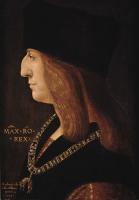
On 18th August 1477 Maximilian Habsburg I Holy Roman Emperor [aged 18] and Mary Valois Duchess Burgundy [aged 20] were married at Ghent [Map]. She the daughter of Charles "Bold" Valois Duke Burgundy and Isabella Bourbon. He the son of Frederick "Peaceful or Fat" Habsburg III Holy Roman Emperor [aged 61] and Eleanor Aviz Holy Roman Empress. They were second cousins. He a great x 3 grandson of King Edward III of England. She a great x 3 granddaughter of King Edward III of England.
On 24th February 1500 Charles V Holy Roman Emperor was born to Philip "Handsome Fair" King Castile [aged 21] and Joanna "The Mad" Trastámara Queen Castile [aged 21] at Ghent [Map]. He a great x 4 grandson of King Edward III of England. Coefficient of inbreeding 2.88%. He married 10th March 1526 his first cousin Isabel Aviz Queen Consort Spain, daughter of Manuel "Fortunate" I King Portugal and Maria Trastámara Queen Consort Portugal, and had issue.


Around 1512 Adrian Poynings was born illegitimately to Edward Poynings [aged 53] at Ghent [Map].
On 20th January 1526 Isabella of Austria Queen Consort Denmark and Norway [aged 24] died at Ghent [Map].
John Evelyn's Diary. 8th October 1641. At near eleven o'clock, I repaired to his Majesty's [aged 40] agent. Sir Henry De Vic [aged 42], who very courteously received me, and accommodated me with a coach and six horses, which carried me from Brussels [Map] to Ghent [Map], where it was to meet my Lord of Arundel [aged 56], Earl Marshal of England, who had requested me when I was at Antwerp [Map] to send it for him, if I went not thither myself.


John Evelyn's Diary. 8th October 1641. Thus taking leave of Brussels [Map] and a sad Court, yet full of gallant persons, (for in this small city, the acquaintance being universal, ladies and gentlemen, I perceived, had great diversions and frequent meetings,) I hasted towards Ghent [Map]. On the way, 1 met with divers little waggons, prettily contrived and full of peddling merchandises, dravm by mastiff-dogs, harnessed completely like so many coachhorses; in some four, in others six, as in Brussels [Map] itself I had observed. In Antwerp [Map] I saw, as I remember, four dogs draw five lusty children in a chariot: the master commands them whither he pleases, crying his wares about the streets. After passing through Ouse, by six in the evening, I arrived at Ghent [Map]. This is a city of so great a circumference, that it is reported to be seven leagues round; but there is not half of it now built, much of it remaining in fields and desolate pastures even within the walls, which have strong gates towards the west, and two fair churches.
Chronicle of Geoffrey le Baker of Swinbroke
Baker was a secular clerk from Swinbroke, now Swinbrook, an Oxfordshire village two miles east of Burford. His Chronicle describes the events of the period 1303-1356: Gaveston, Bannockburn, Boroughbridge, the murder of King Edward II, the Scottish Wars, Sluys, Crécy, the Black Death, Winchelsea and Poitiers. To quote Herbert Bruce 'it possesses a vigorous and characteristic style, and its value for particular events between 1303 and 1356 has been recognised by its editor and by subsequent writers'. The book provides remarkable detail about the events it describes. Baker's text has been augmented with hundreds of notes, including extracts from other contemporary chronicles, such as the Annales Londonienses, Annales Paulini, Murimuth, Lanercost, Avesbury, Guisborough and Froissart to enrich the reader's understanding. The translation takes as its source the 'Chronicon Galfridi le Baker de Swynebroke' published in 1889, edited by Edward Maunde Thompson.
Available at Amazon in eBook and Paperback format.

In March 1686 George Fitzroy 1st Duke Northumberland [aged 20] and Catherine Wheatley were married. Soon after the marriage Northumberland and his brother, Henry FitzRoy, 1st Duke of Grafton [aged 22], allegedly attempted to privately convey her abroad to an English convent in Ghent [Map], Belgium. He the illegitmate son of King Charles II of England Scotland and Ireland and Barbara Villiers 1st Duchess of Cleveland [aged 45].
On 18th January 1702 Petrus Johannes van Reysschoot was born at Ghent [Map].
On 6th March 1340 John of Gaunt 1st Duke Lancaster was born to King Edward III of England [aged 27] and Philippa of Hainaut Queen Consort England [aged 29] at the Prinsenhof Palace [Map] in Ghent aka Gaunt. Coefficient of inbreeding 3.00%. He married (1) his half second cousin once removed Blanche Duchess of Lancaster, daughter of Henry of Grosmont 1st Duke Lancaster and Isabel Beaumont Duchess Lancaster, and had issue (2) 21st September 1371 his half third cousin twice removed Constance of Castile Duchess of Lancaster and had issue (3) 13th January 1396 Katherine Swynford aka Roet Duchess Lancaster and had issue.
John Evelyn's Diary. 8th October 1641. Here I beheld the Palace [Map] wherein John of Gaunt and Charles V were born; whose statue stands in the market-place, upon a high pillar, with his sword drawn, to which (as I was told) the magistrates and burghers were wont to repair upon a certain day every year with ropes about their necks, in token of submission and penance for an old rebellion of theirs; but now the hemp is changed into a blue ribbon. Here is planted the basilisco, or great gun, so much talked of. The Lys and the Scheldt meeting in this vast city, divide it into twenty-six islands, which are united by many bridges, somewhat resembling Venice. This night I supped with the Abbot of Andoyne, a pleasant and courteous priest.