

Henrici Quinti, Angliæ Regis, Gesta, is a first-hand account of the Agincourt Campaign, and subsequent events to his death in 1422. The author of the first part was a Chaplain in King Henry's retinue who was present from King Henry's departure at Southampton in 1415, at the siege of Harfleur, the battle of Agincourt, and the celebrations on King Henry's return to London. The second part, by another writer, relates the events that took place including the negotiations at Troye, Henry's marriage and his death in 1422.
Available at Amazon in eBook and Paperback format.
South Aisle, Edinburgh Cathedral is in St Giles' Cathedral, Edinburgh.
South Aisle, Edinburgh Cathedral [Map]. Memorial to the 78th Highland Regiment who had been posted to Sinde and who were tragically affected by Cholera.
"To the memory of two officers, twenty one serjeants, twenty seven corporals, nine drummers, four hundred and thirty nine privatess, forty seven women and one hundred and twenty four children, of the Seventy Eighth Highland Regiment in all amounting to six hundred and sixty nine, who died on the banks of the River Indus in Sinde, between the sixth day of September one thousand and eight hundred and forty four, and the fourth day of March one thousand eight hundred and forty five.
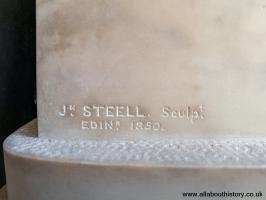
Sculpted by John Steell [aged 45], 1850. See Captain Keogh's Diary, The Edinburgh Medical and Surgical Journal, Volume 76 and The Asiatic Journal and Montly Miscellany

After 1858. South Aisle, Edinburgh Cathedral [Map]. Memorial to the 93rd Sutherland Highlanders who died during the Indian Mutiny of 1857-58 sculpted by William Brodie [aged 42].


After 1881. South Aisle, Edinburgh Cathedral [Map]. Memorial to the men of the 93rd Gordon Highlanders who lost theoir lives in Afghanistan and South Africa.


After 1902. South Aisle, Edinburgh Cathedral [Map]. Boer War Memorial to The Royal Scots.
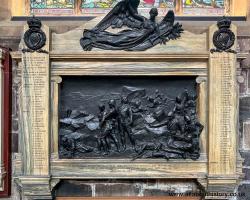
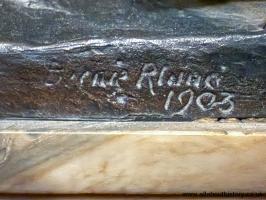
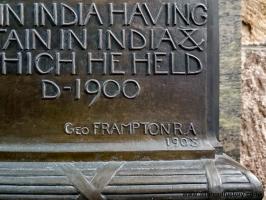
On 9th May 1909 a memorial at the South Aisle, Edinburgh Cathedral [Map] to General William Lockhart by sculptor George Frampton [aged 48] was unveiled by General Edward Pemberton Leach [aged 62].
General William Lockhart: On 2nd September 1841 he was born to Reverend Laurence Lockhart. On 18th March 1900 General William Lockhart died of malaria. His funeral occurred the following day and the service was taken by James Welldon the Bishop of Calcutta, and former headmaster of Harrow School. Lockhart's good friend and Viceroy Lord Curzon attended.
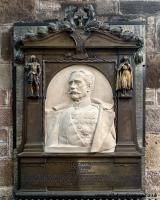

After 1918. South Aisle, Edinburgh Cathedral [Map]. WWI Memorial to the 4th Battalion Royal Scots - Queen's Edinburgh Rifles who died in the Battle of Gully Ravine (Sachir Dere), Gallipoli Peninsular on the 28 June 1915.
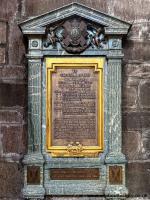
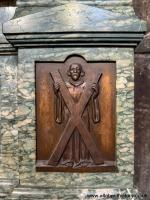
After 1918. South Aisle, Edinburgh Cathedral [Map]. WWI Memorial to the 5th Battalion Royal Scots - Queen's Edinburgh Rifles sculpted by Charles d'Orville Pilkington Jackson [aged 30].
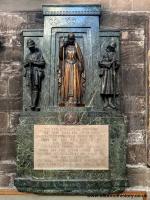
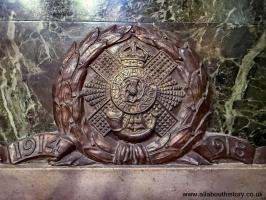
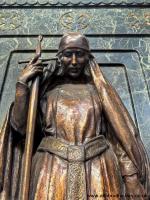
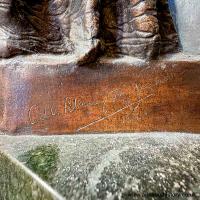
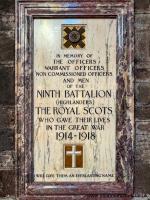
After 1918. South Aisle, Edinburgh Cathedral [Map]. WWI Memorial to the Ninth Battalion (Highlanders) The Royal Scots.
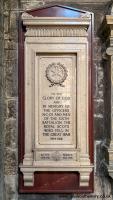
After 1918. South Aisle, Edinburgh Cathedral [Map]. WWI Memorial to the Sixth Battalion The Royal Scots.