

Chronicle of a Bourgeois of Valenciennes
Récits d’un bourgeois de Valenciennes aka The Chronicle of a Bourgeois of Valenciennes is a vivid 14th-century vernacular chronicle written by an anonymous urban chronicler from Valenciennes in the County of Hainaut. It survives in a manuscript that describes local and regional history from about 1253 to 1366, blending chronology, narrative episodes, and eyewitness-style accounts of political, military, and social events in medieval France, Flanders, and the Low Countries. The work begins with a chronological framework of events affecting Valenciennes and its region under rulers such as King Philip VI of France and the shifting allegiances of local nobility. It includes accounts of conflicts, sieges, diplomatic manoeuvres, and the impact of broader struggles like the Hundred Years’ War on urban life in Hainaut. Written from the perspective of a burgher (bourgeois) rather than a monastery or royal court, the chronicle offers a rare lay viewpoint on high politics and warfare, reflecting how merchants, townspeople, and civic institutions experienced the turbulence of the 13th and 14th centuries. Its narrative style combines straightforward reporting of events with moral and civic observations, making it a valuable source for readers interested in medieval urban society, regional politics, and the lived experience of war and governance in pre-modern Europe.
Available at Amazon in eBook and Paperback format.
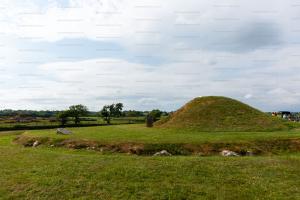
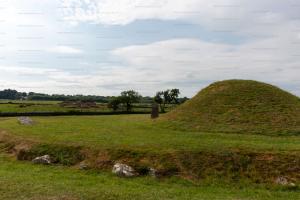
Bryn Celli Ddu Burial Mound is in Llanddaniel Fab, Prehistoric Anglesey Burial Chambers.
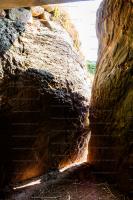
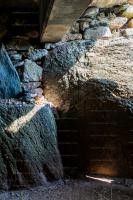
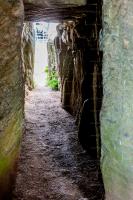
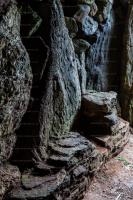
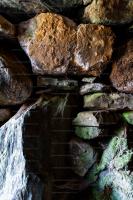
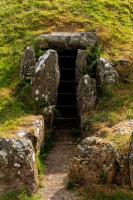
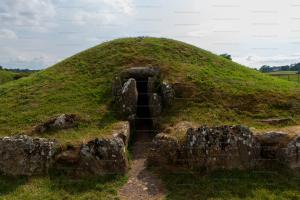
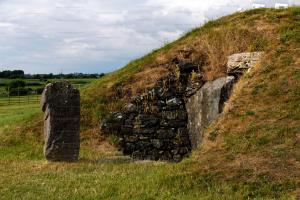
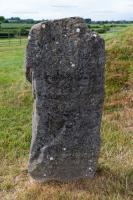
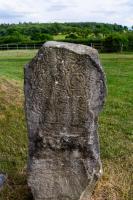
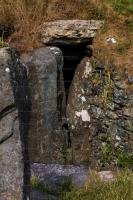
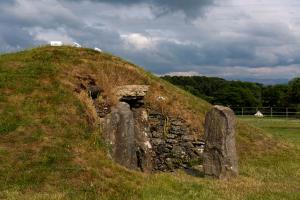
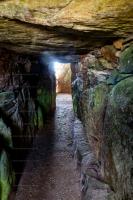
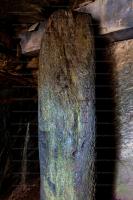
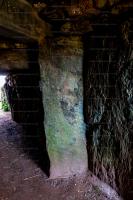
Bryn Celli Ddu [Map], 'the mound in the dark grove', is a Prehistoric Burial Mound in which is located a pillar of blueschist which appears to have markings on it, and outside of which is a decorated pillar, now reproduced; the original is in National Museum of Wales. The mound, now substantially smaller than originally, has a 8.4m long passage which leads to the burial chamber. The site appears to have previously been used as a henge monument with seventeen stones. Some of the stone holes contained cremated remains.
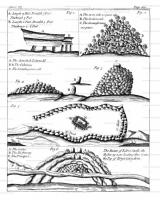
Mona Antiqua Restauranta 93 Druidical Monuments. But of such Cromleche as remain yet undemolished, there is but one besides that at Bodowyr to be seen in all these precincts; and that a very large one, before mentioned, standing near Plâs newydd [Map], formerly Llwyn Moel, where it is probable one of their larger groves was. It is a double1 Cromlech, a larger and a smaller contiguous together. There is also at Plâs newydd wood [Bryn yr Hen Bobl Burial Chamber [Map]] one of the largest Carnedds in the Isle of Anglesey; yet scarce discerned and distinguished from a mount of earth, the stones being overgrown with earth and moss, and great trees growing thick upon it. It lies in a dry bottom, without any pillars now standing by it, fig. 2. There are also in Llanddaniel parish, at a place called formerly Llwyn Llwyd, now Bryn Kelli [Map], the remains of two Carnedds, within a few paces of one another; the one, fig. 3. is somewhat broken and pitted into on one side, where the stones have been carried away; the other, fig. 4. having had its stones almost all taken away into walls and buildings, with two standing columns erected between them.
Note 1. See plate VII. fig. I.
A Tour of Wales by Thomas Pennant Volume 4. A few years ago, beneath a carnedd similar to that at Tregarnedd, was discovered, on a farm called Bryn-celli-ddu [Bryn Celli Ddu Burial Mound [Map]], near the seat of Sir Nicholas Bayley [Plas Newydd House, Anglesey], a passage three feet wide, four feet two or three inches high, and about nineteen feet and a half long, which led into a room, about three feet in diameter, and seven in height. The form was an irregular hexagon, and the sides composed of six rude flabs, one of which measured in its diagonal eight feet nine inches. In the middle was an artless pillar of stone, four feet eight inches in circumference. This supports the roof, which consists of one great stone, near ten feet in diameter. Along the sides of the room was, if I may be allowed the expression, a stone bench, on which were found human bones, which fell to dust almost at a touch: it is prosbable that the bodies were originally placed on the bench. There are proofs that it was customary with the Gauls to place their dead in that form in cells; but they added to the head of each body a stone weapon, which served as a pillow: but nothing of the kind was discovered in this sepulchre. The diameter of the incumbent carnedd is from ninety to a hundred feet. This seems to be that which Mr. Rowland takes notice of in his Mona Antiqua.
Nicholson's Cambrian Guide. November 1777. Mr. Wyndham says that in the beginning of November 1777, there was accidentally discovered, at the hamlet of Brynkelly [Bryn Celli Ddu Burial Mound [Map]], between Plas Newydd and Moel y Bon ferry, a subterraneous gallery, 18 feet in length, 3 in breadth, and 6 in height, This led to a chamber of the same height, covered with a stone 12 feet long and 9 wide. A small round pillar, seemed to afford some support to this stone from the centre of the room. Many human bones were upon the floor, which mouldered into dust on being touched.
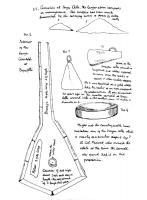
Ten Days Tour through Anglesey by John Skinner. 3rd December 1802. Accompanied by a young farmer who procured a lanthorn for the purpose we walked nearly a mile to the south east of the church to the spot where in Mr. Rowlands' time there were two carnedds [Bryn Celli Ddu Burial Mound [Map]] remaining having two rude stone pillars placed between them but these stones have been employed for the purpose of building a wall near this place as well as a great part (fol. 45.) of the western carnedd which is nearly destroyed for the same purpose about twenty years ago when the labourers when digging towards the center discovered a flat pan about ten inches over-turned bottom upwards and under it a wedge of gold as they pretend the size of the heater of an iron with a piece of wire passing through the smaller end of it. The father of the young man who was with us happened to be one of the workmen employed at the time, but as what they found was immediately taken by Colonel Peacock the proprietor of the ground the man could give no further account of the circumstance. I should imagine that what they called the wedge of gold was no other than one of the brazen celts or sacrificial instruments used in former times which have been discovered in great numbers in Cornwall and (fol. 46) other parts of the kingdom. Whilst a farmer was removing some of the stones from the north east side of the larger carnedd to employ them in his repairs he came to the mouth of a passage covered with a square stone similar to that at Plas Newydd, anxious to reap the fruits of his discovery he procured a light and crept forward on his hands and knees along the dreary vault, when lo! in a chamber at the further end a figure in white seemed to forbid his approach. The poor man had scarcely power sufficient to crawl backwards out of this den of spirits as he imagined however in the course of a few days instigated by the hopes of riches and the presence of many assistants he made his second entré into the cavern and finding the white gentleman did not offer to stir he boldly went (fol. 46a) forward and discovered the object of his apprehensions was no other than a stone pillar about six feet in height standing in the centre of the chamber. His former consternation could now only be exceeded by his eagerness to see what was contained beneath the stone which he shortly overturned but treasure there was none, some large human bones lying near the pillar sufficiently testifying the purpose for which the structure was intended. This is the substance of the account we received fromn the younger man whose father was one of Colonel Peacock's labourers and on the premises at the time of the discovery. The superstition of the common people still suppose this to be the habitation of spirits.
Tour Through North Wales. The circles of stones, of which many remain in North Wales, were the temples of the druids, in which they performed their religious rites; they were generally surrounded by fine oaks. A Carnedd is a great heap of stones, sometimes encircled by upright ones. Some years since, one was discovered near Lord Uxbridge's seat [Bryn Celli Ddu Burial Mound [Map]], in which a passage was perceived, that led to a room about three feet wide, and seven feet high; in the centre was a rude stone pillar, which helped to support a roof, consisting of one immense stone, which measured ten feet in diameter: on the sides were benches of the same material, with human bones upon them, which, at the touch, dissipated into dust. These edifices were the repositories of the dead. A Cromlech is another species of druidical remains; it consists of three, or sometimes more, upright stones, with one large stone placed upon them; the whole being similar to those rooms found in the Carnedda. It has often been asserted, that the Cromlechs were the altars upon which the druids performed their acts of immolation, or sacrifices of human victims taken in war; but to this opinion there are insurmountable objections. To those who can suppose the sacrifice was performed under them, it is objected, that many of these are too low to admit the officiating priest to go through the ceremony; and if, again, as has been the opinion, it is supposed that this act could have been performed upon the top stone, another potent reason starts up, and says, that the greatest number of these stones, from their sloping and often serrated summits, could never admit either the fire, the priest, or the victim upon them1. The most rational idea respecting them is, that they were, like the Carnedd just mentioned, the sepulchral monuments of the priests and philosophers of the ancient Britons; and no doubt were the origin of our church - yard tomb - stones.
Note 1. See also the opinion of Dr. Borlace. Antiq. Cornwall, pa. 210, $
History of the Island of Mona. The progress of cultivation has nearly obliterated many of the vestages of antiquity, which existed in this, as well as several other parishes in Mona. At Bryn Celi [Map], are some traces of large carneddau, where two upright stones are still remaining, with some few others scattered around them, and in several of the adjacent fields are some upright stones, of large dimensions, apparently the remains of cromlechau; and near Bodlew, in this parish, is a deeply excavated and irregularly elliptical area, forty-three yards in length, and twenty-seven in width across the centre, with an entrance at the smaller end. Near the middle of this enclosure, are the remains of an ancient small building, called Capel Cadwaladr, supposed to have been originally erected by Cadwaladr, the last king of the Britons. This is by some writers called "Yr Hen Vonwent," and thought to be the oldest if not the first place of Christian worship established in the Island. Mr. Humphrey Thomas, brother to Davydd Ddfi, the bard of Snowdon, was schoolmaster in the village of Llanddeiniol. By his letter written in 1801, to Mr. P. Bailey Williams, and published in the 2nd. vol. Cambro Quarterly, he appears to have been very conversant with our bardic hoards of unpublished MSS.
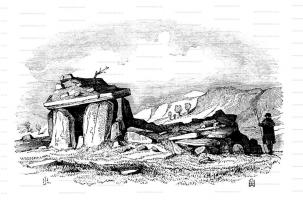
Archaeologia Cambrensis 1847 Brynn Celli Ddu. Cromlech at Bryn Celli Ddu [Map], Anglesey.
Archaeologia Cambrensis 1854 Page 205. A double Cromlech [Ty Newydd Burial Chamber [Map]],—Close to the house of Trefor, on the road from Beaumaris to Pentraeth, in a field on the south side of the road. They were erect not many years since, but were then thrown down by the tenant, because they were superstitious. (For "they were," read, "he was.")
A double Cromlech [Plas Newydd Burial Chamber [Map]],—In the park of Plas Newydd. This has been often engraved and described. (See Pennants' Tour in Wales; Journal of the Archaeological Institute, &c.) Traces of the carnedd of stones which once covered it are still visible.
Cromlech [Bryn Celli Ddu Burial Mound [Map]],—With passage of stones covered over, at Bryn Celli du, near Plas Newydd. This has been fully described and illustrated in the Archaologia Cambrensis? It is styled Yr Ogof, or the Cave, on the Ordnance map, from its having been always considered so until the superincumbent carnedd was removed. It is now securely fenced off, and preserved from future injury, by the care of C. Evans, Esq., of Plas Gwyn, acting on behalf of the Marquis of Anglesey. This is almost an unique instance of the kind in Wales.
Cromlech,—Near Llanidan Old Church, to the south-west; it is partly thrown down. Cromlech,
At Bodowyr [Bodowyr Burial Chamber [Map]], near Llangaffo. This is one of the smallest cromlechau known, and is in admirable preservation. (See Journal of the British Archaeological Association.)

The True Chronicles of Jean le Bel Volume 1 Chapters 1-60 1307-1342
The True Chronicles of Jean le Bel offer one of the most vivid and immediate accounts of 14th-century Europe, written by a knight who lived through the events he describes, and experienced some of them first hand. Covering the early decades of the Hundred Years’ War, this remarkable chronicle follows the campaigns of Edward III of England, the politics of France and the Low Countries, and the shifting alliances that shaped medieval warfare. Unlike later historians, Jean le Bel writes with a strong sense of eyewitness authenticity, drawing on personal experience and the testimony of fellow soldiers. His narrative captures not only battles and sieges, but also the realities of military life, diplomacy, and the ideals of chivalry that governed noble society. A key source for Jean Froissart, Le Bel’s chronicle stands on its own as a compelling and insightful work, at once historical record and literary achievement. This translation builds on the 1905 edition published in French by Jules Viard, adding extensive translations from other sources Rymer's Fœdera, the Chronicles of Adam Murimuth, William Nangis, Walter of Guisborough, a Bourgeois of Valenciennes, Geoffrey le Baker of Swinbroke and Richard Lescot to enrich the original text and Viard's notes.
Available at Amazon in eBook and Paperback format.
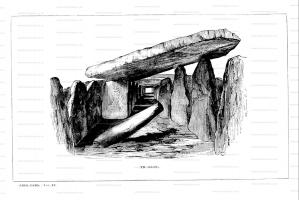
Archaeologia Cambrensis 1869 Page 118-147 Cromlechs in North Wales. None of the cromlechs that have been briefly mentioned seem to have traces of galleries leading to the chamber. This, as is well known, is one of the marked distinctive features of sepulchral chambers in Britany, as contrasted with those of this country. In the former country they are by no means uncommon; in the latter, particularly as regards Wales, they are extremely rare. Allusion has been already made to the gallery connected with the three chambers near Capel Garmon [Map]. Through the courteous kindness of Capt. Lukis we are enabled to present a copy of the plan made by that gentleman, accompanied with careful and accurate measurements of details (cut 12), of the chamber of Bryn-celli Ddu [Map], or, as it is called in the Ordnance Map Yr Ogof, or the hole or cave. It still retains some portion of the original carn, but is more remarkable from its having the greater portion of the original gallery leading to the chamber, in a tolerably perfect state. A view of the exterior of the chamber, showing the remains of the cairn and gallery together with an accurate description of the whole monument will be found in the Archæologia Cambrensis of 1847 (p. 3). Rowlands, in his Mona Antiqua, merely describes the remains of two carns near each other, one of which had been almost in his time entirely removed, and the other had been broken and pitted into on one side. "Two standing columns" are also said to exist between the two carns. (Mona Antiqua, pp. 93, 100.) An extremely rude representation is also given, which represents the carns as composed of nothing but stones, without any admixture of earth, which was not the case. As Rowlands says nothing about the gallery, it is more than probable that although the carn had been "pitted into" on one side, the gallery had not been discovered,— much less the chamber. While Pennant described it, one of the carns had vanished. At least he writes as if only one existed at the time. The upright stones are also passed over without notice, and were also probably no longer in existence. On the other hand, the late Miss Lloyd, in her account of the parish of Llanddeiniol Vab, in which the monument stands (see History of the island of Mona, p. 221), says, "At Bryncelli are some traces of large carneddau, where two upright stones are still standing."
But her not mentioning the chamber and gallery, the account of which by Pennant must have been known to her, would tend to show that she merely obtained her information from Rowlands, and had forgotten Pennant's description. Her History of Mona was printed in 1832. Pugh, in his Cambria Depicta, published in 1816, appears to have visited the chamber, but does little more than repeat what Pennant had previously stated.
Archaeological Journal Volume 28 1871 Pages 97-108. 3. Bryncelli-ddu [Map], Llanddeiniel par. (s).
This highly curious sepulchral monument is situated on the farm of Bryncelli-ddu, near Plas Gwyn, now called Plas-llwynon. It is marked "Yr Ogof" in the Ordnance Survey. Rowlands, in 1766, states that there are "in Llanddeiniel parish, at a place called Plas Gwyn, formerly Llwyn Llwyd, now Bryn Kelli, the remains of two Carnedds, within a few paces of one another." Of these carnedds he has given representations, pl. vii. p. 100. He observes that the stones, of which these vast accumulations were composed, had been carried away to form walls and enclosures. In the progress doubtless of this destruction, the discovery occurred, described by Pennant, Tour in Wales, vol. ii. p. 262. A few years previous to his visit, about 1780, a passage 3 ft. wide was found, and about 19|- ft. high, leading into a chamber of irregularly hexagonal form, 3 ft. in diameter, 7 ft. in height, the sides formed of six rude slabs. In the middle was a pillar supporting the roof, a large stone nearly 10 ft. in diameter. Along the sides of this chamber was a bench, on which lay human bones, that fell to dust at a touch. The diameter of the carnedd was about 100 ft.3 Of the denuded cromlechlike structure, all traces of the carnedd having now disappeared, Mr. Longueville Jones gave a view, taken from the S. E., in 1846, and accompanying more full particulars. Arch. Cambr. vol. ii. p. 3. The most complete description, however, of these remarkable remains is to be found in the Memoir on Cromlechs in North Wales, by the liev. E. L. Barnwell, Arch. Cambr., third series, vol. xv. p. 140; with a ground plan, section, and interior view, shewing the gallery. These illustrations are from actual survey by Capt. Lukis, whose intimate knowledge of subjects of this nature, especially through his researches in the Channel Islands, is well known to all students of prehistoric remains. His account of Bryncelli-ddu claims careful consideration, as compared with the extraordinary statement given by Pennant. The complete denudation of the structure at Bryncelli-ddu, in the course of a century, is a fact of considerable interest, as connected with the belief that all cromlechs had originally been enveloped in a mound of earth, a carnedd of stones and the like. It is gratifying to state that the remains have been fenced in and preserved from future injury by the care of Mr. C. Evans, of Pliis Gwyn, acting on behalf of the Marquis of Anglesey. Arch. Camb., N. S., vol. v. p. 205. They were visited during the meeting of the Cambrian Archaeological Association at Bangor, in 1860: Arch. Cambr., third series, vol. vi. pp. 364—368. They are noticed by Angh. Llwyd, under Llanddeiniel Vab, Hist. Anglesey, p. 221; Pughe, Cambria Depicta, p. 71.
Archaeologia Cambrensis 1895 Page 157. Bryn Celli Cromlech [Map].
Honourable Society of Cymmrodorion 1910. Of these, the dolmen at Bryn Celli Ddu [Map], in the parish of Llanddaniel, and three-quarters of a mile E.S.E. of the Church, is in the best state of preservation and therefore seems worthy of first notice. Being close to Rowlands' home it naturally attracted his attention, and he thus describes it1 "There are also in Llanddaniel parish, at a place formerly called Llwyn Llwyd, now Bryn Kelli, the remains of two carnedds within a few paces of one another; the one (fig. 3) is somewhat broken and pitted into on one side where the stones have been carried away; the other (fig. 4) having had its stones almost all taken away into walls and bridges, with two standing columns erected between them." A curious old-fashioned engraving is given, which is of interest, as it shews the position of the two standing stones and their relation to the carneddau.
Note 1. H. R., p. 94.
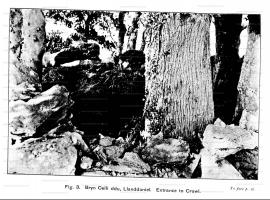
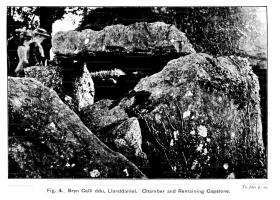
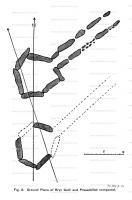
Honourable Society of Cymmrodorion 1910. Figure 6. Ground Plans of Bryn Celli Ddu Burial Mound [Map] and Presaddfed Burial Chambers [Map].
Archaeologia Cambrensis 1931 Page 216. The Chambered Cairn Of Bryn Celli Ddu [Map]. By W. J. Hemp, F.S.A.
Archaeologia Cambrensis 1969 Page 17. Bryn Celli Ddu [Map], Anglesey. A Reinterpretation By Claire O'Kelly.