


The History of William Marshal was commissioned by his son shortly after William’s death in 1219 to celebrate the Marshal’s remarkable life; it is an authentic, contemporary voice. The manuscript was discovered in 1861 by French historian Paul Meyer. Meyer published the manuscript in its original Anglo-French in 1891 in two books. This book is a line by line translation of the first of Meyer’s books; lines 1-10152. Book 1 of the History begins in 1139 and ends in 1194. It describes the events of the Anarchy, the role of William’s father John, John’s marriages, William’s childhood, his role as a hostage at the siege of Newbury, his injury and imprisonment in Poitou where he met Eleanor of Aquitaine and his life as a knight errant. It continues with the accusation against him of an improper relationship with Margaret, wife of Henry the Young King, his exile, and return, the death of Henry the Young King, the rebellion of Richard, the future King Richard I, war with France, the death of King Henry II, and the capture of King Richard, and the rebellion of John, the future King John. It ends with the release of King Richard and the death of John Marshal.
Available at Amazon in eBook and Paperback format.
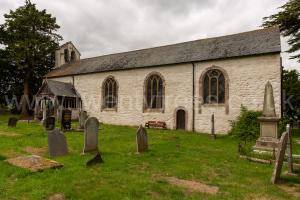
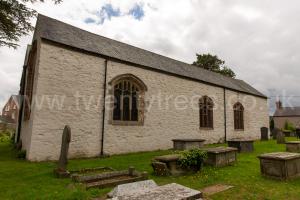
St Saeran's Church, Llanynys is in Llanynys.
St Saeran's Church, Llanynys [Map]. Exterior.
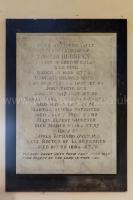
St Saeran's Church, Llanynys [Map]. Interior.
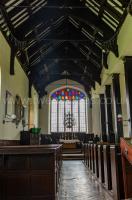
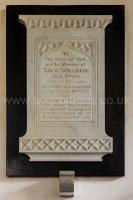
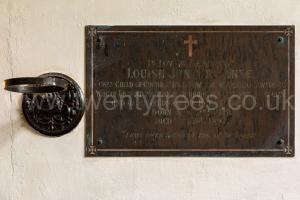
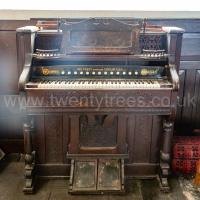
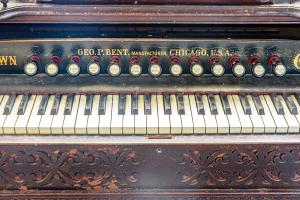
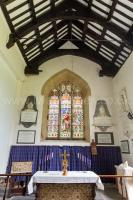
Around 550 St Saeran's Church, Llanynys [Map] was founded in the very centre of Clwyd. Llan means enclosure, 'Ynys' means island, or meadows, so Island Church, or Church in the Water Meadows, attesting to it regularly being surrounded by water. Locals remember it being only accessible by boat when the fields surrounding it were flooded. Little is known about St Saeran to whom the church is dedicated. A Saranus is mentioned in a letter of 640 from Pope John IV to the doctors and Abbots of Ireland but it is not certain if this refers to St Saeran. By 1402 there was a "clas", meaning a college of clergy, at St Saeran's [Map]
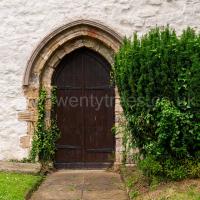
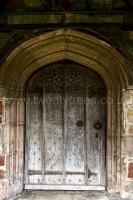
Before 1220. St Saeran's Church, Llanynys [Map]. West Door.
Around 1282 St Saeran's Church, Llanynys [Map] suffered significant damage by English troops during the Welsh Wars of Edward I. Compensation was paid.
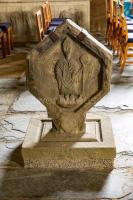
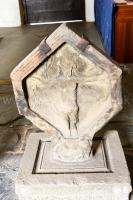
Around 1400. St Saeran's Church, Llanynys [Map]. Considered by some to be earlier. Top of the cross that marked the location of St Saeran's grave.
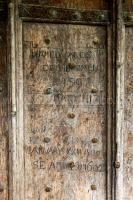
Around 1420. St Saeran's Church, Llanynys [Map]. West door with graffiti.
Jean de Waurin's Chronicle of England Volume 6 Books 3-6: The Wars of the Roses
Jean de Waurin was a French Chronicler, from the Artois region, who was born around 1400, and died around 1474. Waurin’s Chronicle of England, Volume 6, covering the period 1450 to 1471, from which we have selected and translated Chapters relating to the Wars of the Roses, provides a vivid, original, contemporary description of key events some of which he witnessed first-hand, some of which he was told by the key people involved with whom Waurin had a personal relationship.
Available at Amazon in eBook and Paperback format.
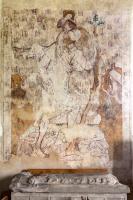
1430. St Saeran's Church, Llanynys [Map]. Wall painting of St Christopher. Considered to be the finest in Wales. Discovered under plaster in 1967.
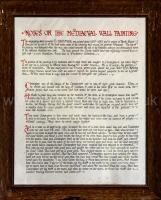
After 1709. St Saeran's Church, Llanynys [Map]. Graves and monuments to the Lloyd family.
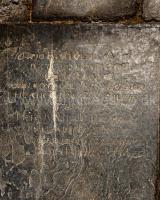
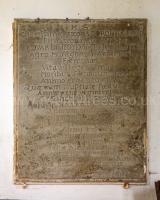
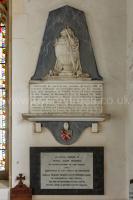
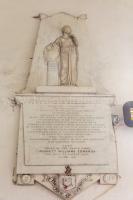
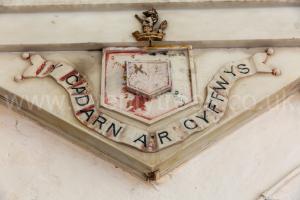
After 1800. St Saeran's Church, Llanynys [Map]. Monuments to the Edwards family.
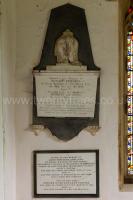
On 8th October 1827 Peter Ellis Eyton was baptised at St Saeran's Church, Llanynys [Map].
On 19th June 1878 Peter Ellis Eyton (age 50) died at Rhyl Hospital. He was buried at St Saeran's Church, Llanynys [Map].
After 19th June 1878. St Saeran's Church, Llanynys [Map]. Monument to Peter Ellis Eyton (deceased) sculpted by Lunt of Rhyl.


After 19th December 1916. St Saeran's Church, Llanynys [Map]. Grave in the churchyard to Tom Jones Railway Guard who was killed in a Railway Accident at Wigan Railway Station:
"In this case the 10 p.m. passenger train from Euston after arrival at the down fast platform line was drawn forward past No. 4 signal-box to be backed into No 5 bay line, and just as it was being set back it was run into in the rear by the 11.15 p.m. express passenger train from Euston to Edinburgh. The guard of the 10 p.m. train was killed as was also a sorter in a postal van of the 11.15 pm. train. Five post office officials and two passengers were injured, also the fireman of the 10 p.m. train, the driver of the assisting engine, the driver and fireman of the train engine, and the assistant guard of the 11.15 p.m. train."