


Text this colour links to Pages. Text this colour links to Family Trees. Text this colour are links that are disabled for Guests.
Place the mouse over images to see a larger image. Click on paintings to see the painter's Biography Page. Mouse over links for a preview. Move the mouse off the painting or link to close the popup.
All About History Books
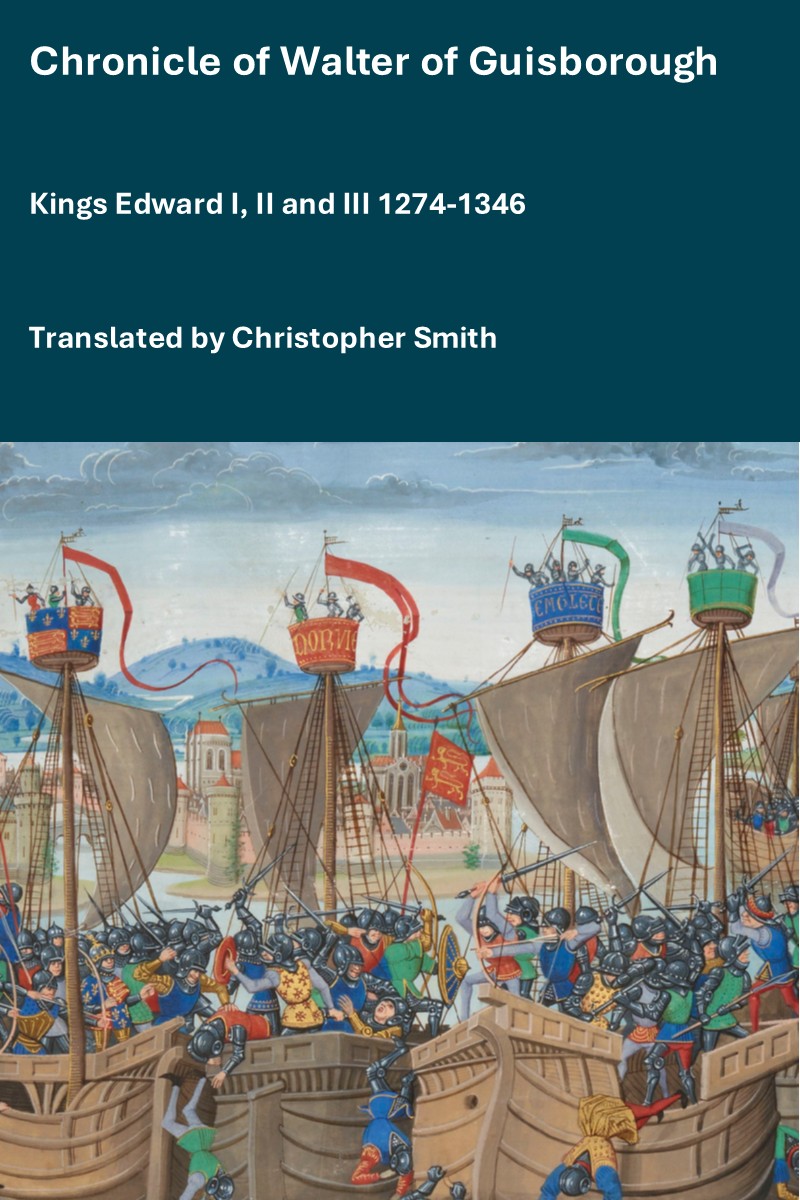
The Chronicle of Walter of Guisborough, a canon regular of the Augustinian Guisborough Priory, Yorkshire, formerly known as The Chronicle of Walter of Hemingburgh, describes the period from 1066 to 1346. Before 1274 the Chronicle is based on other works. Thereafter, the Chronicle is original, and a remarkable source for the events of the time. This book provides a translation of the Chronicle from that date. The Latin source for our translation is the 1849 work edited by Hans Claude Hamilton. Hamilton, in his preface, says: "In the present work we behold perhaps one of the finest samples of our early chronicles, both as regards the value of the events recorded, and the correctness with which they are detailed; Nor will the pleasing style of composition be lightly passed over by those capable of seeing reflected from it the tokens of a vigorous and cultivated mind, and a favourable specimen of the learning and taste of the age in which it was framed." Available at Amazon in eBook and Paperback.
1260 Annals Dunstable is in Late Medieval Books.
1260. In the year of grace 1260.Henry King of England (age 52), son of King John, etc.
Original Latin Text:
Anno gratiae MCCLX. Henricus rex Angliae, filius regis Johannis, pace cum rege Franciae, ibidem per longum tempus traxit; nec in Angliam redire curavit, donec episcopi et magnates Angliae ei literatorie mandaverunt quod reverti in Angliam properaret; quod si non faceret, ad placitum suum in Anglia non rediret. Quo audito, rex in se reversus, in Angliam rediit; sed quidam malitiosi falsis rumoribus inter patrem et filium suum Edwardum discordiam seminavervmt, asserentes quod dictus Edwardus et consiliarii sui guerram domino regi movere procurarunt; propter quod dominus rex supra modum iratus, multos milites de partibus transmarinis usque Londoniam secum adduxit; et eis ultra pontem dimissis in partibus Sureiae, ipse civitatem Londonise ingressus est, et ibi aliquandiu moram fecit, portis civitatis firmatis et seratis, apposuit custodes, ut nullus nisi ab eo licentiatus ingrederetur.
Comes vero Gloverni, et Johannes Maunsel, et quidam alii qui de concilio regis fuerunt, ad placitum suum ingressum et egressum habuerunt.
Rex vero proliibuit, ne filius suus Edwardus, nec aliquis qui de consilio suo extiterat, coram ipso venirent, dicens, "Coram me non appareat filius mens Edwardus, quia si eum videro, quin ipsum osculer me non cohibebo.".
Tandem, amore paterno commotus, et magnatum precibus devictus, ipsum ad osculum pacis recepit, et regina mater sua similiter, quae, ut dicebatur, causa totius malitis extiterat.
Dum ista aguntur, quantos honores et quantas expensas, omnibus qui interesse voluerint, dominus Edwardus fecerit, lingua vix potest explicare.
 Become a Member via our Buy Me a Coffee page to read more.