


Text this colour links to Pages. Text this colour links to Family Trees. Text this colour are links that are disabled for Guests.
Place the mouse over images to see a larger image. Click on paintings to see the painter's Biography Page. Mouse over links for a preview. Move the mouse off the painting or link to close the popup.
Augustinian is in Religious Buildings by Order.
Walsingham Priory [Map] was an Augustinian Canons Regular Monastery founded in 1101.
In 1104 Little Dunmow Priory [Map] was founded as an Augustinian Church by Juga de Baynard, dedicated to the Blessed Virgin Mary and consecrated by Maurice, bishop of London. Juga was the widow of Ralph Baynard, baron of Little Dunmow, sheriff of Essex and builder of Baynard's Castle [Map].
Around 1121 Richard de Belmeis, Bishop of London, founded the Augustinian St Osyth's Priory [Map].
Blythburgh Priory [Map] was an Augustinian Priory founded around 1125. It was among the first Augustinian houses in England and began as a cell of St Osyth's Priory [Map] in Essex.
Newburgh Priory, North Yorkshire [Map] was founded around 1142 as an Augustinian house by Roger D'Aubigny 4th Baron Thirsk (age 22).

Around 1150 Tiptree Priory [Map] was an Augustinian Priory founded by the local Tregoz family. The priory church was dedicated to Saints Mary and Nicholas. The Priory was suppressed in 1525 when it was granted to Cardinal Thomas Wolsey who granted it to Cardinal's College, Oxford (Christ Church College, Oxford University) and then to his college at Ipswich.
1151. Adeliza (age 48), queen of Henry I and subsequently wife of William d'Albigny and countess of Arundel, sometime before 1151 gave a small parcel of land on the east bank of the River Arun for the support of two or three chaplains who were to live under monastic rules, to celebrate daily in the chapel of St. Bartholomew-which was to be built there; and were further to keep in repair the causeway and wooden bridge across the river, for which purpose the earl of Arundel granted them leave to take wood in his forest- the stone for the causeway being obtained close at hand; and to maintain a hospital or hostelry for poor travellers. The land on which the hospital, or Augustinian priory, was built, was called Pynham, but the priory was more usually known as 'the Causeway' (de Calceto, la Chaucée).
Around 1174 St Thomas' Priory, Stafford [Map] was a Augustinian Priory founded by Gerard fitz-Brian, a local landowner and burgess, and settled by canons from Darley Abbey, Derbyshire [Map].
Stonely Priory [Map] was an Augustinian Priory, established before 1274. It was dissolved in 1536.
Chacombe Priory [Map] was an Augustinian Prioriry founded before 1189 by Hugh of Chalcombe. Hugh gave the priory endowments including a yardland at South Newington.[3] In about 1225 the priory's property included eight tenements in Banbury, seven of which it retained until the Dissolution of the Monasteries in the 1530s.
Chacombe Priory, Banbury [Map] was an Augustinian Priory founded around 1170.
All About History Books
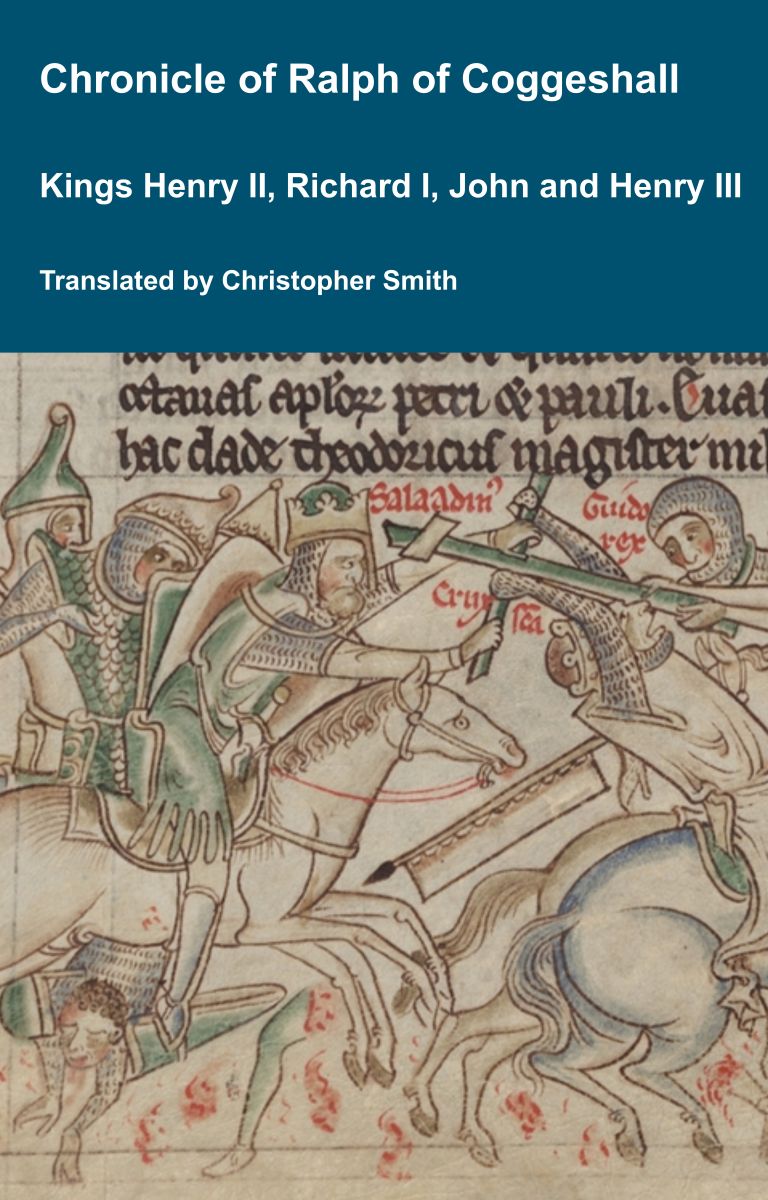
The Chronicle of Abbot Ralph of Coggeshall describes the reigns of Kings Henry II, Richard I, John and Henry III, providing a wealth of information about their lives and the events of the time. Ralph's work is detailed, comprehensive and objective. We have augmented Ralph's text with extracts from other contemporary chroniclers to enrich the reader's experience. Available at Amazon in eBook and Paperback.
Wroxton Abbey [Map] was an Augustinian Priory.
Burscough Priory [Map] was an Augustinian Priory founded by Robert Fitz-Henry, Lord of Lathom, in 1190 and dissolved around 1536.