

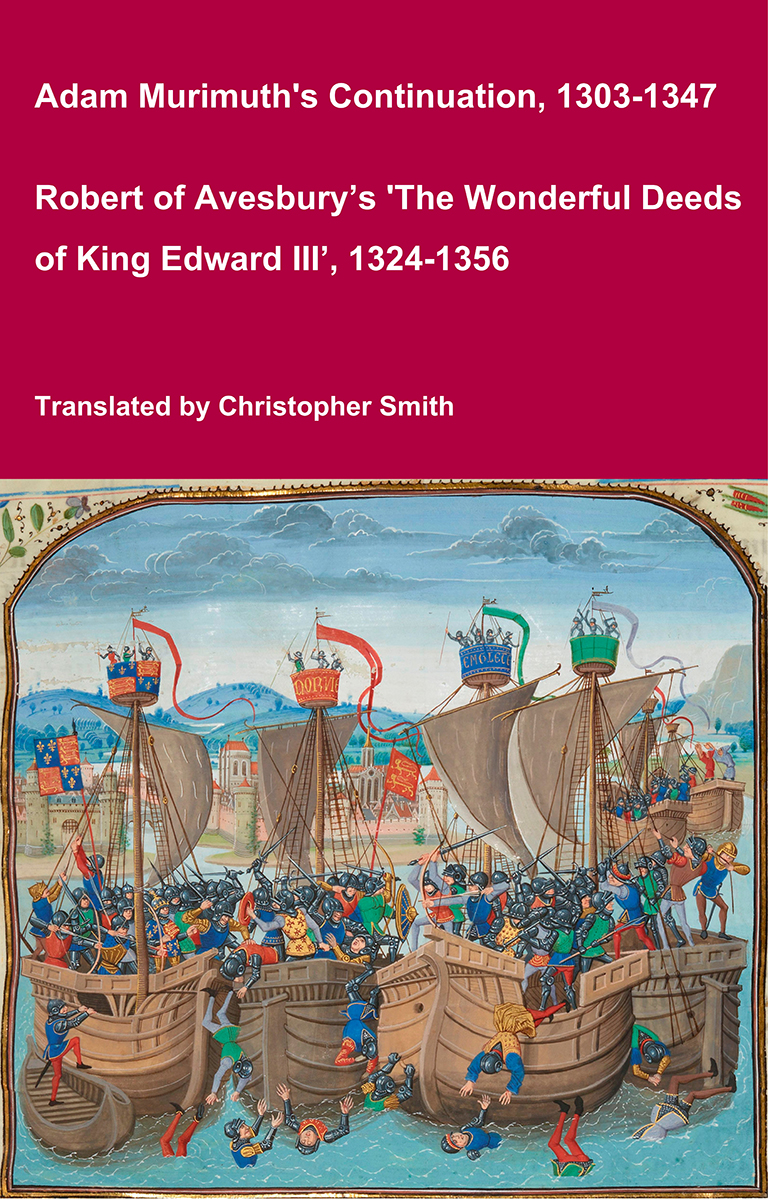
Adam Murimuth's Continuation and Robert of Avesbury’s 'The Wonderful Deeds of King Edward III'
This volume brings together two of the most important contemporary chronicles for the reign of Edward III and the opening phases of the Hundred Years’ War. Written in Latin by English clerical observers, these texts provide a vivid and authoritative window into the political, diplomatic, and military history of fourteenth-century England and its continental ambitions. Adam Murimuth Continuatio's Chronicarum continues an earlier chronicle into the mid-fourteenth century, offering concise but valuable notices on royal policy, foreign relations, and ecclesiastical affairs. Its annalistic structure makes it especially useful for establishing chronology and tracing the development of events year by year. Complementing it, Robert of Avesbury’s De gestis mirabilibus regis Edwardi tertii is a rich documentary chronicle preserving letters, treaties, and official records alongside narrative passages. It is an indispensable source for understanding Edward III’s claim to the French crown, the conduct of war, and the mechanisms of medieval diplomacy. Together, these works offer scholars, students, and enthusiasts a reliable and unembellished account of a transformative period in English and European history. Essential for anyone interested in medieval chronicles, the Hundred Years’ War, or the reign of Edward III.
Available at Amazon in eBook and Paperback format.
Anglo-Saxon Chronicle. 867. This year the army went from the East-Angles over the mouth of the Humber to the Northumbrians, as far as York. And there was much dissension in that nation among themselves; they had deposed their king Osbert, and had admitted Aella, who had no natural claim.
Anglo-Saxon Chronicle. 21st March 867. Late in the year, however, they returned to their allegiance, and they were now fighting against the common enemy; having collected a vast force, with which they fought the army [Battle of York] at York [Map]; and breaking open the town, some of them entered in. Then was there an immense slaughter of the Northumbrians, some within and some without; and both the kings [Osberht King of Northumbria and Ælla King of Northumbria] were slain on the spot. The survivors made peace with the army.
On 21st March 867 Osberht King of Northumbria and Ælla King of Northumbria were killed during the Battle of York.