

Abbot John Whethamstede’s Chronicle of the Abbey of St Albans
Abbot John Whethamstede's Register aka Chronicle of his second term at the Abbey of St Albans, 1451-1461, is a remarkable text that describes his first-hand experience of the beginning of the Wars of the Roses including the First and Second Battles of St Albans, 1455 and 1461, respectively, their cause, and their consequences, not least on the Abbey itself. His text also includes Loveday, Blore Heath, Northampton, the Act of Accord, Wakefield, and Towton, and ends with the Coronation of King Edward IV. In addition to the events of the Wars of the Roses, Abbot John, or his scribes who wrote the Chronicle, include details in the life of the Abbey such as charters, letters, land exchanges, visits by legates, and disputes, which provide a rich insight into the day-to-day life of the Abbey, and the challenges faced by its Abbot.
Available at Amazon in eBook and Paperback format.
In 1903 Doris Emerson Chapman was born.
On 2nd June 1913 [her future husband] Alexander Keiller (age 23) and Florence Marianne Phil-Morris (age 30) were married. She the daughter of Philip Richard Morris and Catherine Evans.
After 1918 [her future husband] Alexander Keiller (age 28) and Florence Marianne Phil-Morris (age 35) were divorced.
On 29th February 1924 [her future husband] Alexander Keiller (age 34) and Veronica Mildred Liddell (age 24) were married.
In 1929 Doris Emerson Chapman (age 26) exhibited two paintings with the East London Group in their first show. One of the paintings was priced by Lefevre at 17 guineas,
An Innkeepers Diary. Doris Chapman (age 27)
A most pretty and remarkable tall girl, Doris Emerson Chapman, with hips up to her armpits, upon which she rests her hand, walking or standing, was brought here to lunch by one of the odd Pete Brown family, where she paints curved-backed shire horses, in face herself rather horse. Her theory is that children needn't be told by their parents what is right and wrong, because they know it themselves instinctively, 'I knew perfectly well when I was being mean or loathsome long before my parents told me. All a child wants is sympathy.' Let her at once drop the shire horse and start a rare and happy stud of her own.
Diary of Virginia Woolf. Friday 27th May 1932. Last night at Adrian's evening. Zuckerman on apes. Doris Chapman (age 29) sitting on the floor.9 I afraid of Eddy coming in—I wrote him a sharp, but well earned, letter. Adrian so curiously reminiscent—will talk of his school of Greece of the past as if nothing had happened in between: a queer psychological fact in him—this dwelling on the past, when there's his present & his future all round him: D.C. to wit, & Karin coming in late, predacious, struggling, never amenable or comforting as poor woman no doubt she knows: deaf, twisted, gnarled, short, stockish—baffled, still she comes. Dick Strachey. All these cold elements of a party not mingling. L. & I talk with some effort. Duncan wanders off. Nessa gone to Tarzan.10 We meet James & Alix in the door. Come & dine says James with the desire strong in him I think to keep hold of Lytton. Monkeys can discriminate between light & dark: dogs cant. Tarzan is made largely of human apes. People have libraries of wild beast 'shots' let out on hire.
Note 9. Solly Zuckerman (b. 1904 in S. Africa), zoologist and from 1928-32 Demonstrator in Anatomy at University College, London, had just published The Social Life of Monkeys and Apes. Doris Chapman, with whom Adrian had fallen in love, was a painter currently showing her work at the Wertheim Gallery.
Note 10. Richard (Dick) Strachey (1902-76), writer, elder son of Lytton's brother Ralph. The 'screen sensation' Tartan the Ape Man, with Johnny Weissmuller and Maureen O'Sullivan, was showing at the Empire Leicester Square.
Diary of Virginia Woolf. Monday 13th June 1932. Back from a good week end at Rodmell—a week end of no talking, sinking at once into deep safe book reading; & then sleep: clear transparent; with the may tree like a breaking wave outside; & all the garden green tunnels, mounds of green: & then to wake into the hot still day, & never a person to be seen, never an interruption: the place to ourselves: the long hours. To celebrate the occasion I bought a little desk & L. a beehive, & we drove to the Lay; & I did my best not to see the cement sheds. The bees swarmed. Sitting after lunch we heard them outside; & on Sunday there they were again hanging in a quivering shiny brown black purse to Mrs Thompsett's tombstone. We leapt about in the long grass of the graves, Percy all dressed up in mackintosh, & netted hat. Bees shoot whizz, like arrows of desire: fierce, sexual; weave cats cradles in the air; each whizzing from a string; the whole air full of vibration: of beauty, of this burning arrowy desire; & speed: I still think the quivering shifting bee bpg the most sexual & sensual symbol. So home, through vapours, tunnels, caverns of green: with pink & yellow glass mounds in gardens— rhododendrons. To Nessa's. Adrian has told Karin that he must separate She demurs. They are to start separate houses, he says, in the autumn.
Last week was such a scrimmage: oh so many people: among them Doris [Chapman] (age 29) & Adrian: she like a dogfish: that circular slit of a mouth in a pale flesh: & an ugly rayed dress: but said by Nessa to be nice. Why the bees should swarm round her, I cant say. Now Vita rings up: may she & Harold dine tonight: then Ethel: I look ahead to my fortnights week end.
Diary of Virginia Woolf. Friday 8th July 1932. And so I fainted, at the Ivy: & had to be led out by Clive. A curious sensation. Feeling it come on; sitting still & fading out: then Clive by my side & a woman with salts. And the odd liberation of emotion in the cab with Clive; & the absolute delight of dark & bed: after that stony rattling & heat & Frankie shouting; & things being churned up, removed.
I write this on a blazing morning, because L. is instructing Miss C[ashin]. how to arrange the books: so that I cant correct articles. "Every- where I look everything is hopeless.... Either the Northern Saga ought not to be here at all—or it ought to be in the other room.... (John is ill: publishing day yesterday; Harold drivelling snapping, when I hoped for 'serious criticism'—why go on hoping?) the whole of thats going over—Here are 3 things of Nature has no tune ofwh. we dont sell a copy a year..."4
Oh dear, I've twenty minutes to use; & cant 'correct' any more. What a fling I shall have into fiction & freedom when this is off! At once, an American comes to ask me to consider writing articles for some huge figure. And (hushed be this said) I sent Nessa a cheque for £100 last night: & Leonard gave his mother £50, & Philip [his youngest brother] £50. These are among the solid good things, I think: Nessa's £100 will buy her some release from worry, I hope: Clive saying they must spend £600 a year less. Roger to have his operation, said to be slight, tomorrow. Adrian fretted to death—almost to fainting in the street—must anyhow stumble in to Nessa's & ask for water & spend the evening—by the vagaries of his Doris (age 29). This is what Francis foretold: a girl of dubious morality, & to me like a codfish in her person. And there are fleas at M[onks].H[ouse].: to which we go; & black beetles here, & said to be mice also.
Note 4. The books referred to are The Northern Saga (1929) by E. E. Kellett and Nature Has No Tvne (1929) by Sylva Norman (HP Checklist nos. 198, 203). Harold Nicolson's review of V W 's and Hugh Walpole's Letters... appeared in the NS&N on 9 July 1932.

1934. Doris Emerson Chapman (age 31). Drawing of the artist's future husband [her future husband] Alexander Keiller (age 44).
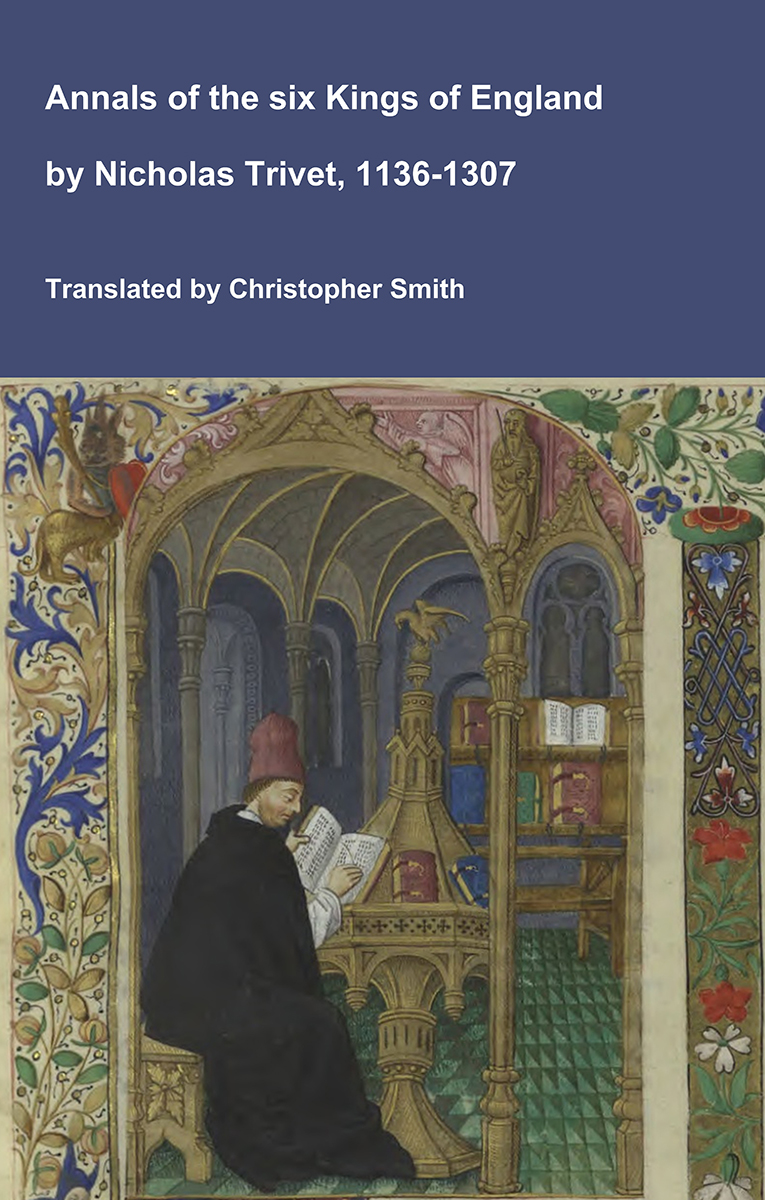
Annals of the six Kings of England by Nicholas Trivet
Translation of the Annals of the Six Kings of England by that traces the rise and rule of the Angevin aka Plantagenet dynasty from the mid-12th to early 14th century. Written by the Dominican scholar Nicholas Trivet, the work offers a vivid account of English history from the reign of King Stephen through to the death of King Edward I, blending political narrative with moral reflection. Covering the reigns of six monarchs—from Stephen to Edward I—the chronicle explores royal authority, rebellion, war, and the shifting balance between crown, church, and nobility. Trivet provides detailed insight into defining moments such as baronial conflicts, Anglo-French rivalry, and the consolidation of royal power under Edward I, whose reign he describes with particular immediacy. The Annals combines careful year-by-year reporting with thoughtful interpretation, presenting history not merely as a sequence of events but as a moral and political lesson. Ideal for readers interested in medieval history, kingship, and the origins of the English state, this chronicle remains a valuable and accessible window into the turbulent world of the Plantagenet kings.
Available at Amazon in eBook and Paperback format.
In 1934 [her future husband] Alexander Keiller (age 44) and Veronica Mildred Liddell (age 34) were divorced.

1937. Doris Emerson Chapman (age 34). "West Kennet Long Barrow [Map]. Age 35. Height 5.7."
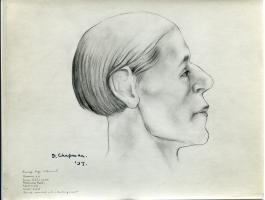
1937. Doris Emerson Chapman (age 34). "Bronze Age Interment. Barrow 20, Susan Gibb's Walk, Rushmore Park. Adult male, Height 5.4.5".
On 16th November 1938 Alexander Keiller (age 48) and Doris Emerson Chapman (age 35) were married.
In 1951 Alexander Keiller (age 61) and Doris Emerson Chapman (age 48) were divorced.
In or after 1951 [her former husband] Alexander Keiller (age 61) and Gabrielle Muriel Ritchie (age 42) were married. His fourth marriage; her third.
On 29th October 1955 [her former husband] Alexander Keiller (age 65) died.
In 1990 Doris Emerson Chapman (age 87) died.
