

Chronicle of Abbot Ralph of Coggeshall
The Chronicle of Abbot Ralph of Coggeshall (Chronicon Anglicanum) is an indispensable medieval history that brings to life centuries of English and European affairs through the eyes of a learned Cistercian monk. Ralph of Coggeshall, abbot of the Abbey of Coggeshall in Essex in the early 13th century, continued and expanded his community’s chronicle, documenting events from the Norman Conquest of 1066 into the tumultuous reign of King Henry III. Blending eyewitness testimony, careful compilation, and the monastic commitment to record-keeping, this chronicle offers a rare narrative of political intrigue, royal power struggles, and social upheaval in England and beyond. Ralph’s work captures the reigns of pivotal figures such as Richard I and King John, providing invaluable insights into their characters, decisions, and the forces that shaped medieval rule. More than a simple annal, Chronicon Anglicanum conveys the texture of medieval life and governance, making it a rich source for scholars and readers fascinated by English history, monastic authorship, and the shaping of the medieval world.
Available at Amazon in eBook and Paperback format.
On 20th March 1836 Edward Poynter 1st Baronet was born.
The Diary of George Price Boyce 1859. 30th April 1859. Found Simeon Solomon [aged 18] and Poynter [aged 23] in Burges' room and appropriated (by leave) a caricature by Simeon of Morris and his wife.


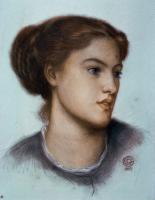
1864. Edward Poynter 1st Baronet [aged 27]. "The Peacock Fan" aka "Portrait of a Lady".
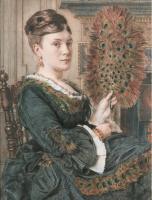
Before 5th February 1865. Edward Poynter 1st Baronet [aged 28]. "The Peacock Fan". Model Ellen Smith. See entry in George Price Boyce's diary.
The Diary of George Price Boyce 1865. 5th February 1865. Called on Poynter [aged 28] to see his competition drawings for the Old Water Colour Society. One of them, that with Ellen Smith with fan in her hand [See Painting], very good. Called on Jopling.


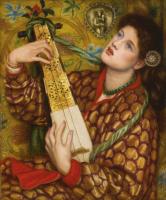
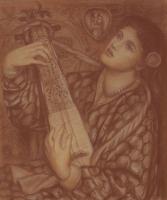

In 1866 Edward Poynter 1st Baronet [aged 29] and Agnes Macdonald Lady Poynter [aged 23] were married.

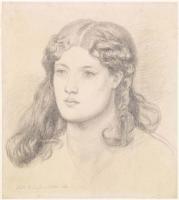
After 1866. Edward Poynter 1st Baronet [aged 29]. Portrait of his wife Agnes Macdonald Lady Poynter [aged 23].
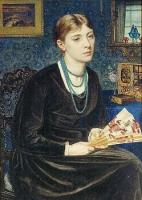
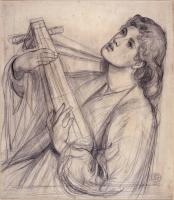
After 1866. Edward Poynter 1st Baronet [aged 29]. Portrait of his sister-in-law Louisa Macdonald [aged 21].
Louisa Macdonald: In 1845 she was born to Reverend George Browne Macdonald and Hannah Jones at Birmingham, Warwickshire. In 1925 she died.
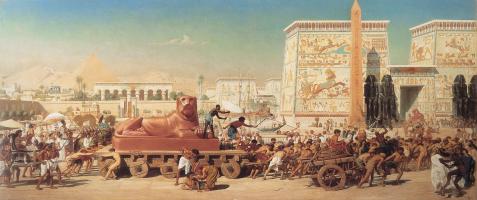
1867. Edward Poynter 1st Baronet [aged 30]. "Israel in Egypt".
On 26th September 1867 [his son] Ambrose Macdonald Poynter 2nd Baronet was born to Edward Poynter 1st Baronet [aged 31] and [his wife] Agnes Macdonald Lady Poynter [aged 24].
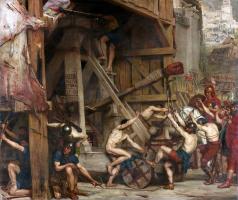
1868. Edward Poynter 1st Baronet [aged 31]. "Catapulta".
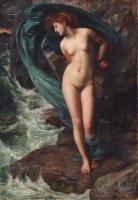
1869. Edward Poynter 1st Baronet [aged 32]. "Andromeda".

1870. Edward Poynter 1st Baronet [aged 33]. Portrait of [his sister-in-law] Georgiana Macdonald Lady Burne-Jones [aged 29].

1881. Edward Poynter 1st Baronet [aged 44]. Portrait of Edward Stuart-Wortley-Mackenzie 1st Earl Wharncliffe [aged 53].
In 1882 [his son] Hugh Edward Poynter 3rd Baronet was born to Edward Poynter 1st Baronet [aged 45] and [his wife] Agnes Macdonald Lady Poynter [aged 39]. Some sources refer to his being the grandson of the first Baronet Edward Poynter 1st Baronet; the fifteen year age betwen Hugh Edward and his older brother Ambrose Macdonald Poynter 2nd Baronet [aged 14] may be the cause of this?

1882. Edward Poynter 1st Baronet [aged 45]. Portrait of Emilie Charlotte Le Breton "Lily Langtry" [aged 28].
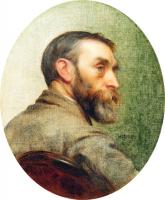
1882. Edward Poynter 1st Baronet [aged 45]. Self-Portrait.
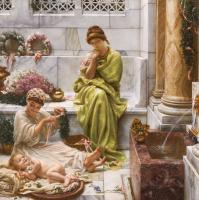
1887. Edward Poynter 1st Baronet [aged 50]. "Corner of the Marketplace".
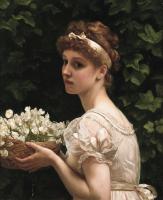
1890. Edward Poynter 1st Baronet [aged 53]. "Pea Blossoms".
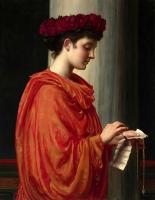
1894. Edward Poynter 1st Baronet [aged 57]. "Barine".
The London Gazette 27457. Whitehall, July 24, 1902. The King has been pleased to direct the preparation of Warrants under His Majesty's Royal Sign Manual, authorizing Letters Patent to be passed under the Great Seal of the United Kingdom of Great Britain and Ireland, conferring the dignity of a Baronet of the said United Kingdom upon each of the following Gentlemen and the heirs male of their respective bodies lawfully begotten, viz.:—
The Right Honourable Andrew Marshall Porter [aged 65], of Merrion-square, in the city and county of Dublin, Master of the Rolls of Ireland;
The Right Honourable Sir Joseph Cockfield Dimsdale [aged 53], of Goldsmiths, Langdon Hills, in the county of Essex, and of Lancaster-street, in the borough of Paddington, in the county of London, Knight, Lord Mayor of the city of London;
Sir Edward Ridley Colborne Bradford, of South Audley-street, in the city-of Westminster, in the county of London, Knight Grand Cross of the Most Honourable Order of the Bath, Knight Commander of the Most Exalted Order of the Star of India. Chief Commissioner of the Police in the Metropolis, Colonel Indian Staff Corps;
Sir Andrew Noble, of Ardmore and Ardardan Noble, in the parish of Cardross, in the county of Dumbarton, Knight Commander of the Most Honourable Order of the Bath;
Sir Francis Henry Evans, of Tubbendens, in the parish of Farnborough, in the county of Kent, Knight Commander of the Most Distinguished Order of St. Michael and St. George;
Sir Francis Henry LaKing, of Kensington, in the parish of Saint Mary Abbots, in the Royal Borough of Kensington, in the county of London, Knight Commander of the Royal Victorian Order, Doctor in Medicine, Member of the Royal College of Physicians of London, Physician in Ordinary to His Majesty;
Sir Thomas Johnstone Lipton, of Osidge, in the parish of Southgate, in the county of Middlesex, Knight Commander of the Royal Victorian Order;
Sir Frederick Treves, of Dorchester, in the county of Dorset, Knight Commander of the Royal Victorian Order, Companion of the Most Honourable Order of the Bath, Fellow of the Royal College of Surgeons of England; Honorary Serjeant-Surgeon to His Majesty;
Sir Charles Hubert Hastings Parry, of Highfnam Court, in the parish of Churcham, in the county of Gloucester, Knight, Doctor of Music;
Sir George Henry Lewis, of Portland-place, in the borough of Marylebone, in. the county of London, Knight;
Sir Edward John Poynter [aged 66], of Albert Gate, in the city of Westminster, in the county of London, Knight, President of the Royal Academy of Arts; [Note. [his wife] Agnes Macdonald Lady Poynter [aged 59] by marriage Lady Poynter of Albert Gate in Westminster in London]
Sir Thomas Jackson, of Stansted House, in the parish of Stansted, in the county of Essex, Knight;
Alexander Henderson, of Buscat Park, in the county of Berks, Esquire;
Robert Trotter Hermon Hodge, of Wyfold Court, in the Parish of Chickendon, in the county of Oxford, Esquire;
Philip Albert Muntz, of Dunsmore, near Rugby, in the parish of Clifton-on-Dunsmore, in the county of Warwick, Esquire;
Charles Benjamin Bright McLaren, of Bodnant, in the parish of Eglwysbach, in the county of Denbigh, Gwylgre, in the parish of Llauasa, in the county of Flint, and Hilders, in the parish of Shottermill, in the county of Surrey, Esquire, one of Ilis Majesty's Counsel learned in the Law; and
William Edward Murray Tomlinson, of Richmond-terrace,.Whitehall, in the city of Westminster, in the county of London, and of Preston, Heysham, and Bolton-le-Sands, in the County Palatine.of Lancaster, Esquire.
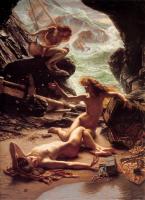
1903. Edward Poynter 1st Baronet [aged 66]. "The Cave of the Storm Nymphs".
New York Times 13 Nov 1904. 13th November 1904. VAL PRINSEP [deceased], R. A., DEAD. Well-Known English Artist Was Born in India in 1838.
LONDON, Nov. 12.—Valantine Cameron Prinsep, R. A., better known as Val Prinsep, Professor of Painting to the Royal Academy, died yesterday from the effects of an operation.
It was thought in 1896 that Val Prinsep would be elected President of the Royal Academy, but Sir Edward Poynter was [aged 68] the successful candidate.
Mr. Prinsep was born in India in 1838. but was educated in England, returning to the land of his birth in 1876 to paint what is perhaps his best-known work, the "Declaration of the Queen as Empress" at the famous Delhi Durbar. A pupil of Watts and Gleyre, Prinsep exhibited his first picture at the Academy in 1862, when he was twenty-four years old. He achieved rapid success and became an A. R. A. in and an R. A. in 1894. He was an author and playwright as well as a painter.
Mr. Prinsep married a daughter [Florence Leyland [aged 45]] of the late F. R. Leyland, the patron of Whistler and Rossetti. When Mr. Leyland died there was a good deal of criticism of the Prinseps because the "Peacock Room" in his London house was not preserved where the public could see it. This work of Whistler, who was a fellow-pupil of Prinsep under Gleyre, has recently been bought by an American.


In 1906 [his wife] Agnes Macdonald Lady Poynter [aged 63] died.

1909. Philip Burne-Jones 2nd Baronet [aged 47]. Portrait of Edward Poynter 1st Baronet [aged 72].

1911. Arthur Stockdale Cope [aged 53]. Portrait of Edward Poynter 1st Baronet [aged 74].
On 26th July 1919 Edward Poynter 1st Baronet [aged 83] died. His son Ambrose [aged 51] succeeded 2nd Baronet Poynter of Albert Gate in Westminster in London.