

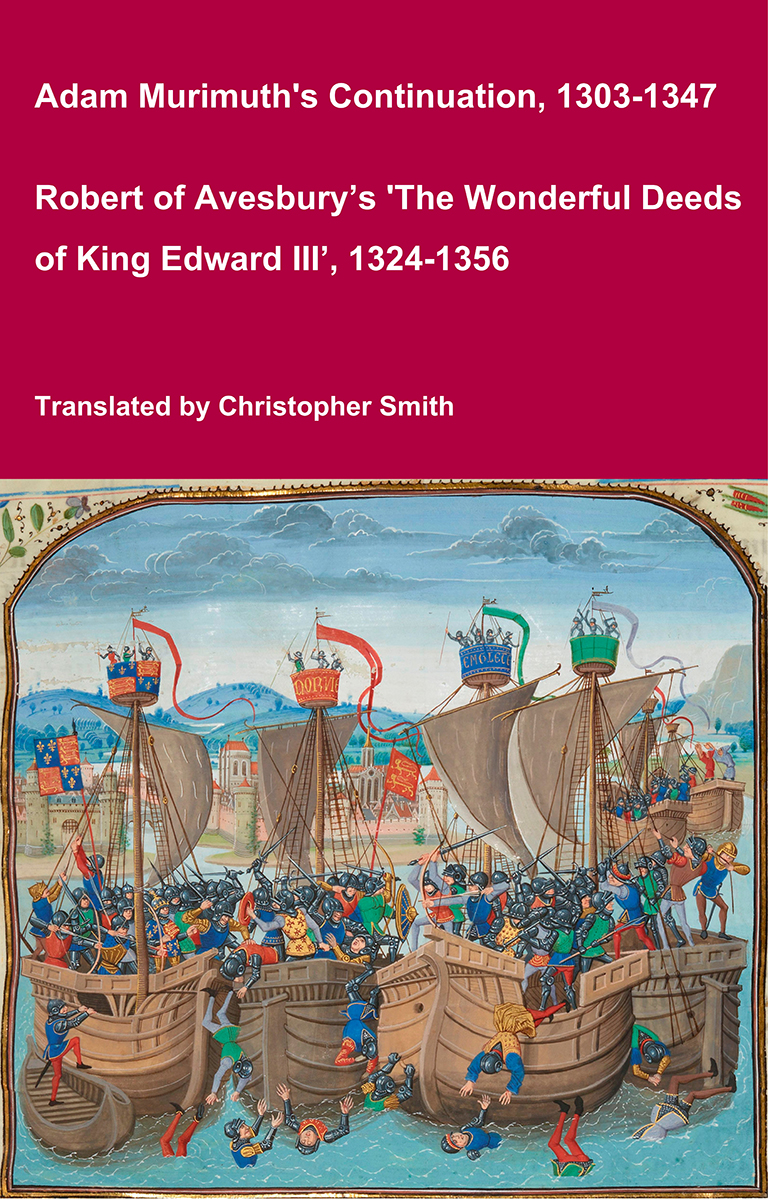
Adam Murimuth's Continuation and Robert of Avesbury’s 'The Wonderful Deeds of King Edward III'
This volume brings together two of the most important contemporary chronicles for the reign of Edward III and the opening phases of the Hundred Years’ War. Written in Latin by English clerical observers, these texts provide a vivid and authoritative window into the political, diplomatic, and military history of fourteenth-century England and its continental ambitions. Adam Murimuth Continuatio's Chronicarum continues an earlier chronicle into the mid-fourteenth century, offering concise but valuable notices on royal policy, foreign relations, and ecclesiastical affairs. Its annalistic structure makes it especially useful for establishing chronology and tracing the development of events year by year. Complementing it, Robert of Avesbury’s De gestis mirabilibus regis Edwardi tertii is a rich documentary chronicle preserving letters, treaties, and official records alongside narrative passages. It is an indispensable source for understanding Edward III’s claim to the French crown, the conduct of war, and the mechanisms of medieval diplomacy. Together, these works offer scholars, students, and enthusiasts a reliable and unembellished account of a transformative period in English and European history. Essential for anyone interested in medieval chronicles, the Hundred Years’ War, or the reign of Edward III.
Available at Amazon in eBook and Paperback format.
Around 1505 William Bill was born.
In 1551 William Bill [aged 46] was appointed Master of Trinity College, Cambridge University [Map].
In 1558 William Bill [aged 53] was appointed Masterof Trinity College, Cambridge University [Map].
In 1558 William Bill [aged 53] was appointed Almoner to Queen Elizabeth I of England and Ireland [aged 24].
Henry Machyn's Diary. 20th November 1558. The xx day of November dyd pryche at Powlles crosse doctur Bylle [aged 53], quen Elsabeth('s) chaplen, and mad a godly sermon.
Henry Machyn's Diary. 27th March 1559. The xxvij day of Marche dyd pryche at sant Mare Spyttyl doctur Bylle [aged 54] the quen('s) [aged 25] amner [almoner].
Henry Machyn's Diary. 9th April 1559. The ix day of Aprell dyd pryche at Powlles crosse [Map] doctur Bylle [aged 54] the quen('s) [aged 25] awmer, and declaryd warfor the byshopes whent to the Towre.
Henry Machyn's Diary. 23rd June 1559. The xxiij day of June was electyd vj nuw byshopes, com from beyond the see, master Parker [aged 54] bysshope of Canturbere, master Gryndall [aged 40] bysshope of London, docthur Score [aged 49] bysshope of Harfford, Barlow [aged 61] Chechastur, doctur Bylle of Salysbere [Note. Possibly a reference to William Bill [aged 54] although he wasn't Bishop of Salisbury, doctur Cokes [aged 66] (of) Norwyche [Note. He was elected but the Queen changed her mind and appointed him to Ely].


Henry Machyn's Diary. 6th March 1560. The vj of Marche dyd pryche at the court doctur Byll [aged 55] dene of Westmynster that day in the quen('s) chapell, the crosse and ij candylles bornyng and the tabulles standyng auter-wyse.
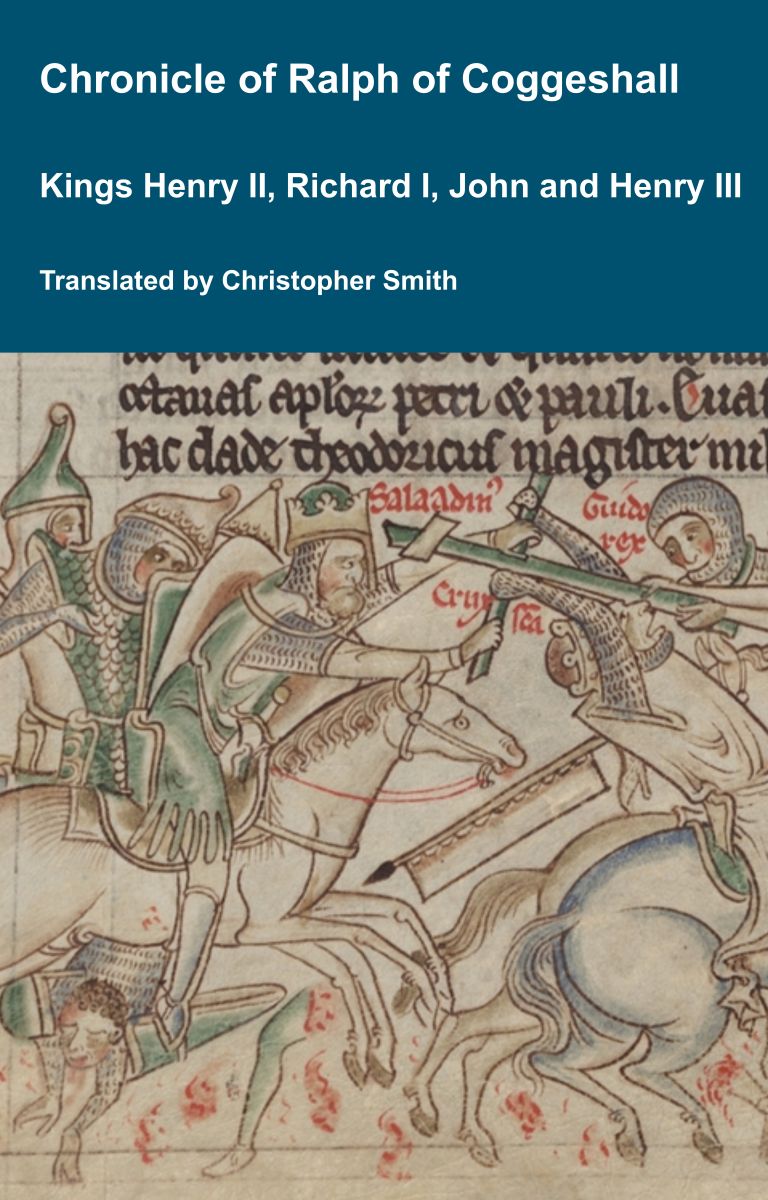
Chronicle of Abbot Ralph of Coggeshall
The Chronicle of Abbot Ralph of Coggeshall (Chronicon Anglicanum) is an indispensable medieval history that brings to life centuries of English and European affairs through the eyes of a learned Cistercian monk. Ralph of Coggeshall, abbot of the Abbey of Coggeshall in Essex in the early 13th century, continued and expanded his community’s chronicle, documenting events from the Norman Conquest of 1066 into the tumultuous reign of King Henry III. Blending eyewitness testimony, careful compilation, and the monastic commitment to record-keeping, this chronicle offers a rare narrative of political intrigue, royal power struggles, and social upheaval in England and beyond. Ralph’s work captures the reigns of pivotal figures such as Richard I and King John, providing invaluable insights into their characters, decisions, and the forces that shaped medieval rule. More than a simple annal, Chronicon Anglicanum conveys the texture of medieval life and governance, making it a rich source for scholars and readers fascinated by English history, monastic authorship, and the shaping of the medieval world.
Available at Amazon in eBook and Paperback format.
On 30th June 1560 William Bill [aged 55] was appointed Dean of St Paul's Cathedral.
On 15th July 1561 William Bill [aged 56] died. He was buried in the Chapel of St Benedict, Westminster Abbey [Map].
Henry Machyn's Diary. 20th July 1561. The xx day of July was bered in Westmynster abbay [Map] master Bylle [deceased] dene of Westmynster abbay and master of Etton and master (of sant John's) college in Cambryge, and cheyffe amner [almoner] to the quen('s) [aged 27] grace.
Note. P. 264. Burial of [William] Bill, dean of Westminster. His sepulchral brass remains in the abbey, and has been engraved, as also a portrait derived from it, for the series of portraits of the deans of Westminster which accompany their lives in Neale and Brayley's History of Westminster Abbey. See also an engraving in Dart, i. 101.