


Anne Boleyn. Her Life as told by Lancelot de Carle's 1536 Letter.
In 1536, two weeks after the execution of Anne Boleyn, her brother George and four others, Lancelot du Carle, wrote an extraordinary letter that described Anne's life, and her trial and execution, to which he was a witness. This book presents a new translation of that letter, with additional material from other contemporary sources such as Letters, Hall's and Wriothesley's Chronicles, the pamphlets of Wynkyn the Worde, the Memorial of George Constantyne, the Portuguese Letter and the Baga de Secrets, all of which are provided in Appendices.
Available at Amazon in eBook and Paperback format.
Barrow in Furness, Lancashire is in Lancashire.
Furness Abbey is also in Abbeys in England.
In 1123 Furness Abbey [Map] was founded by Stephen Count of Boulogne (age 29), the future King Stephen, as an Order of Savigny.
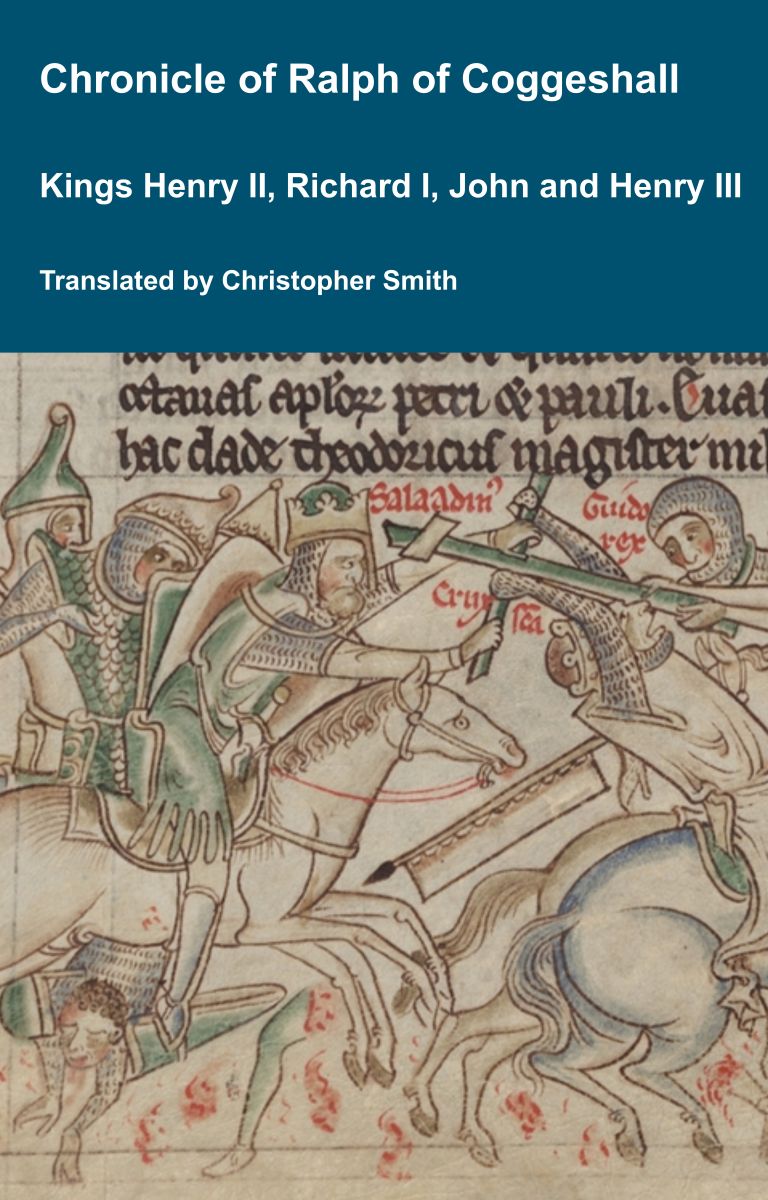 Chronicum Anglicanum by Ralph Coggeshall. 1139. Empress Matilda arrived in England. In the year 1140, King Stephen and Queen Matilda1 founded Coggeshall Abbey [Map], as well as the Abbey of Furness [Map], the Abbey of Longvilliers, and the Abbey of Faversham [Map], where their bodies were later buried. In the same year, a council was held at Coggeshall on the third day before the Nones of August [3rd August].
MCXXXIX. Venit imperatrix Mathildis in Angliam. mcxl. Facta est abbatia de Cogeshala a rege Stephano et regina Mathildi, qui etiam fundaverunt abbatiam de Furneis, et abbatiam de Lungviliers, et abbatiam de Favresham, ubi etiam corpora eorum humata sunt. Eodem anno convenit conventus apud Cogeshala tertio nonas Augusti.
Note 1. Matilda of Flanders, daughter of Eustace, Count of Boulogne, and Mary, daughter of King Malcolm III of Scotland and Margaret of Wessex. She was a sister of Edith aka Matilda, wife of King Henry I of England. Mary and King Stephen were married in 1125. They had three children: Eustace, died aged twenty-three in 1153, Matilda, died young and Marie who married Matthew of Metz in 1160.
In 1147 Furness Abbey [Map] passed to the Cistercians who enlarged and rebuilt the original ornate church.
by 1400 Furness Abbey [Map] had become the second richest and most powerful Cistercian abbeys in England, behind Fountains Abbey [Map].
In 1537 Furness Abbey [Map] was dissolved.
Vesta Monumenta. 1727. The ruins of Furness Abbey [Map] in Lancashire. Engraving by George Vertue (age 43) after an untraced drawing originally commissioned by John Montagu, 2nd Duke of Montague (age 37).


In 1848 the ruins of Furness Abbey [Map] were visited by Queen Victoria of the United Kingdom (age 28) with her lady-in-waiting Augusta Elizabeth Frederica Bruce (age 25).


Around 1855. Benjamin Brecknell Turner (age 40). Furness Abbey [Map].
Chronicle of Jean Molinet Chapter 158. [4th June 1487]1 King Edward, newly crowned in Ireland, arrived at Scanforth1 with a great force. Sir Edward de Hauteville, Lord of Scales, who supported King Henry, had come to a town named Lancaster, accompanied by six thousand men, to reinforce King Edward's army; but he was so relentlessly pursued from lodging to lodging, and driven back for three days straight, that he was forced to cross the forest of Nottingham in great haste. The Lord of Oxenford, the Lord of Salisbury and Talbot, the Lord of Astingham, Sir John Savage, and other great lords, accompanied by fifteen thousand men, after the arrival of the said Lord of Scales, and upon recognizing the strength of King Edward's army, recrossed the river with all speed, not daring to face his power, and fled like fugitives.
Le roy Édouard, nouvellement couronné en Irlande, arrive à Scanfort à grande puissance. Sire Édouard de Oudeville, seigneur d'Escalles, tenant parti pour le roy Henry, estoit venu à une ville nommée Lancastre, accompaignié de six mille hommes, pour secourir l'armée du roy Edouard; duquel il fut tellement poursuivi de logis en logis, et rebouté par trois jours continuels, qu'il fut contraint de passer la forest de Notinghen, à très grand hastė . Le seigneur de Occenfort, le seigneur de Saresbry et Tallebot, le seigneur d'Astinghen, messire Jehan Sauvaige, et aultres grands seigneurs, accompaignés de quinze mille hommes, lesquels, après la venue dudit seigneur d'Escales, congnoissant la disposition de l'armée du roy Edouard, repassèrent l'eaue à toute diligence, sans oser attendre sa puissance, et se rendirent comme fuitifs .
Note 1. Some sources say the 4th, some the 5th. The location "Scanfort" usually taken to mean "Piel Island [Map]", which given its size, is an unlikely landing point for the size of Simnel's army. "Carnforth" is a plausible alternative.
Calendar of State Papers Charles II Oct 1667. October 1667. 102. Proposals by Sir Thomas Strickland (age 45) to the Navy Comrs., to build three third-rate frigates in Foudray Pill, to be completed by 1 Aug. 1671, upon a similar contract to that of Mr. Baylie, of Bristol. [Adm. Paper.] Enclosing,.
102. i. Edward Tyldesley to Sam. Pepys (age 34). Robt. Withers (age 49) and the writer have viewed Foudray Pill, where they proposed to build ships for the King's service. Sends a draft sketch thereof, leaving the rest of the business to be transacted by his partners, Sir Thomas Strickland and Mr. Withers. Has such timber as all England cannot show. Lodge in the Forest of Meirscough, 1st October 1667.
102. ii. Sketch of Walney Island, the pill, bar, &c., in coloured chalks.


