

William of Worcester's Chronicle of England
William of Worcester, born around 1415, and died around 1482 was secretary to John Fastolf, the renowned soldier of the Hundred Years War, during which time he collected documents, letters, and wrote a record of events. Following their return to England in 1440 William was witness to major events. Twice in his chronicle he uses the first person: 1. when writing about the murder of Thomas, 7th Baron Scales, in 1460, he writes '… and I saw him lying naked in the cemetery near the porch of the church of St. Mary Overie in Southwark …' and 2. describing King Edward IV's entry into London in 1461 he writes '… proclaimed that all the people themselves were to recognize and acknowledge Edward as king. I was present and heard this, and immediately went down with them into the city'. William’s Chronicle is rich in detail. It is the source of much information about the Wars of the Roses, including the term 'Diabolical Marriage' to describe the marriage of Queen Elizabeth Woodville’s brother John’s marriage to Katherine, Dowager Duchess of Norfolk, he aged twenty, she sixty-five or more, and the story about a paper crown being placed in mockery on the severed head of Richard, 3rd Duke of York.
Available at Amazon in eBook and Paperback format.
Blickling Hall, Norfolk is in Blickling, Norfolk.
Blickling Hall, Norfolk [Map].

Before 5th November 1459 Blickling Hall, Norfolk [Map] was in the possession of John Fastolf [aged 79].
John Fastolf sold it to Geoffrey Boleyn [aged 53] who made it his country seat.
The estate passed to Alice Boleyn who married Robert Clere [aged 13]. Their grandson Edward Clere ran into debt and sold the estate to Henry Hobart 1st Baronet.
Around 1501 Queen Anne Boleyn of England was born to Thomas Boleyn 1st Earl Wiltshire and Ormonde [aged 24] and Elizabeth Howard Countess of Wiltshire and Ormonde [aged 21] at either Blickling Hall, Norfolk [Map] or Hever Castle, Kent [Map].
The year of her birth somewhat uncertain - see Life of Cardinal Wolsey Note 6 - as is the order of the birth of her and her two siblings.
See An Account of the Life of Anne Boleyn Note c and Note e.
See also letter from her father to Cromwell in which he describes his three children being born in or before the death of his father in 1505.
There are few accounts of the description of Anne Boleyn:
Letter of Simon Grynæus to Martin Bucer, 1531: "she is young, good looking, of a rather dark complexion".
Sanuto Diaries: "Madam Anne is not one of the handsomest women in the world; she is of middling stature, swarthy complexion, long neck, wide mouth, bosom not much raised, and in fact has nothing but the English King's great appetite, and her eyes, which are black and beautiful"
Nicholas Sander's 'Rise and Growth of the Anglican Schism': "Anne Boleyn was rather tall of stature, with black hair, and an oval face of a sallow complexion, as if troubled with jaundice. She had a projecting tooth under the upper lip, and on her right hand six fingers. There was a large wen [small cyst] under her chin, and therefore to hide its ugliness she wore a high dress covering her throat. In this she was followed by the ladies of the court, who also wore high dresses, having before been in the habit of leaving their necks and the upper portion of their persons uncovered. She was handsome to look at, with a pretty mouth, amusing in her ways, playing well on the lute, and was a good dancer. She was the model and the mirror of those who were at court, for she was always well dressed," She married 25th January 1533 her fifth cousin once removed King Henry VIII of England and Ireland, son of King Henry VII of England and Ireland and Elizabeth York Queen Consort England, and had issue.


Around 1503 George Boleyn Viscount Rochford was born to Thomas Boleyn 1st Earl Wiltshire and Ormonde [aged 26] and Elizabeth Howard Countess of Wiltshire and Ormonde [aged 23] at Blickling Hall, Norfolk [Map]. He married 1525 his sixth cousin Jane Parker Viscountess Rochford, daughter of Henry Parker 11th Baron Marshal 10th Baron Morley and Alice St John Baroness Marshal Baroness Morley.
On 15th June 1536 Edward Clere was born to Admiral John Clere [aged 25] and Anne Tyrrell at Blickling Hall, Norfolk [Map]. He married (1) 16th December 1554 Frances Fulmerston and had issue (2) 7th September 1580 Agnes Crane.
Around 1563 Edward Clere was born to Edward Clere [aged 26] and Frances Fulmerston [aged 23] at Blickling Hall, Norfolk [Map].
After 1605. The current Blickling Hall, Norfolk [Map] was built by Robert Lyminge after 1605 for Henry Hobart 1st Baronet [aged 45]. The estate passed through the Hobart family to John Hobart 2nd Earl Buckinghamshire. It then passed to his daughter Caroline Hobart Baroness Suffield who was married to William Assheton Harbord 2nd Baron Suffield. The couple did not have any issue. The estate then passed to Caroline's great-nephew William Schomberg Kerr 8th Marquess Lothian; grandson son of her sister Harriet Hobart Viscountess Belmore.
William Schomberg Kerr 8th Marquess Lothian: In 1832 he was born to John Kerr 7th Marquess Lothian and Cecil Chetwynd-Talbot Marchioness Lothian. On 14th November 1841 John Kerr 7th Marquess Lothian died at Blickling Hall, Norfolk [Map]. His son William succeeded 8th Marquess Lothian, 11th Earl Lothian, 9th Earl Lothian. He inherited the Blickling, Norfolk estate and made significant changes. On 12th August 1857 William Schomberg Kerr 8th Marquess Lothian and Constance Harriet Mahonesa Talbot Marchioness Lothian were married. She by marriage Marchioness Lothian. She the daughter of Henry John Chetwynd-Talbot 3rd Earl Talbot 18th Earl of Shrewsbury and Sarah Elizabeth Beresford Countess Talbot Shrewsbury Waterford. He the son of John Kerr 7th Marquess Lothian and Cecil Chetwynd-Talbot Marchioness Lothian. They were first cousins.
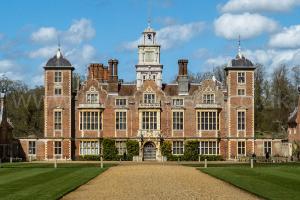
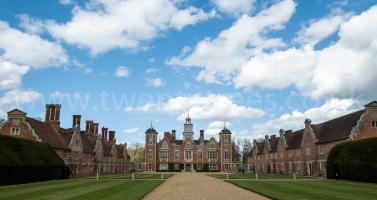
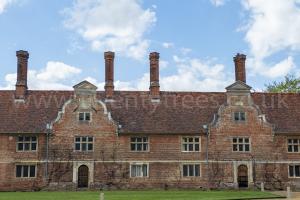


On 3rd August 1793 John Hobart 2nd Earl Buckinghamshire [aged 69] died. His half brother George [aged 61] succeeded 3rd Earl Buckinghamshire, 3rd Baron Hobart, 7th Baronet Hobart of Intwood in Norfolk. Albinia Bertie Countess Buckinghamshire [aged 54] by marriage Countess Buckinghamshire. Harriet Hobart Viscountess Belmore [aged 31] inherited Blickling Hall, Norfolk [Map].


On 15th June 1836 Constance Harriet Mahonesa Talbot Marchioness Lothian was born to Henry John Chetwynd-Talbot 3rd Earl Talbot 18th Earl of Shrewsbury [aged 32] and Sarah Elizabeth Beresford Countess Talbot Shrewsbury Waterford [aged 28] at Blickling Hall, Norfolk [Map]. She married 12th August 1857 her first cousin William Schomberg Kerr 8th Marquess Lothian, son of John Kerr 7th Marquess Lothian and Cecil Chetwynd-Talbot Marchioness Lothian.


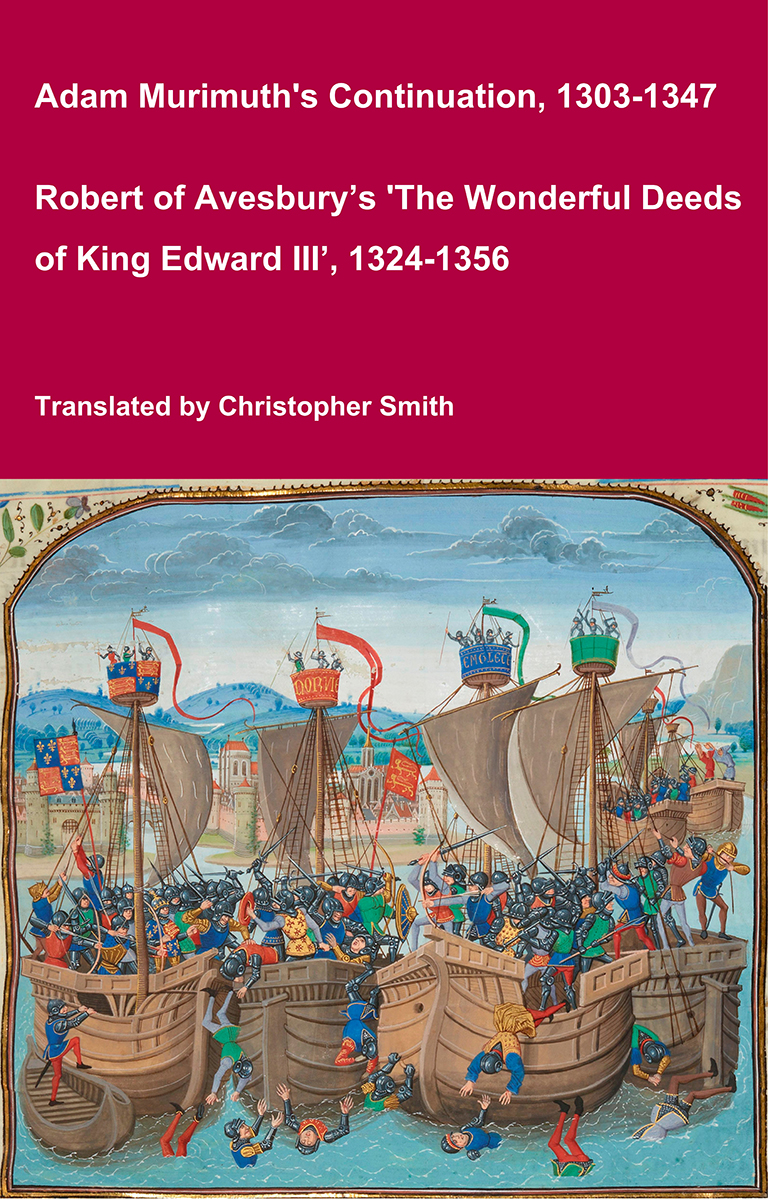
Adam Murimuth's Continuation and Robert of Avesbury’s 'The Wonderful Deeds of King Edward III'
This volume brings together two of the most important contemporary chronicles for the reign of Edward III and the opening phases of the Hundred Years’ War. Written in Latin by English clerical observers, these texts provide a vivid and authoritative window into the political, diplomatic, and military history of fourteenth-century England and its continental ambitions. Adam Murimuth Continuatio's Chronicarum continues an earlier chronicle into the mid-fourteenth century, offering concise but valuable notices on royal policy, foreign relations, and ecclesiastical affairs. Its annalistic structure makes it especially useful for establishing chronology and tracing the development of events year by year. Complementing it, Robert of Avesbury’s De gestis mirabilibus regis Edwardi tertii is a rich documentary chronicle preserving letters, treaties, and official records alongside narrative passages. It is an indispensable source for understanding Edward III’s claim to the French crown, the conduct of war, and the mechanisms of medieval diplomacy. Together, these works offer scholars, students, and enthusiasts a reliable and unembellished account of a transformative period in English and European history. Essential for anyone interested in medieval chronicles, the Hundred Years’ War, or the reign of Edward III.
Available at Amazon in eBook and Paperback format.
On 14th November 1841 John Kerr 7th Marquess Lothian [aged 47] died at Blickling Hall, Norfolk [Map]. His son William [aged 9] succeeded 8th Marquess Lothian, 11th Earl Lothian, 9th Earl Lothian. He inherited the Blickling, Norfolk estate and made significant changes.
On 10th October 1901 Constance Harriet Mahonesa Talbot Marchioness Lothian [aged 65] died without issue at Blickling Hall, Norfolk [Map].
The River Bure rises at Melton Constable, Norfolk [Map] from where it flows past Briston, Norfolk [Map], Thurning, Norfolk [Map] after which it is joined by the River Thurne. Thereafter it flows past Corpusty, Norfolk [Map], ItterIngham, Norfolk [Map], Blickling Hall, Norfolk [Map], where there is a large ornamental lake, Ingworth, Norfolk [Map], Drabblegate, Norfolk [Map], Aylsham, Norfolk [Map], Burgh, Norfolk [Map], Church of St Michael, Oxnead [Map], Buxton, Norfolk [Map], Little Hautbois, Norfolk [Map], Horstead, Norfolk [Map], Belaugh, Norfolk [Map], Wroxham, Norfolk [Map], Horning, Norfolk [Map], Upper Street [Map], Ranworth, Norfolk [Map] after which it is joined by the River Ant after which it passes St Benet's Abbey, Norfolk [Map] then joining the River Bure just after Thurne, Norfolk [Map]. The River Bure then flows under Acle Bridge, Norfolk [Map], past Stokesby, Norfolk [Map], Herringby, Norfolk [Map] to Great Yarmouth, Norfolk [Map] where it joins the River Yare before joining the North Sea.